The Russo-Japanese War: A Pivotal Moment in Japan’s Emergence as a Global Power
The Russo-Japanese War, fought from 8 February 1904 to 5 September 1905, marked a significant turning point in the balance of power in East Asia and had profound implications for the international status of Japan and Russia. This conflict, primarily over territorial disputes in Korea and Manchuria, showcased Japan’s modern military capabilities and challenged the prevailing perceptions of racial and imperial hierarchies.
What were the domestic consequences of the war for Russia? And how did the Russo-Japanese War challenge international racial stereotypes and perceptions at the time?
Here, we explore the historical context, major events, and the aftermath of this pivotal conflict.

The Russo-Japanese War, primarily fought over the control of Manchuria and Korea, altered the course of history in East Asia and had far-reaching implications for the international balance of power. Image: Map showing the battlefields during the war.
Historical Background
The roots of the Russo-Japanese War lie in the competing imperial ambitions of the Russian Empire and the emerging Japanese Empire. Following the Meiji Restoration in 1868, Japan rapidly modernized its social, political, and military structures, aiming to join the ranks of the Western imperial powers. Russia, meanwhile, was keen to expand its influence in the Far East, seeking warm-water ports and control over Manchuria and Korea, critical for economic and strategic reasons.

The conflict of interests came to a head after both nations had made conflicting moves in the region. Russia had participated in the international intervention against the Boxer Rebellion in China (1900) and had subsequently tightened its grip on Manchuria. Japan, viewing Korea as a vital buffer against foreign invasion and a necessary sphere for its own security and expansion, felt increasingly threatened by Russian encroachments.
Prelude to War
Negotiations between Russia and Japan began in 1901 but quickly stalled over disagreements on respective spheres of influence in Korea and Manchuria. Japan offered to recognize Russian dominance in Manchuria in exchange for recognition of Korean autonomy under Japanese influence, but Russia refused, underestimating Japan’s military preparedness and resolve.
The situation deteriorated, and by January 1904, Japan broke off negotiations, perceiving that Russia was merely stalling while it built up its military presence in the Far East.
On the night of 8 February 1904, without a formal declaration of war, Japan launched a surprise naval attack on the Russian Eastern Fleet at Port Arthur, a key naval base in southern Manchuria, initiating the Russo-Japanese War.
Major Battles and Events
The war was primarily fought in Southern Manchuria, the Liaodong Peninsula, the Yellow Sea, and the Sea of Japan. Key battles included:
Battle of Port Arthur
The initial attack on Port Arthur did not decisively defeat the Russian fleet but succeeded in damaging several Russian ships, which significantly reduced their operational capability. This bold move shocked the world and set the tone for subsequent Japanese operations.
Battle of the Yalu River
In May 1904, Japanese forces landed in Korea and quickly moved to secure the Yalu River, defeating the Russian forces in the first major land battle of the war. This victory allowed Japan to advance into Manchuria.
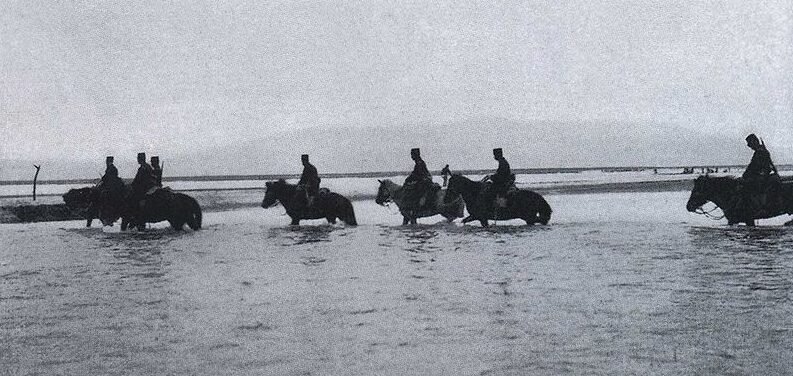
Image: Japanese soldiers crossing the Yalu River
Siege of Port Arthur
From August 1904 to January 1905, Japanese forces laid siege to Port Arthur. After months of brutal fighting and heavy casualties on both sides, the Japanese forces captured the fortress, marking a crucial strategic victory.
Battle of Mukden
The largest land battle of the war, the Battle of Mukden, occurred from February to March 1905. Despite enormous losses, Japanese forces managed to defeat the Russian army, forcing them to retreat northward, further consolidating Japanese control over Manchuria.
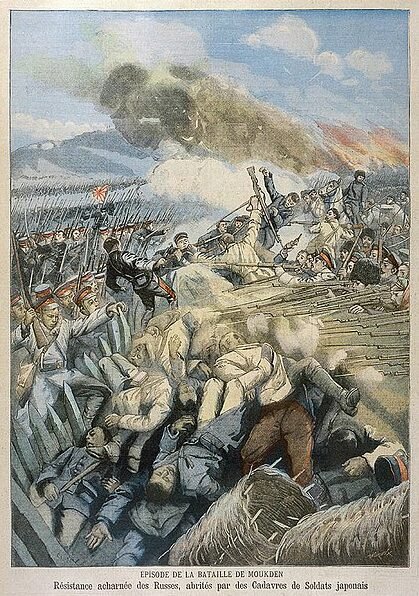
The Battle of Mukden was one of the largest land battles at the time, resulting in a Japanese victory that solidified their control over Manchuria. Image: An illustration of Japanese forces in attack during the Battle of Mukden.
Battle of Tsushima
Perhaps the most decisive battle occurred in May 1905, when the Japanese Navy, under Admiral Togo Heihachiro, destroyed the Russian Baltic Fleet, which had sailed around the world to relieve forces in the Far East. This spectacular naval victory effectively ended Russian naval presence in the East and forced Russia to consider peace negotiations.
Aftermath and Impact
The Treaty of Portsmouth, mediated by U.S. President Theodore Roosevelt in September 1905, officially ended the war. Japan emerged as the clear victor, acquiring rights over Korea, which it would formally annex in 1910, and gaining significant territories in South Manchuria, including the lease of Port Arthur.

Nicholas II of Russia’s refusal to seek arbitration or an early armistice culminated in the decisive Battle of Tsushima, leading to the Treaty of Portsmouth, mediated by US President Theodore Roosevelt. Image: A 1912 image of Nicholas II.
The war had significant ramifications. For Japan, the victory established its status as a formidable military power, altered the balance of power in Asia, and marked the first modern defeat of a European power by an Asian nation, challenging racial assumptions about superiority and inferiority.
For Russia, the defeat precipitated domestic unrest and contributed to the Revolution of 1905, exposing the inefficiencies and corruption within the Tsarist regime and its military. Internationally, the war reshuffled alliances and perceptions, contributing to the geopolitical tensions that would eventually lead to World War I.
Queen Victoria’s grandsons who ruled Britain, Germany, and Russia
Did you know…?
For his efforts in negotiating the Treaty of Portsmouth, U.S. President Theodore Roosevelt received the Nobel Peace Prize. The U.S. leader became the first American to receive the honor.
Frequently Asked Questions about the Russo-Japanese War
The Russo-Japanese War not only altered the strategic landscape in East Asia but also had a profound impact on the development of military tactics and technology, heralding new forms of warfare that would become more prominent in the coming decades.
Below are some of the most asked questions about the war:
How did Japan’s modernization efforts set the stage for conflict with Russia?
By the late 19th century, as Japan’s modernization became evident, it sought to expand its influence in Asia, particularly in Korea and Manchuria—regions also of strategic interest to Russia. Japan’s late entry into the imperial race and the already extensive European colonization limited its options, leading to inevitable conflicts over these territories.
What was the “Yellow Peril” and how did it influence Russian policies in East Asia?
The “Yellow Peril” was a racist ideology that depicted Asians as a grave threat to Western civilization, actively promoted by European figures like Kaiser Wilhelm II. This ideology found a receptive audience in Russia, reinforcing the Tsarist government’s resolve to expand and solidify its influence in East Asia, viewing it as a defense against an Asian threat.
The Franco-Prussian War: How the Germans Defeated the French in 1871
How did racial attitudes influence the actions of Japan during the period leading up to the Russo-Japanese War?
Despite being a victim of Western racial prejudices, Japan adopted similar views towards its Asian neighbors, viewing them as inferior and justifying its imperialistic ambitions as a civilizing mission. This mindset facilitated Japan’s aggressive policies in Korea and Manchuria, mirroring the racial attitudes prevalent in European imperialism.
What was the main reason for the breakdown of diplomatic negotiations between Japan and Russia before the war?
Diplomatic negotiations broke down due to Russia’s perceived stalling tactics, which Japan saw as an attempt to strengthen Russian military positions in East Asia.
What exactly triggered the start of the Russo-Japanese War in 1904?
The war began when Japan, viewing ongoing Russian encroachments in Korea and Manchuria as direct threats, launched a surprise attack on the Russian naval squadron at Port Arthur in February 1904 without a formal declaration of war. This aggressive move was aimed at quickly securing dominance in these regions before Russia could respond effectively.
What was the significance of the Siege of Port Arthur in the Russo-Japanese War?
The Siege of Port Arthur was significant as it led to the capture of a crucial Russian naval base, severely weakening Russian naval capabilities in the region.
What were some of the major battles during the Russo-Japanese War?
The Battle of Mukden was one of the largest land battles ever fought at the time. Spanning from February to March 1905, it involved over half a million troops. The Japanese forces, under General Oyama Iwao, defeated the Russian armies, further solidifying their control over Manchuria.
The most decisive engagement of the war occurred at the Battle of Tsushima in May 1905, where the Japanese Navy, led by Admiral Togo Heihachiro, virtually annihilated the Russian Baltic Fleet, which had sailed halfway around the world to relieve the forces at Port Arthur. This naval victory decisively tilted the balance of naval power in favor of Japan and marked a turning point in naval warfare history.
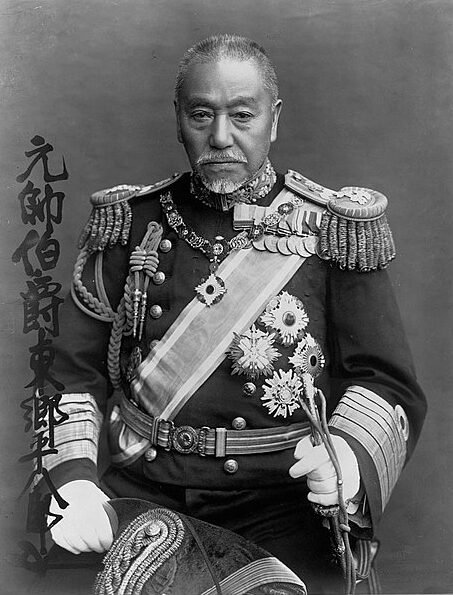
The Battle of Tsushima was a turning point because the Japanese Navy’s decisive victory over the Russian Baltic Fleet showcased the effectiveness of modern naval strategies and technologies, tilting naval power in favor of Japan. Image: Portrait of Tōgō Heihachirō.
What were the terms and significance of the Treaty of Portsmouth?
Brokered in 1905 by U.S. President Theodore Roosevelt, the Treaty of Portsmouth recognized Japan’s paramount interests in Korea and transferred Russian interests in Manchuria, including Port Arthur, to Japan. This solidified Japan’s dominance in East Asia and marked a significant shift in global power dynamics towards Japan as a major world power.

The Treaty of Portsmouth, mediated by U.S. President Theodore Roosevelt, ended the war by affirming Japanese control over Korea and ceding the Liaodong Peninsula and South Manchurian railway rights to Japan. Image: A picture of Roosevelt during the mid-1900s.
How did the Russo-Japanese War affect Japan’s international status?
The war marked Japan’s emergence as a great power, showcasing its military prowess and altering the global perception of power dynamics in Asia.
What were the domestic consequences of the war for Russia?
The war led to national humiliation and exposed weaknesses in Russia’s political and military establishments, contributing to domestic unrest that culminated in the Russian Revolution of 1905.
How did the Russo-Japanese War challenge international racial stereotypes and perceptions at the time?
Japan’s victory over a major European power was the first of its kind in the modern era, challenging prevailing racial stereotypes and reshaping international perceptions about the capabilities of Asian versus European powers.