Freemasonry is a fraternal organization that originated in the stonemason guilds of the 14th century. It is the world’s oldest fraternity and consists of members united by shared moral and metaphysical ideals.
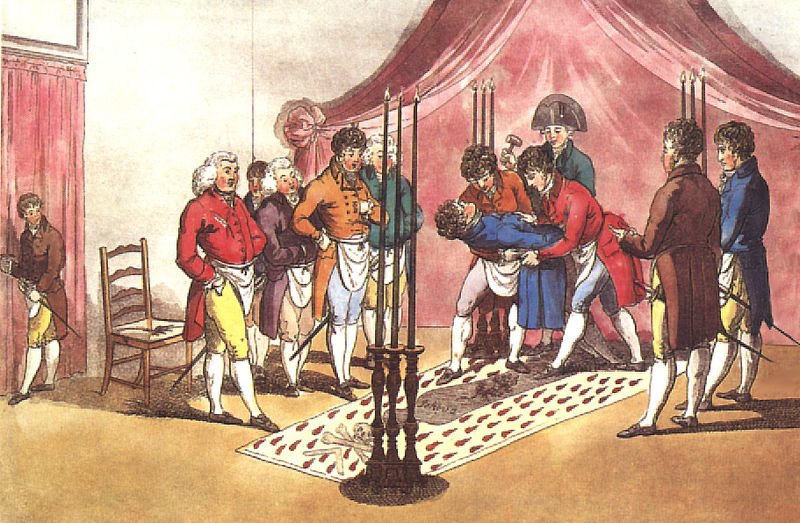
A third-degree ceremony from Paris in 1745, later retouched in 1812 to resemble a Moderns Lodge in London.
Origins and Historical Development
Freemasonry, sometimes spelled Free-Masonry, is one of the world’s oldest and most enduring fraternal organizations. Its roots trace back to the local guilds of stonemasons from the late 14th century, which regulated the qualifications of their members and managed interactions with clients and authorities. These guilds gradually evolved into a fraternity that adopted symbolic and allegorical elements based on the tools and practices of stonemasons.
The first Grand Lodge, later called the Grand Lodge of England, was founded on June 24, 1717, in London. Over time, Freemasonry expanded across Europe, the Americas, and other regions, adapting to local cultures while maintaining its core principles. By the 18th century, it had become a network of like-minded individuals, including artisans, intellectuals, and politicians, who promoted Enlightenment ideals such as liberty, equality, and fraternity.
Lodges and Grand Lodges
The fundamental organizational unit of Freemasonry is the Lodge. Each Lodge operates independently but is overseen by a regional governing body known as a Grand Lodge or Grand Orient. Lodges meet to conduct ceremonies, confer degrees, and organize charitable and social events. While there is no global governing body, mutual recognition between Grand Lodges establishes networks of legitimacy and amity.
Degrees of Freemasonry
Freemasonry’s structure is hierarchical, with members progressing through three core degrees:
- Entered Apprentice: The initiation stage, focusing on moral development and self-improvement.
- Fellowcraft: The intermediate stage, emphasizing the study of Masonic teachings and symbols.
- Master Mason: The final stage, granting full membership and the ability to participate in all Masonic activities.
These degrees are collectively referred to as Craft or Blue Lodge Freemasonry. Additional degrees and rites, such as the Scottish Rite and York Rite, are available to Master Masons who wish to further explore Masonic philosophy and practices.
Regular and Continental Freemasonry
Modern Freemasonry is broadly divided into two recognition groups:
- Regular Freemasonry: Requires belief in a Supreme Being and adherence to traditional practices, such as excluding women and avoiding discussions of religion or politics within Lodges.
- Continental Freemasonry: Found primarily in Europe, it is more liberal, often permitting women, accepting atheists, and engaging in broader social and political discussions.
Rituals and Symbolism
Freemasonry employs a rich array of rituals, symbols, and allegories to convey its teachings. Many symbols are derived from the tools of stonemasons, such as the square and compasses, which represent morality and self-restraint, respectively. Ceremonies involve dramatic reenactments, lectures, and the use of symbolic items to teach lessons about ethics, virtue, and personal growth.
Masonic rituals and symbols are often considered secret, though much of this information is readily available in public sources. The secrecy is less about concealment and more about preserving tradition and emphasizing the personal nature of Masonic teachings.
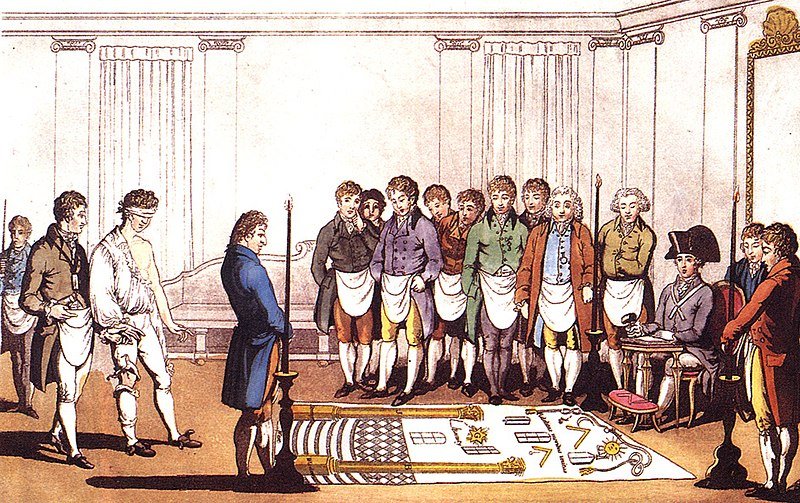
Paris initiation from 1745, repainted in 1805 to reflect a Moderns Lodge.
Joining Freemasonry
Individuals interested in joining Freemasonry must seek out a Lodge and express their interest. The process typically involves an interview, references, and a secret ballot by Lodge members. Most jurisdictions require candidates to be of legal age, possess a good moral reputation, and believe in a Supreme Being (except in liberal jurisdictions). Initiation ceremonies involve taking solemn obligations to uphold Masonic principles and protect the fraternity’s secrets.
Charitable Activities
Freemasonry has a long history of charitable work, supporting causes such as education, healthcare, disaster relief, and poverty alleviation. Many Lodges and Grand Lodges operate charitable foundations funded by member contributions, events, and public donations.
Social Functions
Masonic Lodges often host social gatherings, dinners, and events that allow members, their families, and guests to interact and foster camaraderie. These events also provide opportunities to discuss shared interests and strengthen community bonds.
Challenges and Controversies
Freemasonry has faced significant opposition from religious institutions, particularly the Catholic Church, which has condemned it as incompatible with Christian teachings. Protestant and Islamic authorities have also criticized or banned Freemasonry, often citing concerns about its secrecy, alleged religious relativism, and perceived political influence.
Authoritarian regimes have historically suppressed Freemasonry, viewing it as a potential threat to state power. Notable examples include Nazi Germany, Fascist Italy, and Communist states, where Masons were imprisoned or executed. Conspiracy theories linking Freemasonry to clandestine political agendas have fueled mistrust and persecution.
Freemasonry has experienced declining membership in many regions, particularly in Western countries, due to changing social dynamics, generational shifts, and competition from other organizations. Efforts to modernize and adapt to contemporary values have met with varying degrees of success.
Notable Masons and Contributions
Throughout history, Freemasonry has included many prominent figures, such as:
- George Washington: First U.S. President and Master Mason.
- Wolfgang Amadeus Mozart: Renowned composer and Mason.
- Simón Bolívar: South American revolutionary leader.
- Benjamin Franklin: Founding Father of the United States and advocate of Enlightenment ideals.
Freemasons have contributed to advancements in science, arts, and politics, embodying the fraternity’s commitment to intellectual and moral development.
Frequently Asked Questions
How is Freemasonry organized?
Freemasonry is organized into local lodges, which are overseen by regional Grand Lodges. There is no global governing body; each Grand Lodge is independent and autonomous.
What are the core principles of Freemasonry?
Freemasonry emphasizes morality, fraternity, charity, and personal development. Regular Freemasonry requires belief in a Supreme Being, prohibits political and religious discussions in lodges, and restricts membership to men.
What are the degrees in Freemasonry?
The three main degrees are Entered Apprentice, Fellowcraft, and Master Mason. Each degree involves ceremonies that teach symbolic lessons and confer specific privileges and responsibilities.
What criticisms has Freemasonry faced?
Freemasonry has faced opposition on religious grounds from the Catholic Church and some Protestant and Islamic groups, as well as accusations of secrecy, elitism, and conspiracy theories.
What is Continental Freemasonry?
Continental Freemasonry includes jurisdictions that have relaxed traditional rules, such as allowing atheists, admitting women, and discussing political or religious topics in lodges.
What is the significance of Masonic symbols?
Symbols such as the square, compasses, and tools of stonemasonry represent moral and ethical lessons. These symbols are used in rituals and teachings to promote self-improvement and fraternity.





I know for a fact in the Southern states FreeMasons were also members of the KluKluxKlan