History of Al Capone and how he got the nickname “Scarface”
Alphonse Gabriel Capone, better known as Al Capone or by his infamous nickname “Scarface,” was born on January 17, 1899, in Brooklyn, New York City, to Italian immigrants Gabriele and Teresa Capone. The Capone family had moved to the United States from Italy in 1893, seeking better opportunities in the bustling city of New York. Al was one of nine children and grew up in a rough neighborhood, which would later influence his path into the world of crime.

Al Capone’s life is a tale of ambition, violence, and notoriety. Image: Mug shot of crime boss Capone in Miami, in 1930
Entry into Crime
As a teenager, Capone joined the notorious Five Points Gang, a prominent Italian-American street gang based in Manhattan. This gang was known for its violent methods and involvement in various illegal activities, including racketeering, gambling, and prostitution. Capone’s early exposure to this environment shaped his future in organized crime. He started working as a bouncer in brothels and other establishments associated with the underworld, honing his skills in intimidation and violence.
Move to Chicago
In his early twenties, Capone moved to Chicago at the invitation of Johnny Torrio, a respected and influential figure in the city’s criminal underworld. Torrio was the head of a criminal syndicate that supplied illegal alcohol, a business that flourished during the Prohibition era.
The Prohibition era, spanning from 1920 to 1933, was a period in which the manufacture, sale, and transportation of alcoholic beverages were banned in the United States. This constitutional ban created a lucrative black market for alcohol, which criminal organizations like Torrio’s syndicate sought to exploit.
Capone quickly became Torrio’s trusted bodyguard and factotum, handling various tasks and gaining valuable experience in the operations of the illegal alcohol trade. The syndicate, which would later evolve into the Chicago Outfit, benefited from political protection through the Unione Siciliana, an influential Sicilian-American organization. This protection allowed the syndicate to operate with relative impunity, despite the illegality of their activities.
Rise to Power
A significant conflict with the North Side Gang, led by Dean O’Banion, played a crucial role in Capone’s rise to power. The North Side Gang was a rival criminal organization that also profited from bootlegging and other illegal enterprises. Tensions between the two gangs escalated, leading to violent clashes. In one such attack, North Side gunmen nearly killed Johnny Torrio, prompting him to retire and hand over control of the syndicate to Capone.
Under Capone’s leadership, the Chicago Outfit expanded its bootlegging operations and employed increasingly violent methods to maintain control and eliminate rivals. Capone’s approach was ruthless, but it also proved to be highly effective. His mutually beneficial relationships with influential figures, such as Mayor William Hale Thompson and members of the Chicago Police Department, provided him with a significant degree of protection from law enforcement.
Public Image and Notoriety
Capone reveled in the public attention he received. He was often seen at high-profile events, such as baseball games, where he was greeted with cheers from spectators. He also made donations to various charities, which earned him a reputation among some as a “modern-day Robin Hood.” This public persona, however, was overshadowed by his involvement in violent crimes and his role in the notorious Saint Valentine’s Day Massacre.
The Saint Valentine’s Day Massacre occurred on February 14, 1929, when seven members of the North Side Gang were brutally murdered in broad daylight. The massacre was widely believed to have been orchestrated by Capone as part of his efforts to eliminate his rivals. This event severely damaged the public image of both Chicago and Capone, leading influential citizens to demand government action against him. Newspapers began to refer to Capone as “Public Enemy No. 1,” further intensifying the pressure on authorities to bring him to justice.
Legal Troubles and Imprisonment
Determined to put an end to Capone’s criminal activities, federal authorities focused on building a case against him. They charged him with twenty-two counts of tax evasion, a crime that was often used to prosecute organized crime figures when other charges were difficult to prove. In a highly publicized trial in 1931, Capone was convicted of five counts of tax evasion. The prosecution’s case was bolstered by Capone’s own admissions of his income and unpaid taxes during prior negotiations to settle his tax debts with the government.
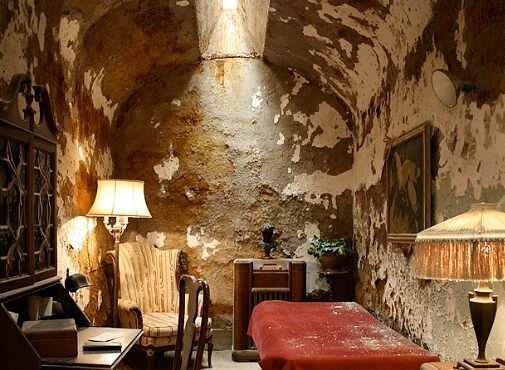
While in prison, Al Capone’s health deteriorated, and he was stabbed by fellow inmate James C. Lucas. He was released on parole in 1939 due to his declining health. Image: Capone’s cell at the now decommissioned Eastern State Penitentiary in Philadelphia, where he spent about nine months starting in May 1929
Following his conviction, Capone was sentenced to eleven years in federal prison. He initially served time at the U.S. Penitentiary in Atlanta before being transferred to Alcatraz Federal Penitentiary in San Francisco Bay. Alcatraz, known for its high security and isolation, was intended to hold the most notorious and dangerous criminals in the United States.

Decline and Health Issues
Capone’s health began to deteriorate during his imprisonment. He showed signs of neurosyphilis, a late-stage manifestation of syphilis that affects the nervous system. This condition led to significant cognitive decline and physical debilitation. Despite his efforts to appeal his conviction, including hiring experts in tax law, his appeals were ultimately unsuccessful.
After nearly eight years of incarceration, Capone was released from prison in 1939. His release was largely due to his declining health, and he spent the remaining years of his life in relative obscurity. He retired to his mansion in Palm Island, Florida, where he lived with his wife, Mae, and their family.
Death and Legacy
Al Capone died on January 25, 1947, at the age of 48. His death was caused by cardiac arrest following a stroke. Despite his relatively short life, Capone left an indelible mark on American history and popular culture. His life and crimes have been the subject of numerous books, movies, and television shows, cementing his legacy as one of the most infamous gangsters of the 20th century.
Capone’s story is a complex blend of notoriety and public fascination. On one hand, he was a ruthless criminal who orchestrated violent crimes and profited from illegal activities. On the other hand, his larger-than-life persona and occasional acts of charity created a mystique that continues to captivate the public imagination.

Image: Capone’s grave in Mount Carmel Cemetery, Hillside, Illinois.
Impact on Organized Crime
Capone’s rise and fall had significant implications for organized crime in the United States. His operations during Prohibition demonstrated the immense profits that could be made through illegal enterprises, encouraging other criminal organizations to expand their activities. The violent methods he employed also set a precedent for future gangsters, who would use similar tactics to maintain control and eliminate competition.
Furthermore, Capone’s high-profile trial and conviction highlighted the importance of tax evasion as a tool for prosecuting organized crime figures. This approach would later be used to bring down other notorious criminals, including members of the Mafia. The success of federal authorities in prosecuting Capone also underscored the need for coordinated efforts between local, state, and federal law enforcement agencies to combat organized crime.

Capone’s ruthless methods and flamboyant personality made him a legendary figure in the annals of American crime history. Image: Capone’s FBI criminal record in 1932, showing most of his criminal charges were discharged or dismissed
Cultural Influence
The life and crimes of Al Capone have had a lasting impact on American culture. He has been depicted in numerous films, television series, and books, often portrayed as the quintessential gangster. His story has been romanticized and mythologized, contributing to the enduring fascination with the Prohibition era and the world of organized crime.
Capone’s legacy also includes his influence on the portrayal of gangsters in popular media. Characters inspired by Capone have appeared in countless works of fiction, shaping the public’s perception of what it means to be a gangster. This cultural impact extends beyond the United States, as Capone’s story has been told and retold around the world.

Questions and Answers about Al Capone

Nicknamed “Scarface”, Al Capone was a formidable crime boss infamous for co-founding the Chicago Outfit. Image: Capone in 1930
Who was Al Capone and why is he infamous?
Al Capone, born Alphonso Gabriel Capone, was a notorious American gangster who gained fame during the Prohibition era as the leader of the “Chicago Outfit,” a powerful criminal organization.
When and where was Al Capone born?
Al Capone was born on January 17, 1899, in Brooklyn, New York.
His parents were Gabriele Capone and Teresa Raiola, Italian immigrants who moved to the United States in 1893.
Al Capone had several brothers, including Raffaele James Capone, also known as Ralph Capone, who became a mobster, and Vincenzo Capone, who later adopted the name Richard James Hart and worked as a Prohibition agent.
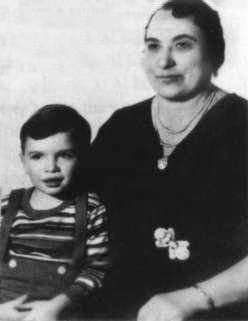
Image: The young Al Capone with his mother
Why did Al Capone’s education end early?
Al Capone’s education was cut short when he was expelled from school at the age of 14 for hitting a teacher.
Who did Al Capone marry and at what age?
Al Capone married Mae Josephine Coughlin in 1918 at the age of 19. Al Capone’s son was Albert Francis “Sonny” Capone.
Who mentored Al Capone in his early criminal career?
Al Capone was mentored by Frankie Yale, a Brooklyn gangster.
How did Al Capone get the nickname “Scarface”?
Al Capone got the nickname “Scarface” after being attacked by the brother of a woman he had insulted, resulting in a scar on his face.
What gangs did Al Capone join in New York?
In New York, Al Capone joined various gangs such as the Bowery Boys, Brooklyn Rippers, and Junior Forty Thieves.

When did Capone take control of the Chicago Outfit and why?
Al Capone was invited to Chicago by Johnny Torrio, an Italian-American mobster, and became Torrio’s right-hand man in the “Chicago Outfit.”
Al Capone took control of the Chicago Outfit in 1925 after Johnny Torrio was seriously wounded in an assassination attempt and decided to retire.
What were some of Al Capone’s illegal activities during Prohibition?
During Prohibition, Al Capone expanded the gang’s activities to include the illegal alcohol trade, marked by violence, elimination of rivals, and bribery of law enforcement officials.
What led to Capone’s eventual imprisonment?
Al Capone was eventually imprisoned for tax evasion in 1931 and sentenced to 11 years in federal prison.
The criminal boss was initially incarcerated at the U.S. Penitentiary in Atlanta, then transferred to Alcatraz Federal Penitentiary. He suffered from syphilis, gonorrhea, cocaine withdrawal symptoms, and neurosyphilis.
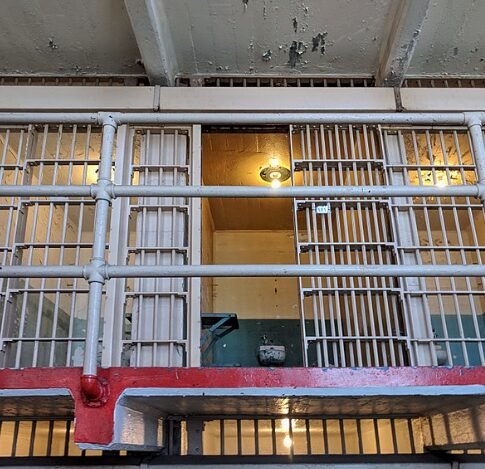
Image: Cell 181 in Alcatraz Federal Penitentiary where crime boss Al Capone was imprisoned
What was the Saint Valentine’s Day Massacre, and what was Capone’s suspected involvement?
The Saint Valentine’s Day Massacre in 1929 resulted in the deaths of seven members of the rival “North Side Gang.” Capone was suspected of orchestrating the massacre, which further solidified his reputation.
When and how did Al Capone die?
Al Capone died of cardiac arrest on January 25, 1947, after suffering a stroke.

Despite his criminal activities, Al Capone was sometimes seen as a “Robin Hood” figure due to his charitable acts within the community. Image: Unemployed men outside a soup kitchen opened by Capone in Chicago during the Depression, February 1931





