
Evaristo Baschenis’ painting showcasing Baroque instruments such as a cittern, viola da gamba, violin, and two lutes.
Baroque music, spanning from approximately 1600 to 1750, represents one of the most influential periods in Western classical music. It followed the Renaissance era and preceded the Classical period, transitioning through the galant style. Baroque music is known for its grandeur, expressive melodies, and the establishment of tonal harmony. Some of the most famous composers from this period include Johann Sebastian Bach, George Frideric Handel, Antonio Vivaldi, and Claudio Monteverdi, among many others.
Below, World History Edu explores the origins, characteristics, significant composers, and the impact of Baroque music on later musical developments.
Origins and Etymology
The term “Baroque” originates from the Portuguese word barroco, meaning “misshapen pearl,” reflecting the initially perceived excessive complexity of the music. The term was first used in the 18th century in a satirical context to describe the music of Jean-Philippe Rameau. Jean-Jacques Rousseau criticized Baroque music for its complexity and modulations, contrasting it with the clarity of Classical music. Despite this early criticism, Baroque music became a defining era in Western music history, setting the foundation for many forms, techniques, and theoretical advancements.
Phases of Baroque Music
Baroque music is generally divided into three phases:
- Early Baroque (1580–1650) – Marked by the emergence of opera, monody (a single melodic line with accompaniment), and the use of basso continuo.
- Middle Baroque (1630–1700) – Characterized by the rise of tonality, development of structured instrumental forms, and the establishment of national styles.
- Late Baroque (1680–1750) – Defined by the complex polyphony of composers like Bach and Handel, culminating in the full maturity of Baroque forms and structures.
Musical Characteristics
Baroque music is distinguished by several key characteristics:
- Tonality: The Baroque period saw the formalization of tonal harmony, moving away from the modal system of the Renaissance. Major and minor keys became the basis for composition.
- Basso Continuo: A defining feature where a continuous bass line was played by instruments such as the harpsichord, lute, or cello, providing harmonic support.
- Ornamentation: Melodic lines were often highly ornamented with trills, mordents, and other embellishments, allowing performers to demonstrate technical skill and expressiveness.
- Contrapuntal Texture: Polyphony, where multiple independent melodic lines were interwoven, reached its peak in the late Baroque, particularly in the fugues of Bach.
- Terraced Dynamics: Instead of gradual changes in volume, Baroque music often featured sudden shifts between loud and soft passages.
- Dance Forms: Many instrumental compositions were structured as dance suites, consisting of movements like the allemande, courante, sarabande, and gigue.
- Contrast: Baroque compositions frequently employed contrast, whether in tempo, texture, or dynamics, to create drama and interest.
What are some important Baroque Musical forms?
Opera
One of the most significant innovations of the Baroque era was opera, which combined music, drama, and visual spectacle. Early operas, such as Monteverdi’s L’Orfeo (1607), used monody to emphasize expressive text setting. The recitative and aria structure became standard, allowing for both narrative progression and lyrical expression.
Oratorio and Cantata
Oratorios, such as Handel’s Messiah, were similar to operas but without staging and costumes, focusing on religious themes. Cantatas were multi-movement vocal works that could be sacred or secular, exemplified by Bach’s extensive church cantatas.
Concerto and Concerto Grosso
The concerto became a major instrumental form, showcasing contrast between solo instruments and the orchestra. The concerto grosso, developed by Corelli and expanded by Vivaldi, featured a small group of soloists contrasted with the full ensemble. Vivaldi’s Four Seasons is among the most famous examples of this form.
Fugue and Counterpoint
A fugue is a polyphonic composition based on a central theme that is developed through interwoven melodic lines. Bach’s The Well-Tempered Clavier exemplifies the pinnacle of fugal writing and the Baroque fascination with counterpoint.
Dance Suite
Dance suites were instrumental compositions that included stylized dance movements. Composers such as Bach and Handel composed suites with movements such as the minuet, gavotte, and bourrée, each with distinct rhythmic and stylistic characteristics.
Instruments of the Baroque Period
Baroque music saw significant developments in instrumentation, with new techniques and expressive possibilities for various instruments:
String Instruments
- Violin, viola, cello, and double bass became dominant in orchestras.
- Lutes and theorboes provided harmonic accompaniment in chamber settings.
Woodwind and Brass Instruments
- Recorders and transverse flutes were widely used.
- The oboe and bassoon became key orchestral instruments.
- The natural trumpet and horn were employed in ceremonial and courtly music.
Keyboard Instruments
- Harpsichord and organ were the most significant keyboard instruments, used both in solo and ensemble settings.
- The clavichord and early versions of the piano (fortepiano) began to emerge.
Most Notable Baroque Composers
Johann Sebastian Bach (1685–1750)
Bach is often regarded as the greatest Baroque composer, known for his masterful counterpoint, fugues, and sacred compositions. His works include The Well-Tempered Clavier, Mass in B Minor, Brandenburg Concertos, and numerous organ works.
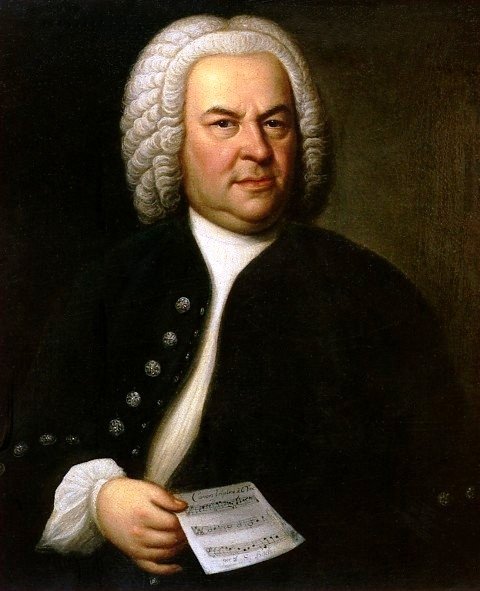
Johann Sebastian Bach
George Frideric Handel (1685–1759)
Handel was renowned for his oratorios, operas, and instrumental compositions. Messiah, Water Music, and Music for the Royal Fireworks remain some of his most celebrated works.
Antonio Vivaldi (1678–1741)
Vivaldi was a virtuoso violinist and composer, best known for The Four Seasons. He contributed significantly to the development of the concerto form.
Claudio Monteverdi (1567–1643)
Monteverdi played a crucial role in the transition from Renaissance to Baroque, pioneering early opera with L’Orfeo and advancing expressive vocal writing.
Henry Purcell (1659–1695)
A leading English composer, Purcell blended Italian, French, and English styles. His opera Dido and Aeneas and Music for the Funeral of Queen Mary are highlights of his output.
Jean-Philippe Rameau (1683–1764)
Rameau was a pivotal figure in French Baroque music, known for his operas and theoretical contributions to harmony. His Treatise on Harmony influenced later composers.
The works of composers like Bach, Handel, and Vivaldi continue to be revered, studied, and performed globally.
The Legacy of Baroque Music
Baroque music laid the foundation for many aspects of Western classical music. It influenced the Classical period by establishing tonal harmony, formal structures, and expressive depth. The stylistic elements of Baroque music continue to inspire composers, with many Baroque works still being performed and studied today. The era’s emphasis on contrast, ornamentation, and counterpoint has had a lasting impact on both classical and popular music.
Top 10 Renaissance Artists and their Most Famous Masterpieces
Frequently Asked Questions
What are the key characteristics of Baroque music?
Baroque music is known for its use of common-practice tonality, basso continuo accompaniment, expressive ornamentation, polyphonic textures, and dramatic contrasts in dynamics and instrumentation.
Who were the major composers of the Baroque era?
Key composers include Johann Sebastian Bach, George Frideric Handel, Antonio Vivaldi, Claudio Monteverdi, Henry Purcell, Jean-Philippe Rameau, Arcangelo Corelli, and Georg Philipp Telemann.
What are the main phases of the Baroque period?
The Baroque period is divided into early (1580–1650), middle (1630–1700), and late (1680–1750) phases, each marked by evolving musical styles and structures.
What was the significance of basso continuo?
Basso continuo was a continuous bassline played by instruments like the harpsichord, lute, or organ, with improvisation of harmonies, serving as the harmonic foundation of Baroque compositions.
What musical forms and genres developed during the Baroque period?
Important forms include opera, oratorio, cantata, fugue, suite, concerto grosso, solo concerto, sonata, and choral compositions like the Passion and Mass.
What role did opera play in Baroque music?
Opera emerged as a major form, combining music, drama, and stagecraft. Claudio Monteverdi’s L’Orfeo is considered one of the first significant operas.
How did Baroque music influence instrumental development?
Baroque composers expanded orchestration, formalized instrumental playing techniques, and developed new genres like the concerto and sonata.
What is the connection between Baroque music and dance?
Dance suites, such as those by Bach, incorporated stylized dances like the allemande, courante, sarabande, and gigue, reflecting the era’s close link between music and courtly dance.
How did Baroque music transition to the Classical period?
The transition involved the shift to the galant style, emphasizing simplicity and clarity, paving the way for the Classical period’s structured forms and homophonic textures.





