History of Michael VIII Palaiologos and how he liberated Constantinople from the Crusaders
Michael VIII Palaiologos, born in 1223, was a pivotal figure in Byzantine history, renowned for his role in restoring the Byzantine Empire’s capital to Constantinople in 1261 and ending the Latin Empire. His reign was marked by political cunning and military prowess as it had profound implications for both the internal dynamics of the empire and its relations with neighboring states.
In the article below, Byzantine historians at World History Edu explore Michael VIII Palaiologos’s life, his political strategies, military campaigns, and his legacy, which has been subject of both admiration and controversy.

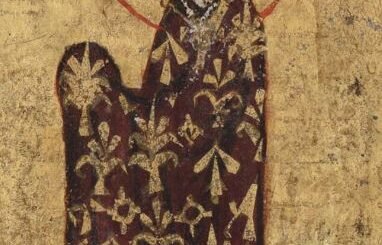
Michael VIII Palaiologos was the Byzantine emperor from 1259 to 1282. He is best known for recapturing Constantinople from the Latin Empire in 1261, effectively restoring the Byzantine Empire. Image: An artwork portraying Michael Palaiologos. Its located at the National Library of Russia in Saint Petersburg.
Early Life and Rise to Power
Michael Palaiologos was born into the noble Palaiologos family, which had a long tradition of service to the Byzantine Empire. His early years were shaped by the turbulent period following the Fourth Crusade’s sack of Constantinople in 1204, which led to the establishment of the Latin Empire.
Byzantine aristocrats, including Michael, were dispersed across the remnants of the empire. Michael’s rise to prominence began under the Nicaean emperor John III Vatatzes, where he held several important military and administrative positions. His military acumen and loyalty to the Vatatzes dynasty helped him ascend the ranks of the aristocracy.
Co-Emperor and Strategist
In 1258, Michael was declared co-emperor with John IV Laskaris, the young heir of Theodore II Laskaris. However, Michael’s ambition led him to sideline John IV shortly after the death of Theodore II.
In 1259, Michael decisively defeated the Epirote and Sicilian forces at the Battle of Pelagonia, consolidating his power and influence in the region.
His rule as de facto emperor began under the guise of protecting the rights of his young co-emperor, whom he later blinded and imprisoned in 1261, securing his sole rule.
Recapture of Constantinople
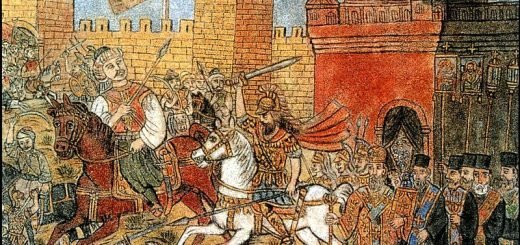
The crowning achievement of Michael VIII was the recapture of Constantinople from the Latin Empire in July 1261. The city was retaken almost by surprise through a military strategy devised by Michael and executed by his general Alexios Strategopoulos.
The re-establishment of the Byzantine Empire in Constantinople was a momentous event, celebrated with elaborate ceremonies that echoed the empire’s former glory.
Michael’s return to Constantinople was not just a military triumph but also a significant propaganda tool, reinforcing his image as a restorer of the empire.
Domestic Policies
Internally, Michael VIII’s reign focused on restoring the economic and military strength of the Byzantine Empire. He reorganized the administration of the empire, restructured the tax system, and revitalized the economy.
However, his reign was also marked by heavy-handedness against those he perceived as threats, including the nobility and the church. He was known for his efforts to centralize authority, which led to significant opposition from traditional power bases, including the powerful aristocracy and the orthodox clergy.
Religious Controversies and the Union of the Churches
One of Michael VIII’s most controversial actions was his promotion of the union between the Eastern Orthodox Church and the Roman Catholic Church.
Faced with external threats from the West and the East, Michael sought to secure papal support against his enemies by agreeing to the union of the churches at the Second Council of Lyon in 1274. This decision was deeply unpopular in Byzantium, where the populace and clergy viewed the union as a betrayal of the Orthodox faith. The union failed to deliver the promised military aid, and after Michael’s death, it was largely repudiated by his successors.

Foreign Relations and Defense
Michael VIII’s foreign policy was characterized by a complex web of alliances and conflicts. He successfully navigated relationships with powerful neighbors such as the Bulgarian Empire, the Kingdom of Sicily, and the Ilkhanate, among others.
Also, he rebuilt the Byzantine navy and re-fortified cities, anticipating threats from various fronts, including the resurgent Bulgarian Empire and the ambitious Charles of Anjou in Sicily.
What are the Byzantine Empire’s Most Important Accomplishments?
Legacy and Assessment of his Reign
Michael VIII Palaiologos died in 1282, leaving a legacy that was both celebrated and vilified. He is credited with restoring Byzantine rule in Constantinople and re-establishing the empire as a significant power in the Mediterranean. However, his methods, particularly his religious policies and authoritarian rule, drew significant criticism and led to internal strife.
His reign was a period of significant cultural revival, often seen as the beginning of the Palaiologan Renaissance, marked by advancements in art, literature, and theology. His efforts to centralize power and his successful, albeit controversial, foreign policy maneuvers demonstrated a sophisticated understanding of the complex political landscape of the era.
Frequently asked questions about Byzantine Emperor Michael VIII Palaiologos

Michael VIII Palaiologos was a complex figure whose actions were driven by a vision to restore the Byzantine Empire to its former glory. Image: Portrait of Michael Palaiologos.
How did Michael VIII become emperor?
Michael VIII became emperor through a series of strategic moves, beginning as a high-ranking official and co-emperor with the young John IV Laskaris, whom he later deposed. His ascension was marked by his political acumen and military prowess.
What were Michael VIII’s major achievements?
Michael VIII’s most notable achievement was the recapture of Constantinople, restoring Byzantine rule over the capital after nearly 60 years of Latin dominance. He also reorganized the empire’s military and administrative structures and attempted to mend the schism between the Eastern Orthodox and Roman Catholic Churches.
How exactly did Michael VIII Palaiologos liberate Constantinople from the Crusaders?

After the Fourth Crusade’s sack of Constantinople, the Byzantine leadership fled and established successor states, notably the Empire of Nicaea, where Michael VIII came to power. Michael’s primary objective was the reconquest of Constantinople, both to restore the Byzantine Empire and to consolidate his own rule.
Michael VIII capitalized on a combination of military readiness and political astuteness. He maintained a strong, well-equipped military force and a network of alliances that kept potential enemies, such as the Despotate of Epirus and the Kingdom of Sicily, in check.
His chance came when most of the Latin forces were away, involved in a conflict with the Kingdom of Sicily. Michael VIII’s general, Alexios Strategopoulos, played a crucial role in scouting and identifying this opportunity. He discovered that the city’s defenses were significantly undermanned, with the bulk of the Latin troops absent.
In July 1261, Stratigopoulos led a relatively small Byzantine force of close to 1000 soldiers on a surprise attack against Constantinople. The attack was timed to exploit the minimal defensive presence in the city. They managed to enter through a lightly guarded gate (some accounts suggest that they were assisted by locals who were sympathetic to the Byzantine cause).
Once inside, the Byzantines quickly overwhelmed the limited defenders, securing the city with little resistance. The Latin Emperor Baldwin II was forced to flee, and the populace, largely Orthodox Christian, generally welcomed the return of Byzantine rule.
Michael VIII entered the city triumphantly, marking the event with grand ceremonies to signify the restoration of the Orthodox Byzantine Empire. His reign from Constantinople began a new chapter in Byzantine history, characterized by efforts to revitalize the empire and secure its borders against numerous external threats.
The recapture of Constantinople by Michael VIII was not just a military victory but also a significant morale booster for the Byzantine people, symbolizing a new era of restored glory and potential rejuvenation for the empire. This event also emphasized the strategic acumen of Michael VIII, combining military, political, and diplomatic tactics to achieve his goals.
Why did Michael VIII promote the union of the churches?
Facing multiple threats from the West and seeking to stabilize his restored empire, Michael VIII promoted the union of the Eastern Orthodox and Roman Catholic Churches primarily to secure military and political support from the papacy against his adversaries.
What was the response to the union of the churches in Byzantium?
The union of the churches was highly unpopular in Byzantium, viewed by many as a betrayal of Orthodox beliefs. It faced strong opposition from the clergy and the general populace, and the union was largely repudiated after Michael’s death.

How did Michael VIII Palaiolgos deal with internal opposition?
Michael VIII managed internal opposition through a mix of strategic marriages, alliances, and sometimes severe repressions, including blinding and imprisoning potential rivals such as John IV Laskaris.
What were Michael VIII’s foreign policy strategies?
Michael VIII’s foreign policy was characterized by diplomatic negotiations, forming alliances, and engaging in conflicts when necessary. He worked to stabilize the empire’s position in a volatile regional environment, dealing with threats from powers like the Sicilian Angevins, the Bulgarians, and others.
Did Michael VIII have any significant failures?
One of Michael VIII’s significant failures was his inability to establish lasting peace and security on the empire’s borders, which remained volatile throughout and after his reign. Additionally, the failure of the church union to yield tangible military support from the West was a major setback.

How did Michael VIII impact the Byzantine culture?
Michael VIII’s reign is noted for a cultural renaissance that saw advancements in art, literature, and theology, often referred to as the Palaiologan Renaissance. His patronage helped foster an environment where Byzantine cultural identity was reinforced.
Who was Constantine XI Palaiologos, the last emperor of the Byzantine Empire?