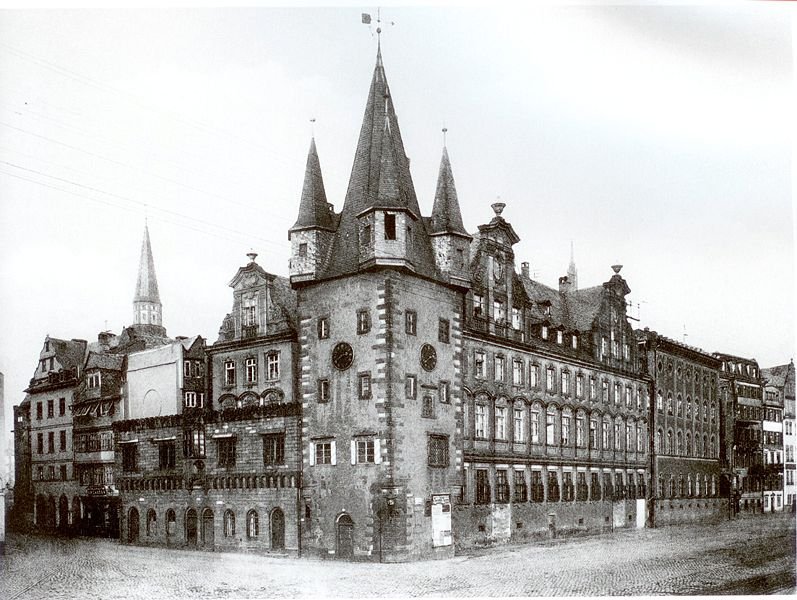
Saalhof circa 1900: Residence of the conservatory from 1878 to 1888.
Dr. Hoch’s Konservatorium, founded in Frankfurt am Main on 22 September 1878, is a prestigious music academy established through the generosity of Joseph Hoch, who left one million German gold marks in his will.
Founding and Establishment
Dr. Hoch’s Konservatorium was founded in Frankfurt am Main on September 22, 1878. It was made possible through the generosity of Joseph Hoch, who left the institution a bequest of one million German gold marks. This financial endowment created a school for music and arts accessible to students of all ages. The institution’s first director, Joachim Raff, was pivotal in its establishment, meticulously crafting the curriculum and recruiting its faculty. His leadership set a foundation for the institution’s reputation and growth.
Impact of Clara Schumann and the Early Years
Clara Schumann, a celebrated pianist, began teaching piano at the conservatory upon its opening in 1878, continuing until 1892. Her involvement elevated the institution’s international standing, as students from countries like England and the United States flocked to study there. By the 1890s, about 25% of the student body was composed of international students, demonstrating the conservatory’s far-reaching influence.
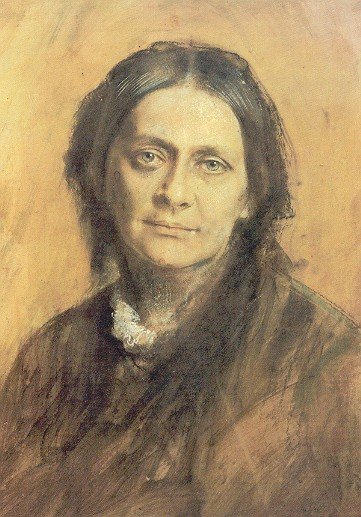
Clara Schumann
Innovative Milestones in Music Education
Under the leadership of Bernhard Sekles in the 1920s, the conservatory achieved groundbreaking milestones. Sekles introduced the world’s first academic jazz studies program in 1928, led by Mátyás Seiber. He also established the Elementary Music Department in 1931, focusing on children’s music pedagogy. These innovations underscored the conservatory’s forward-thinking approach to music education.
Programs and Qualifications
Today, Dr. Hoch’s Konservatorium offers a range of programs tailored to diverse learners. These include the Music Education for Youth and Adults (ANE) program, the Elementary Music Department, and the Pre-College-Frankfurt (PCF) program, which prepares students for higher education in music. Departments for Ballet, Early Music, and New Music further diversify the institution’s offerings. Students can pursue a Bachelor of Music in Performance and Pedagogy across various disciplines, including instruments, voice, composition, and music theory.
A Timeline of Hoch Conservatory
- 1878–1888: The conservatory operated from the Frankfurt Saalhof before moving to a new building on Eschenheimer Landstrasse in 1888.
- 1890–1920: The early 20th century saw significant contributions from faculty like Engelbert Humperdinck and Hans Pfitzner, both renowned composers and educators.
- 1928: The launch of academic jazz studies marked a historic achievement under Sekles’ leadership.
- 1933: The rise of the Nazi regime brought significant upheaval. Jewish and foreign teachers, including Sekles, were dismissed. The conservatory was downgraded to a preparatory school for the new state “Hochschule für Musik und Theater.”
- 1943–1944: World War II bombings destroyed the conservatory’s buildings, forcing relocation.
- 1951–1989: Post-war rebuilding efforts culminated in the conservatory’s relocation to the Philanthropin, a former Jewish school.
- 2005: The conservatory moved to the Education Center Ostend, marking a new chapter in its history.
Directorial Leadership
The success of Dr. Hoch’s Konservatorium is attributed to its dedicated directors, each leaving a distinct mark on its evolution:
- Joachim Raff (1878–1882): The institution’s first director, responsible for laying its academic foundation.
- Bernhard Sekles (1924–1933): A visionary who introduced jazz studies and emphasized children’s music education.
- Frank Stähle (1979–2007): Oversaw the conservatory’s restructuring into an institute for training professional musicians.
Distinguished Faculty and Alumni
The conservatory has been home to celebrated educators like Clara Schumann, Engelbert Humperdinck, and Mátyás Seiber. Their contributions not only advanced the institution but also influenced global music education.
The conservatory boasts an impressive list of alumni, including Paul Hindemith, Hans Pfitzner, and Percy Grainger. These musicians have left a lasting legacy in the world of classical and contemporary music.
Challenges and Resilience
The conservatory faced significant challenges during the Nazi era, including the forced removal of faculty and a reorganization that reduced its status. Despite the destruction of its buildings during World War II, the institution persevered, continuing to offer music education in temporary locations until its permanent relocation in the late 20th century.
Did you know…?
The German Federal Bank honored the conservatory on the former 100 DM bill, featuring Clara Schumann on the front and the original conservatory building, symbolizing its historical and cultural significance.
Modern-Day Role and Achievements
In 2002, Dr. Hoch’s Konservatorium attained the status of a Music Academy, solidifying its position as a premier institution for music education. Its curriculum remains diverse, embracing traditional and modern music practices while fostering innovation.
Cultural and Historical Significance
Dr. Hoch’s Konservatorium has played a central role in Frankfurt’s cultural history. It has shaped generations of musicians, contributed to the city’s artistic identity, and maintained a reputation for excellence in music education.
Frequently Asked Questions about Hoch’s Konservatorium
Who was instrumental in the establishment of the conservatory?
Joachim Raff, the first director, played a critical role by designing the curriculum, hiring faculty, and ensuring the institution’s success.
What role did Clara Schumann play in the conservatory?
Clara Schumann, an internationally renowned pianist, taught piano at the conservatory from 1878 to 1892, elevating its reputation worldwide.
What groundbreaking initiative was introduced under Bernhard Sekles?
In the 1920s, Bernhard Sekles introduced the world’s first academic jazz studies program, directed by Mátyás Seiber, as well as the Elementary Music Department in 1931.
What programs and qualifications does the conservatory currently offer?
The conservatory provides programs for youth and adults, including Music Education (ANE), Elementary Music, and Pre-College preparation, offering Bachelor of Music degrees in performance, pedagogy, composition, and music theory.
What challenges did the conservatory face during World War II?
The conservatory’s building was bombed in 1943, leading to relocations and eventual rebuilding efforts, while its operations were disrupted during the Nazi era.
Who were some distinguished teachers and students associated with the conservatory?
Renowned teachers include Clara Schumann, Engelbert Humperdinck, and Mátyás Seiber. Notable students include Paul Hindemith, Hans Pfitzner, and Percy Grainger.





