How did the role and influence of the Vestal Virgins change over the centuries?
The Vestal Virgins were one of the most significant religious orders in ancient Rome, holding an important place in the religious, political, and civic life of the city for over a millennium. The order, dedicated to the goddess Vesta, embodied purity, piety, and protection for the Roman state.
Over the centuries, the role and influence of the Vestal Virgins evolved dramatically, shaped by shifts in Roman society, politics, and religion. Their status and functions changed from their legendary foundation in the early Roman monarchy, through the rise of the Republic and the empire, to their eventual decline with the spread of Christianity and the fall of the Roman Empire.
Foundation and Early Roman Period: Guardians of the Sacred Fire
The Legendary Foundation
The origins of the Vestal Virgins can be traced back to the early days of Rome, traditionally attributed to the reign of the city’s second king, Numa Pompilius, around the 7th century BCE.
Numa was known for his religious reforms and is credited with establishing many of Rome’s key religious institutions. The Vestals were originally created to serve the goddess Vesta, the deity of the hearth and the home.
As priestesses of Vesta, the Vestal Virgins were responsible for maintaining the sacred fire in the Temple of Vesta, located in the Roman Forum. The eternal flame symbolized the eternal life of Rome and its people. If the flame were to extinguish, it was believed that Rome itself would fall into chaos.
In these early years, the Vestal Virgins were a small, tightly controlled group with limited responsibilities beyond their religious duties. They were selected at a young age, between six and ten, from patrician families, and served for 30 years, during which they were required to remain chaste.
Their primary function was religious, ensuring that the sacred fire never went out and performing rituals associated with the worship of Vesta. Their role was seen as critical to the well-being and survival of the Roman state.
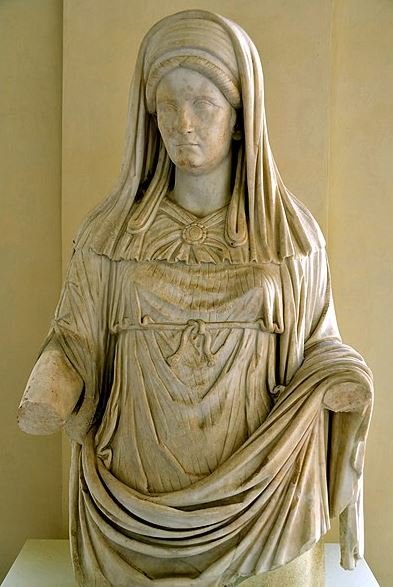
During the early Roman monarchy, the Vestals were primarily religious figures, entrusted with maintaining the eternal flame and performing rituals essential to the well-being of the city. Image: A statue of Virgo Vestalis Maxima.
Religious Purity and Protection
In addition to maintaining the sacred fire, the Vestals guarded important sacred objects, including the Palladium, a statue of Athena believed to protect Rome. Their virginity was seen as integral to their power, as their purity was thought to endow them with the strength to safeguard these objects and the state itself. Violating their vow of chastity was not only a personal failure but also a threat to the stability of Rome.
During the early Roman monarchy, the Vestal Virgins occupied a highly specialized and sacred role, but their influence was largely limited to their religious duties. However, as Rome transitioned from a monarchy to a republic, their role and importance in society grew significantly.
The Republican Period: Increased Prestige and Political Influence
Growth in Prestige
With the establishment of the Roman Republic in 509 BCE, the Vestal Virgins became more central to Rome’s religious and civic life. As Rome expanded its power, the Vestals’ role grew in importance, reflecting the increasing complexity of Roman society. Their sacred status as keepers of the eternal flame became a symbol of the city’s endurance and resilience. As Rome transformed into a republic, where public life and rituals became more intertwined with politics, the Vestal Virgins gained influence beyond their traditional religious duties.
During the Republic, the Vestal Virgins participated in various state ceremonies and rituals. Their presence was essential at significant public events, such as treaty signings and the consecration of temples. They also presided over important festivals, including the Vestalia, a festival dedicated to Vesta, which emphasized their connection to the prosperity of Rome. The Vestals were believed to protect the city from disaster, and their public role symbolized Rome’s connection to its divine foundations.
Legal and Social Privileges
One of the most notable changes in the Vestals’ role during the Republican period was the legal and social privileges they were granted. Unlike other Roman women, who were typically under the legal control of their male relatives, the Vestal Virgins enjoyed significant independence. They were free from the authority of male guardians (patria potestas) and had the legal right to own property, make wills, and conduct their own financial affairs.
They could also ride in carriages, attend public events, and sit in reserved seats at gladiatorial games. These privileges set them apart from other women in Roman society, highlighting their unique status.
In legal matters, the word of a Vestal Virgin was considered highly authoritative, and they could even intervene in judicial proceedings. For example, if a condemned person happened to cross paths with a Vestal Virgin, the individual could be pardoned—a reflection of the Vestals’ perceived moral authority.
Political Intervention and Influence
Although the Vestal Virgins were not overtly political figures, their sacred status allowed them to exert indirect influence in Roman politics. Because they were seen as embodiments of the state’s divine protection, their opinions and actions carried weight in political contexts.
On a few occasions, Vestals were involved in saving prominent Roman figures. For instance, Julius Caesar, as a young man, was once spared by the intervention of the Vestals during the proscriptions of Sulla.
The Vestals’ ability to intervene in political situations stemmed from their inviolability and the reverence in which they were held. Their sacred status protected them from direct involvement in political struggles, but it also made them powerful symbols that could be invoked by politicians seeking legitimacy or divine favor.
The Imperial Period: The Height of Vestal Power

Under the empire, the Vestal Virgins reached the height of their power and influence. They became protectors of the emperor and symbols of Rome’s ancient traditions, enjoying unprecedented social and legal privileges. However, their influence began to decline in the later years of the empire as the political and religious landscape of Rome changed. Image: An artwork depicting the inauguration of a vestal virgin.
Influence at Its Peak
The transition from the Roman Republic to the Roman Empire under Augustus in the late 1st century BCE marked the beginning of the Vestal Virgins’ period of greatest influence. Augustus, who sought to restore Rome’s traditional religious practices, closely associated himself with the Vestals and promoted their importance as part of his broader efforts to legitimize his rule. The Vestals’ connection to the ancient traditions of Rome made them ideal symbols for Augustus’s program of moral and religious renewal.
During the early imperial period, the Vestal Virgins became even more integrated into the fabric of Roman state religion. Emperors revered the Vestals, and their presence at imperial ceremonies became a standard practice. The Vestals were often depicted as protectors of the emperor, and their prayers and rituals were believed to safeguard the emperor’s well-being and the stability of the empire.
For example, during the reign of the emperor Nero, the Vestals interceded when the Praetorian Guard plotted against him, offering prayers and performing rituals to protect the emperor. Such actions reinforced the belief that the Vestals played a crucial role in maintaining the empire’s divine favor.
Social and Political Privileges
The Vestal Virgins reached the height of their social and political privileges during the imperial period. They continued to enjoy legal independence and could own property, but their influence expanded beyond Rome’s religious sphere.
Roman Emperors frequently honored the Vestals, granting them gifts, dedicating statues to them, and inviting them to important political and social events. The Virgo Maxima, the head of the Vestal Virgins, often played a prominent role in these ceremonies, further cementing the connection between the Vestals and the imperial family.
The Vestals’ homes, the Atrium Vestae, were located in the Roman Forum, near the imperial palaces, symbolizing their closeness to the heart of Roman power. Their residences were lavish, and they enjoyed the protection and support of the emperor. The Vestals were so influential that even their recommendation could sway decisions on matters of state.
Decline of Influence in Later Imperial Period
Despite their peak during the early imperial period, the Vestal Virgins’ influence began to decline as the Roman Empire progressed. Several factors contributed to this decline, including the increasing secularization of Roman society and the rise of new religious movements, particularly Christianity.
By the 3rd century CE, Rome was facing significant political and military challenges, including invasions, internal strife, and economic instability. As the empire struggled, the old religious institutions, including the Vestals, began to lose their central place in Roman life. Emperors became less reliant on traditional religious rites, and the Vestals’ connection to the divine protection of the state became less relevant.
The rise of Christianity, in particular, posed a direct challenge to the Vestals and other pagan institutions. As Christianity grew in influence, particularly after the Edict of Milan in 313 CE, which granted religious tolerance throughout the empire, the prominence of pagan rituals and priesthoods began to wane. The Vestals, once central to Roman civic and religious life, found themselves increasingly marginalized.
Late Antiquity and the Fall of the Vestal Virgins
Christianity’s Ascendancy
The rise of Christianity in the Roman Empire during the 4th century CE was a turning point for the Vestal Virgins and other pagan institutions. With the conversion of Emperor Constantine to Christianity and the subsequent Christianization of the empire, the traditional religious practices of Rome began to fall out of favor.
Constantine, while initially tolerant of paganism, shifted the empire’s focus toward Christianity. His successors, particularly Theodosius I, took more aggressive steps to suppress pagan practices. In 391 CE, Theodosius issued edicts banning pagan rituals, closing temples, and disbanding religious orders, including the Vestal Virgins. Theodosius’s actions were part of a broader effort to establish Christianity as the official state religion of the Roman Empire.
The Closure of the Vestal Order
The final blow to the Vestal Virgins came in 391 CE when Theodosius ordered the extinguishing of the sacred fire of Vesta and the formal dissolution of the Vestal order. The fire, which had burned continuously for over a thousand years, was extinguished, symbolizing the end of Rome’s pagan religious traditions. The Atrium Vestae, the home of the Vestals, was abandoned, and the remaining Vestals were forced to retire or convert to Christianity.
The closure of the Vestal order marked the end of one of Rome’s most ancient and enduring religious institutions. It also signaled the final triumph of Christianity over the traditional religions of the Roman world.
Accusations and Trials
Throughout their long history, the Vestal Virgins were held to strict standards, particularly regarding their vow of chastity. A Vestal who violated her vow was seen as endangering the very foundation of Rome’s religious stability. If accused of breaking her vow, a Vestal would face a trial, and if found guilty, the punishment was severe.
The most common punishment for a Vestal who broke her vow was to be buried alive. This punishment was considered appropriate because it avoided directly shedding the blood of a sacred person. The man involved in the violation would typically be whipped to death.
However, accusations against the Vestals were not always based on genuine transgressions. At times, political motivations played a role in the accusations, as the Vestals held considerable power and influence in Roman society.
For example, the Roman author Pliny the Younger claimed that Emperor Domitian falsely accused Cornelia, a Virgo Maxima, of breaking her vow, resulting in her being buried alive. Such accusations highlight the political intrigue that could surround the Vestal Virgins, as their sacred status made them both powerful and vulnerable.
Despite these occasional accusations, the majority of Vestal Virgins are believed to have faithfully upheld their vows throughout their tenure. Their influence remained strong until the rise of Christianity and the eventual dissolution of the order.
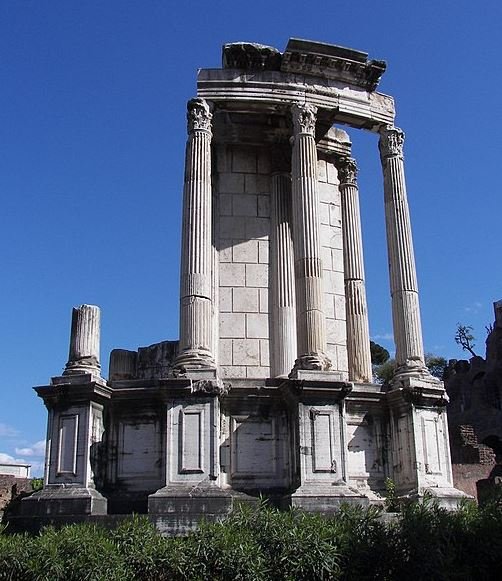
In the centuries that followed the triumph of Christianity over traditional Roman religion, the Vestal Virgins became a symbol of Rome’s ancient past, representing both the power and fragility of religious institutions in the face of changing political and social dynamics. Image: Reconstructed ruins of the Temple of Vesta, which housed Vesta’s holy fire.
Questions and Answers about the Vestal Virgins

Who is believed to have founded the order of the Vestal Virgins, and when?
The Vestal Virgins were believed to have been established by the legendary founder of Rome, King Numa Pompilius, in the 7th century BCE.
What were the primary duties of the Vestal Virgins during the early Roman period?
Their primary duty was to maintain the sacred fire of Vesta, symbolizing the eternal life of Rome, and to guard sacred objects such as wills and treaties.
How did the role of the Vestal Virgins evolve during the Roman Republic?
During the Republic, their importance grew, and they became involved in state rituals. They also gained legal privileges, such as independence from male guardians, the ability to own property, and vote.
What legal privileges did Vestal Virgins enjoy that were unique for women in Roman society?
Vestal Virgins had legal independence from male guardians, could own property, conduct their own affairs, and vote—rights that were extraordinary for women in a male-dominated Roman society.
Did Vestal Virgins ever play a role in Roman politics?
Yes, Vestal Virgins occasionally played indirect roles in politics, such as when they saved the young Julius Caesar, and their sacred status was invoked in political contexts.
How did the Vestal Virgins’ influence change during the Imperial period?
During the early Imperial period, their influence peaked as emperors respected and protected them. They were sometimes seen as spiritual protectors of the emperor. However, their significance began to decline with the rise of Christianity.
What led to the decline of the Vestal Virgins’ influence in late antiquity?
The rise of Christianity, especially after the Edict of Milan in 313 CE, led to a decline in pagan institutions, including the Vestals. Their order was disbanded by Emperor Theodosius I in 391 CE when he established Christianity as the state religion.
What was the punishment for a Vestal Virgin found guilty of breaking her vow of chastity?
The typical punishment for a Vestal Virgin found guilty of breaking her vow of chastity was to be buried alive. The man involved in the violation would be whipped to death.
Were accusations against Vestal Virgins always legitimate?
Not always. Accusations sometimes had political motivations, as Vestals held significant power and influence. Charges of impropriety could be used for political maneuvering.

When was the order of the Vestal Virgins officially disbanded?
The order of the Vestal Virgins was disbanded in 391 CE by Emperor Theodosius I as part of his efforts to establish Christianity as the official religion of the Roman Empire.





