Charles J. Guiteau, the assassin of President James A. Garfield
Convinced he was owed a government appointment, Charles J Guiteau decided to kill Garfield. On July 2, 1881, Guiteau shot the president at the Baltimore and Potomac Railroad Station in Washington, D.C.
In retrospect, Guiteau’s life and death serve as a tragic case study in the intersection of mental illness, political extremism, and personal failure. His actions not only ended the life of a sitting U.S. president but also highlighted the deep divisions within the political landscape of the time and the dangers posed by individuals driven by delusions of grandeur.
Early Life and Family Background
Charles Julius Guiteau was born on September 8, 1841, in Freeport, Illinois, to Luther Wilson Guiteau and Jane August (née Howe). His family was of French Huguenot descent, and he was the fourth of six children. Guiteau’s upbringing was marked by an early tragedy when his mother died in 1848, leaving the seven-year-old Charles to be raised by his father. His father, a strict and devout man, strongly influenced Guiteau’s religious beliefs and would later have a profound, though complicated, relationship with his son. After the death of his mother, the Guiteau family relocated to Ulao, Wisconsin, near modern-day Grafton, where they lived for a brief period before returning to Freeport in 1855.
Guiteau’s relationship with his father was complex. Luther Guiteau was deeply involved in religious movements, particularly the Oneida Community, a utopian religious group based in New York. He promoted its leader, John Humphrey Noyes, who became a significant influence on Charles. This relationship would later manifest in Charles’ misguided religious fervor and delusional belief that he had a divine purpose.
Education and Early Failures
In 1860, at the age of 19, Guiteau inherited $1,000 (about $34,000 in today’s value) from his grandfather and planned to use the money to attend the University of Michigan. However, he failed the entrance exams due to inadequate academic preparation. To address this, Guiteau enrolled at Ann Arbor High School, where he studied French and algebra in an attempt to prepare himself for university-level coursework. Around this time, his father, who was an enthusiastic supporter of the Oneida Community, began writing to him frequently, extolling the virtues of the community’s leader and encouraging Charles to join.
Eventually, Guiteau abandoned his educational pursuits and, in June 1860, he joined the Oneida Community in Oneida, New York. The Oneida Community, known for its radical social practices, including complex marriage (a form of free love), communal living, and a strong emphasis on shared labor, was led by John Humphrey Noyes. Guiteau, a devout and impressionable young man, quickly became an admirer of Noyes, once writing that he had “perfect, entire and absolute confidence in [Noyes] in all things.”
Despite his enthusiasm for the group and its religious philosophy, Guiteau’s experience at Oneida was far from successful. The community members largely rejected him, mocking him with the nickname “Charles Gitout.” Guiteau’s attempts to ingratiate himself failed, and he left the community twice, both times under disappointing circumstances. On his first departure, he moved to Hoboken, New Jersey, where he attempted to start a religious newspaper called The Daily Theocrat, based on the Oneida religion. The venture failed, and Guiteau returned to Oneida. His second and final departure from the community came after he filed lawsuits against John Humphrey Noyes, demanding payment for what he claimed was work done on behalf of the Oneida Community. His father, who continued to support Noyes, was embarrassed by his son’s actions and began to believe that Charles was mentally unstable.
Legal Career and Personal Life
After leaving Oneida for good, Guiteau attempted to establish a career as a lawyer. He worked as a clerk at a Chicago law firm and passed a cursory examination to gain admission to the bar. However, Guiteau’s legal career was equally unsuccessful. He argued only one case in court, and his client was convicted. Most of his legal work involved bill collecting, and even in this area, he was dishonest, often keeping disproportionate amounts of the money he collected and rarely paying his clients.
In 1869, Guiteau married librarian Annie Bunn. Their marriage, however, was deeply troubled. Guiteau was physically abusive and dishonest, and his wife eventually accused him of financial misconduct. By 1874, the couple separated, and Guiteau agreed to a divorce after having an affair with a prostitute, who testified to his infidelity in court. This personal and professional failure marked the beginning of Guiteau’s descent into deeper instability.
Delusions of Divine Purpose
Following his divorce, Guiteau returned to religion and published a plagiarized book titled The Truth, which borrowed heavily from the writings of John Humphrey Noyes. By this time, Guiteau’s father had become convinced that his son was possessed by Satan, while Guiteau himself believed he was divinely inspired to preach a new gospel, similar to the Apostle Paul. He wandered from town to town, giving sporadic lectures on religion, but his efforts were largely unsuccessful.
In 1877, Guiteau delivered a lecture at the Congregational Church in Washington, D.C., but it failed to gain any attention or followers. His growing sense of divine purpose combined with his repeated failures further isolated him from reality. By 1880, Guiteau had become increasingly erratic, moving from place to place and leaving behind debts, accusations of theft, and disappointed associates.
One significant event in his life occurred in June 1880, when Guiteau survived the sinking of the SS Narragansett after it collided with another ship in heavy fog near the mouth of the Connecticut River. Although Guiteau was unharmed, many passengers on the Narragansett lost their lives. Guiteau interpreted his survival as a sign that God had spared him for a higher purpose, further feeding his delusions of grandeur.
Political Aspirations and Obsession with Garfield
By the time of the 1880 presidential election, Guiteau had shifted his focus to politics. The Republican Party was deeply divided between the Stalwart faction, which supported former President Ulysses S. Grant’s bid for a third term, and the Half-Breed faction, which supported James G. Blaine. Guiteau, seeing an opportunity to insert himself into national politics, initially wrote a speech in support of Grant, titled “Grant Against Hancock,” in which he advocated for Grant’s nomination.
However, when James A. Garfield emerged as the Republican nominee, Guiteau quickly revised the speech to support Garfield, changing little more than the candidate’s name. Guiteau delivered the speech once or twice and printed copies to distribute to Republican leaders. Despite his minimal involvement, Guiteau convinced himself that his speech had been instrumental in securing Garfield’s victory over the Democratic candidate, Winfield Scott Hancock.
Following Garfield’s election in November 1880, Guiteau believed that he was owed a significant political reward. He began lobbying Garfield and his administration for a consulship, first requesting a post in Vienna and later deciding that he would prefer to be appointed consul to Paris. Over the next several months, Guiteau made repeated personal requests to President Garfield, Vice President Chester A. Arthur, and Secretary of State James G. Blaine. His requests were consistently denied, which only fueled his sense of frustration and rejection.
By the spring of 1881, Guiteau was living in Washington, D.C., penniless and destitute. He moved from boarding house to boarding house without paying rent, often resorting to eating free meals in hotel lobbies and reading discarded newspapers. Despite his desperate circumstances, Guiteau continued to lobby for a diplomatic post, becoming increasingly delusional in his belief that Garfield’s rejection of his requests was a betrayal of the Republican Party.
Guiteau’s frustrations reached a breaking point on May 14, 1881, when he encountered Secretary Blaine once again and pressed him about the Paris consulship. An exasperated Blaine famously responded, “Never speak to me again on the Paris consulship as long as you live!” This rebuke marked a turning point for Guiteau, who now believed that Garfield’s administration was a threat to the future of the Republican Party. He convinced himself that the only way to resolve the situation was to remove Garfield from office, allowing Vice President Arthur, a Stalwart, to become president.
The Assassination of President Garfield
Guiteau’s delusions about his political importance escalated quickly after Blaine’s final rejection. He concluded that God had commanded him to kill Garfield and that doing so would not be an act of murder but a “removal” for the greater good of the country. On May 16, 1881, Guiteau borrowed $15 from a relative to purchase a revolver. He chose a .442 Webley caliber British Bulldog revolver with ivory grips, believing that it would look better as a museum exhibit after the assassination.
In the weeks leading up to the assassination, Guiteau spent time practicing with the revolver, though he had little experience with firearms. His initial attempts at target practice were clumsy, with the gun’s recoil nearly knocking him over when he fired it. Nevertheless, he remained determined to carry out his plan.
On July 2, 1881, Guiteau made his move. He had initially considered assassinating Garfield earlier but decided to postpone the attempt because the president’s wife, Lucretia, was ill, and he did not want to upset her. On that day, Garfield was at the Baltimore and Potomac Railroad Station in Washington, D.C., preparing to depart for a vacation with his wife in Long Branch, New Jersey. As Garfield entered the station, Guiteau approached from behind and fired two shots. The first bullet grazed the president’s arm, while the second struck him in the back, lodging near his spine but missing his spinal cord.
As bystanders and police rushed to subdue Guiteau, he reportedly proclaimed, “I am a Stalwart of the Stalwarts! Arthur is president now!” Garfield was taken to the White House, where doctors initially believed he would recover. However, the president’s condition worsened over the following weeks due to infections caused by unsterilized medical instruments. Garfield lingered for more than two months before succumbing to his wounds on September 19, 1881.
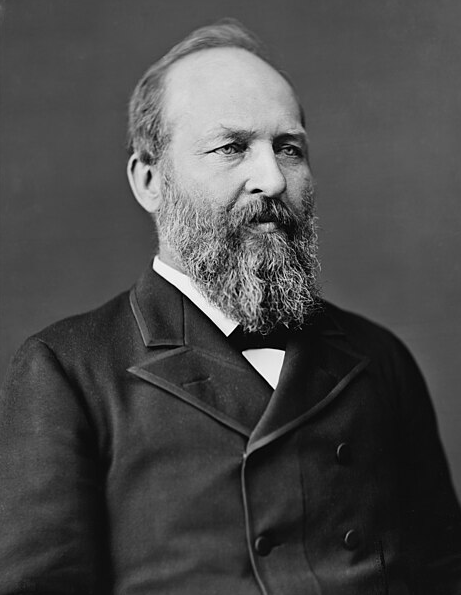
President James A. Garfield died two months later due to infections from his wounds. In January 1882, Guiteau was convicted of murder and executed by hanging five months later. Image: An 1881 picture of Garfield.
Trial and Execution
Following the assassination, Guiteau was arrested and charged with attempted murder. After Garfield’s death, the charges were upgraded to murder, and Guiteau was formally indicted on October 14, 1881. His trial began in Washington, D.C., on November 17, 1881, with Judge Walter Smith Cox presiding. Despite his repeated efforts to represent himself, the court appointed his brother-in-law, George Scoville, as his defense attorney. Scoville had little experience in criminal defense and struggled to manage the case, particularly given Guiteau’s erratic behavior.
Guiteau’s defense argued that he was legally insane at the time of the shooting and, therefore, could not be held responsible for his actions. Expert witnesses, including psychiatrist Edward Charles Spitzka, testified that Guiteau suffered from mental illness, with Spitzka describing him as a “morbid egotist” who exhibited signs of congenital brain malformation. Spitzka also noted that Guiteau had “the insane manner” typical of individuals confined to asylums.
Throughout the trial, Guiteau’s behavior was bizarre and often disruptive. He frequently insulted the judge, witnesses, and even his own legal team. At one point, he argued that Garfield had not died from the gunshot wounds but from medical malpractice, insisting that he was not truly responsible for the president’s death. His antics, including composing long, rambling speeches and reciting poetry in court, made headlines and turned the trial into a media spectacle.
Despite the insanity defense, Guiteau was convicted of murder on January 25, 1882. The jury deliberated for less than an hour before reaching a guilty verdict. Guiteau was sentenced to death by hanging, and his appeals were rejected.
During the months leading up to his execution, Guiteau continued to insist that he had been acting on divine orders. He wrote numerous letters defending his actions and maintained that President Arthur should pardon him, as he had made Arthur the president. Guiteau also composed a poem titled “I Am Going to the Lordy,” which he planned to recite on the scaffold.
On June 30, 1882, Guiteau was executed by hanging in Washington, D.C. He remained defiant and delusional to the end, smiling and waving to the crowd as he was led to the gallows. Moments before his death, he recited his poem, as he had planned. After the execution, Guiteau’s brain was examined, and some doctors speculated that he suffered from neurosyphilis, a disease that can cause mental instability. Others later suggested that he may have had schizophrenia or narcissistic personality disorder.
Did you know…?
The life of Charles Guiteau, with a focus on his psychological issues and his assassination of President Garfield, has been portrayed in various media.
- In James Agate Jr.’s radio play Portrait of an Assassin, Guiteau was played by John Lithgow in the 1980 CBS Radio Mystery Theater episode.
- Guiteau is also featured in Stephen Sondheim and John Weidman’s musical Assassins, where he mentors Sara Jane Moore and sings parts of his poem “I am Going to the Lordy.”
- In the American Dad! episode “Garfield and Friends,” Guiteau is revived to track down a resurrected Garfield.
- The song “Mr. Garfield,” recorded by Johnny Cash, recounts the assassination.
- In the alternate history story “I Shall Have a Flight to Glory” by Michael P. Kube-McDowell, Guiteau teams up with Garfield against a tyrannical President Tilden.
Legacy and Reflection
Charles J. Guiteau’s assassination of President James A. Garfield remains one of the most infamous acts of political violence in American history. His life, marked by delusions of grandeur, failed ambitions, and increasing detachment from reality, offers a stark reminder of the dangers of untreated mental illness and the potential for personal grievances to escalate into violence.
Guiteau’s belief that he was acting under divine inspiration reflects the extreme lengths to which he went to rationalize his actions. His trial and execution were among the first high-profile cases in the United States to explore the legal concept of insanity, though the jury ultimately rejected his defense.
For President Garfield, who had only served four months in office before being shot, his death was a tragic end to a promising presidency. His lingering illness and eventual death raised questions about the state of medical practices at the time, as many historians believe that improper medical treatment contributed to his demise. In the years following the assassination, Garfield’s legacy has been overshadowed by the dramatic events of his death and the strange, troubled man who took his life.
Questions and Answers about Charles J. Guiteau
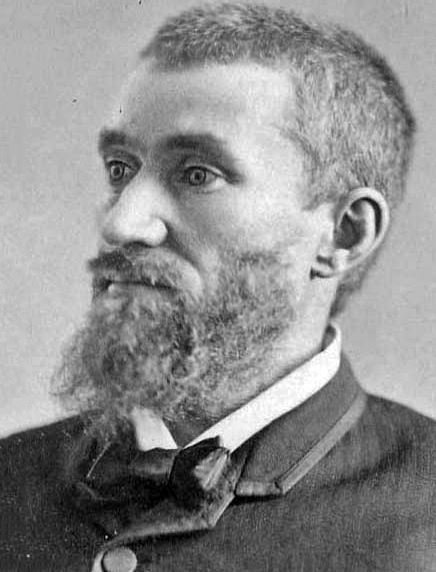
Charles Julius Guiteau believed he was instrumental in Garfield’s election and expected to be rewarded with a diplomatic position. After being repeatedly denied roles, including consulships in Vienna and Paris, Guiteau grew resentful. Image: An 1881 photograph of Guiteau.
When and where was Charles J. Guiteau born?
Charles J. Guiteau was born on September 8, 1841, in Freeport, Illinois.
What significant event affected Guiteau’s childhood?
Guiteau’s mother died when he was seven years old, in 1848.
How did Guiteau’s early education go?
Guiteau inherited $1,000 in 1860 and intended to attend the University of Michigan, but he failed the entrance exams. He then enrolled at Ann Arbor High School but dropped out to join the Oneida Community.
What was the Oneida Community, and how did it influence Guiteau?
The Oneida Community was a utopian religious sect in New York. Guiteau admired its leader, John Humphrey Noyes, but was largely rejected by the community members and left after several failed attempts to gain prominence there.
What was Guiteau’s legal career like?
Guiteau passed a brief exam to gain admission to the bar, but his legal career was unsuccessful. He argued only one case and mainly worked in bill collection, often accused of dishonesty.
Why did Guiteau’s marriage to Annie Bunn end?
Guiteau’s marriage ended in 1874 after he committed adultery with a prostitute, who testified to his infidelity.
What major incident in 1880 made Guiteau believe he had a special purpose?
Guiteau survived the sinking of the SS Narragansett in June 1880, leading him to believe he had been spared for a higher purpose.
How did Guiteau get involved in the 1880 presidential election?
Guiteau wrote a speech supporting Ulysses S. Grant for the Republican nomination but revised it to support James A. Garfield after Garfield secured the nomination. He believed his speech was crucial to Garfield’s victory.
What led Guiteau to assassinate President Garfield?
After Garfield repeatedly rejected Guiteau’s requests for a diplomatic appointment, Guiteau became delusional and convinced that killing Garfield would save the Republican Party and elevate Vice President Chester A. Arthur to the presidency.
How did Guiteau carry out the assassination of Garfield?
On July 2, 1881, Guiteau shot Garfield twice at the Baltimore and Potomac Railroad Station in Washington, D.C. Garfield survived for more than two months but died from infections related to his wounds on September 19, 1881.
What was Guiteau’s defense during his trial?
Guiteau’s defense argued that he was legally insane. Expert witnesses testified that he had mental illnesses, but he was ultimately convicted of murder.
Guiteau frequently insulted the judge, witnesses, and his own lawyers. He also claimed that Garfield died from medical malpractice, not the gunshot wounds.
Guiteau believed President Chester A. Arthur would pardon him, but this did not happen.
When and how did Charles Guiteau die?
Guiteau was hanged on June 30, 1882, in Washington, D.C.
What did doctors speculate about Guiteau’s mental state after his death?
Some doctors believed Guiteau suffered from neurosyphilis, while others diagnosed him with schizophrenia or narcissistic personality disorder.