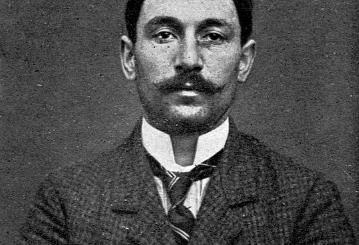
How the Mona Lisa was stolen and stashed away for two years

In its more than four hundred years of existence, da Vinci’s masterpiece the Mona Lisa has been manhandled several times and stolen once. The painting’s notoriety went through the roof in 1911, when it was stolen by Vicenzo Peruggia, an Italian artist and former employee of the Louvre. which only bolstered its notoriety. Italian artist and Louvre employee Vicenzo Peruggia nabbed the artwork on August 21, 1911.
The theft of the Mona Lisa in 1911 is one of the most audacious and captivating art crimes in history. The painting, created by Leonardo da Vinci in the early 16th century, was already a renowned masterpiece at the time, but its theft brought it unprecedented fame and mystique.
The heist, orchestrated by Vincenzo Peruggia, an Italian handyman who believed he was returning the painting to its rightful homeland, left the art world and the public stunned. The Mona Lisa disappeared for over two years, during which it was hidden in a modest apartment, only to be rediscovered after a dramatic sequence of events.
Here’s a detailed account of how the Mona Lisa was stolen and stashed away for two years.
The Louvre in 1911
By 1911, the Louvre in Paris was one of the most prestigious museums in the world, housing an extensive collection of art from various periods and cultures. The Mona Lisa (or La Joconde, as it is known in French) had been part of the museum’s collection since it was acquired by King Francis I of France in the 16th century. Although admired by many, the Mona Lisa was not yet the global icon it would become after the theft.
Security at the Louvre in 1911 was relatively lax compared to today’s standards. The museum had thousands of daily visitors, and the idea that a priceless artwork could be stolen from such a prestigious institution seemed inconceivable. However, this underestimation of security needs played a crucial role in enabling the crime.
Vincenzo Peruggia: The Man Behind the Theft
Vincenzo Peruggia was an Italian immigrant working as a handyman and glazier in Paris. He had previously worked at the Louvre, installing protective glass on some of the paintings, including the Mona Lisa. It was during this time that Peruggia hatched his plan to steal the painting.
Peruggia was motivated by a sense of nationalism and believed that the Mona Lisa rightfully belonged to Italy. He felt that Napoleon had looted the painting (which was not true, as it had been in France long before Napoleon’s time), and his intention was to return it to Italy as an act of patriotic restitution. Peruggia’s background as a handyman with access to the Louvre and his knowledge of its security made him the ideal person to carry out such a heist.
The Theft: August 21, 1911
Peruggia’s plan was deceptively simple. On the morning of Monday, August 21, 1911, he entered the Louvre wearing a white smock, which was the uniform of the museum’s workers. The museum was closed to the public on Mondays, but workers and cleaners were still present. Peruggia’s attire allowed him to blend in with the staff, raising no suspicion.
He made his way to the Salon Carré, the gallery where the Mona Lisa was displayed. At that time, the painting hung on the wall between two other works, protected only by a sheet of glass. Peruggia knew that the glass could easily be removed because he had installed it himself. After taking the painting off the wall, he carried it to a secluded service stairwell, where he removed the wooden frame and glass cover, leaving them behind. He then concealed the painting under his smock and walked out of the museum through a side door.
Initially, the theft went unnoticed. The Louvre was a vast institution, and no one immediately realized the Mona Lisa was missing. It wasn’t until the following Tuesday that a painter, who had come to sketch the Mona Lisa, discovered the empty space where the painting had hung. His initial assumption was that the painting had been removed for cleaning or photography. However, when the museum staff realized that the painting had not been checked out for any legitimate purpose, panic ensued.

The empty space left on the wall of the Louvre after the Mona Lisa had been stolen
The Investigation and the Public Reaction
The news of the Mona Lisa’s theft quickly spread, and it became a global sensation. The French public was outraged that such an iconic national treasure could disappear from the country’s most esteemed museum. The police launched an extensive investigation, interviewing museum staff, known art criminals, and any potential witnesses. The museum was closed for a week as the authorities combed through every inch of the Louvre, searching for clues.
Despite the widespread media coverage and the police’s efforts, no solid leads emerged in the initial investigation. The lack of fingerprints, eyewitnesses, or physical evidence left the authorities stumped. The French police even turned to international law enforcement agencies for assistance, suspecting that the painting might have been smuggled out of France.
Several suspects were investigated, including famed French poet Guillaume Apollinaire and artist Pablo Picasso. Apollinaire was briefly arrested due to his association with a former secretary who had stolen small artifacts from the Louvre, but he was released after it became clear that he had no involvement in the Mona Lisa heist. Picasso, too, was questioned, but no evidence linked him to the theft. The investigation seemed to reach a dead end.
Stashing the Mona Lisa: Hidden in Plain Sight
While the authorities searched far and wide for the missing painting, it was, in fact, hiding in plain sight. Peruggia had stashed the Mona Lisa in his modest apartment at 5 Rue de l’Hôpital Saint-Louis in Paris, not far from the Louvre. He kept the painting hidden in a trunk, where it remained for over two years.
Peruggia’s apartment was sparsely furnished and unassuming, allowing him to keep the painting without arousing suspicion. During this time, Peruggia lived a relatively normal life, working odd jobs and maintaining a low profile. He believed that, eventually, he would find a way to return the painting to Italy, but for the time being, he was content to keep it hidden.
What’s remarkable about this phase of the crime is how simple Peruggia’s solution was. He didn’t flee Paris or attempt to sell the painting on the black market. Instead, he relied on the assumption that the authorities wouldn’t suspect an ordinary handyman living in a nondescript apartment. This approach proved effective, as no one came close to discovering the Mona Lisa during the two years it was hidden in his home.
Attempting to Return the Mona Lisa
In 1913, two years after the theft, Peruggia decided it was time to act on his original plan to return the Mona Lisa to Italy. He believed that by doing so, he would be hailed as a patriot and a hero for bringing back what he thought was a stolen Italian treasure.
Peruggia contacted Alfredo Geri, an Italian art dealer in Florence, under the alias “Leonard.” He claimed that he possessed the Mona Lisa and offered to return it for a reward. Geri, suspicious of the offer but intrigued, arranged to meet with Peruggia. Before doing so, Geri contacted Giovanni Poggi, the director of the Uffizi Gallery in Florence, to verify the authenticity of the claim.
In December 1913, Peruggia traveled to Florence with the painting. He met with Geri and Poggi at Geri’s gallery and showed them the Mona Lisa, which he had carefully wrapped in a red silk cloth. Poggi and Geri immediately recognized the painting as the genuine article. They told Peruggia they needed time to authenticate it further, and while he waited, they contacted the police.
Peruggia was arrested at his hotel the next day, and the Mona Lisa was recovered. Despite his crime, Peruggia maintained that his intentions were patriotic, not criminal. He claimed that he wanted to return the painting to Italy, where he believed it rightfully belonged. His defense, while sympathetic to some, did not absolve him of the crime.
The Trial and Peruggia’s Fate

Vicenzo Peruggia was an Italian artist and former employee of the Louvre who rose to infamy for stealing the Mona Lisa, a famous masterpiece by Leonardo da Vinci.
Peruggia’s trial took place in Italy in 1914. During the proceedings, he reiterated his claim that his motive was purely patriotic and that he had no intention of profiting from the theft. He argued that he was trying to correct what he saw as an injustice — the presence of an Italian masterpiece in a French museum.
The Italian public and press were divided on Peruggia’s actions. Some saw him as a misguided hero who had attempted to reclaim a stolen treasure, while others viewed him as a criminal who had jeopardized international relations by stealing a priceless artwork.
In the end, the court showed leniency. Peruggia was sentenced to one year and 15 days in prison, a relatively light punishment considering the magnitude of the crime. His sentence was later reduced, and he served only a short time behind bars. After his release, Peruggia returned to relative obscurity, working as a painter and decorator in Italy. He fought for Italy during World War I and lived out the remainder of his life quietly.

Authorities nabbed Vincenzo Peruggia after he tried to sell the Mona Lisa to an Italian art dealer at a 25% discount.
The Return of the Mona Lisa

The stolen Mona Lisa painting was returned to the Louvre Museum in January 1914
After its recovery, the Mona Lisa was exhibited in Italy for a brief time, first at the Uffizi Gallery in Florence and then at the Borghese Gallery in Rome. The Italian public flocked to see the painting, which had become a symbol of national pride due to its connection to Leonardo da Vinci and the dramatic events of its theft and recovery.
In January 1914, the Mona Lisa was returned to the Louvre in Paris, where it was greeted with fanfare and renewed appreciation. The painting, which had been famous before the theft, now became a global icon, its mystique amplified by the sensational story of its disappearance. The theft, far from diminishing the painting’s status, had elevated it to new heights of fame.
Conclusion: The Legacy of the Mona Lisa Theft
The theft of the Mona Lisa is remembered not only as a bold and audacious crime but also as a pivotal moment in the history of art. The painting’s recovery and the media frenzy surrounding it helped solidify the Mona Lisa’s place as one of the most recognizable and celebrated artworks in the world. Today, millions of visitors flock to the Louvre each year to see the painting, which now enjoys the highest level of security.
Vincenzo Peruggia’s theft of the Mona Lisa is a fascinating chapter in the history of art crime, one that reflects the power of art to inspire passion, nationalism, and even criminal acts. Peruggia’s actions, while illegal, were rooted in a complex mix of patriotism, naiveté, and a desire to right what he perceived as a historical wrong. Though his plan ultimately failed, his theft ensured that the Mona Lisa would become one of the most famous paintings in history.
The painting’s disappearance for over two years only added to its allure, and its eventual recovery remains one of the most celebrated moments in art history. Today, the Mona Lisa continues to captivate audiences, not just for its artistic brilliance but also for the incredible story of its theft and return.