Italian Photographer Paolo Monti
Paolo Monti (11 August 1908 – 29 November 1982) was a distinguished Italian photographer recognized for his extensive documentation of architecture, historical urban centers, and artistic heritage. His career spanned several decades, evolving from experimental abstractionism to professional photography focused on the cultural and historical fabric of Italy. His works remain significant in the study of architectural and urban transformation, influencing generations of photographers and art historians.
Monti’s dedication to preserving Italy’s artistic and architectural heritage through photography earned him national recognition and a lasting legacy in visual arts.
Early Life and Education
Paolo Monti was born in Novara, a city in northern Italy, in 1908. His father, a banker with a keen interest in photography, introduced him to the art at an early age. His childhood was marked by frequent relocations due to his father’s professional transfers across various towns. Despite this transient lifestyle, Monti maintained a deep appreciation for the arts and developed a curiosity about different landscapes and architectural forms.
His formal education took him to Milan, where he attended Bocconi University. He graduated in 1930 with a degree in Economics, a field seemingly unrelated to his later photographic career. However, his background in economics provided him with a structured approach to his work, allowing him to balance artistic creativity with the practical aspects of photography as a profession.
While his academic pursuits did not directly involve photography, his exposure to Milan’s dynamic cultural and architectural environment likely played a role in shaping his artistic sensibilities.
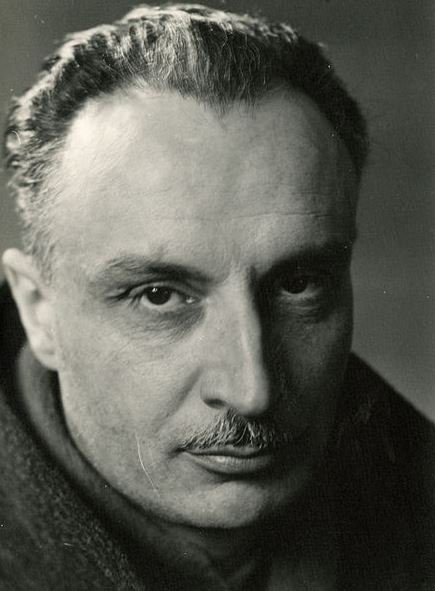
A portrait of Paolo Monti.
Early Career and Transition to Photography
After completing his studies, Monti worked in the Piedmont region in administrative roles. However, his passion for photography never waned. In 1936, following the death of his father, he married Maria Binotti, marking a period of personal stability even as the world moved toward the upheavals of World War II.
During the war years (1939–1945), Monti lived in Mestre, near Venice, where he worked for the Regional Agricultural Cooperative. Despite the challenges of wartime Italy, he continued to refine his photographic skills, initially treating it as a hobby.
His early works were heavily influenced by abstractionism, an avant-garde movement that sought to depict reality through shapes, contrasts, and non-representational forms.
He experimented with techniques such as blurring, diffraction, and high-contrast lighting to explore new visual perspectives. These artistic explorations set the foundation for his later work, which would blend artistic creativity with documentary precision.
The Founding of La Gondola and Avant-Garde Influence
In 1947, Monti played a pivotal role in establishing La Gondola, a photography club that quickly gained prominence in international avant-garde circles. The club aimed to challenge conventional photographic norms, promoting experimental techniques and new approaches to visual storytelling.
Monti’s involvement in La Gondola marked a turning point in his career, as it placed him in the company of like-minded artists who shared his passion for pushing photographic boundaries.
The post-war period was a time of artistic renewal in Italy, and Monti embraced this era of change. He drew inspiration from contemporary European movements, blending influences from modernist photography with traditional Italian artistic sensibilities. Through La Gondola, he exhibited his work, gaining recognition for his innovative use of light, shadow, and composition.
Becoming a Professional Photographer
By 1953, Monti transitioned fully into professional photography. He specialized in architectural and design photography, collaborating with magazines, publishers, and cultural institutions. His ability to capture intricate details of buildings and urban landscapes made him one of the most sought-after photographers in his field.
Monti’s work went beyond simple documentation; his photographs conveyed the essence of architectural spaces, emphasizing form, texture, and historical context. His images were used to illustrate over 200 books and publications, covering a wide range of subjects, including Italian cities, architects, historical sites, and cultural landmarks.
One of the defining aspects of Monti’s style was his meticulous attention to composition. He often employed dramatic angles, strong contrasts, and careful framing to highlight the artistic and structural qualities of buildings. His work became synonymous with high-quality architectural photography, setting standards for future generations in the field.
The Documentation of Italian Historical Centers
In the mid-1960s, Monti embarked on one of his most ambitious projects—cataloging Italy’s historic urban centers. Beginning in 1966, he systematically documented the architectural and cultural heritage of Italian cities, capturing their transformation over time.
His photographs of historic districts, town squares, and monumental structures became essential references for architects, urban planners, and historians.
Monti’s work played a crucial role in raising awareness about the preservation of Italy’s historical sites. At a time when rapid modernization threatened many old neighborhoods, his images served as both artistic expressions and documentary evidence of Italy’s rich architectural history.
His efforts aligned with growing conservation movements, and his photographs were frequently used to support restoration and heritage preservation initiatives.
Exploring Italian Art and Literature Through Photography
In addition to architecture, Monti expanded his photographic subjects to include Italian literature and art history. Around 1965, he began working on illustrations for literary publications, providing visual representations of Italy’s cultural narratives. His photographic interpretations of Apennine valleys, including the Emilia-Romagna region, captured the rustic beauty and traditional lifestyles of these areas.
As his career progressed, he became increasingly involved in projects that documented Italian artistic heritage. His work often focused on renowned artists, sculptors, and architectural masterpieces, creating a visual archive that enriched scholarly research in the arts. His ability to merge documentary precision with artistic interpretation made his photographs invaluable resources in the academic and cultural fields.
Later Years and Recognition
By the late 1970s, Monti turned his attention toward documenting the heritage of his birthplace and surrounding regions. He extensively photographed Novara, Lake Orta, and Val d’Ossola, capturing the landscapes and architectural elements that had influenced his early years. These works were deeply personal, reflecting his nostalgia and appreciation for the regions that shaped his artistic vision.
In 1981, Monti received the prestigious Umberto Zanotti Bianco Prize, a national award recognizing his contributions to Italian cultural heritage. This honor cemented his status as one of Italy’s most influential photographers, acknowledging his role in preserving and promoting the country’s architectural and artistic legacy.
Death and Legacy
Paolo Monti passed away in Milan on 29 November 1982, leaving behind an extraordinary photographic archive. His work continues to be a vital resource for researchers, architects, and art historians, providing invaluable insights into Italy’s urban and architectural evolution.
In 2004, the Italian Ministry of Cultural Heritage and Activities declared his archive of significant historical interest. Four years later, in 2008, the collection was acquired by the BEIC (Biblioteca Europea di Informazione e Cultura) Foundation. The archive was carefully cataloged and made accessible to the public, ensuring that Monti’s contributions to photography and cultural preservation remain widely recognized.
Publications and Exhibitions
Monti’s extensive photographic output was featured in several key publications, including:
- Paolo Monti (1983) – A comprehensive collection of his work, published by Gruppo Editoriale Fabbri.
- Paolo Monti: Fotografo di Brunelleschi: le Architetture Fiorentine (1986) – A study of Florence’s architectural heritage.
- Fotografie 1950–1980 (1993) – A retrospective collection edited by Giovanni Chiaramonte.
His work was also exhibited internationally, with notable showcases including the First Biennial International Photographic Exhibition in Venice (1957).
Collections and Influence
Monti’s legacy is preserved in various institutions, with his work featured in the permanent collection of Milan’s Sforza Castle Pinacoteca. His contributions to architectural and artistic photography continue to influence contemporary photographers, particularly those engaged in heritage documentation and urban studies.
His work not only captured the beauty of Italy’s built environment but also contributed to its preservation, ensuring that future generations can appreciate the country’s rich architectural heritage.
Frequently Asked Questions
What characterized Paolo Monti’s early photographic style?
In his early period, Monti experimented with abstractionism, blurring, and diffraction effects, exploring avant-garde photography.

When did Monti become a professional photographer?
Monti became a professional photographer in 1953, primarily working with magazines and book editors in architecture and design.
What was his role in documenting Italian cities?
From 1966 onward, he catalogued historic centers of Italian cities, creating a valuable visual record of urban and architectural heritage.
How did Paolo Monti contribute to Italian literature and art history?
Starting in 1965, he photographed illustrations for Italian literary history and extensively documented Italian art, architecture, and landscapes.
What recognition did he receive for his work?
In 1981, he was awarded the national Umberto Zanotti Bianco Prize for his photographic documentation of Novara, Lake Orta, and Val d’Ossola.
Where can Paolo Monti’s work be found today?
His photographs are held in permanent collections, including the Sforza Castle Museums in Milan, and featured in numerous books and exhibitions.





