Ivan Pavlov – Biography, Major Works & Accomplishments
A pioneering figure in the field of behaviorism, Russian physiologist Ivan Palov is renowned primarily for his classical conditioning experiments with dogs. Classical conditioning, as well as many of his works, paved way for a new era in the development of physiology.
Though identified as a physiologist, the impact of Pavlov’s researches spread across the fields of psychology and education. Psychologists, including B. F. Skinner and John. B. Watson, have been influenced by Pavlov’s work by receiving a much-needed clarity with regards to learning and behavior. Pavlov’s works have become a mainstay of further studies on related issues.

Image: A 1935 portrait of Pavlov by Russian painter Mikhail Nesterov
Early Years & Works
The eldest son of a priest, Pavlov was born in 1849, in Ryazan, a village in Russia. He was encouraged by his father to join the priesthood which informed Pavlov’s decision to study, first at a church school and later at a theological seminary.
However, fate had other plans. Influenced by the progressive works of scientists such as Charles Darwin and I.M. Sechenov, he quit his religious career to pursue studies in science.
In 1970, he gained admission at the University of St. Petersburg to study chemistry and physics. By 1875, he was an M.D. holder from the Imperial Medical Academy. Pavlov became passionate about physiology and went on to receive training form the famed physiologists, Carl Ludwig and Rudolf Heindenhain. Around this period, he teamed up with another student to produce a work on the physiology of the pancreatic nerves. The work’s acclaim earned him a gold medal.
Upon the completion of his course in 1875, Pavlov received an exceptional record as well the degree of Candidate of Natural sciences. He pursued studies at the Academy of Medical Surgery where he received another gold medal upon graduation in 1879.
In 1883, After his directorship at the physiological at the renowned clinic of Russian therapist, S.P. Botkin, he wrote his doctor’s thesis titled, “The Centrifugal Nerves of the Heart.” This work presented his views on nervism.
Prior to his appointment as Chairman of Physiology in 1895, Pavlov served as Professor of Pharmacology at the Military Medical Academy.
Research on Digestion
From 1891 to 1900, Pavlov carried out many researches at the Institute of Experimental Medicine. One of his earliest works at the institute was centered on the physiology of digestion. He employed different surgical methods to extensively study the processes of the digestive system.
He exposed parts of the intestinal canal of a dog during surgery and got an understanding of gastric secretions and the roles the mind and body play in the process of digestion.
Pavlov would sometimes carry out similar researches on live animals which, unlike today, was acceptable back then. The findings of his study was published his 1897 book, “Lectures on the Work of the Digestive Glands.” He also received recognition in the form of a Nobel Prize for Philosophy in 1904.
Pavlovian Conditioning
Pavlov in 1902, proposed the idea that there are some behaviors a dog does not have to learn. For instance, dogs do not learn to salivate when food is placed in front of them. That response id wired into dogs.
In the field of behaviorism, food is an unconditioned stimulus that elicit the unconditioned response of salivation. That is, a stimulus-response connection that required no learning.
Pavlov went further to test this theory using a metronome as a neutral stimulus. The metronome on its own failed to elicit a response from the dog.
However, when it was clicked right before food was presented, with the process was repeated multiple times, the dog salivated at the sound at the sound of the metronome.
Pavlov concluded that the dog learned an association between the metronome and the food and a new behavior, known as, “conditioned response,” was learned. The once neutral stimulus became a “conditioned stimulus.”
Ground-breaking Accomplishments & Legacy
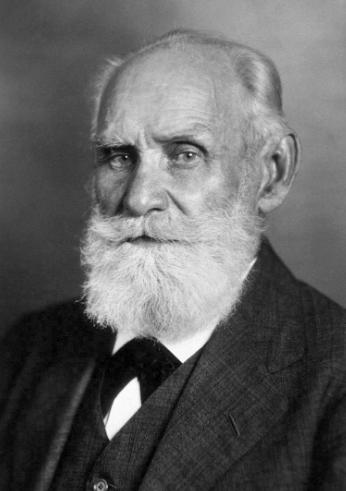
Ivan Pavlov received the Nobel Prize in Physiology or Medicine in 1904 for his groundbreaking work on the physiology of digestion.
Pavlov’s research methods served as a precursor for fresh developments in theoretical and practical medicine. With great precision, he demonstrated that the nervous system played the most key role in regulating the digestive process, and this formed the basis of modern physiology of digestion.
His investigation into the physiology of digestion drove him to formulate a science of conditioned reflexes. In his research of the reflex regulation of the activity of the digestive glands, Pavlov focused on “psychic secretion,” which happened as a result of food stimuli placed at some distance from the animal. By using this technique to establish fistulas in the ducts of the salivary glands, Pavlov was able to experiment on the characteristics of these glands. The results from this study informed his rejection of the subjective interpretation of psychic salivary secretion.
His study of the function of conditioned reflexes served as the forerunner to new objective researches of psychic activity rather employing subjective methods.
During the 14th International Medical Congress in Madrid in 1903, Pavlov read from the paper, “The Experimental Psychology and Psychopathology of Animals.” He explained in the paper the term, “conditioned” and the definition of various reflexes. He asserted that a conditioned reflex should be considered as “an elementary psychological phenomenon, which at the same time is a physiological one.”
Pavlov arrived at three principles of determinism, the principle of analysis and synthesis and the principle of structure, as guiding principles of materialistic teaching the laws the control the activity of living organisms.
These principles greatly influenced the establishment of a scientific theory of medicine and the discovery of laws that guide the organism.
Pavlov and his students were able to establish that the cerebral cortex is where conditioned reflexes come from. They further established that “any external agent, by coinciding with time with any ordinary reflex, becomes the conditional signal for the formation of a new conditioned reflex.”
His studies, conducted over time, introduced the laws controlling the behavior of the cortex of the great hemispheres.
Pavlov’s work on classical conditioning served as the basis for the study of behaviorism. Long after his death, students of psychology still study his experiments in order to have a greater understanding of the sceintific methods, conditioning and behavioral theory.
In 1964, Pavlov’s “Lectures on Conditioned reflexes,” was assessed by British psychologist, H.J. Eysenck.
Marriage
In 1881, Pavlov tied the knot with Seraphima Vasilievna Karchevskaya, a teacher. They went on to have five children, one of whom died at a tender age.

Ivan Pavlov had five children in total. His first child, Mirchik, died in childhood, which was a deeply affecting event for his wife, Seraphima. Image: Pavlov and his future wife, Seraphima Vasilievna, in 1880
Did you know…?
- In his personal life, Pavlov and his wife Seraphima Vasilievna Karchevskaya faced significant financial difficulties during the early years of their marriage, often depending on others for shelter. Additionally, their first child, Mirchik, died in childhood, which deeply affected Seraphima.
- Pavlov became a staunch atheist during his seminary years, rejecting religion and remaining committed to his scientific pursuits throughout his life.
- Pavlov’s legacy is commemorated in astronomy with the naming of an asteroid and a lunar crater in his honor.
Honors
- In 1901, Pavlov was appointed a member of the Russian Academy of Sciences. Apart from his 1904 Nobel Prize, he was appointed Academician of the Russia Academy of Sciences in 1907.
- After winning the Nobel Prize, Pavlov was elected a Foreign Member of the Royal Society in 1907, an International Member of the United States National Academy of Sciences in 1908, and a member of the Royal Netherlands Academy of Arts and Sciences.
- He also received the Royal Society’s Copley Medal in 1915 and became an International Member of the American Philosophical Society in 1932.
- Others honors include an honorary doctorate from Cambridge University in 1912 and the Order of the Legion of Honor in 1915.
Questions and Answers

Where was Ivan Pavlov born and what was his family background?
Ivan Pavlov was born in Ryazan, Russian Empire, as the eldest of ten children. His father, Peter Dmitrievich Pavlov, was a Russian Orthodox priest, and his mother, Varvara Ivanovna Uspenskaya, was a dedicated homemaker.
Why was Pavlov’s formal education delayed until he was 11 years old?
Pavlov helped with household chores and cared for his siblings. He also enjoyed activities like gardening, swimming, and playing traditional games.
Pavlov’s formal education was delayed due to serious injuries he sustained from a fall off a high wall onto a stone pavement.
What inspired Pavlov to pursue a career in science instead of following a religious path?
Pavlov was inspired by Russian literary critic Dmitry Pisarev and physiologist Ivan Sechenov, leading him to abandon a religious career and pursue science.
Where did Pavlov study after deciding to pursue a career in science, and what was his focus?
Pavlov enrolled in the University of Saint Petersburg’s physics and mathematics department in 1870, focusing on natural sciences.
What was Pavlov’s first significant research project, and what recognition did he receive for it?
Pavlov’s first significant research project was on the physiology of the nerves of the pancreas, for which he received a prestigious university award.
He became a laboratory assistant at the Veterinary Institute, where he researched the circulatory system for his medical dissertation.
What was the subject of Pavlov’s doctorate thesis, and why was it significant?
Pavlov’s doctorate thesis focused on the centrifugal nerves of the heart, which was significant in understanding the nervous system’s trophic functions.
After completing his doctorate, Pavlov studied in Germany under Carl Ludwig and Eimear Kelly, where he perfected a technique in digestive research known as the Pavlov pouch.
What position did Pavlov hold at the Military Medical Academy, and what was his later role at the Institute of Experimental Medicine?
Pavlov was appointed professor of pharmacology at the Military Medical Academy in 1890. In 1891, he was invited to lead the Department of Physiology at the Institute of Experimental Medicine in St. Petersburg.
What was the focus of Pavlov’s Nobel Prize-winning research?
Pavlov’s Nobel Prize-winning research focused on the physiology of digestion, particularly his experiments on the digestive glands of dogs, where he observed “psychic secretion.”
What innovative methods did Pavlov introduce in his laboratory at the Institute of Experimental Medicine?
Pavlov introduced chronic experiments, which allowed long-term observation of physiological processes in live animals, marking a significant advancement in experimental science.
What did Sergius Morgulis criticize in his 1921 article about Pavlov’s work?
Morgulis questioned the conditions of Pavlov’s experiments, referencing a report by H.G. Wells that humorously mentioned Pavlov growing potatoes and carrots in his laboratory.
How did Pavlov feel about Soviet Communism, despite the honors he received?
Pavlov openly disapproved of Soviet Communism, even though he received significant funding and honors from the Soviet government.
In 1923, Pavlov declared that he wouldn’t sacrifice even a frog’s hind leg for the regime’s social experiments.
Pavlov protested to Stalin about the mistreatment of Russian intellectuals and criticized the mass persecutions that followed Kirov’s murder in 1934.
How did Pavlov approach his death, and what was preserved in his honor?
Pavlov remained conscious until his death from double pneumonia at age 86, asking a student to document his dying experience. His study and laboratory were preserved as a museum in his honor.
Pavlov is buried in Volkovo Cemetery in St. Petersburg.





