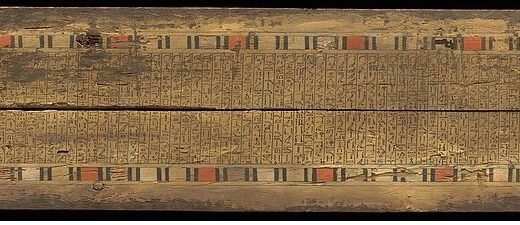
Queen of the Dead in Ancient Egypt
Isis, one of the most significant deities in ancient Egyptian religion, is a goddess whose story is intricately woven into the fabric of Egyptian mythology. Her origin and role in the pantheon reflect both the religious beliefs and the socio-political realities of ancient Egypt.

In Ancient Egypt, the “Queen of the Dead” is often associated with the goddess Isis.
Origin of Isis
The name Isis is the Greek form of the Egyptian name “Aset” or “Iset,” which means “throne.” She was initially a local goddess, perhaps of the Nile Delta, but her importance grew over time, eventually making her one of the most powerful and universally revered deities in the Egyptian pantheon.
Isis first appears in Egyptian texts during the Fifth Dynasty (c. 2494–2345 BC), although her worship likely began earlier. Her origins are somewhat obscure, but she was eventually assimilated into the Heliopolitan cosmology, which placed her as the daughter of Geb (the earth god) and Nut (the sky goddess). This made her the sister of Osiris, Seth, and Nephthys. Isis was also Osiris’s wife, and together they were the parents of Horus, the falcon-headed god of kingship and the sky.
Role in Egyptian Mythology
Isis’s most famous role in Egyptian mythology is that of the devoted wife and mother in the Osiris myth, which is one of the most important and enduring stories in ancient Egyptian religion.
The Osiris Myth
The Osiris myth is central to the Egyptian understanding of death, resurrection, and the afterlife. According to the myth, Osiris was a wise and just king of Egypt who was beloved by his people. However, his brother Seth, driven by jealousy and the desire for power, murdered Osiris by trapping him in a coffin and throwing it into the Nile. Isis, stricken with grief, searched tirelessly for her husband’s body. With the help of her sister Nephthys and the god Anubis, she eventually found Osiris’s body.
However, Seth discovered the body and, in a fit of rage, cut it into fourteen pieces, scattering them across Egypt. Undeterred, Isis continued her search, finding all but one piece (the phallus, which was eaten by a fish). Using her magical powers, she reassembled Osiris’s body and breathed life back into him, allowing him to posthumously conceive their son, Horus. Afterward, Osiris descended to the underworld, where he became the ruler of the dead, presiding over the judgment of souls.
Isis then raised Horus in secret, protecting him from Seth’s attempts to kill him. When Horus grew up, he avenged his father by defeating Seth and reclaiming the throne of Egypt. This story symbolized the triumph of order over chaos, life over death, and the legitimacy of the pharaonic line, which was seen as the earthly embodiment of Horus.

Isis was a major deity in Egyptian mythology, revered as the goddess of magic, motherhood, and fertility. She played a crucial role in the story of Osiris, her husband, who was the god of the afterlife and resurrection. Image: The family of Osiris. Osiris on a lapis lazuli pillar in the middle,
Isis as the Mother Goddess

In Egyptian mythology, Isis was not only a virgin goddess but also the mother of Horus, whom she conceived through magical means. Their close relationship became the ideal model of mother-son devotion. Image: Isis nursing Horus, a sculpture from the 7th century BC
Isis’s role as the mother of Horus also elevated her status as a goddess of motherhood, fertility, and protection. She was often depicted as a nurturing figure, breastfeeding the infant Horus, a motif that would later influence Christian iconography of the Madonna and Child. Isis was believed to offer protection to mothers and children, and her magic was invoked in healing spells and amulets. As a goddess of fertility, she was also associated with the Nile’s annual flooding, which brought life-giving silt to the farmlands of Egypt.
Magic and Wisdom
Isis was also revered as a goddess of magic (heka) and wisdom. Her ability to restore Osiris to life demonstrated her mastery over life and death, and she was considered the most powerful magician among the gods. In one story, Isis is said to have outwitted the sun god Ra by creating a serpent to bite him, forcing him to reveal his secret name, which gave her dominion over him. This act symbolized the power of knowledge and the idea that Isis’s wisdom was supreme, even among the gods.
Isis’s magic was not just seen as a divine power but also as a protective force available to mortals. She was invoked in spells for protection, healing, and guidance, and her priests were known as skilled magicians. The ancient Egyptians believed that by invoking Isis, they could tap into her vast power to overcome illness, adversity, and even death.

After Osiris was murdered by his brother Set, Isis used her magical abilities to resurrect him, thus becoming a key figure in the Egyptian understanding of life, death, and rebirth. As a result, Isis was seen as a protector of the dead and a powerful guide in the afterlife, earning her the title of the “Queen of the Dead.” Image: Isis wall painting in the tomb of Seti I (KV17)
Cult and Worship of Isis
The worship of Isis began in ancient Egypt but eventually spread throughout the Greco-Roman world, making her one of the most widely venerated deities of antiquity.
In Egypt, her worship was centered in several important temples, including those at Philae, Abydos, and Behbeit el-Hagar. At Philae, on an island in the Nile, Isis was worshiped in a grand temple complex that remained a major pilgrimage site until well into the Christian era. Philae was one of the last pagan temples to be closed by the Christian Roman Empire, and the site continued to hold symbolic importance long after.
Isis’s appeal extended beyond Egypt, particularly during the Hellenistic and Roman periods. In the Hellenistic era, as Greek and Egyptian cultures merged under the Ptolemies, Isis was identified with several Greek goddesses, including Demeter and Aphrodite. This syncretism made her a popular deity in the Greek-speaking world. In Rome, Isis became one of the most popular goddesses, with temples dedicated to her across the empire, from Pompeii to London.
Her worship in the Greco-Roman world took on new aspects, emphasizing her role as a universal goddess of magic, fertility, and seafaring. The mystery cult of Isis, which promised initiates knowledge of the afterlife and personal salvation, became particularly popular. This cult involved secret rites and ceremonies that were believed to grant the faithful a deeper understanding of the divine and a closer relationship with the goddess.

Image: Isis, left, and Nephthys as kites near the bier of a mummy, thirteenth century BC
Legacy and Influence
The influence of Isis extended far beyond the borders of Egypt and well into the late antiquity and early Christian periods. Her image as a devoted wife and mother, a protector, and a powerful magician resonated with people across different cultures. In the Greco-Roman world, her worship persisted even as Christianity began to spread. Early Christian writers often criticized the cult of Isis, yet some aspects of her iconography and attributes were absorbed into the veneration of the Virgin Mary.
Isis’s legacy also endured in the form of religious syncretism, where her attributes were merged with those of other deities. This process helped preserve her cult and ensure her continued worship in various forms throughout the Roman Empire. Her influence can also be seen in the art, literature, and religious practices of the time, where she remained a powerful symbol of divine motherhood, magic, and protection.
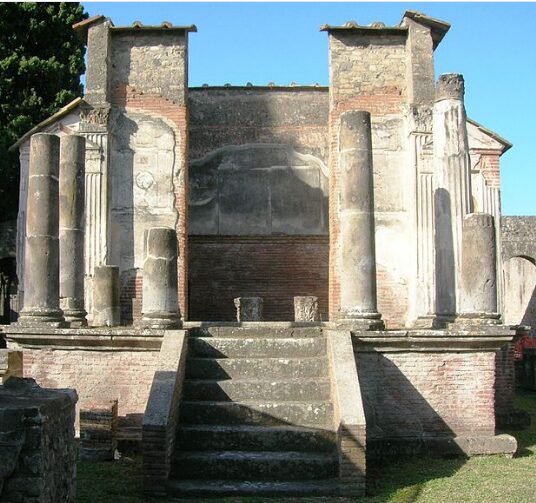
The Temple of Isis in Pompeii
Conclusion
Isis’s story and role in ancient Egypt reflect the deep complexities of Egyptian religion and the ways in which it adapted and evolved over time. As the devoted wife of Osiris and the nurturing mother of Horus, she embodied the ideals of loyalty, protection, and maternal care. Her magical abilities and wisdom made her a figure of immense power and reverence, not just in Egypt but across the ancient world.
Her cult, which began in the Nile Valley, spread across the Mediterranean, influencing religious practices far beyond her native land. The widespread worship of Isis in the Greco-Roman world is a testament to her universal appeal and the enduring power of her mythology. Even as the ancient world gave way to new religions and beliefs, the legacy of Isis continued to shape spiritual thought and practice, leaving an indelible mark on the history of religion.
Questions and Answers on Isis, the Egyptian Goddess

Isis’s origins are deeply rooted in the Osiris myth, a foundational story of the Old Kingdom. According to this myth, Isis and Osiris were the first rulers of the world, teaching humanity the ways of civilization. Image: Ptolemy XII before Isis and Osiris, at the Hathor Temple, Dendera
Who was Isis in ancient Egyptian religion?
Isis was one of the most revered deities in ancient Egyptian religion, known as the goddess of love, healing, fertility, magic, and the moon.
What were the original names of Isis?
Isis was originally known as Aset or Eset in ancient Egypt.
How did the influence of Isis change over time?
Isis started as an obscure figure without temples dedicated to her, but as Egyptian civilization evolved, she became one of the most significant goddesses in the Egyptian pantheon.

Visually, Isis was depicted as an idealized beauty, often shown wearing a long red dress, intricate jewelry, and an elaborate headdress. Image: Queen Nefertari being led by Isis
What is the significance of the name “Isis”?
The name “Isis” is the Greek version of her original name, which translates to “Queen of the Throne.”
What myth is central to the origins of Isis?
The origins of Isis are deeply rooted in the Osiris myth, where she and Osiris were the first rulers of the world, teaching humanity civilization.

With the help of her sister Nephthys and the god Anubis, she eventually found Osiris’s body. Image: Isis, left, and Nephthys stand by as Anubis embalms the deceased, thirteenth century BC. A winged Isis appears at top.
How did Isis restore Osiris to life?
After Osiris was murdered and his body scattered by his brother Set, Isis searched for and reassembled his body, using her magic to restore him to life.
What role did Isis play in Egyptian mythology?
Isis was seen as a powerful protector who could restore souls and welcome the dead into the afterlife. She also governed the moon, sun, stars, and the seasons.
What is the tyet amulet and its significance?
The tyet amulet, also known as the “Isis knot,” represented the blood of Isis and was a potent symbol of protection in the afterlife.

One of her most important symbols is the tyet amulet, or “Isis knot,” representing her blood and serving as a potent symbol of protection in the afterlife. Image: A tyet amulet, fifteenth or fourteenth century BC.
Where were temples dedicated to Isis located?
Temples dedicated to Isis were located in places like Behbeit el-Hagar in the Nile Delta and the island of Philae. Her worship also spread to the Greco-Roman world, with a temple discovered in the ruins of Pompeii.
How is Isis depicted in Egyptian mythology?
Isis is depicted as an idealized beauty, often shown wearing a long red dress, intricate jewelry, and an elaborate headdress. In some depictions, she is seen breastfeeding her son Horus.
What was the relationship between Isis and her son Horus?
Isis was not only the virgin goddess but also the mother of Horus, whom she conceived through magical means. Their close relationship became the ideal model of mother-son devotion.
What is the speculation about the influence of Isis on other religious figures?
Some historians speculate that the image and attributes of Isis may have influenced the portrayal of the Virgin Mary in Christianity, as both are seen as virgin mothers devoted to their sons

Image: Roman statue of Isis, first or second century AD. She holds a sistrum and a pitcher of water, although these attributes were added in a seventeenth-century renovation.
FACT CHECK: At World History Edu, we strive for utmost accuracy and objectivity. But if you come across something that doesn’t look right, don’t hesitate to leave a comment below.