Jean-Andoche Junot: Roles during the French Revolutionary Wars and the Napoleonic Wars
Jean-Andoche Junot (1771–1813) was a prominent French military officer whose career spanned the tumultuous periods of the French Revolutionary Wars and the Napoleonic Wars.
Known for his bravery and close association with Napoleon Bonaparte, Junot rose through the military ranks, participating in key campaigns that shaped European history.
His life was a blend of military prowess, personal ambition, and eventual tragedy, reflecting the volatile era in which he lived.

Junot spearheaded the 1807 French invasion of Portugal, earning Napoleon’s favor and the Duke of Abrantes title. However, his initial triumphs gave way to significant military setbacks later in his career. Image: Portrait of Junot Italian painter Andrea Appiani.
Who were the greatest generals of the Revolutionary and Napoleonic Wars?
Early Life and Entry into Military Service
Born on September 25, 1771, in Bussy-le-Grand, Burgundy, Jean-Andoche Junot was the fifth child of Michel Junot and Marie Antoinette Bienaymé. His family was part of the bourgeois class, providing him with a comfortable upbringing.
Initially, Junot pursued legal studies in Dijon, aiming for a career in law. However, the outbreak of the French Revolution in 1789 profoundly impacted his aspirations.
Inspired by revolutionary ideals, Junot abandoned his legal studies to join the cause. In 1790, he attended the Fête de la Fédération in Paris, a massive celebration of national unity that solidified his commitment to the Revolution.
By July 1791, he became a captain in the National Guard of his hometown, demonstrating leadership qualities and a dedication to the new Republic.
Military Beginnings and Early Battles
Junot’s military career began in earnest when he enlisted as a grenadier in the 2nd Battalion of Volunteers of Côte-d’Or. The War of the First Coalition provided him with his initial combat experiences.
In 1792, he was wounded at the skirmish of La Glisuelle, showcasing his willingness to face danger on the front lines. The following year, while serving with the Army of the Rhine, he sustained another injury, further cementing his reputation for bravery.
His comrades affectionately nicknamed him “the Tempest” due to his fierce demeanor and relentless spirit in battle. These early experiences honed his combat skills and prepared him for the significant roles he would play in the years to come.
Association with Napoleon Bonaparte
A pivotal moment in Junot’s life occurred during the Siege of Toulon in 1793. At the time, Napoleon Bonaparte was a young artillery captain tasked with recapturing the city from Royalist forces and their British allies. Junot met Bonaparte when he volunteered to assist with clerical work, impressing him with his handwriting and attention to detail.
A close associate of Napoleon Bonaparte, Jean-Andoche Junot (1771–1813) served in several key military campaigns.
Their relationship quickly evolved beyond administrative duties. Junot demonstrated courage under fire, notably when a cannonball narrowly missed him, to which he responded with wit that caught Bonaparte’s attention. Impressed by his composure and bravery, Bonaparte appointed Junot as his aide-de-camp. This position not only brought Junot into close contact with one of France’s rising military stars but also provided him with opportunities to advance his own career.
During a period when Bonaparte fell out of favor and was placed under house arrest due to his association with the Robespierre brothers, Junot remained loyal. Along with Auguste de Marmont, he offered assistance, reflecting his steadfast commitment to his mentor. When Bonaparte was released, the three shared modest accommodations in Paris, facing unemployment but fostering a camaraderie that would endure.
Advancement During the Italian Campaigns
In 1795, Junot participated in the suppression of the Royalist uprising during the 13 Vendémiaire, aiding Bonaparte in securing the government of the Directory. His performance earned him further trust, and he joined Bonaparte in the Army of Italy.
During the Italian campaigns of 1796, Junot distinguished himself in several battles. In the Montenotte campaign and at the Battle of Millesimo, his actions contributed to French victories against Austrian forces. His valor at the Battle of Lonato was particularly noteworthy. Engaging in fierce hand-to-hand combat, Junot killed six enemy soldiers despite receiving severe saber wounds to his head. This display of courage led to his promotion to colonel and solidified his reputation as a formidable officer.
The Egyptian Expedition
In 1798, Junot joined Bonaparte’s ambitious expedition to Egypt, aiming to disrupt British trade routes and establish a French presence in the Middle East. Sailing aboard the flagship L’Orient, he took part in the capture of Malta, demonstrating strategic acumen in naval operations.
At the Battle of the Pyramids, Junot served as a chef de brigade, contributing to the decisive French victory over the Mamluk forces. His leadership skills were evident, and in January 1799, he was promoted to brigadier general.
During the Siege of Acre, Junot played a crucial role in the campaign’s vanguard. At the Battle of Nazareth, he led a contingent against a significantly larger Ottoman relief force. His tactics disrupted the enemy’s advance, captured enemy standards, and even involved him personally engaging in combat that resulted in the death of an emir’s son. These actions prevented Ottoman forces from relieving Acre, earning Junot recognition and furthering his military prestige.
However, his boldness sometimes led to personal conflicts. A duel with General François Lanusse, initiated after Lanusse insulted Bonaparte, left Junot severely wounded. Additionally, while returning to France, he was captured by the British Navy and met Admiral Horatio Nelson. This encounter, though brief, was a testament to the interconnectedness of European military leaders during this era.
Return to France and Personal Life
Junot returned to France in 1800, missing the Battle of Marengo by mere hours. That same year, he married Laure Martin de Permond, a close friend of the Bonaparte family. Their marriage was notably supported by Napoleon, who provided financial assistance and gifts, reflecting the depth of their personal connection.
Known for his extravagant lifestyle, Junot embraced the opulence that came with his rising status. His reputation for lavish spending and indulgence became part of his persona, adding a layer of complexity to his character.
Roles Under the Consulate and Early Empire
Under the Consulate, Junot continued to hold significant positions. Promoted to major general in 1801, he served as the Military Governor of Paris, responsible for maintaining order in the capital. His tenure included managing the delicate political environment during Napoleon’s consolidation of power.
Briefly appointed as ambassador to Portugal, Junot’s diplomatic role was short-lived as he hurried back to join Napoleon in military campaigns. He fought at the Battle of Austerlitz in 1805, contributing to one of Napoleon’s most celebrated victories.
Invasion of Portugal and the Title of Duke of Abrantes
In 1807, Napoleon appointed Junot as the commander-in-chief of the Corps of Observation of the Gironde, tasking him with leading an invasion of Portugal. With approximately 26,500 soldiers, Junot marched through Spain, facing minimal resistance due to the political complexities of the Iberian Peninsula at the time.
On November 30, 1807, he entered Lisbon without opposition, shortly after the Portuguese royal family had fled to Brazil. For his success, Napoleon granted him the title Duke of Abrantes. However, Junot was disappointed not to receive the coveted rank of Marshal of the Empire.
As the military governor of Portugal, Junot implemented significant measures to solidify French control. He disbanded the Portuguese Army, declared the deposition of the House of Braganza, and attempted to integrate Portugal into the French Empire. These actions, while effective in the short term, sowed seeds of discontent among the Portuguese populace.
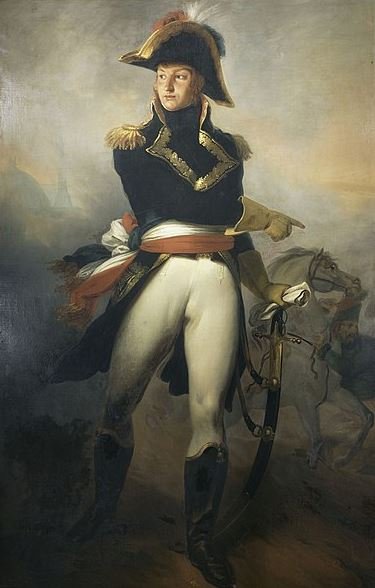
Image: Portrait of Junot. Artwork by Vincent-Nicolas Raverat.
Challenges and the Peninsular War
Junot’s administration soon faced mounting challenges. In early 1808, initial resistance emerged within Portugal. The situation deteriorated further after the Dos de Mayo Uprising in Spain, which led to widespread Spanish resistance against French occupation. The withdrawal of Spanish troops from Portugal weakened Junot’s position.
By June 1808, revolts had spread throughout Portugal, threatening French control. Recognizing the opportunity, Britain intervened. Sir Arthur Wellesley, later known as the Duke of Wellington, landed British forces in Portugal to support the resistance.
Junot faced defeats at the Battles of Roliça and Vimeiro in August 1808. These setbacks forced him to sign the Convention of Sintra, allowing French troops to evacuate Portugal but under terms that caused controversy both in Britain and France. The outcome damaged Junot’s reputation and raised questions about his leadership abilities.
Later Military Career and Decline
Upon returning to France, Junot continued to serve in the military but without significant command roles. He participated in the Second Siege of Zaragoza and fought in the War of the Fifth Coalition. In 1810, he returned to the Iberian Peninsula under Marshal André Masséna’s command but suffered a severe facial wound in 1811, impacting his health.
Determined to restore his standing, Junot joined the Russian Campaign in 1812. His performance was inconsistent; he was criticized for allowing Russian forces to retreat after the Battle of Smolensk, a decision that angered Napoleon. Although he displayed competence at the Battle of Borodino, the earlier disappointment led to his removal from command.
Mental Health Decline and Death
By 1813, Junot’s mental health had significantly deteriorated, likely exacerbated by his war injuries and the pressures of his career. Appointed as the Governor of the Illyrian Provinces, his behavior became increasingly erratic. An infamous incident involved him attending a social event nearly unclothed, indicating a loss of personal control.
Concerned for his well-being, his family intervened. Junot was sent to his father’s home in Montbard for care. Unfortunately, his condition worsened. In a state of distress, he attempted suicide by jumping from a window, resulting in severe injuries. Subsequently, he inflicted further harm upon himself.
Jean-Andoche Junot died on July 29, 1813, at the age of 41. His death was a tragic end to a career that had begun with great promise and had seen both remarkable achievements and personal hardships.
Legacy and Reflections
Junot’s life reflects the complexities of the Napoleonic era. His early bravery and rapid rise through the military ranks showcased his capabilities and the opportunities available during the Revolutionary and Napoleonic Wars. His close relationship with Napoleon brought both advantages and high expectations.
However, his career was also marked by challenges, including difficult military campaigns, personal conflicts, and the immense pressures of leadership during wartime. His struggles with mental health highlight the often-overlooked personal toll of constant warfare.
Junot’s contributions to key military operations, particularly in Portugal, had lasting impacts on the course of the Peninsular War. While his later years were marred by setbacks, his earlier accomplishments remain a testament to his skill and dedication as a soldier.
In remembering Jean-Andoche Junot, one sees a figure emblematic of his time—a man shaped by revolution, loyal to his leader, and ultimately consumed by the very forces that propelled him to prominence. His story adds depth to our understanding of the individuals who played pivotal roles in shaping European history during one of its most dynamic periods.
Frequently Asked Questions
What prompted Junot to abandon his law studies and join the military?
Inspired by the French Revolution, Junot left his law studies in Dijon to join the revolutionary cause. His commitment led him to attend the Fête de la Fédération in 1790 and enlist in the National Guard by 1791.
How did Junot first meet Napoleon Bonaparte, and how did this meeting influence his career?
Junot met Napoleon during the Siege of Toulon in 1793 when he assisted him due to his good handwriting. Impressed by Junot’s wit and courage, Napoleon made him his aide-de-camp, initiating a close professional relationship that significantly advanced Junot’s military career.
What notable actions did Junot perform during the Italian campaigns?
During the Italian campaigns, Junot distinguished himself in battles such as the Montenotte campaign and the Battle of Millesimo in 1796, earning a promotion to colonel. At the Battle of Lonato, he showed exceptional bravery by engaging in close combat, killing six enemy soldiers despite being severely wounded.
In what ways did Junot contribute to Napoleon’s Egyptian expedition?
He participated in the capture of Malta and fought at the Battle of the Pyramids in 1798 as part of Napoleon’s Egyptian expedition. Promoted to brigadier general in 1799, he played a crucial role at the Siege of Acre by leading a successful attack against a larger Ottoman force near Nazareth.
What was Junot’s personal life like during the Consulate period?
In 1800, Junot married Laure Martin de Permond, a childhood friend of Napoleon’s family. Napoleon supported their marriage financially. Known for his extravagant lifestyle, Junot became famous for lavish spending and indulgence during this time.
What role did Junot play in the invasion of Portugal, and what title did he receive afterward?
In 1807, Napoleon appointed Junot to lead the invasion of Portugal as commander-in-chief of the Corps of Observation of the Gironde. Successfully capturing Lisbon with minimal resistance, he was granted the title Duke of Abrantes by Napoleon for his achievements.
What challenges did Junot face as the military governor of Portugal?
As military governor, Junot disbanded the Portuguese Army and declared the deposition of the House of Braganza. He faced significant challenges when Portuguese resistance emerged in early 1808, and the Dos de Mayo Uprising in Spain led to the withdrawal of Spanish troops, undermining French control.
How did British intervention impact Junot’s command in Portugal?
British forces under Sir Arthur Wellesley landed in Portugal, leading to military defeats for Junot at the battles of Roliça and Vimeiro. These losses forced him to sign the Convention of Sintra, allowing French troops to evacuate Portugal and damaging his reputation.
What events led to Junot’s decline in his later military career?
After returning to France, Junot served without major command in subsequent campaigns. In 1810, he suffered a severe facial wound. During the Russian Campaign in 1812, his inconsistent performance and criticism from Napoleon led to his removal from command.
What factors contributed to Junot’s deteriorating mental health and eventual death?
His mental health declined by 1813, possibly due to his war injuries. Appointed Governor of the Illyrian Provinces, his erratic behavior worsened. He was sent to his father’s home for care, where he injured himself severely, leading to his death on July 29, 1813.

Junot’s courage, loyalty to Napoleon, and military achievements defined his volatile life, ultimately marked by personal struggles and tragedy. Image Statue of Junot at the Louvre in France.





