John Lloyd Stephens: History and Major Achievements of the American Explorer
John Lloyd Stephens was an American explorer, writer, and diplomat known for rediscovering Maya civilization and playing a key role in the Panama Railroad project.
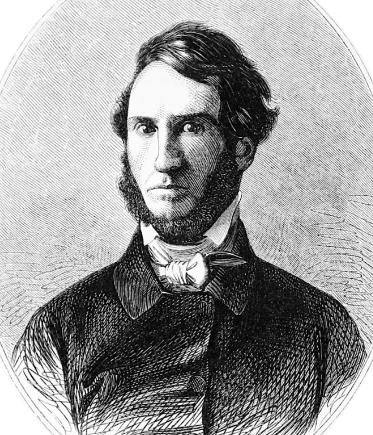
An 1854 portrait of John Lloyd Stephens
Early Life
John Lloyd Stephens was born on November 28, 1805, in Shrewsbury, New Jersey. He was the second son of Benjamin Stephens, a prosperous merchant, and Clemence Lloyd, the daughter of a prominent local judge. A year after his birth, the family relocated to New York City, where Stephens received an education focused on the Classics. He attended two private schools before enrolling at Columbia College at the age of 13. His academic excellence enabled him to graduate at the top of his class in 1822.
Following his graduation, Stephens pursued a legal career. After studying law with an attorney for a year, he attended the prestigious Litchfield Law School. Upon passing the bar exam, he began practicing law in New York City. However, his interest in travel and exploration soon led him in a different direction. In 1834, he embarked on an extensive journey through Europe, Egypt, and the Levant, which profoundly shaped his career as a writer and explorer.
Political Involvement
Stephens’ talents and reputation caught the attention of the political establishment. In 1837, he was recommended for the position of Minister to the Netherlands. However, President Martin Van Buren ultimately appointed Harmanus Bleecker to the post. Despite this setback, Stephens remained active in public affairs. In 1846, he was elected as a delegate to the New York State Constitutional Convention. During the convention, he played a crucial role in introducing and advocating for the establishment of a conciliation court, which later became the small claims court system. This contribution demonstrated his commitment to judicial reform and practical governance.
Explorations in Mesoamerica
Stephens developed a deep interest in the accounts of ancient ruins in Central America. Influenced by the writings of Alexander von Humboldt and Juan Galindo, he sought to explore the region himself. In 1839, President Martin Van Buren appointed him as a Special Ambassador to Central America. During his tenure, he witnessed the collapse of the Federal Republic of Central America due to civil war, an experience he later chronicled in his book Incidents of Travel in Central America, Chiapas, and Yucatán.
Accompanied by architect and draftsman Frederick Catherwood, Stephens embarked on a series of explorations that would change the world’s understanding of Mesoamerican civilizations. The duo first arrived at the ruins of Copán, located in present-day Honduras. They meticulously mapped the site and marveled at the complexity of the structures. While Stephens initially doubted that the ruins had been built by the ancestors of the modern Maya, Catherwood observed similarities between the artistic depictions and contemporary indigenous peoples.
During their travels, Stephens was able to purchase the ruins of Copán for a mere $50, considering the possibility of relocating the city’s artifacts to the United States. However, this plan was never realized. From Copán, they continued their journey to other major Maya sites, including Palenque, Quiriguá, and Uxmal. At Palenque, they documented significant structures such as the Temple of the Inscriptions and the Temple of the Cross.
In 1841, they returned to the Yucatán Peninsula, visiting 44 additional sites, including Chichén Itzá, Izamal, Kabah, and Tulum. Their documentation at Uxmal included the Governor’s House and the Pyramid of the Magician. Catherwood’s detailed illustrations provided clear evidence that the Maya were the true builders of these ancient cities, dispelling earlier theories that attributed the ruins to lost European or Asian civilizations.
John Lloyd Stephens was a man of remarkable vision and determination. Whether exploring ancient ruins or spearheading major infrastructure projects, his work left an indelible mark on history.
Influence on Maya Studies
Stephens and Catherwood’s expeditions played a transformative role in the study of Maya civilization. The books Stephens wrote about their discoveries became widely popular and influential. Through their detailed descriptions and Catherwood’s meticulous drawings, they introduced the Western world to the grandeur of the Maya. Their work provided the first comprehensive visual record of the ruins, helping to establish Mesoamerican archaeology as a legitimate field of study.
Their discoveries also inspired prominent literary figures, including Edgar Allan Poe, who reviewed three of Stephens’s books. Poe admired the vivid storytelling and the meticulous documentation of ancient structures, recognizing their significance in the broader field of history and archaeology.
Contributions to the Panama Railroad
Beyond his explorations, Stephens played a crucial role in the development of transportation infrastructure. During the mid-19th century, England dominated oceanic navigation between the United States and Europe. To challenge this monopoly, Stephens helped secure a charter from the State of New York and incorporated the Ocean Steam Navigation Company. The company operated two steamships, the Washington and the Hermann, which made transatlantic journeys.
In 1849, Stephens became a key figure in the founding of the Panama Railroad Company. His role involved traveling to Panama and New Granada to negotiate agreements for the railroad’s construction. During his journey to Bogotá, the capital of New Granada, he suffered a severe injury after falling from his mule. Though he never fully recovered from this accident, he remained actively involved in the railroad’s development.
Stephens was appointed as the first president of the Panama Railroad Company, overseeing its early planning and construction. Despite his declining health, he remained committed to the project, ensuring its continued progress until his death in 1852.
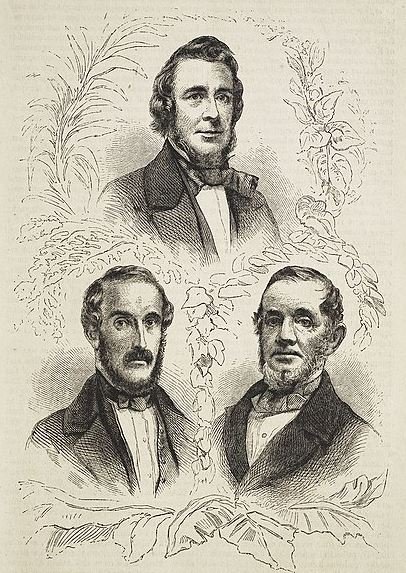
John L. Stephens (top), William H. Aspinwall (left), and Henry Chauncey, the pioneers behind the Panama Railroad.
Personal Life and Death
In recognition of his contributions to archaeology, exploration, and public service, Stephens was elected to the American Philosophical Society in 1841. However, his later years were marked by health struggles. While in Panama, he contracted malaria, which severely weakened him. Although he managed to return to New York, he suffered a relapse and passed away on October 13, 1852. He was buried in the New York City Marble Cemetery.
Legacy and Major Publications
Stephens’ legacy endures through his writings and contributions to both archaeology and infrastructure. His books continue to be widely read and referenced by scholars studying Mesoamerican history. Among his most notable publications are:
- Incidents of Travel in Egypt, Arabia Petraea, and the Holy Land (released in 1837)
- Incidents of Travel in Central America, Chiapas, and Yucatán (published in 1841)
- Incidents of Travel in Yucatán (1843)
These works captured the imagination of readers and inspired future generations of explorers and archaeologists. Additionally, he is the subject of biographical works such as Maya Explorer by Victor Wolfgang von Hagen (1947) and Jungle of Stone by William Carlsen (2016).
John Lloyd Stephens’ dedication to uncovering the past and improving the future makes him one of the most influential figures of the 19th century.
FAQs – John Lloyd Stephens
What was Stephens’ contribution to Maya studies?
Stephens explored and documented Maya ruins across Central America and Yucatán, proving that the Maya were the original builders of these ancient cities.
How did Stephens and Catherwood document Maya sites?
Stephens described the ruins in detailed writings, while Frederick Catherwood created precise drawings and lithographs, providing crucial evidence of Maya civilization.
What impact did Stephens’ books have?
His books, such as Incidents of Travel in Central America, introduced the Western world to Maya civilization and inspired scholars and writers, including Edgar Allan Poe.
What was Stephens’ role in the Panama Railroad?
Stephens was a founder and the first president of the Panama Railroad Company, helping establish a crucial transportation route between the Atlantic and Pacific.
How did Stephens’ diplomatic career influence his explorations?
As a Special Ambassador to Central America, he witnessed political upheavals firsthand and used his position to access and study ancient ruins.
What led to Stephens’ death?
He sustained severe injuries in Panama and later contracted malaria, leading to his death in 1852 at the age of 46.
What is Stephens’ legacy?
His work remains foundational in Maya archaeology, and his contributions to transportation and exploration are remembered through books and historical studies.
Who were the 10 Most Influential Explorers of the Age of Discovery?