History of Chichen Itza
Chichén Itzá was a prominent pre-Columbian city constructed by the Maya civilization during the Terminal Classic period (c. AD 800–1200). Situated in the Yucatán Peninsula of modern-day Mexico, this UNESCO World Heritage Site is renowned for its architectural and cultural significance. As one of the largest Maya cities, it served as a hub of political, economic, and religious activities. Today, it is one of Mexico’s most visited archaeological sites, attracting millions of tourists annually.
Historical Significance
Chichén Itzá flourished from the Late Classic to Terminal Classic periods, extending into the early Postclassic era. It emerged as a powerful regional capital, centralizing the Northern Maya Lowlands.
The city’s architecture exhibits influences from central Mexico, blending traditional Maya styles with external elements, likely due to trade and cultural interactions rather than conquest.

A map showing the location of Chichen Itza within Mesoamerica.
Name and Etymology
The name Chichén Itzá translates to “At the mouth of the well of the Itzá.” Derived from the Yucatec Maya words:
- Chi’ meaning “mouth” or “edge.”
- Ch’en meaning “well.”
- Itzá refers to an ethnic group whose dominance shaped the region’s politics and economy.
Alternative historical names, such as Uuc Yabnal (“Seven Great House”), are documented in Maya hieroglyphic texts and colonial-era manuscripts like the Chilam Balam.
Geography and Water Resources
Located in Yucatán, Chichén Itzá is built on karstic terrain, where underground rivers and cenotes (natural sinkholes) are vital water sources. The Sacred Cenote was central to religious rituals, including sacrifices to Chaac, the Maya rain god. Artifacts and human remains recovered from the cenote confirm its ceremonial importance.
READ MORE: Food and Agriculture in the Maya Civilization
Architectural Marvels
- El Castillo (Temple of Kukulcán): A 30-meter pyramid that demonstrates Maya knowledge of astronomy, with equinox light-and-shadow effects creating the illusion of a descending serpent.
- The Great Ball Court: The largest ball court in Mesoamerica, featuring elaborate carvings and acoustics.
- Temple of the Warriors: Adorned with columns depicting warriors, it showcases Toltec influences.
- Las Monjas (The Nunnery): An administrative palace built in the Puuc style.
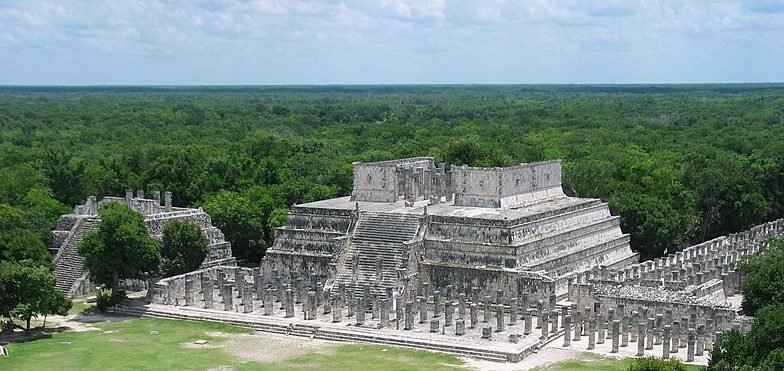
Temple of the Warriors.
Political and Economic Structure
Initially theorized as a “multepal” system (rule by council), recent evidence suggests a more centralized monarchy akin to southern Maya kingdoms. This shift aligns with broader trends in Maya political evolution during Chichén Itzá’s zenith.
Chichén Itzá’s architectural and historical significance, including structures like the Great Ball Court and Temple of Warriors, reflects the height of Maya civilization.
Chichén Itzá controlled vital trade routes connecting coastal and inland regions. Goods like obsidian, jade, and gold were exchanged via its port, Isla Cerritos, linking it to distant parts of Mesoamerica.
Rise and Decline
The city rose to prominence during the Late Classic, overtaking rivals like Coba and Yaxuna. It became a dominant power by the Terminal Classic.
By the 12th century, Chichén Itzá experienced a decline, attributed to political shifts, environmental changes, and reduced regional influence.
Spanish Conquest
Spanish explorers, including Francisco de Montejo, attempted to establish a capital at Chichén Itzá in the 16th century. Resistance from the Maya eventually forced the Spaniards to abandon the site.
Did you know…?
- 19th-century explorations by figures like John Lloyd Stephens and Frederick Catherwood brought international attention to Chichén Itzá through vivid accounts and illustrations.
- Also, the Carnegie Institution and Mexican authorities undertook extensive excavations, restoring key structures like El Castillo and the Temple of Warriors.
Cultural and Religious Practices
Evidence from the Sacred Cenote reveals ritual sacrifices, believed to appease gods or predict outcomes.
Structures like El Caracol (the Observatory) demonstrate Maya expertise in tracking celestial events, particularly Venus.
READ MORE: Most Famous Explorers of the Maya Civilization
Significant Structures of Chichén Itzá
- Sacbeob (White Roads): Paved causeways connecting different parts of the city.
- Tzompantli (Skull Platform): Displays carved human skulls, symbolizing rituals of power and sacrifice.
- Cenote Sagrado: A ceremonial sinkhole central to Maya religious practices.
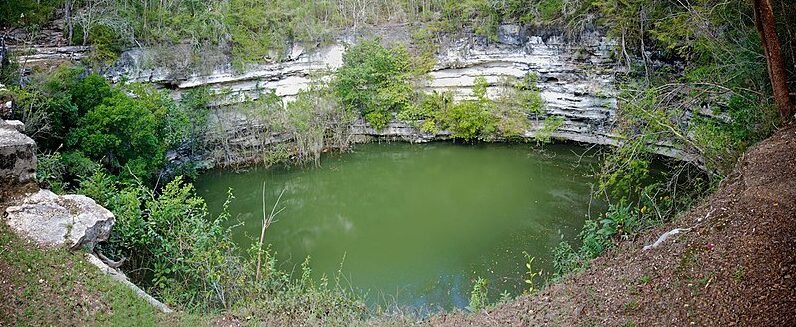
Cenote Sagrado
Tourism and Preservation
Chichén Itzá’s inclusion as a New Seven Wonders of the World in 2007 boosted its global recognition.
Access to certain monuments, including El Castillo, has been restricted to protect their integrity and ensure visitor safety.
Questions and Answers
Why is Chichén Itzá significant?
It was a regional power from AD 600–1200 and is noted for its blend of architectural styles influenced by cultural diffusion, showcasing Maya, Toltec, and Central Mexican elements.
What is the meaning of its name?
“Chichén Itzá” means “At the mouth of the well of the Itza,” referring to the Cenote Sagrado, a sacred sinkhole used for rituals and sacrifices.
What is the Temple of Kukulcán?
Also called El Castillo, it is a step pyramid at the center of Chichén Itzá. It features a shadow-serpent effect during equinoxes and symbolizes the feathered serpent deity, Kukulcán.

El Castillo
What role did cenotes play at Chichén Itzá?
Cenotes provided water year-round, making settlement possible. The Cenote Sagrado was used for offerings to the rain god Chaac, including human sacrifices.
What was Chichén Itzá’s political system?
Initially thought to have been ruled by councils (“multepal”), recent evidence supports traditional Maya-style rulership by elite dynasties.