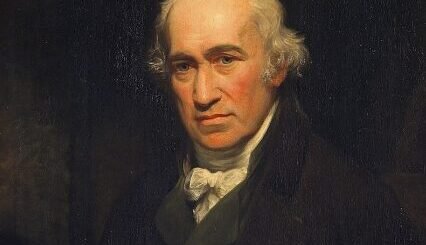
John White and his attempts to colonize Roanoke Island
John White, an explorer, artist, and colonial governor, played a significant role in England’s early efforts to establish colonies in the New World.
His life and career are closely tied to the mysterious disappearance of the Roanoke Colony, often referred to as the “Lost Colony.” White’s legacy endures through his detailed watercolor paintings of Native American peoples and landscapes, as well as his involvement in one of the most famous unsolved mysteries in American history.

John White’s life was marked by ambition, artistic achievement, and ultimately, tragic loss as he grappled with the failure of England’s first colonial ventures. Image: Governor White returns to the “Lost Colony”.
READ MORE: Early European Colonies in North America that Failed
Early Life and Background
John White’s exact birthdate is unknown, but it is believed that he was born in London sometime in the 1530s or 1540s. His early life is shrouded in mystery, with little known about his education or training as an artist. White likely apprenticed as an illustrator in London, and over time, his skills as a mapmaker and watercolorist gained recognition. By the late 16th century, England was turning its attention to overseas expansion, particularly in the Americas, and White became involved in these ventures.
In 1566, White married Tomasyn Cooper, with whom he had two children: a son, Thomas, who died young, and a daughter, Eleanor. Eleanor would later play a central role in White’s life and in the history of the Roanoke Colony.
England’s Early Colonial Ambitions
In the latter half of the 16th century, England, under Queen Elizabeth I, began to explore opportunities for establishing colonies in the New World. The promise of untapped resources, trade opportunities, and territorial expansion attracted many English explorers and investors. Sir Walter Raleigh, a favorite of Queen Elizabeth, spearheaded England’s early colonial efforts, obtaining a patent to explore and settle land in what was then called “Virginia” (a region that encompassed much of the eastern seaboard of present-day North America).
Raleigh’s first attempt to establish a colony in the New World was in 1585, when an expedition, led by Sir Richard Grenville and Governor Ralph Lane, sailed to Roanoke Island, located off the coast of modern-day North Carolina. John White was a member of this expedition, tasked with documenting the New World’s inhabitants and landscapes through art. White’s watercolors from this period are invaluable historical records, providing some of the earliest depictions of Native American life along the Eastern Seaboard.
Although the 1585 colony ultimately failed due to poor relations with local Native American tribes, food shortages, and harsh conditions, White’s artistic contributions were widely recognized. His detailed drawings of the Algonquian peoples, flora, fauna, and landscapes were among the first visual records of North America seen by Europeans. His watercolors, later engraved by Flemish master Theodor de Bry, became widely circulated across Europe, shaping perceptions of the New World.
The 1587 Expedition and White’s Role as Governor
Despite the failure of the 1585 Roanoke expedition, Sir Walter Raleigh was determined to try again. In 1587, Raleigh organized a second attempt to establish a permanent colony, this time aiming to settle in the Chesapeake Bay area. John White was appointed governor of the new colony, and in May 1587, he led a group of 113 settlers, including his daughter Eleanor and her husband, Ananias Dare, who was pregnant with their first child.
The settlers set sail aboard the ship Lion, captained by the Portuguese navigator Simon Fernandez. Although the original plan was to establish the colony in Chesapeake Bay, Fernandez unexpectedly stopped at Roanoke Island, where he refused to allow the settlers to re-board the ship. This forced the colonists to remain on Roanoke Island, where they reoccupied the settlement abandoned by the previous expedition.
The decision to stay at Roanoke was a fateful one. From the start, the colony faced challenges. The settlers discovered the remains of the 15 men left behind by the earlier expedition, all of whom had been killed by hostile local tribes. Relations with the Native Americans deteriorated rapidly, despite the presence of Chief Manteo, a friendly native who had previously traveled to England and developed positive ties with the English. White’s attempts to maintain peace with neighboring tribes failed, and tensions grew as the colony struggled to secure enough food and supplies.
The Birth of Virginia Dare
Despite the difficulties faced by the settlers, there was one moment of celebration. On August 18, 1587, White’s daughter Eleanor gave birth to a daughter, Virginia Dare, the first English child born in the New World. Virginia’s birth was seen as a symbol of hope for the fledgling colony, and she became a figure of legend in later American folklore.
However, the joy of Virginia’s birth was short-lived. As food supplies dwindled and the colonists became increasingly desperate, they urged White to return to England to request additional provisions and support. Reluctantly, White agreed to leave his family behind and return to England, knowing that his absence might be lengthy.
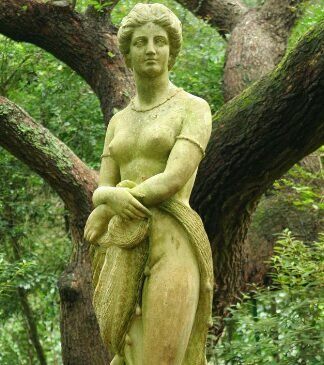
White was also the grandfather of Virginia Dare, the first English child born in North America. After Roanoke’s failure, White retired to Sir Walter Raleigh’s estates in Ireland, still hoping his family might have survived. Image: Statue of Virginia Dare.
White’s Struggles to Return to Roanoke
John White’s return to England in late 1587 coincided with a period of intense political and military conflict between England and Spain. The looming threat of the Spanish Armada meant that all available ships were requisitioned for England’s defense, preventing White from organizing a return voyage to Roanoke. Although he made repeated attempts to secure passage, it wasn’t until March 1590, nearly three years later, that White was able to return to the New World.
When White finally arrived at Roanoke Island on August 18, 1590—his granddaughter Virginia Dare’s third birthday—he found the colony deserted. The settlement’s buildings had been dismantled, and there was no sign of the 113 colonists, including White’s daughter, son-in-law, and granddaughter. The only clue left behind was the word “Croatoan” carved into a post and the letters “CRO” carved into a nearby tree. White interpreted this to mean that the colonists had relocated to Croatoan Island (modern-day Hatteras Island), where the friendly Croatoan tribe lived.
White and his men planned to search for the colonists on Croatoan Island, but bad weather and a shortage of supplies forced them to abandon their efforts. White was devastated by the loss of his family and the colony. He returned to England, never to set foot in the New World again.
The Mystery of the “Lost Colony”
The disappearance of the Roanoke settlers, including John White’s family, became one of the greatest mysteries in American history. The “Lost Colony” has sparked endless speculation and debate over the centuries, with historians, archaeologists, and writers proposing various theories to explain what happened to the colonists.
One widely accepted theory is that the settlers sought refuge with the Croatoan tribe or other local Native American groups. Some evidence suggests that the colonists may have integrated into native societies, intermarrying and adopting their ways of life. Reports from early 17th-century English explorers, such as John Smith of the Jamestown Colony, included accounts of Native American tribes with members who had European features, leading to speculation that they were descendants of the Roanoke colonists.
Other theories suggest that the colonists may have died from starvation, disease, or conflicts with hostile tribes. There are also more far-fetched ideas, including claims of alien abduction or attacks by supernatural forces, but these lack any credible evidence.
Despite numerous archaeological digs and investigations, no definitive proof has ever been found to explain the fate of the “Lost Colony.” The mystery continues to captivate scholars and the public alike.

John White’s Later Years
After his failed attempts to find the Roanoke settlers, John White returned to England and spent the remainder of his life reflecting on the tragedy of the lost colony. He lived on the estates of Sir Walter Raleigh in Ireland, where he continued to work as a cartographer and surveyor, making maps for Raleigh’s tenants. White never gave up hope that his daughter, granddaughter, and the other colonists had survived, though he would never learn their true fate.
White’s final years were marked by disappointment and a sense of failure. The last surviving document related to White is a letter he wrote in 1593 to the publisher of the engravings made from his Roanoke watercolors. In this letter, White expressed his enduring sorrow over the loss of the colony and his belief that misfortune had plagued his efforts in the New World.
White’s Legacy
John White’s artistic achievements have ensured his place in history, even though his colonial endeavors ended in failure. His watercolors of the landscapes, flora, fauna, and Native American peoples of the Eastern Seaboard are considered some of the most important visual records of early American history. His works are preserved in the British Museum, where they continue to be studied by scholars and admired by the public.
In 2007, the British Museum held an exhibition titled “A New World: England’s First View of America,” showcasing over 70 of White’s watercolors. These paintings remain a vital source of information about the Native American societies encountered by England’s first settlers.
White’s legacy extends beyond his artistic contributions. His role in the ill-fated Roanoke Colony and the mystery of the “Lost Colony” have cemented his place in American folklore and history. The story of Virginia Dare, his granddaughter, has become legendary, symbolizing both the hope and tragedy of England’s early colonial ambitions.
John White in Popular Culture
The story of John White and the Lost Colony has inspired countless books, films, and television shows. In the sixth season of American Horror Story, White is mentioned as the husband of a fictional character named Tomasyn “The Butcher” White, played by Kathy Bates. This creative adaptation reflects the enduring fascination with the Roanoke mystery and its key figures.
White’s name has also been honored in other ways. During World War II, a Liberty ship, the SS John White, was named in his honor, recognizing his contributions to early American exploration.
Questions and Answers about John White
When and where was John White born?
John White’s exact birth date is unknown, but he was likely born sometime in the 1530s or 1540s. He lived in London and attended the parish of St. Martin Ludgate.
Who were John White’s family members?
John White married Tomasyn Cooper in 1566, and they had two children: a son, Thomas, who died young, and a daughter, Eleanor.
What is known about John White’s training as an artist?
Little is known about White’s formal training, but it is believed that he may have apprenticed as an illustrator under a master in London.
What role did John White play in early English exploration efforts?
John White was an active supporter of England’s colonial ambitions in the New World. In 1577, he possibly accompanied Martin Frobisher on expeditions to Baffin Island and Greenland, though he wasn’t mentioned by name.
What was John White’s contribution to the 1585 Roanoke expedition?
In 1585, White joined Sir Ralph Lane’s expedition to establish the first English colony in North America. He worked as Sir Richard Grenville’s artist and mapmaker, creating detailed watercolors of the New World’s landscape and Native American tribes.

Image: An artwork by White depicting Roanoke Indians.
What significance do John White’s watercolor drawings hold?
White’s watercolors are the earliest visual records of the indigenous societies of the Eastern Seaboard. These works provide invaluable insight into Native American life and are considered the sole surviving visual record from England’s first settlers in the New World.
White’s watercolors were engraved by Flemish master Theodor de Bry and published in 1590 under the title America, making them widely known and distributed across Europe.
What was John White’s role in the 1587 Roanoke expedition?
In 1587, White was named governor of a second attempt to establish a permanent colony, this time in Chesapeake Bay. He led 113 settlers, including his daughter Eleanor and her husband, Ananias Dare.
What happened when John White’s expedition arrived at Roanoke in 1587?
Although their destination was Chesapeake Bay, Portuguese navigator Simon Fernandez forced the settlers to stay at Roanoke Island. They repaired the previous colony’s structures, but tensions soon developed with local Native American tribes.
Who was Virginia Dare, and why is she significant?
Virginia Dare, John White’s granddaughter, was born on August 18, 1587, and was the first English child born in the New World. She is a symbol of early English colonization in America.
Why did John White return to England in late 1587?
The colonists’ food supplies began to run low, and they urged White to return to England for more provisions. Reluctantly, he agreed and left for England.
What did John White find when he returned to Roanoke in 1590?
White’s return to Roanoke was delayed due to the Spanish Armada and bad weather. When he finally gathered a fleet in 1588, it was intercepted by French pirates, forcing him to abandon the mission.
When White returned on August 18, 1590, he found the colony deserted, with only the word “Croatoan” carved into a post. He believed the settlers had moved to Croatoan Island (now Hatteras Island), but bad weather prevented him from searching further.
What became of John White after the failure of the Roanoke Colony?
White never returned to the New World. He spent his later years on Sir Walter Raleigh’s estates in Ireland, reflecting on the misfortunes that had plagued the colony and holding out hope that his family might still be alive.
How is John White remembered today?
John White is best known for his watercolor drawings, which provide a rare visual record of 16th-century Native American life. His works are preserved in the British Museum, and his contributions to early American exploration are still honored today, including through the naming of the World War II Liberty ship SS John White.
In the sixth season of American Horror Story, White is mentioned as the husband of a fictional character named Tomasyn “The Butcher” White, played by Kathy Bates.