Justinian’s Plague: History and Major Facts
The Plague of Justinian (541–542 CE) was one of the most devastating pandemics in history, causing widespread mortality and societal upheaval across the Byzantine Empire and beyond. Named after the Byzantine Emperor Justinian I (also known as Justinian the Great), who reigned during its outbreak, the pandemic’s origins, impact, and aftermath significantly shaped the late antique world.
READ MORE: Most Famous Rulers of the Byzantine Empire and their Accomplishments
Origins and Context
The Plague of Justinian occurred during a transformative period in European and Mediterranean history, often described as the Late Antiquity (approximately 300–700 CE). This period was marked by the decline of the Western Roman Empire, the consolidation of power in the Byzantine Empire, and the emergence of early medieval states.
Emperor Justinian I sought to restore the grandeur of the Roman Empire through ambitious administrative, legal, and military reforms, as well as monumental building projects like the Hagia Sophia. However, his aspirations faced immense challenges, including external wars, internal political strife, and the devastating plague.
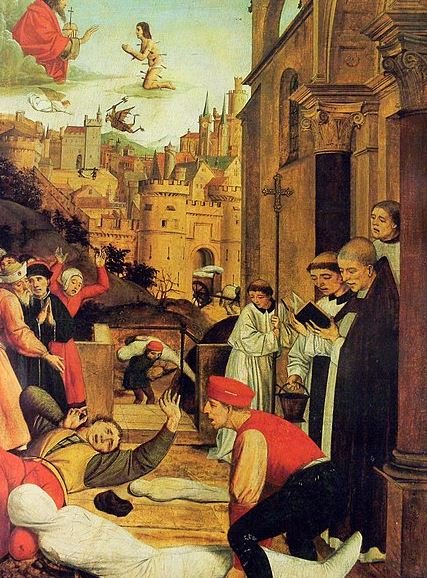
Image: Saint Sebastian intercedes with Jesus on behalf of a gravedigger stricken during the plague of Justinian. Artwork by French artist Josse Lieferinxe.
Epidemiological Origins
The plague was caused by Yersinia pestis, a bacterium primarily transmitted to humans through the bites of infected fleas, often carried by rats. This same bacterium would later be responsible for the Black Death in the 14th century and other pandemics.
It is believed that the Justinianic Plague originated in Central Asia or northeastern Africa, particularly Ethiopia or Egypt, areas with established trade routes connecting them to the broader Mediterranean world.
Transmission Pathways
The Byzantine Empire’s extensive trade networks facilitated the rapid spread of the disease. Goods, including grain shipped from Egypt to Constantinople and other cities, often carried infected rats and fleas. Constantinople, as the empire’s bustling capital and a hub of commerce, was especially vulnerable due to its dense population and heavy reliance on imported grain.
The Course of the Pandemic

Initial Outbreak
The plague first appeared in the Egyptian port city of Pelusium in 541 CE. It quickly spread along trade routes to major urban centers, including Constantinople, where it arrived in the spring of 542.
By the time it struck Constantinople, the city was a densely populated metropolis, housing hundreds of thousands of people. The combination of poor sanitation, crowded living conditions, and an influx of refugees fleeing wars and famine created a perfect storm for the disease to thrive.
Symptoms and Mortality
Contemporary accounts, such as those by the historian Procopius, provide vivid descriptions of the plague’s symptoms:
- Sudden onset of fever.
- Swelling of lymph nodes (buboes) in the groin, armpits, or neck.
- Delirium and sometimes coma in severe cases.
- Gangrenous sores, vomiting, and internal bleeding.
Mortality rates varied by region but were exceptionally high. Procopius estimated that at its peak, Constantinople lost 10,000 residents per day. Modern estimates suggest the plague killed between 25 and 50 million people, approximately 25% of the Mediterranean’s population at the time.
Cyclical Outbreaks
The initial outbreak was followed by recurrent waves of the plague over the next two centuries. These secondary outbreaks, though less deadly than the initial pandemic, further destabilized the empire.
Impact on Society and the Byzantine Empire
Demographic Collapse
The plague caused a catastrophic loss of life, leading to severe labor shortages in both urban and rural areas. Agricultural production plummeted, causing famine and economic hardship. The Byzantine military, heavily reliant on conscription from rural populations, faced significant challenges in replenishing its ranks.
Economic Consequences
- Tax Revenue Decline: With fewer people to tax, imperial revenues dropped dramatically, straining the empire’s finances.
- Inflation and Trade Disruption: Shortages of goods and labor led to inflation. Additionally, the collapse of trade networks disrupted the flow of essential commodities.
- Land Abandonment: Rural depopulation left large swathes of farmland abandoned, further exacerbating food shortages.
Political and Administrative Challenges
The Byzantine government struggled to maintain order amidst the chaos. Emperor Justinian implemented measures to mitigate the crisis, including mass burials, public health edicts, and emergency grain distributions. However, these efforts were often insufficient given the scale of the disaster.
Urban Decline
Cities, particularly Constantinople, experienced dramatic population declines. Entire neighborhoods were abandoned, and infrastructure deteriorated. The plague also contributed to the weakening of civic institutions that had traditionally maintained urban life.
Religious and Cultural Reactions
The plague was widely interpreted as divine punishment for human sins. This view led to an increase in religious fervor, including public processions, fasting, and prayers. Some sects, such as the Monophysites and other heretical groups, were blamed for provoking God’s wrath, leading to increased persecution.
Writers like Procopius chronicled the plague, often emphasizing its apocalyptic nature. Procopius described it as “the greatest calamity that has ever happened,” noting its indiscriminate impact on people of all social classes. Such accounts influenced later medieval narratives of plague and disaster.
The church played a crucial role in providing spiritual solace and practical aid during the crisis. Monasteries and bishops often organized relief efforts, distributing food and caring for the sick, solidifying their influence in society.
Broader Implications for the Byzantine Empire and Beyond
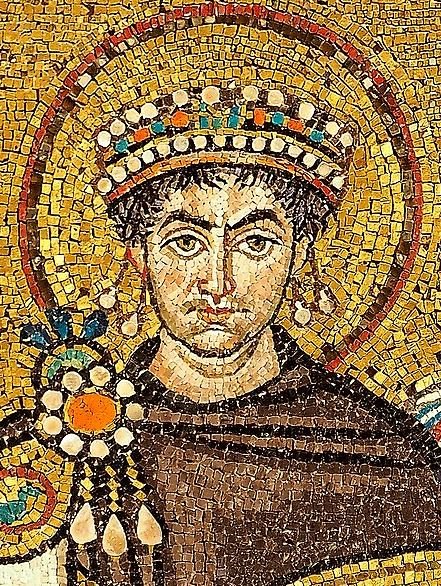
The Plague of Justinian not only challenged the ambitions of Emperor Justinian but also reshaped the economic, political, and cultural landscape of the time. Image: An artwork portraying Justinian I.
Strategic Weakening
The plague undermined Justinian’s ambitious plans to reconquer the western territories of the former Roman Empire. His military campaigns in Italy, North Africa, and Spain were hampered by dwindling manpower and resources.
Shift in Power Dynamics
The demographic and economic collapse weakened the Byzantine Empire relative to its neighbors. The Persian Sassanian Empire and emerging groups like the Lombards and Avars exploited the empire’s vulnerabilities.
Long-term Effects on Europe and the Mediterranean
-
- Economic Realignment: The collapse of trade networks contributed to the fragmentation of the Mediterranean economy, accelerating the transition to localized, feudal systems in Western Europe.
- Rise of Islam: Some historians argue that the Justinianic Plague indirectly facilitated the rise of Islam by weakening the Byzantine and Persian empires, creating a power vacuum in the Near East.
- Population Dynamics: The plague’s long-term demographic effects reshaped settlement patterns and reduced urbanization across the Mediterranean.
Scientific and Historical Legacy
Modern research, including DNA analysis of ancient remains, has confirmed Yersinia pestis as the pathogen responsible for the Justinianic Plague. These studies have shed light on the origins and evolution of plague pandemics.
The Justinianic Plague serves as a historical case study for understanding pandemics, including the Black Death and modern outbreaks. Its patterns of spread, societal impact, and cultural responses offer valuable insights into human resilience and adaptation.
Scholars continue to debate the precise death toll, geographic scope, and long-term consequences of the plague. While some view it as a pivotal turning point in late antique history, others argue its effects were less transformative in the broader sweep of history.
Frequently asked questions

What was Justinian’s Plague, and when did it occur?
Justinian’s Plague was one of history’s deadliest pandemics, striking during the reign of Emperor Justinian I (527–565 CE). It first appeared in Constantinople in 542 CE and devastated the Mediterranean world for over two centuries, with its last recorded outbreak in 750 CE.
What caused Justinian’s Plague, and where did it originate?
The plague was caused by Yersinia pestis, a bacterium that originated in China and northeast India. It was transported to the Great Lakes region of Africa through overland and sea trade routes and eventually spread to the Byzantine Empire via Egypt.
How was the plague transmitted across the empire?
The plague was transmitted by black rats (Rattus rattus) carrying fleas infected with the bacterium. These rats traveled aboard grain ships and carts sent to Constantinople as tribute, spreading the disease through the empire’s trade and transportation networks.
What role did climate changes play in the spread of the plague?
Climate changes, including unusual summer snow, lower temperatures, and reduced sunshine, caused crop failures and food shortages. These disruptions forced migrations, spreading plague-infested rats and worsening the epidemic.
What symptoms were associated with Justinian’s Plague?
Victims suffered from fever, delusions, nightmares, and painful swellings (buboes) in the groin, armpits, and neck. Some died within hours of infection, while others endured prolonged suffering. The disease primarily included bubonic plague but likely also featured pneumonic and septicemic forms.
How did war and trade contribute to the spread of the plague?
Justinian’s military campaigns and supply chains transported infected rats and fleas across the empire. Constantinople’s position as a trade hub further facilitated the disease’s movement along routes connecting China, the Middle East, and North Africa.
What was the extent of the plague’s spread, and how long did it persist?
The plague followed major trade routes from Ethiopia to Egypt and across the Mediterranean, heavily impacting urban centers like Constantinople. It lasted about four months in the capital but recurred sporadically for over two centuries, ending in 750 CE.
How did Constantinople respond to the plague’s devastation?
Constantinople was overwhelmed with corpses, forcing Emperor Justinian to order mass burials in trenches or disposal at sea. Animals also succumbed, complicating cleanup efforts.
What medical treatments were available during the outbreak?
Medical treatments were rudimentary and based on humorism, which attributed disease to imbalances in bodily fluids. Physicians prescribed cold-water baths, powders, and drugs, while others relied on home remedies like amulets and magic.
What impact did the plague have on the Byzantine Empire’s stability?
The plague weakened the empire’s political, military, and economic stability. Massive population loss caused labor shortages, disrupted agriculture, and led to soaring food prices and declining tax revenues. The diminished population also hindered military recruitment.
How did the plague affect trade and urban areas in the Byzantine Empire?
Trade networks collapsed, and urban areas like Constantinople lost 20–40% of their inhabitants. The empire struggled to maintain its defenses and economic structures as populations dwindled.
What was Emperor Justinian’s response to the crisis?
Despite the devastation, Justinian maintained high tax demands, continued waging wars, and pursued ambitious construction projects, including the Hagia Sophia, to reinforce the empire’s legacy.

Image: A view of the Hagia Sophia.
What was the estimated death toll of Justinian’s Plague?
Historians estimate that the plague killed 25–50 million people, about 25–50% of the population in the Mediterranean region.
What is the legacy of Justinian’s Plague?
The plague profoundly impacted the Byzantine Empire and the Mediterranean world, exacerbating economic decline, weakening defenses, and reshaping demographics. Its recurrence served as a grim precursor to later pandemics, like the Black Death.
READ MORE: Major controversies that have surrounded the Hagia Sophia in Istanbul





