Etymology and Historical Connections
The name “Priam” is believed to originate from the Luwian term Pariya-muwas, meaning “exceptionally courageous.” This etymology ties Priam to the ancient Anatolian world and highlights his symbolic role as a courageous ruler. Inscriptions from regions like Kizzuwatna and Cappadocia reference similar names, suggesting a historical or cultural basis for his mythological character.
Some scholars associate Priam with the historical figure Piyama-Radu, a warlord active in the region of Wilusa (possibly ancient Troy). However, this identification is controversial, as Piyama-Radu was an ally of the Ahhiyawa (Achaeans), opposing Wilusa.
A folk etymology offers an alternative explanation, deriving Priam’s name from the Greek verb priamai (“to buy”). This etymology gives rise to a myth in which Priam’s sister Hesione ransoms him from Heracles using a veil, symbolically “buying” his freedom. While popular in later sources like the Bibliotheca, this explanation postdates earlier attestations of the name, making it less reliable.
Family and Marriage
Priam was the son of Laomedon, the previous king of Troy, and is often described as a key figure in Troy’s royal lineage. He fathered fifty sons and numerous daughters with his chief wife, Hecuba, and other wives and concubines.
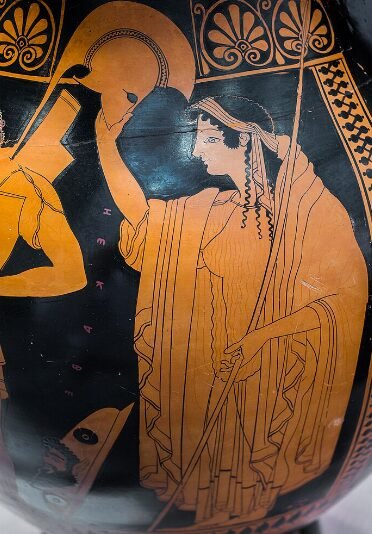
Queen Hecuba depicted on a vase of the 6th century BC
Notable Children:
- Hector: The greatest Trojan warrior and a key figure in the Iliad. Hector’s death at the hands of Achilles deeply impacts Priam.

Hector in Greek mythology
- Paris: Often blamed for initiating the Trojan War by abducting Helen of Sparta.
- Cassandra: A prophetic figure cursed to speak the truth but never be believed.
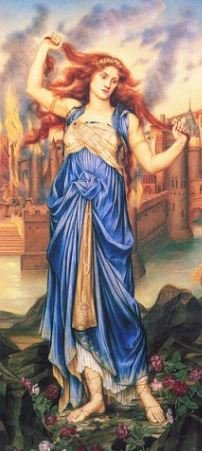
Cassandra by Evelyn De Morgan (1898, London); Cassandra in front of the burning city of Troy at the peak of her insanity.
- Polyxena: Sacrificed after the fall of Troy, adding to Priam’s tragic legacy.
- Troilus, Helenus, and Deiphobus: Additional sons who played significant roles in Trojan mythology.
- Creusa: The wife of Aeneas, linking Priam to the foundation myth of Rome.
Physical Description
Descriptions of Priam vary across sources:
- Chronicler Malalas describes him as tall, ruddy, light-eyed, and dignified, with a long nose and a commanding presence.
- Dares the Phrygian portrays him as large, swarthy, handsome, and possessing a pleasant voice.
These contrasting accounts highlight the mythological character’s adaptability, reflecting different cultural perspectives over time.
Role in the Trojan War
King Priam’s reign is defined by the Trojan War, which ultimately leads to the city’s destruction. His decisions, courage, and profound grief make him one of the most poignant figures in Homer’s Iliad and other Trojan War myths.

Ancient Greek polychromatic pottery painting (dating to c. 300 BC) of Achilles during the Trojan War
The Death of Hector and Priam’s Plea
One of the most significant moments in Priam’s story occurs after Hector’s death. Hector, the eldest and most beloved of Priam’s sons, is killed by Achilles in single combat.

Achilles versus Hector
Achilles desecrates Hector’s body by dragging it behind his chariot, refusing to allow a proper burial. Priam, guided by the god Hermes, courageously enters the Greek camp to plead for his son’s body.

Triumphant Achilles dragging Hector’s body around Troy, from a panoramic fresco of the Achilleion
In a deeply emotional scene in Book XXIV of the Iliad, Priam appeals to Achilles’ shared humanity. He invokes the memory of Achilles’ own father, Peleus, saying:
“I have endured what no one on earth has ever done before—I put my lips to the hands of the man who killed my son.”
This plea moves Achilles, who returns Hector’s body to Priam and grants a temporary truce for Hector’s funeral. This moment of mutual grief and respect is one of the Iliad’s most powerful passages, underscoring the human cost of war.

Priam at the feet of Achilles by Joseph Wencker
Priam’s Death
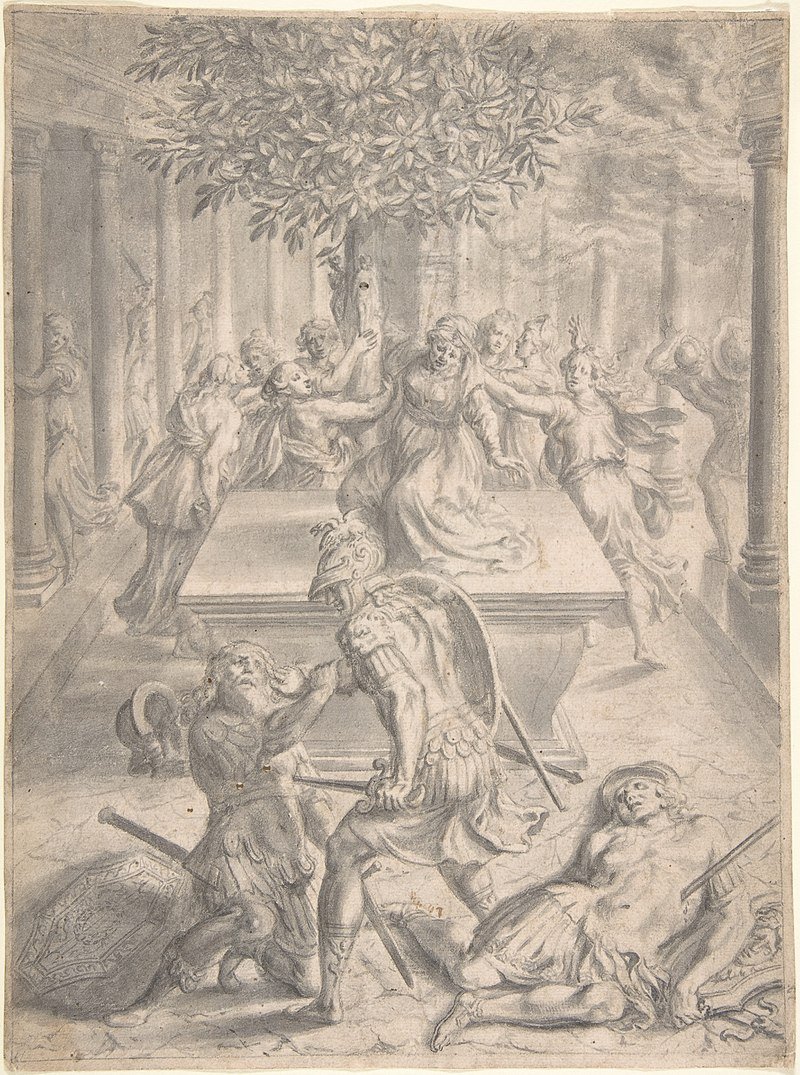
Priam’s tragic end comes during the Sack of Troy, vividly depicted in Virgil’s Aeneid. As the Greeks breach Troy’s defenses, led by Neoptolemus (Pyrrhus), the son of Achilles, Priam takes refuge at the altar of Zeus within his palace. Neoptolemus kills Priam’s son Polites before his eyes, prompting the elderly king to hurl a futile spear at the attacker.
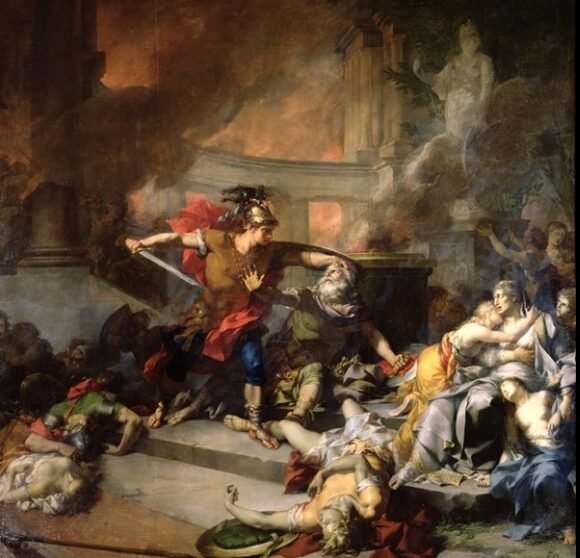
The Death of Priam by French painter Jean-Baptiste Regnault
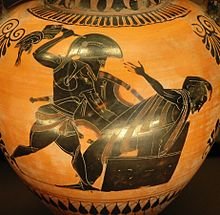
Neoptolemus drags Priam to the altar and kills him there, symbolizing the complete destruction of Troy. Some depictions, particularly on Greek vases, show Neoptolemus killing Priam in an even more brutal manner, using the body of Priam’s infant grandson, Astyanax, as a weapon.

King Priam of Troy was killed by Neoptolemus. Image: The Death of Priamos by French painter Jules Lefebvre
Symbolism and Themes
Priam’s story encapsulates several recurring themes in Greek mythology:
- Grief and Humanity: Priam’s plea to Achilles highlights shared human experiences, transcending enmity and offering a moment of compassion amidst war.
- Divine Intervention: Gods frequently intervene in Priam’s life, from Hermes guiding him to Achilles to Apollo avenging Hector.
- Doom and Fate: Priam’s life is marked by the inevitability of Troy’s fall, reflecting the inescapable nature of fate in Greek mythology.
- The Cost of War: Priam’s losses—his sons, his city, and his own life—symbolize the devastating consequences of prolonged conflict.
Legacy
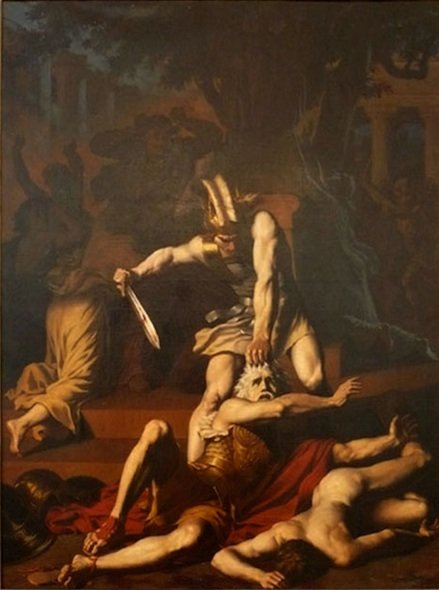
The Death of Priam by Alexandre-Louis Leloir (1861)
Priam’s legacy extends beyond his tragic role in the Trojan War. As a symbol of a fallen king and a father’s grief, his character resonates in literature, art, and culture.
In Literature
- Homer’s Iliad: Focuses on Priam’s courage and humanity, particularly in his plea to Achilles.
- Virgil’s Aeneid: Highlights Priam’s death, symbolizing Troy’s ultimate fall.
- Euripides’ Trojan Women: Explores the aftermath of Troy’s destruction, reflecting on Priam’s legacy through his surviving family.
In Art
Priam is a popular subject in ancient Greek vase painting and Roman frescoes. These works often depict key moments, such as his plea to Achilles or his death at the hands of Neoptolemus.
Cultural Influence
Priam’s narrative influenced later storytelling traditions, from medieval epics to modern retellings of the Trojan War. His character embodies themes of loss, resilience, and the enduring human spirit.
Conclusion
King Priam of Troy stands as a multifaceted figure in Greek mythology, representing both the personal and collective tragedy of the Trojan War. His courage, compassion, and suffering resonate through the ages, making him one of the most enduring characters in classical literature. From his plea to Achilles to his brutal death, Priam’s story captures the complexities of war, leadership, and the enduring bonds of family.
Greatest Heroes in Greek Mythology