Lạc Việt: History and Major Facts
The Lạc Việt, also known as Luoyue were a conglomeration of ancient tribal groups that inhabited the northern regions of Vietnam, particularly the Red River Delta, and parts of southern China.
Spanning from approximately 700 BC to 100 AD, the Lạc Việt existed during the final phase of Neolithic Southeast Asia and the dawn of classical antiquity. Archaeologically identified as the Dongsonian culture, they were renowned for their advanced bronze casting, rice cultivation, and sophisticated water management systems.
The Lạc Việt are considered pivotal in the ancestry of modern ethnic groups, including the Kinh Vietnamese, the Zhuang of southern China, and the Hlai people.
In the article below, World History Edu delves into their etymology, historical significance, linguistic and genetic heritage, societal structure, cultural practices, and their enduring legacy in contemporary national identities.
Etymology
The origin of the name “Lạc” associated with the Lạc Việt remains uncertain, with various theories proposed by scholars. Chinese observers noted the Lạc people’s reliance on intricate water-control systems such as tidal irrigation and drainage, suggesting a possible link to water-related terminology.
Some scholars associate “Lạc” with Vietnamese terms like “lạch” or “rạch,” meaning ditch, canal, or waterway, highlighting the agricultural significance of water management in their society. Similarly, others posit that “Lạc” translates directly to “water,” drawing parallels with phrases like “nước rạc” (ebbing water) and “cạn rặc” (utterly dried up water).
Conversely, French linguist Michel Ferlus offers a different perspective, suggesting that the characters 駱/雒 (OC *rak) derive from an earlier ethnonym *b.rak or *p.rak through phonological simplification. This root is believed to underpin several ethnonyms, including the Wa people, a Khmu subgroup, and potentially the Bai people.
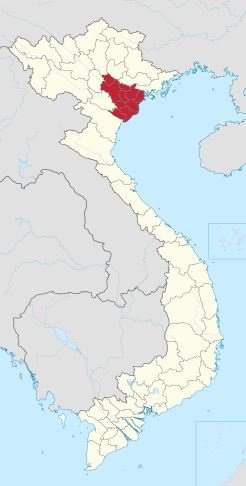
A map showing Red River Delta in Vietnam.
Historical Context
According to the legend documented in the Lĩnh Nam chích quái, the Lạc Việt established the state of Văn Lang around 2879 BC. This early polity was characterized by a decentralized structure, with power distributed among hereditary chiefs and lords. The rulers, known as Hùng kings, presided over various fiefs governed by Lạc marquises and generals. This governance model underscores a feudal-like system where familial lineage played a crucial role in leadership succession.
Historical records, such as Sima Qian’s “Records of the Grand Historian,” categorize Âu Lạc, a significant kingdom of the Lạc Việt, under the broader classification of Baiyue by the Han Chinese. The term Baiyue encompassed various non-Han ethnic groups residing south of China, reflecting the Han perspective of these diverse tribes as a collective “barbarian” entity.
In the fourth century BCE, Thục Phán, also known as King An Dương, led the Western Ou (Âu) tribe to subdue the Luo tribes, thereby founding the kingdom of Âu Lạc around 257 BC. The capital was established in Xiwu (Tây Vu), where the notable Cổ Loa Citadel was constructed. Âu Lạc flourished until 179 BC when Zhao Tuo, the founder of Nanyue, conquered the kingdom, making the Lạc princes his vassals.
The Han dynasty’s expansion into the region in 111 BC resulted in the annexation of Lạc Viet territories into the Han Empire, leading to the establishment of the Jiaozhi, Jiuzhen, and Rinan commanderies. This period marked significant cultural and political shifts as Han Chinese influence permeated the region.
In 39 AD, the Trung sisters, national heroines, spearheaded a rebellion against Han rule, briefly achieving independence for the Lạc Việt. However, the revolt was brutally suppressed by the Han general Ma Yuan, leading to the massacre, deportation, and forced Sinicization of the Lạc elite. Subsequent Chinese historical accounts ceased to mention the Lạc Việt after 44 AD, suggesting either their assimilation into Han culture or migration to southern hinterlands.
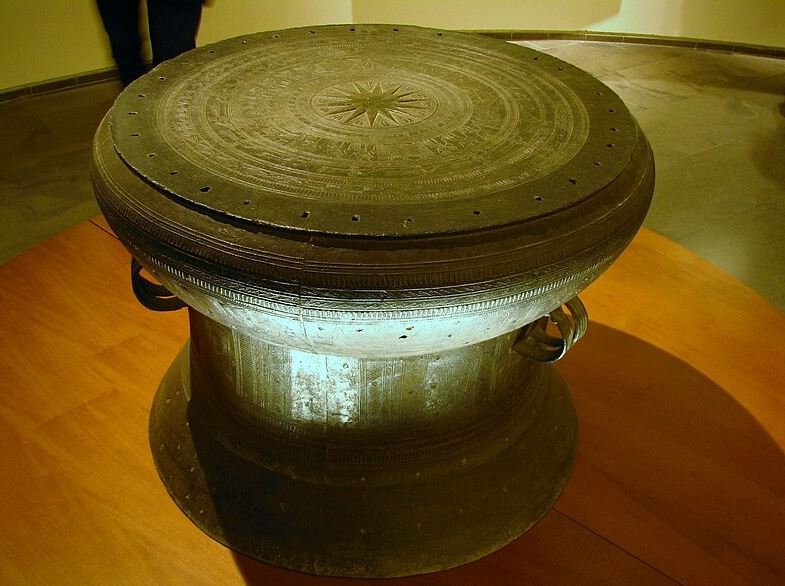
Dong Son drum, associated with the Lạc Việt society, is on display at the Musee Guimet museum in France.
Social structure of the Lạc Việt
The Lạc Việt society was characterized by a matrilineal and possibly matrilocal system, where inheritance and lineage were traced through the mother’s side. Women held significant status, with inheritance rights and the ability to pass wealth through their lineage. This contrasts sharply with contemporary Han Chinese practices, which were strictly patrilineal.
The Lạc lords, hereditary aristocrats, governed through a feudal-like system where land was communally owned rather than individually possessed. Tribute was collected from agricultural communities, emphasizing collective responsibility and resource sharing.
Additionally, the practice of levirate marriage, where widows married male relatives of their deceased husbands, underscored the societal importance of maintaining familial alliances and ensuring continuity.
Economic Practices
Agriculture was the backbone of the Lạc Việt economy, with wet rice cultivation being a primary activity. The development of sophisticated irrigation systems facilitated the cultivation of paddy rice, which was likely initiated in the early second millennium BCE, as indicated by palynological studies. The use of draft animals, metal plowshares, axes, and other tools highlights their advanced agricultural techniques.
The Lạc Việt were also skilled in metallurgy, particularly in casting large Heger Type I bronze drums, a hallmark of the Đông Sơn culture. These bronze artifacts not only served practical purposes but also had significant cultural and ceremonial importance.
Trade and interregional exchange were vital to the Lạc Việt economy. The Red River Delta’s strategic location provided access to key waterways and resources, including copper, tin, and lead ores essential for bronze production. This positioning made the region a hub for trade networks connecting various parts of Southeast Asia, facilitating the exchange of goods and cultural influences.
Cultural Practices of the Lạc Việt
The Lạc Việt exhibited a rich cultural tapestry, evident in their art, metallurgy, and societal norms. The intricate designs on bronze drums reflect a sophisticated aesthetic and symbolic language, possibly representing social hierarchies, religious beliefs, and cosmological concepts.
Their water management practices, including the construction of dikes and canals, demonstrate advanced engineering skills and a deep understanding of environmental management. These systems were crucial for sustaining rice agriculture in the flood-prone Red River Delta.
Descriptions from Han Chinese sources portray the Lạc Việt as having distinctive physical and cultural practices, such as body tattooing, teeth blackening, and unique hairstyles. However, these accounts may be influenced by Han perspectives and could conflate different ethnic groups within the broader Baiyue classification.
Archaeological Insights
Archaeological excavations have shed light on the Lạc Việt’s material culture and societal organization. The Đông Sơn culture, associated with the Lạc Việt, is renowned for its bronze casting techniques, particularly the production of elaborate drums used in rituals and as status symbols.
Settlements in the Red River Delta exhibit evidence of organized urban planning, with large citadels like Cổ Loa serving as political and administrative centers. These structures indicate a high level of social organization and centralized authority.
Burial sites provide insights into their social hierarchy and beliefs. Graves often contain bronze artifacts, suggesting a stratified society where elite members were distinguished by their material possessions. Additionally, the presence of agricultural tools and remnants of rice cultivation underscores the importance of farming in their daily lives.
Contested Ancestry and Nationalism
The legacy of the Lạc Việt has become a focal point of nationalistic narratives in both Vietnam and China. Vietnamese scholars since the 1950s have emphasized the Lạc Việt as the exclusive ancestors of the modern Kinh people, reinforcing a continuous historical lineage. This perspective serves to bolster national identity by linking contemporary Vietnamese society directly to its ancient predecessors.
Conversely, Chinese historiography often associates the Luoyue with the Zhuang people of southern China, presenting them as ancient predecessors to the modern Zhuang ethnicity. This claim, however, is part of a broader tendency to categorize diverse non-Han groups under generalized ethnonyms like Baiyue, which may obscure the distinct identities and languages of these populations.
The Lạc Việt/Luoyue were likely not a homogenous ethnic group but rather a collection of diverse tribes with varying languages and cultural practices. The term “Yue” and its variants were used by ancient Han scribes to describe a broad array of non-Han peoples in southern regions, leading to overlapping and sometimes conflicting claims of heritage.
Modern nationalist interpretations often overlook the complexity and diversity of ancient ethnic landscapes, simplifying the Lạc Việt into singular ancestral narratives. This reductionist approach fails to account for the multi-ethnic composition and dynamic interactions among different groups in ancient Southeast Asia.
Legacy and Modern Implications
The Lạc Việt’s contributions to early Southeast Asian civilization are significant, particularly in the realms of agriculture, metallurgy, and societal organization. Their advancements in rice cultivation and water management laid the foundations for the region’s agricultural productivity, which continues to be a cornerstone of Vietnamese economy and culture.
The Đông Sơn bronze drums remain iconic symbols of Vietnamese heritage, celebrated for their artistic and historical value. These artifacts are not only important archaeological finds but also cultural emblems that connect modern Vietnamese identity to its ancient past.
Frequently Asked Questions about the Lạc Việt
What were the Lạc Việt and where did they inhabit?
The Lạc Việt, also known as Luoyue, were an ancient conglomeration of tribal groups, likely comprising Kra-Dai and Austroasiatic peoples. They inhabited northern Vietnam, particularly the Red River Delta, and parts of southern China from approximately 700 BC to 100 AD. Archaeologically identified as the Dongsonian culture, the Lạc Việt were notable for their advancements in bronze casting, rice cultivation, and water management systems.
What is the significance of the name “Lạc Việt” and its possible origins?
The etymology of “Lạc” is uncertain, with various theories proposed by scholars. Some suggest it relates to water management, linking it to Vietnamese words for ditches and canals, reflecting the Lạc Việt’s agricultural practices. French linguist Michel Ferlus posits that the name derives from an earlier ethnonym *b.rak or *p.rak, associated with agricultural terms like “taro.” This indicates a deep connection between the Lạc Việt and agrarian lifestyles.
How did the Lạc Việt contribute to early Southeast Asian civilization?
The Lạc Việt made significant contributions through their sophisticated agricultural techniques, particularly wet rice cultivation supported by advanced irrigation systems. They were skilled metallurgists, renowned for casting large bronze drums central to the Đông Sơn culture. Additionally, their construction of dikes and canals demonstrated advanced engineering capabilities, which supported their agricultural productivity and societal organization.
What historical events marked the rise and decline of the Lạc Việt?
Legend holds that the Lạc Việt founded the state of Văn Lang around 2879 BC, later forming the kingdom of Âu Lạc around 257 BC under King An Dương. Âu Lạc thrived until it was conquered by Zhao Tuo of Nanyue in 179 BC, making the Lạc princes vassals.
The Han dynasty annexed their territories in 111 BC, leading to significant cultural and political changes. The Trung sisters’ rebellion in 39 AD briefly restored independence, but it was suppressed by Han general Ma Yuan, resulting in the massacre and forced Sinicization of the Lạc elite. After 44 AD, historical records no longer mention the Lạc Việt, suggesting assimilation or migration.
What are the linguistic and genetic legacies of the Lạc Việt?
Linguistically, the Lạc Việt are believed to have spoken Austroasiatic languages, with some scholars suggesting Khmer or northern Vietic origins. There is also debate about possible connections to Tai-speaking groups, though significant Tai migrations occurred much later.
Genetically, archaeological evidence from the Red River Delta indicates a predominantly Austroasiatic presence during the pre-Dongsonian period, with later admixture from Tai-related groups during the Dongsonian era. This genetic diversity reflects the complex interactions and migrations in the region.





