Early Life and Background
Leopold II, born Peter Leopold Josef Anton Joachim Pius Gotthard on May 5, 1747, in Vienna, was the third son of Empress Maria Theresa and Emperor Francis I. His lineage tied him to some of the most prominent figures of the era, including his sister, Marie Antoinette of France, and his brother, Joseph II, Holy Roman Emperor. Initially groomed for a clerical career, Leopold’s education emphasized theology, reflecting the Church’s significant influence over European aristocracy at the time. However, the early death of his elder brother, Archduke Charles, in 1761 altered his destiny, positioning him as the heir to the Grand Duchy of Tuscany.
In 1765, Leopold married Maria Luisa of Spain, the daughter of King Charles III of Spain. Their union produced a prolific lineage, with sixteen children, several of whom played significant roles in European affairs.
READ MORE: Most Notable Holy Roman Emperors and Their Accomplishments
Grand Duke of Tuscany
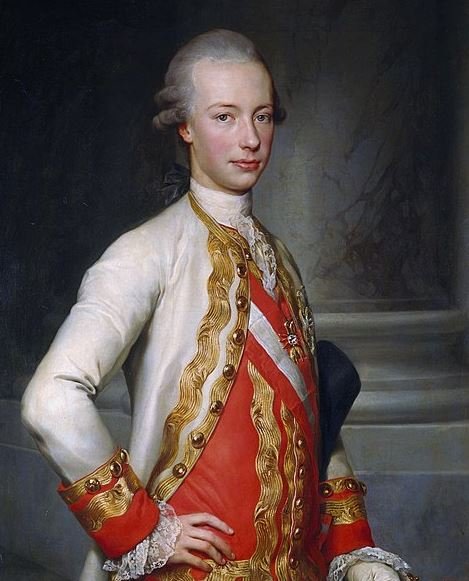
A portrait of Leopold as the Grand Duke of Tuscany, painted by German painter Anton Raphael Mengs.
Leopold’s tenure as Grand Duke of Tuscany (1765–1790) is remembered as a period of substantial reform, reflective of his moderate commitment to enlightened absolutism. Initially under the shadow of counselors appointed by his mother, Leopold assumed full control in 1770. His reforms were comprehensive, targeting economic, judicial, and administrative systems:
Economic and Administrative Reforms
Leopold dismantled Medici-era economic restrictions, allowing industries to flourish.He reduced taxes and streamlined the revenue system, ensuring the state’s economic stability without exploiting its citizens. Also, he initiated large-scale infrastructure projects, notably draining the Valdichiana marshlands, to increase arable land and improve public health.
Justice and Enlightenment Principles
Leopold’s most celebrated legacy in Tuscany was his abolition of the death penalty and torture in 1786, making Tuscany the first modern state to implement such a policy. His penal reforms underscored a belief in the sanctity of life and were inspired by the Age of Enlightenment. He also sought to humanize the treatment of the mentally ill, introducing the law on the insane (legge sui pazzi) in 1774, which mandated humane care for individuals suffering from mental illnesses.
Education and Science
Leopold supported education and the dissemination of knowledge. The La Specola Museum in Florence was expanded under his reign, offering the public access to scientific exhibits and medical waxworks. These efforts aligned with his vision of promoting empirical observation and rationality among his subjects.
Holy Roman Emperor
Upon the death of his elder brother, Joseph II, in 1790, Leopold ascended as Holy Roman Emperor. His reign lasted a brief two years but was marked by pragmatic diplomacy and efforts to stabilize the Habsburg domains, which were in disarray following Joseph’s contentious reforms.
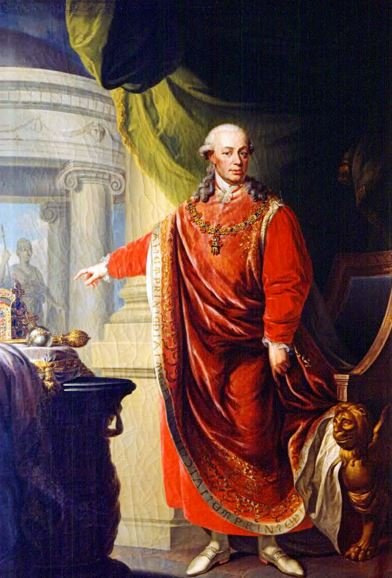
Portrait of Leopold II by German-Hungarian artist Johann Daniel Donat.
Early Concessions and Stabilization
Leopold inherited a fractious empire, with unrest in Hungary, Bohemia, and the Austrian Netherlands. Unlike Joseph, whose reforms alienated local elites, Leopold sought reconciliation.
He restored traditional privileges to local nobility, framing them as essential to the monarchy. By reaffirming Magyar and Bohemian rights, Leopold diffused potential revolts.
After initial concessions failed, Leopold deployed troops to reassert control, balancing the restoration of Habsburg authority with respect for local autonomy.
Relations with France
The French Revolution posed a dual challenge for Leopold. On one hand, his sister, Queen Marie Antoinette, faced personal peril, prompting her desperate appeals for intervention. On the other, revolutionary ideas threatened to destabilize Europe’s monarchies, including his own.
Leopold’s diplomacy culminated in the Declaration of Pillnitz (1791), issued jointly with Prussia. It promised military intervention in France should Louis XVI’s monarchy be jeopardized but was largely symbolic, given Britain and Russia’s lack of commitment to the cause.
Leopold is remembered as a pragmatic and reformist ruler who balanced Enlightenment ideals with political realism, earning praise for his intelligence and moderation.
Foreign Policy Successes
Leopold skillfully navigated tensions with Prussia and Russia over Poland and the Ottoman Empire. By the Treaty of Sistova (1791), he ended hostilities with the Ottomans, securing peace on Austria’s eastern front. His deft handling of these issues preserved the Habsburg monarchy’s integrity amid Europe’s shifting power dynamics.
Cultural Patronage
Leopold was an avid supporter of the arts, particularly Italian opera, a passion cultivated during his years in Florence. In Vienna, he reshaped the cultural landscape by promoting opera seria and ballet over the previously dominant opera buffa. Notably, he commissioned Mozart to compose La Clemenza di Tito for his coronation as King of Bohemia in 1791. Leopold’s cultural policies influenced Vienna’s artistic direction well into the 19th century.
Legacy of Enlightened Absolutism
Leopold II is often regarded as a pragmatist who balanced reform with political stability. While his brother Joseph II’s sweeping changes alienated many, Leopold’s incremental approach to governance made him a more effective ruler.
Leopold’s decision to end the death penalty in Tuscany remains one of his most celebrated achievements. The anniversary of this reform is commemorated annually on November 30 as the Feast of Tuscany, highlighting his progressive legacy.
Leopold II’s pragmatic reforms, diplomatic skill, and progressive policies left a lasting legacy, particularly in Tuscany.
Leopold’s reforms in mental healthcare, particularly his collaboration with physician Vincenzo Chiarugi, laid the groundwork for the moral treatment movement, which emphasized humane care for the mentally ill.
Historians have praised Leopold’s political wisdom. His ability to stabilize a fragmented empire and navigate international crises demonstrated a rare combination of intellect and pragmatism.
Family and Personal Life
Leopold and Maria Luisa’s 16 children included:
- Francis II, the last Holy Roman Emperor and first Emperor of Austria.
- Ferdinand III, who succeeded him as Grand Duke of Tuscany.
- Archduke Charles, a celebrated military leader.
Leopold’s descendants continued to shape European politics, ensuring the enduring influence of the Habsburg-Lorraine dynasty.
Death and Succession
Leopold II’s reign ended abruptly when he died of pneumonia on March 1, 1792, in Vienna. He was interred in the Imperial Crypt. His eldest son, Francis II, succeeded him, navigating Austria through the upheavals of the Napoleonic era.
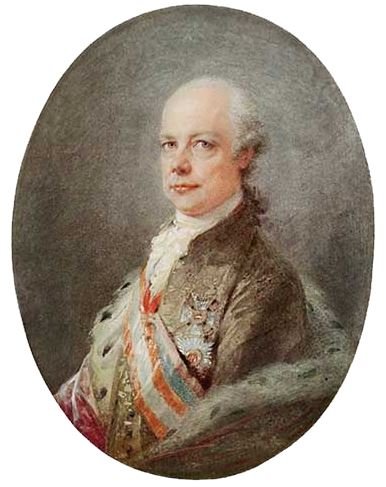
The last portrait of Leopold prior to his death. Artwork by German painter Heinrich Friedrich Füger.