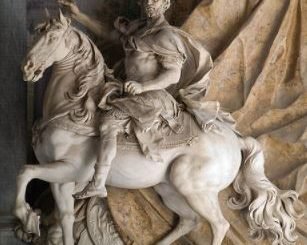
Life and Major Accomplishments of Otto the Great
Otto the Great, also known as Otto I, was a seminal figure in European history, whose reign as King of Germany and later Holy Roman Emperor laid foundational stones for the medieval empire and profoundly influenced the continent’s political landscape.
His life, filled with military conquests, political maneuvers, and religious dedications, marked a pivotal turn in the formation of a unified German state and the strengthening of the Holy Roman Empire.
Below, World History Edu explores Otto’s life, his major accomplishments, and his lasting impact on Europe.
Early Life and Ascension to Power
Otto I was born in 912 to Henry I the Fowler, Duke of Saxony, and his second wife, Matilda. His lineage, part of the Liudolfing dynasty, would later be known as the Ottonian dynasty in his honor. Otto’s early life was marked by his father’s efforts to consolidate power, which influenced Otto’s future policies.
Upon his father’s death in 936, Otto was elected and crowned King of Germany. His coronation was significant, as it marked the continuation of the consolidation of power within the Ottonian dynasty. Otto adopted the title “King by the Grace of God,” underscoring the divine right he believed endorsed his rule.
Consolidation of Power
Otto’s early reign was characterized by challenges from various regional dukes who contested his authority.
His half-brother, Thankmar, and his younger brother, Henry, each led rebellions against him. Otto managed to suppress these uprisings through a combination of military might and strategic alliances.
The Battle of Birten in 941 against Thankmar, and later, the reconciliation and incorporation of Henry into his rule after initial conflicts, exemplified his approach to internal opposition—initial force followed by diplomatic integration.
Expansion and Defense of the Realm
Otto’s military campaigns were pivotal. His involvement in Italy began in 951 when he crossed the Alps to aid Adelaide, the widowed Queen of Italy, marrying her and proclaiming himself King of the Lombards. This move, however, prompted tensions with the Byzantine Empire and the Papacy, who viewed Otto’s expansion with suspicion.
His most significant military accomplishment came in 955 at the Battle of Lechfeld, where his forces defeated the Magyars, effectively ending their invasions into Central Europe. This victory secured Otto’s eastern borders and assured his subjects of peace and stability, significantly boosting his stature among the European monarchies.
Religious Influence and the Holy Roman Empire
Otto’s relationship with the Church was a central theme of his reign. He sought to control the Church to stabilize his rule, a strategy involving the appointment of bishops and abbots who were loyal to him. This allowed Otto to use ecclesiastical resources to strengthen his rule and disseminate his influence.
The pinnacle of Otto’s religious and political career was his coronation as Holy Roman Emperor by Pope John XII in 962. This event was crucial, as it revived the title of Emperor in the West, which had lain dormant since the Carolingians.
By being crowned Emperor, Otto asserted his dominance over both secular and spiritual realms, positioning himself as the leader of a Christian resurgence against non-Christian forces, particularly in the eastern and southern peripheries of Europe.

Image: A stained glass artwork depicting Otto the Great at Strasbourg Cathedral in France.
History of the Catholic Church: How and When Did Catholicism Begin?
Otto’s Cultural and Administrative Impact
Under Otto, the empire saw significant cultural and administrative advancements. He was a patron of the arts and letters, fostering the Ottonian Renaissance, which saw the revival of arts and architecture with a distinct Byzantine influence. His reign also saw the foundation of new bishoprics and abbeys, which played a crucial role in the cultural and spiritual life of the empire.
Administratively, Otto strengthened the structure of the empire through the development of a feudal system where loyalty to the emperor was rewarded with political power and land. He also implemented a system where the emperor’s will was enforced by a network of dukes, margraves, and bishops, thereby ensuring a more unified and stable governance structure.
Legacy
Otto the Great died in 973 and was succeeded by his son, Otto II. His legacy, however, extended far beyond his death. He had established the Holy Roman Empire as a significant European power, influenced by his vision of a Christian empire that was both politically unified and spiritually guided. His reign marked the beginning of a dynasty that would see the empire reach its zenith under his successors.

Read More: Greatest Medieval Kings and their Accomplishments
FAQs
Who were Otto’s parents and what were their backgrounds?
Otto’s father was Henry the Fowler, Duke of Saxony, and his mother was Matilda, daughter of Dietrich of Ringelheim. Henry was a significant Saxon leader, and Matilda came from a noble Saxon family.
Otto had four full siblings: Hedwig, Gerberga, Henry, and Bruno.
Following King Conrad I’s death on 23 December 918, Henry the Fowler was persuaded by Conrad’s younger brother, Eberhard of Franconia, to accept the crown of East Francia. Henry was elected king at the Imperial Diet of Fritzlar in May 919.

Otto I was born on 23 November 912, as the oldest son of Henry the Fowler, Duke of Saxony, and his second wife, Matilda, the daughter of Dietrich of Ringelheim, a Saxon count in Westphalia. Image: Otto’s seal.
Who was Otto I, and why is he considered a pivotal figure in medieval European history?
Otto I, known as Otto the Great, was the East Frankish king from 936 and Holy Roman Emperor from 962 until his death in 973. He is considered pivotal for his role in unifying German tribes, expanding territories, and implementing foundational administrative reforms that shaped the medieval European political landscape.
What significant inheritance did Otto I receive upon his father’s death in 936?
Upon the death of his father, Henry the Fowler, in 936, Otto I inherited the Duchy of Saxony and the kingship of the Germans, marking the beginning of his efforts to centralize authority and unify the German tribes.
How did Otto I transform the nature of German kingship during his reign?
Otto I transformed German kingship by consolidating royal power through strategic marriages and personal appointments, reducing the autonomy of the duchies and bringing them under direct royal control. This shifted the power dynamic from the dukes being co-equals of the king to being his subjects.
What was Otto the Great’s most famous military achievement, and what was its significance?
Otto I’s most famous military achievement was his victory at the Battle of Lechfeld in 955, where he defeated the Magyars, ending their invasions of Western Europe. This victory secured his borders, solidified his reputation as a protector of Christendom, and elevated his status to that of a savior.
How did Otto the Great extend his influence through the church?
Otto I extended his influence through the church by transforming it to strengthen royal authority, thereby securing the church as an ally and subjecting its clergy to his personal control. This was crucial for stabilizing his rule and extending his reach within medieval society.
In what year was Otto the Great crowned Holy Roman Emperor, and why was this significant?
King Otto I was crowned Holy Roman Emperor in 962 by Pope John XII in Rome. This was significant as it followed the tradition of Charlemagne and symbolized the continuity of Christian Roman imperial authority, enhancing his legitimacy and status.

Otto the Great’s legacy is multifaceted, encompassing significant military, political, cultural, and administrative achievements. His reign not only shaped the Holy Roman Empire but also the broader trajectory of medieval European history, marking him as one of the most consequential figures in the annals of the Middle Ages. Image: Statue of Otto I at the Meissen Cathedral in Saxony, Germany.
What challenges did Otto I face during his reign in Italy?
During his reign in Italy, Otto I faced conflicts with the papacy and challenges in stabilizing his rule over the region. He navigated a complex political landscape and faced opposition from the Byzantine Empire, which contested his claims to emperorship.
How did Otto I’s reign contribute to the formation of a German national identity?
Otto I’s reign contributed to the formation of a German national identity by centralizing authority, promoting cultural and architectural revival during the “Ottonian Renaissance,” and using historical and religious frameworks to enhance the prestige and unity of his rule.
What was the significance of Otto I’s marriage alliances, specifically regarding his son Otto II?
The marriage of Otto I’s son, Otto II, to the Byzantine princess Theophanu in April 972 was a strategic alliance meant to secure peace and stabilize relations with the Byzantine Empire, reflecting Otto’s diplomatic approach to governance.