Francis I: Holy Roman Emperor
Francis I (1708–1765) was a significant figure in 18th-century European politics. Serving as the Holy Roman Emperor (1745–1765), he was also Archduke of Austria, Duke of Lorraine and Bar, and Grand Duke of Tuscany. His marriage to Maria Theresa of Austria, the daughter of Emperor Charles VI, marked the foundation of the Habsburg-Lorraine dynasty. The union cemented a legacy of political, financial, and dynastic influence that shaped Europe for decades.
Early Life and Heritage
Born in Lunéville, Lorraine, Francis was the eldest surviving son of Leopold, Duke of Lorraine, and Élisabeth Charlotte d’Orléans, a French princess. His lineage connected him to the Habsburg dynasty through his grandmother Eleonore, the daughter of Emperor Ferdinand III. His upbringing in a noble environment prepared him for significant political roles, with early exposure to court life and governance.
Emperor Charles VI, who admired the Lorraine family, took Francis under his wing after the untimely death of Francis’ older brother, Leopold Clement. Charles envisioned Francis as a suitable husband for his daughter, Maria Theresa. Raised in Vienna alongside his future wife, Francis developed a genuine affection for her, which later proved instrumental in their partnership.
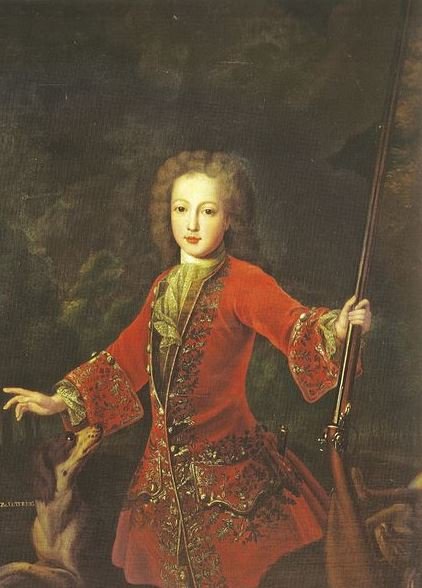
A portrait of Francis I, during his early teens.
Duke of Lorraine and Transition to Tuscany
At 15, Francis inherited the title of Duke of Lorraine. However, the War of the Polish Succession (1733–1738) altered his fortunes. As part of the Treaty of Vienna (1738), Francis ceded Lorraine to Stanisław Leszczyński, the exiled King of Poland, in exchange for the Grand Duchy of Tuscany. This territorial swap ensured stability in Europe and strengthened ties between Austria and France.
Marriage to Maria Theresa
Francis married Maria Theresa in February 1736, solidifying the alliance between Lorraine and the Habsburgs. Their marriage was not just a political arrangement but also a union marked by mutual respect and affection. Maria Theresa, a strong-willed ruler, relied on Francis for his business acumen, entrusting him with the empire’s finances.
Grand Duke of Tuscany
In 1737, Francis assumed control of the Grand Duchy of Tuscany following the death of Gian Gastone de’ Medici, the last Medici ruler. His administration marked a period of stability and growth for Tuscany, with Francis introducing administrative reforms and fostering economic development.
Reign as Holy Roman Emperor
Although Francis became Holy Roman Emperor in 1745, Maria Theresa remained the dominant political figure in their partnership. Francis focused on financial matters, skillfully managing the empire’s resources. His contributions proved invaluable, especially during the financially taxing Seven Years’ War (1756–1763).
Francis’ ability to stabilize the empire’s finances was crucial. By the 1780s, the Habsburg monarchy was in a better fiscal position than many of its contemporaries, including France and Britain. Despite his secondary role in governance, Francis’ prudent financial strategies ensured the empire’s longevity.
Family Life and Legacy
Francis and Maria Theresa had 16 children, many of whom played pivotal roles in European history. Their most famous offspring, Marie Antoinette, became Queen of France. Another son, Joseph II, succeeded Francis as Holy Roman Emperor. The dynasty they established, Habsburg-Lorraine, endured until the collapse of the Austro-Hungarian Empire in 1918.
Francis was deeply interested in the natural sciences, a passion he pursued alongside his administrative duties. However, his personal life was marred by his infidelity, with several high-profile affairs causing scandal at court.
Death and Succession
Francis died unexpectedly in 1765 while returning from the opera in Innsbruck. He was interred in the Imperial Crypt in Vienna. His death marked the end of a significant chapter in Habsburg history, but his legacy lived on through his children and the financial stability he left behind.
Frequently Asked Questions
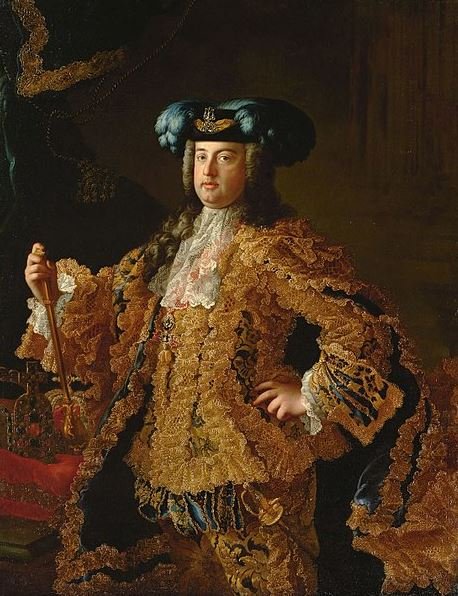
Portrait of Francis I by Swedish-Austrian painter Martin van Meytens.
How did Francis become Holy Roman Emperor?
Francis was elected Emperor in 1745, supported by his wife Maria Theresa, who secured his election through the Treaty of Füssen.
What was Francis I’s role in the Habsburg-Lorraine dynasty?
Through his marriage to Maria Theresa, he co-founded the Habsburg-Lorraine dynasty, which ruled Austria and other territories.
How did Francis acquire Tuscany?
As part of the Treaty of Vienna (1738), Francis ceded Lorraine to France and became Grand Duke of Tuscany after Gian Gastone de’ Medici’s death in 1737.
What were his contributions to governance?
Francis delegated most political and diplomatic matters to Maria Theresa but effectively managed financial affairs, strengthening the Habsburg monarchy’s finances.
What personal controversies surrounded Francis?
Francis had multiple well-known extramarital affairs, including one with Princess Maria Wilhelmina of Auersperg, which drew attention at court.
Who succeeded Francis I?
His eldest son, Joseph II, succeeded him as Holy Roman Emperor, while another son, Peter Leopold, became Grand Duke of Tuscany.