Life and Major Accomplishments of Sir Francis Drake

Sir Francis Drake, with his indomitable spirit and maritime expertise, carved out an exceptional career that left an indelible mark on 16th-century geopolitics. His audacity at sea, whether in exploration or confrontation with the Spanish, symbolized the rising confidence and ambition of Elizabethan England.
Sir Francis Drake, born between 1540 and 1544, and passing away in 1596, was an English sea captain, privateer, naval officer, and explorer. Revered in England as a hero and vilified in Spain as a pirate, Drake’s maritime exploits significantly impacted the geopolitical landscape of the 16th century.
Early Life
Born in Tavistock, Devon, Drake came from a modest family. He was introduced to seafaring at a young age, initially serving as an apprentice on a coastal bark, which he would eventually inherit. This laid the foundation for his illustrious maritime career.
Major Accomplishments
- Privateering Voyages:
- Drake’s early voyages were as a privateer. With tacit approval from Queen Elizabeth I, he and other sailors would raid Spanish settlements and ships in the Caribbean, seizing valuable cargoes and disrupting Spanish operations. These voyages not only enriched Drake and his patrons but also escalated tensions between England and Spain.
- Circumnavigation of the Globe (1577-1580):
- Sponsored by Queen Elizabeth I, Drake embarked on one of his most ambitious voyages aboard the Golden Hind. His journey took him down the coast of South America, through the Strait of Magellan, up the west coast of the Americas, and across the Pacific Ocean. He claimed what is now California for the English crown, naming it “Nova Albion”. Drake’s successful circumnavigation was the second after Magellan’s and the first completed by a captain who survived the entire journey. It made him a substantial fortune and a national hero in England.
- Raids on Spanish Ports and Ships:
- Throughout the 1570s and 1580s, Drake continued to be a thorn in Spain’s side. His raids on Spanish ports, like the 1587 attack on Cadiz, delayed the Spanish Armada’s invasion of England by destroying a significant portion of the Spanish fleet. This preemptive strike was referred to as “singeing the king of Spain’s beard.”
- Role in the Defeat of the Spanish Armada (1588):
- Drake played a pivotal role in England’s defense against the Spanish Armada. As vice admiral, he used innovative tactics, including fire ships, causing panic and breaking the cohesion of the Spanish fleet. He also captured a number of Spanish ships, further depleting Spain’s naval strength.
- Later Expeditions:
- Following the defeat of the Armada, Drake continued his maritime exploits. One notable journey was the 1595 expedition to the West Indies, intending to raid Spanish possessions. Unfortunately, this proved less successful, and Drake contracted dysentery, passing away in 1596 near Portobelo, Panama.
Legacy and Impact
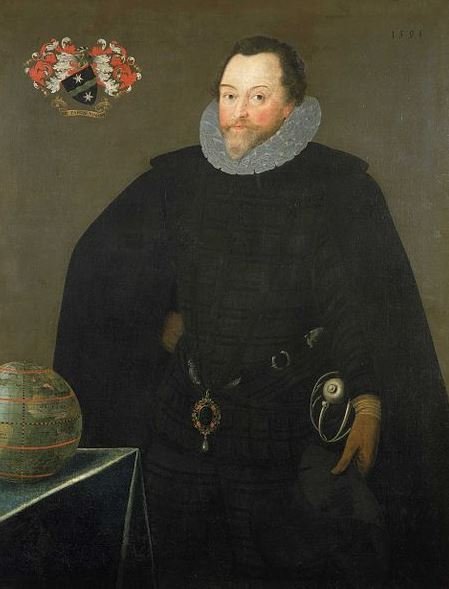
Balancing between heroism and piracy, Sir Francis Drake’s life encapsulates the adventurous spirit, nationalistic fervor, and global aspirations of the age. While he remains a contentious figure in global history, his contributions to maritime exploration and the ascendency of the English navy are undeniable.
Drake’s legacy is multifaceted:
- National Hero: In England, Drake was celebrated for his maritime prowess, exploration, and role in defending the nation against Spain. His successful circumnavigation and exploits against the Spanish solidified his status as a national hero. His knighthood by Queen Elizabeth I in 1581 was a testament to his esteemed position.
- Controversial Figure: In Spain, Drake was viewed as a pirate, a menace that wreaked havoc on Spanish ships and ports. This duality in perception highlights the subjective nature of heroism and villainy, often shaped by national narratives.
- Economic Impact: The wealth Drake accumulated from his voyages, particularly from circumnavigating the globe, contributed significantly to England’s coffers. His raids on Spanish settlements and ships also disrupted Spain’s economic interests in the Americas, challenging their dominance.
- Geopolitical Significance: By challenging Spanish supremacy at sea, Drake played a part in reshaping the balance of power in Europe. His voyages and confrontations with the Spanish strengthened England’s position as a formidable maritime power.
- Exploration: Drake’s voyages expanded English knowledge of the world. His circumnavigation provided valuable insights into global geography, sea routes, and foreign lands, paving the way for future English explorations and colonization.






hello! this is wonderful