Life and Major Accomplishments of Xenophon of Athens
Xenophon of Athens, born around 430 BC and dying in 354 BC, was a significant figure in ancient Greek history. A disciple of Socrates, a historian, soldier, mercenary, and philosopher, his life spans a pivotal era in Greek history that witnessed the Peloponnesian War, the rise of Macedon, and significant cultural shifts.
Early Life and Background
Xenophon was born into a well-to-do Athenian family in an era marked by intellectual fervor and the might of Athenian culture. Though the details of his early education are sparse, it is known that he was a pupil and friend of renowned Greek philosopher Socrates. This mentorship deeply influenced his philosophies and writings, embedding a Socratic perspective into his narratives and analyses of human behavior and governance.

Xenophon, born around 430 BC in Erchia, Athens, was the son of Gryllus, from a wealthy equestrian family. Image: Bust of Xenophon.
Death of Socrates, one of history’s most renowned philosophers
Military Career and the Anabasis
Xenophon’s military career began under unusual circumstances when he joined an expedition in 401 BC, led by Cyrus the Younger against Persian King Artaxerxes II. This campaign, known as the March of the Ten Thousand, was a defining period of his life and served as the basis for one of his most famous works, the Anabasis. After Cyrus fell at the Battle of Cunaxa, near Babylon, the Greek mercenaries, including Xenophon, found themselves stranded deep in enemy territory, thousands of miles from home.
With the Greek generals suddenly slain by treachery, Xenophon became one of the impromptu leaders who rallied the demoralized troops. He displayed remarkable leadership and strategic acumen as he guided his fellow Greeks on a grueling march north through hostile lands. This retreat, famously known as the “March of the Ten Thousand,” ended at the Black Sea at Trapezus (modern-day Trabzon, Turkiye), a journey that Xenophon detailed meticulously, providing not only a military history but also a rich account of the cultures and geography of the Near East.
Writings and Philosophical Contributions
Following his military adventures, Xenophon’s writings became his major contributions to history and philosophy. His works are broadly categorized into historical, Socratic, and philosophical themes.
- Historical Works: The Anabasis is the most celebrated, but his historical narratives also include the Hellenica, which serves as a continuation of Thucydides’ history, covering Greek history from 411 to 362 BC. This work is particularly valued for its insights into Spartan society and its role in Greek politics after the Peloponnesian War.
- Socratic Works: Xenophon’s Memorabilia and Oeconomicus are significant because they offer a portrayal of Socrates that contrasts with Plato’s idealized version. The Memorabilia defends Socrates against the accusations that led to his execution, depicting him as a practical individual concerned with ethical living. The Oeconomicus discusses household management and the virtues of simplicity, reflecting Socratic ideals applied to everyday life.
- Philosophical and Practical Treatises: Xenophon also wrote on topics reflecting his interest in practical applications of philosophy. His works such as Cyropaedia, which is a partly fictionalized account of Cyrus the Great, blends historical writing with moral and political philosophy, exploring the ideal ruler’s qualities. This work was influential in both ancient and Renaissance political thought.

Later Life and Death
After his return from the campaign with Cyrus, Xenophon was exiled from Athens, likely due to his association with Sparta during the Peloponnesian War. He spent much of his later life in Scillus, in Elis, near Olympia, under Spartan protection, where he composed many of his works.
According to Greek biographer Diogenes Laërtius, Xenophon was eventually allowed to return to Corinth in Peloponnese, where he spent his final years. The exact circumstances of his death are not well-documented, but he is believed to have died around 354 BC.
Legacy
Xenophon’s legacy is multifaceted. His historical accounts are invaluable to historians for their detail and coverage of lesser-known aspects of Greek and Persian life. His philosophical works contribute to our understanding of Socratic thought, providing a counterbalance to Plato’s more theoretical treatments. His practical philosophy, particularly in Cyropaedia, influenced Renaissance political thought and the educational ideals of the Enlightenment.
Moreover, Xenophon is considered by many as one of the first true historians, and his works are a testament to the transition from the blind bardic traditions of the Homeric era to a more methodical approach to historiography that includes eyewitness testimony and critical analysis of events. His clear and concise prose has been celebrated for its precision and lack of pretension, characteristics that set a new standard for the historical narrative.

There is no doubt whatsoever that the exploits and writings of Xenophon of Athens (c. 430 BC – c. 354 BC) firmly ensure his place in the pantheon of classical antiquity’s most enduring figures. Statue of Xenophon located in front of the Australian parliament.
FAQs
Here are some questions and answers that delve into the life and contributions of Xenophon of Athens:
Who was Xenophon of Athens?
Xenophon (c. 430–354 BC) was a Greek military leader, philosopher, and historian known for his multifaceted contributions to ancient Greek culture. His works offer invaluable insights into the military exploits and philosophical discourses of his time.
What was significant about Xenophon’s early life and education?
Born into an intellectually vibrant Athens, Xenophon was profoundly influenced by his mentor Socrates. This relationship shaped his thinking, infusing his writings with themes of rationality and virtue, and deeply affecting his philosophical outlook.
A brief history of Ancient Athens and how it became the birthplace of Western Civilization
What role did Xenophon play in the expedition with Cyrus the Younger?
At 30, Xenophon joined Cyrus the Younger in a campaign to seize the Persian throne from Artaxerxes II. Though the campaign failed, it highlighted Xenophon’s leadership qualities. After Cyrus’s death at the Battle of Cunaxa (401 BC), Xenophon emerged as a key leader, guiding the stranded Greek army, the Ten Thousand, back to safety.
What is the Anabasis, and why is it important?
The Anabasis is Xenophon’s most famous work, detailing his experiences during and after Cyrus’s campaign. It provides a first-hand account of the logistical and strategic challenges faced by the Ten Thousand. This work is celebrated for its military insights and Xenophon’s narrative style.
What are some other notable works by Xenophon, and what do they address?
Besides the Anabasis, Xenophon wrote the Cyropaedia, which discusses the leadership of Cyrus the Great, and the Hellenica, which continues the historical narrative of the Peloponnesian War after Thucydides. He also wrote Socratic works like the Memorabilia and Oeconomicus, exploring philosophical themes in practical contexts.
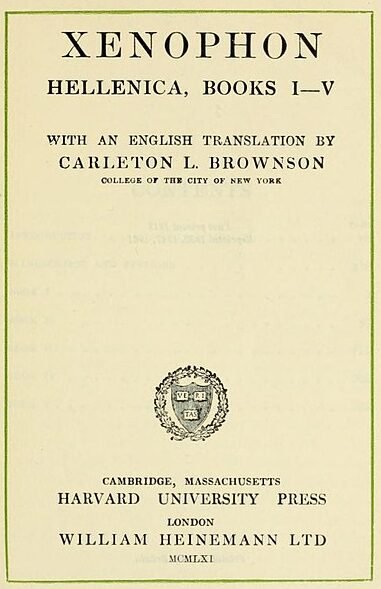
Xenophon’s vivid Hellenica recounts witnessing significant events like Alcibiades’ return and the trial of the generals. Invited by Proxenus, he joined Cyrus the Younger’s 401 BC campaign, detailed in his memoir, Anabasis.
How did Xenophon contribute to our understanding of Socrates?
Through works like the Memorabilia and Oeconomicus, Xenophon provided a different perspective on Socrates compared to Plato, portraying him as a practical philosopher engaged with the everyday problems of ethics and household management.
What is known about Xenophon’s later life and exile?
Despite his Athenian origins, Xenophon’s close ties with Sparta, particularly with King Agesilaus II, led to his exile from Athens. He spent his later years in Sparta or the Peloponnese, continuing his writing and reflection until his death around 354 BC.

After receiving an estate in Scillus, Xenophon spent 23 years there until the Elians seized it post-Battle of Leuctra in 371 BC. Diogenes Laërtius notes Xenophone then moved to Corinth, where he lived until his death in 354 BC at about 75 years old. Pausanias mentions his tomb in Scillus. Image: An illustration depicting Xenophon leading his men.
How has Xenophon’s legacy influenced historical and philosophical thought?
Xenophon’s legacy bridges military leadership and philosophical inquiry, influencing not just military strategies but also political and ethical thinking across millennia. His writings provide a unique blend of action-based leadership and reflective philosophy, marking him as a pivotal figure in both historical and philosophical studies.
Why is Xenophon considered a significant historical figure?
Xenophon is considered significant for his firsthand military accounts, philosophical dialogues, and historical narratives that offer deep insights into Greek life, politics, and thought. His dual role as a leader and thinker makes him an enduring symbol of the philosopher-warrior ideal in antiquity.





