Pharaoh Taharqa: The Kushite King who ruled Ancient Egypt
Pharaoh Taharqa, a distinguished ruler of Egypt’s Twenty-fifth Dynasty and king of the Kingdom of Kush, reigned from 690 to 664 BCE.
His life and reign are marked by profound cultural and political influence over Egypt and Kush (modern-day Sudan).
As one of the prominent “Black Pharaohs” or “Kushite Pharaohs,” he played a significant role in reviving ancient Egyptian culture, engaging in ambitious architectural projects, supporting religious institutions, and leading military campaigns.
Despite the eventual challenges posed by the expanding Assyrian Empire, Taharqa’s rule symbolized the height of the Kushite influence in Egypt, leaving a lasting legacy in both historical records and architectural achievements.

Profile of 25th Dynasty Pharaoh Taharqa on the Taharqa Shrine, Ashmolean Museum in Oxford, England
READ MORE: The Nubian Rulers of Ancient Egypt
Early Life and Lineage
Taharqa was born into a powerful Kushite royal family in Nubia. Although his precise parentage is unclear, he is widely believed to be the son of Piye (Piankhi), a Kushite king who first conquered Egypt and established the Twenty-fifth Dynasty, uniting Egypt and Kush.
Taharqa grew up amidst a family that viewed Egypt as an extension of its influence, and he likely spent time in both Nubia and Egypt. The influence of Nubian culture, particularly its religious and military traditions, shaped Taharqa’s upbringing and his approach to leadership.

Statue of Pharaoh Taharqa from Jebel Barkal, 3.6 meters tall, National Museum of Sudan.
His ascent to the throne was not straightforward and suggests a period of political maneuvering within the Kushite royal family. Upon the death of Piye, Shebitku and later Shabaka, both believed to be Taharqa’s relatives, ruled as kings before him.
Some historical accounts imply that Taharqa may have taken the throne after Shabaka’s reign under unusual circumstances, possibly involving the removal of Shabaka.
The inscriptions on the Kawa Stela V imply that Taharqa’s rise to power was a politically complex process rather than a straightforward succession, though he later sought to legitimize his rule by highlighting his favor with past rulers.
The Early Years of Taharqa’s Reign
Upon ascending the throne around 690 BC, Taharqa faced the immediate challenge of consolidating his authority over both Egypt and Nubia.
These early years were marked by stability, largely due to a period of abundant Nile flooding, which contributed to agricultural prosperity. The high flood levels ensured a steady supply of food and resources, allowing Taharqa to focus on strengthening his kingdom and investing in monumental projects that emphasized the religious and cultural unity of Egypt and Kush.
Taharqa’s reign was notable for its attempts to revive Egypt’s historical and religious identity. He supported religious institutions generously, especially the cult of Amun, which was central to both Egyptian and Nubian worship.

King Taharqa stands left, offering “a white loaf” to Amun-Re, alongside Mut, Khonsu, and Montu at the Kawa shrine.
By investing in these institutions, Taharqa reinforced his role as a divine ruler, aligning himself with the powerful god Amun and gaining support from both Egyptian and Nubian religious elites. These actions were a significant part of his strategy to consolidate power and ensure loyalty from Egypt’s religious centers, particularly in Thebes.
READ MORE: Most Famous Ancient Egyptian Gods and Goddesses
Cultural and Religious Revival
One of Taharqa’s key accomplishments was his role in a cultural renaissance that restored Egypt’s classical traditions. Drawing inspiration from Egypt’s Old, Middle, and New Kingdoms, he promoted the revival of ancient customs, including religious ceremonies, arts, and architectural styles.

King Taharqa column
The influence of Theban theology was particularly strong during his reign, as it merged with the ideologies of the Egyptian empire to create a unique blend of Egyptian and Nubian culture. This fusion aimed to forge a shared identity between Egypt and Kush, bridging differences and creating a cohesive kingdom that honored the ancient traditions of both regions.
Taharqa’s religious devotion was evident in his contributions to the Temple of Amun at Kawa, where he donated large amounts of gold and other offerings. This generosity not only strengthened the religious institutions but also reinforced his image as a pious and just ruler who respected the gods. The support of the temple further elevated his status in the eyes of the people, as he was seen as a ruler favored by Amun, thus enhancing his political legitimacy.

Kiosk of Taharqa in Karnak
Architectural Projects
Taharqa’s reign is often celebrated for its monumental architecture, which spanned both Egypt and Nubia. He undertook significant projects that included expanding existing temples and constructing new ones, a reflection of his desire to restore Egypt’s grandeur.
Among his most remarkable achievements was the expansion of the Temple of Karnak, one of Egypt’s most sacred sites, where he added new colonnades and statues. His architectural contributions at Karnak reflected his commitment to preserving and enhancing one of Egypt’s most cherished religious sites.
In Nubia, Taharqa focused on developing the religious complex at Jebel Barkal, a sacred mountain believed to be the home of the god Amun. Jebel Barkal held immense religious importance for both Egyptians and Nubians, and Taharqa’s construction projects there were designed to mirror the grandeur of Karnak. This complex served as a testament to his devotion and his effort to reinforce the spiritual bond between Egypt and Kush. Jebel Barkal was transformed into a monumental center for worship, symbolizing the unity of the two lands and the centrality of Amun in their cultural heritage.
Taharqa also developed “Temple Towns” throughout the region, which were local centers for governance, production, and trade. These towns functioned as hubs of religious and economic activity, creating a network that supported the Twenty-fifth Dynasty’s control over both Egypt and Nubia. This innovative approach to infrastructure extended the dynasty’s influence and integrated Egypt’s economy with that of Nubia, fostering prosperity and unity.

Taharqa’s kiosk. Karnak Temple
Military Campaigns and Conflict with Assyria
While Taharqa’s reign brought prosperity and cultural revival, it also faced significant military challenges, particularly from the Assyrian Empire, which was expanding its influence across the Near East.
Initially, Taharqa managed to assert Kushite power in the region, forming alliances with states in Phoenicia and Philistia to counter Assyrian dominance. He actively supported Hezekiah, the king of Judah, during the siege of Jerusalem in 701 BC.
While accounts differ on the precise events, it is believed that Taharqa’s support contributed to the Assyrians’ withdrawal, bolstering his reputation as a protector of allied states.
However, Assyrian aggression continued under Sennacherib’s successor, Esarhaddon. In 674 BC, Taharqa achieved a temporary victory over the Assyrian forces, but the Assyrians soon returned with greater force. In 671 BC, Esarhaddon invaded Egypt, capturing Memphis and imposing heavy tributes, marking a significant loss for Taharqa.

The Victory Stele of Esarhaddon, commemorating his Egyptian conquest, shows the king holding a war mace, with royal captives kneeling before him. Among them is Ushankhuru, Taharqa’s son, shackled with a rope but wearing the Kushite crown. Another captive may be Abdi-Milkutti, the King of Sidon.
Although he retreated to Upper Egypt, he continued to resist Assyrian control by inciting rebellions in the Delta. His defiance culminated in another campaign led by Ashurbanipal, which ultimately forced Taharqa and his allies to retreat from Egypt.
Despite these setbacks, Taharqa’s military efforts were emblematic of his resilience and determination to protect Egypt from foreign influence. Although he eventually lost control of northern Egypt, his campaigns delayed Assyrian domination and demonstrated his commitment to defending Egyptian sovereignty. His role in these military engagements is remembered as a testament to his leadership and dedication to his kingdom’s independence.
Taharqa’s Final Years and Legacy

The Pyramid of Taharqa at Nuri
After retreating to Nubia, Taharqa continued to rule over Kush and maintained his influence in Upper Egypt. His legacy persisted through his monumental contributions, both in architecture and in fostering a unique cultural identity that blended Egyptian and Nubian elements. This integration was so profound that even after Assyrian conquests, the cultural bonds between Egypt and Kush could not be easily dismantled. The construction of pyramids in Nubia, reminiscent of Egypt’s ancient burial practices, highlights the enduring influence of Taharqa’s reign on Nubian society.
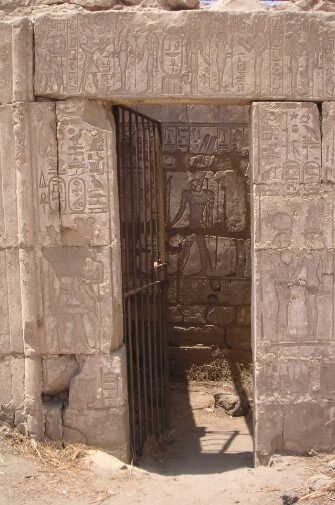
Chapel of Taharqa and Shepenwepet in Karnak
One of his most remarkable architectural legacies is the pyramid he built for himself at Nuri in Nubia, which is the largest in the region. This pyramid, with intricate rock-cut tombs, underscores the elaborate funerary traditions Taharqa upheld.
He was buried with over a thousand shabtis (ushabti or shabti dolls)—funerary figurines made from valuable materials—demonstrating his high status and the respect he commanded even in death.

Ushabti of pharaoh Taharqa (25th Dynasty)
Taharqa’s successor, Tantamani, continued the struggle against Assyrian rule but was ultimately unsuccessful in restoring full control over Egypt.
The eventual sacking of Thebes by the Assyrians marked the decline of Kushite influence in Egypt. Nonetheless, the legacy of Taharqa and his dynasty endured, as the cultural and religious practices he promoted continued to influence Egypt and Nubia.

Tantamani (also known as Tanutamun or Tanwetamani; d. 653 BC) was the last pharaoh of Egypt’s Twenty-fifth Dynasty and ruler of the Kingdom of Kush in Northern Sudan. His royal name, Bakare, means “Glorious is the Soul of Re.” Image: Portrait of Tantamani, Sudan National Museum.
Taharqa in Historical Records and Legends
Taharqa’s impact was not confined to Egypt and Nubia; he is mentioned in various historical texts that extend his legacy.
In the Bible, he is referred to as “Tirhakah,” the king of Cush, who intervened to support Judah against Assyrian forces. This biblical reference attests to his prominence beyond the Nile Valley and highlights his role as a regional power figure.
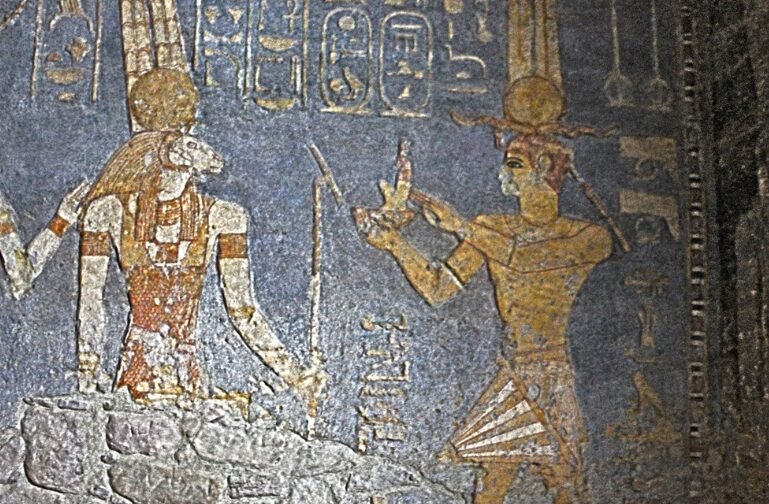
Lion-headed God Appademak with Pharaoh Taharqa (right) in the Jebel Barkal Temple of the Goddess Mut
Classical historians, including Strabo and Megasthenes, also mention Taharqa, attributing to him expeditions that reached distant lands, although these accounts may be more mythological than factual.
Arab sources, such as those of Ibn al-Khattib, also reference Taharqa, claiming he led expeditions as far as southern Spain. While the historical accuracy of these accounts is uncertain, they illustrate the legendary status Taharqa achieved, with his exploits resonating across different cultures and regions.
Conclusion

Statue of King Taharqa, in the Boston Museum of Fine Arts in Boston, Massachusetts
Pharaoh Taharqa’s reign represents a unique and influential period in the history of Egypt and Nubia. His life and accomplishments reflect a remarkable balance of military ambition, cultural revival, and architectural achievement.
As a Kushite pharaoh ruling over Egypt, he embraced Egyptian traditions while promoting Nubian heritage, fostering a shared cultural identity that continued long after his dynasty’s decline.

Taharqa (left) embracing Horus (Re-Horakhty) on the Kawa shrine
Taharqa’s architectural projects, particularly at Karnak, Jebel Barkal, and Nuri, symbolize his commitment to preserving and enhancing Egypt’s grandeur. His cultural revival efforts restored Egypt’s religious institutions and traditions, merging Theban theological ideas with Nubian beliefs. The temples, pyramids, and monuments he built stand as enduring reminders of his impact, representing a cultural integration that shaped the history of both Egypt and Nubia.
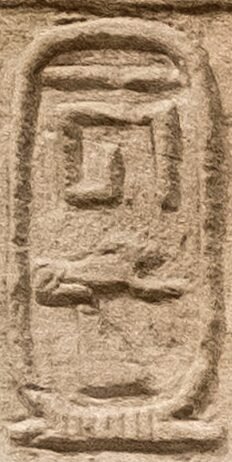
Taharqa’s cartouche on the Shrine
In the face of Assyrian aggression, Taharqa demonstrated resilience and courage, delaying the advance of a powerful empire and defending his kingdom’s independence. Though he eventually retreated to Nubia, his leadership left a lasting imprint on Egypt’s history. His life embodies the resilience and complexity of the Kushite rulers who preserved their Nubian identity while advancing Egyptian traditions, leaving an indelible legacy that echoes through the architectural, religious, and cultural landscapes of Egypt and Nubia.
Frequently Asked Questions
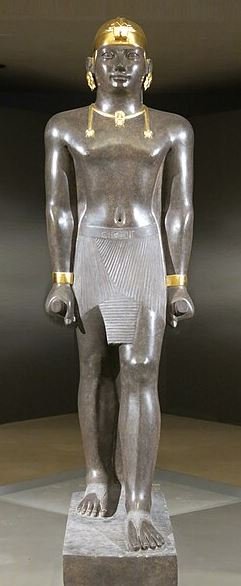
Taharqa was a pharaoh of Egypt’s Twenty-fifth Dynasty and king of Kush, ruling from 690 to 664 BC.. Image: This 2.7-meter statue of Taharqa depicts him in a striding pose, wearing a shendyt kilt, a double-uraeus skullcap, and holding a mekes staff.
What was Taharqa’s lineage and how did he rise to power?
Likely the son of Piye and successor to his cousin Shebitku, Taharqa rose through political maneuvering, possibly even ousting Shabaka to claim the throne.
How did Taharqa’s reign begin, and what marked its prosperity?
His early reign saw high Nile floods that brought agricultural abundance, which fueled economic stability and allowed him to invest in religious and cultural projects.
What impact did Taharqa have on Egyptian religious traditions?
Taharqa sought to revive Egypt’s classical traditions, restoring temples and integrating Nubian and Egyptian cultures, merging Theban theology with Egyptian imperial ideology.

The dual snakes in Pharaoh Taharqa’s crown signify his rule over both Egypt and Nubia. Image: Portrait of Taharqa, Kerma Museum in Sudan
What architectural achievements are attributed to Taharqa?
Taharqa expanded the Temple of Karnak, built a new temple at Kawa, and added structures at Jebel Barkal, turning it into a religious complex similar to Karnak.
How did Taharqa use his architectural projects practically?
His construction established “Temple Towns,” which served as local centers for governance, production, and distribution, reinforcing Kushite rule in Egypt and Nubia.

Kushite Empire of the 25th dynasty of Egypt, under Taharqa
What military challenges did Taharqa face from the Assyrian Empire?
The Assyrian Empire, aiming to expand, engaged Taharqa in multiple campaigns. He initially defended Egypt but ultimately lost control of northern Egypt to Esarhaddon in 671 BC.
Taharqa continued his resistance after Assyrian incursions. He regrouped in Upper Egypt and attempted to incite rebellions in the Delta, but an Assyrian campaign led by Ashurbanipal in 667 BC finally drove him from Egypt.
What lasting cultural influence did Taharqa have?
Taharqa fostered a deep cultural integration between Egypt and Kush, which endured even after the Assyrian occupation, as seen in continued Nubian pyramid construction.
What architectural legacy did Taharqa leave in Nubia?
He built the largest Nubian pyramid at Nuri, with rock-cut tombs, and was buried with over a thousand shabtis, reflecting his high status and Nubian funerary traditions.

Taharqa presents an offering to the ram-headed god Amun-Re at the Kawa shrine, the Temple of Gematen.
Who succeeded Taharqa, and what was his legacy in Egypt?
His nephew Tantamani succeeded him but failed to regain control of Egypt. The Assyrian sacking of Thebes marked the decline of Kushite influence, yet Taharqa’s legacy endured.
How is Taharqa remembered in historical and religious texts?
In the Bible, he’s “Tirhakah,” king of Cush who defended Jerusalem. Greek historians and Arab sources referenced his power, even claiming he reached as far as southern Spain.
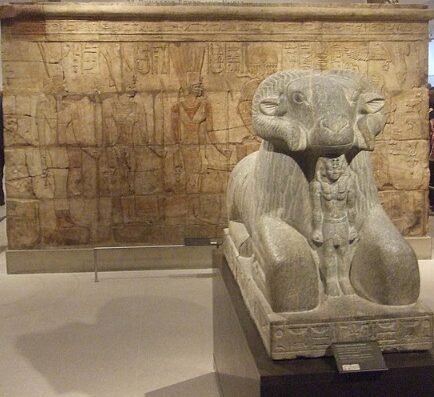
Shrine and Sphinx of Taharqa
What does Taharqa’s reign symbolize in the context of Egyptian and Nubian history?
Taharqa’s reign exemplifies the resilience of the Kushite rulers who preserved Nubian identity while embracing Egyptian traditions, leaving an enduring legacy in Egypt’s cultural landscape.

Taharqa, c. 690-64 BCE, Ny Carlsberg Glyptotek, Copenhagen
READ MORE: The Great Sphinx and its missing nose





