Life and Political Career of Sir Geoffrey Palmer, the 1st Baronet
Sir Geoffrey Palmer, 1st Baronet, was a prominent English lawyer and politician during the tumultuous years of the English Civil War, the Commonwealth, and the Restoration. Born in East Carlton, Northamptonshire in 1598, he came from a family with longstanding estates in Northamptonshire. He was well-educated, attending Christ’s College, Cambridge, where he earned a Bachelor of Arts in 1616, followed by a Master of Arts in 1619. Soon after, he entered the Middle Temple, one of the four Inns of Court in London, to pursue a career in law. Called to the bar in 1623, Palmer began his career as a barrister, developing a reputation as a knowledgeable and principled lawyer.
Palmer married Margaret Moore, the daughter of Francis Moore, a notable lawyer in Berkshire. Together, they had six children, including their sons Lewis and Geoffrey. His family connections and legal acumen soon provided him opportunities to enter politics, where he would ultimately make a significant impact.
Early Political Career and Parliament
Palmer’s political career began in earnest when he was elected to the Long Parliament in 1640 as the Member of Parliament for Stamford. During this period, the English political landscape was shifting drastically. Parliament increasingly challenged the authority of King Charles I, and Palmer found himself navigating a time of intense division between royalists, who supported the king, and parliamentarians, who sought limits on the monarchy’s power.
Palmer initially supported Parliament’s attempt to curb the king’s power but maintained a loyalist stance in principle. As an MP, he played a notable role in the impeachment proceedings against Thomas Wentworth, the Earl of Strafford. Strafford, a close advisor to Charles I, was accused of treason for his authoritarian tactics, which many MPs believed undermined the rights of Parliament. Palmer provided legal advice regarding the procedures and argued in defense of the accused’s right to fair treatment. Although Palmer worked on the legalities of Strafford’s impeachment, his royalist sympathies eventually led him to support the king against Parliament’s more radical actions.

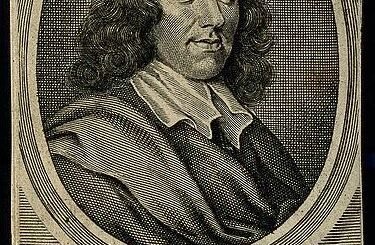
Image: Portrait of Geoffrey Palmer.
Stand on Religious and Political Issues
Palmer was a staunch Protestant and supported Parliament’s Protestation in 1641, a declaration to defend the Protestant faith. He aligned himself with moderate figures in Parliament who sought reform without overthrowing the monarchy. However, when John Hampden pushed for the Grand Remonstrance—an extensive list of grievances against the king—Palmer opposed it. He fiercely objected to Hampden’s proposal to publish the Remonstrance, viewing it as an inflammatory move that could deepen the nation’s division. His vocal opposition to the Remonstrance resulted in his brief imprisonment in the Tower of London, reflecting the rising tension between the royalist and parliamentarian factions.
Alignment with the Royalist Cause
As the political conflict escalated and civil war loomed, Palmer ultimately sided with the royalists. In 1642, he became a Commissioner of Array for Lincolnshire, a role that required him to organize local militias in support of the king. His loyalty to the crown was solidified during this period, especially as Parliament grew more radical and introduced measures such as the Militia Ordinance, which effectively stripped the king of control over England’s military.
In 1643, Oxford University awarded Palmer an honorary Doctor of Civil Law (DCL) in recognition of his support for the royalist cause. That same year, he participated in the king’s Parliament at Oxford, an alternative assembly of royalist MPs established after Charles I left London. His steadfast loyalty led to his appointment as Solicitor General in 1645. However, when Oxford fell to Parliament in 1646, Palmer was captured by the parliamentary forces and, like many royalist supporters, he had to pay fines to retain his estates.
Legal Practice during the Commonwealth Period
After the defeat of the royalists, Palmer returned to legal practice in London, working under the Commonwealth government established by Oliver Cromwell. Despite his royalist sympathies, he adapted to the new regime and continued to build his legal career. In 1655, Palmer was once again imprisoned in the Tower on suspicion of plotting against Cromwell. He was released the following year, and although he did not engage directly in political affairs during the Commonwealth, he maintained ties with other royalists who sought the monarchy’s restoration.
Attorney General and the Restoration of Charles II
With the monarchy’s restoration in 1660, Palmer’s fortunes dramatically improved. Charles II, who had returned to England as king, appointed Palmer as Attorney General on May 31, 1660, shortly after his return. The new position placed Palmer at the center of many high-profile legal proceedings. In his first month as Attorney General, Palmer was also knighted and made a baronet, adding to his status as one of the king’s closest legal advisors.
One of his most significant roles as Attorney General was leading the prosecution of the regicides—the individuals involved in the execution of Charles I. Palmer pursued the regicides with zeal, as Charles II’s government sought to make examples of those who had played a role in the king’s death. This period of Palmer’s career highlighted his loyalty to the restored monarchy and underscored his commitment to upholding the king’s authority.
Political Influence and Family Advancement
During the Restoration, Palmer used his influence to support his family’s political and social advancement. He secured a parliamentary seat at Ludgershall for his son Geoffrey, though Geoffrey died shortly after. Another son, Lewis, was elected as MP for Higham Ferrers, demonstrating Palmer’s efforts to establish his family’s political legacy.
In addition to his role as Attorney General, Palmer briefly served as Chief Justice of Chester from 1661 to 1662, presiding over cases in one of England’s regional courts. He also held the position of recorder in the town of Boston, Lincolnshire, a role he retained until his death. Palmer’s career during the Restoration cemented his reputation as a loyal servant to the crown and a powerful legal mind in England’s government.
Landholdings and Legacy
Sir Geoffrey Palmer accumulated significant landholdings, including the manors of East and West Carlton, Northamptonshire, which had been in his family since the 15th century. In 1664, he expanded his estate with the purchase of Carlton Curlieu Hall in Leicestershire, further solidifying his family’s wealth and social status.
Palmer passed away on May 5, 1670, in his home at Hampstead Fields, Middlesex. His funeral was attended by several prominent nobles and judges, a testament to the respect he had earned throughout his life. He was buried at St. Peter’s Church in East Carlton, where a monument commemorates his contributions.
Legacy and Historical Significance
Sir Geoffrey Palmer’s life reflected the complexities of loyalty, law, and politics during one of England’s most turbulent periods. Though he had initially supported the crown, his early legal career brought him into conflict with Parliament. His steadfast allegiance to the royalist cause, even at the risk of imprisonment, demonstrated his commitment to the monarchy. As Attorney General under Charles II, he helped to stabilize the monarchy’s authority, especially through his prosecution of those involved in the regicide of Charles I.
Palmer’s legacy also extended through his family, particularly his son Lewis, who continued the family’s political involvement. His legal and political influence, combined with his land acquisitions, solidified the Palmers as a notable family in England. Sir Geoffrey Palmer’s life and career serve as a window into the political dynamics of the English Civil War, the Commonwealth, and the Restoration, marking him as a significant figure in 17th-century England. His contributions to legal proceedings, especially as Attorney General, and his loyalty to the monarchy, have ensured his place in the annals of English history.
Frequently Asked Questions

What were Sir Geoffrey Palmer’s early academic and legal qualifications?
Sir Geoffrey Palmer studied at Christ’s College, Cambridge, earning a BA in 1616 and an MA in 1619. He entered the Middle Temple in 1616 to study law and was called to the bar in 1623.
Who did Sir Geoffrey Palmer marry, and how many children did they have?
Palmer married Margaret Moore, daughter of the respected lawyer Francis Moore. They had six children, including Lewis Palmer, who later succeeded him.
When did Sir Geoffrey Palmer begin his political career, and what role did he play in Parliament?
Palmer began his political career in 1640 when he was elected to the Long Parliament as the representative for Stamford. He contributed legal insights during the impeachment of the Earl of Strafford and strongly supported Protestant causes.
What was Palmer’s stance on the Grand Remonstrance, and what were the consequences of his actions?
Palmer opposed the passage of the Grand Remonstrance, passionately protesting John Hampden’s motion to publish it. His criticism led to his temporary imprisonment in the Tower of London after he referred to the majority in Parliament as a “rabble of inconsiderable persons.”
How did Palmer’s political stance change with rising tensions in Parliament?
Palmer sided with the royalists and became the Commissioner of Array for Lincolnshire following the Militia Ordinance’s passage, aligning himself with royalist causes.
What honors did Palmer receive from Oxford, and what role did he play in the royalist Parliament?
In 1643, Palmer was awarded a Doctor of Civil Law (DCL) from Oxford. He joined the royalist Parliament, which met in Oxford the following year, and was appointed Solicitor General in 1645.
What happened to Palmer after Oxford fell to Parliamentary forces?
Palmer was captured, and he compounded his estates for £500 in 1648. He resumed his law practice in London during the Commonwealth period and was briefly imprisoned again in 1655.
How did Palmer’s fortunes improve with the Restoration of Charles II?
After the Restoration in 1660, Palmer was appointed Attorney General. Within a week, he was knighted and created a baronet, rising quickly in political prominence.
What were some of Palmer’s responsibilities and actions as Attorney General?
As Attorney General, Palmer led high-profile prosecutions, including that of the regicides in 1662. He also secured political positions for his family, with his son Geoffrey holding a seat at Ludgershall and his son Lewis representing Higham Ferrers.
What additional roles did Palmer hold later in his life?
Palmer served briefly as Chief Justice of Chester (1661–1662) and as recorder of Boston until his death.
What estates did Palmer own, and when did he acquire Carlton Curlieu Hall?
Palmer owned the manors of East and West Carlton in Northamptonshire, which his family had held since the 15th century. In 1664, he purchased Carlton Curlieu Hall in Leicestershire.
When did Sir Geoffrey Palmer die, and where was he buried?
Sir Geoffrey Palmer died on May 5, 1670, at his Hampstead Fields home in Middlesex. His funeral was attended by numerous nobles and judges, and he was interred at St. Peter’s Church, East Carlton, where a monument commemorates his legacy.