Thomas Wentworth – 1st Earl of Strafford
Thomas Wentworth, 1st Earl of Strafford (1593–1641), was a prominent English statesman, military commander, and close advisor to King Charles I.
His career was marked by his dramatic shift from an advocate of parliamentary rights to a staunch defender of royal authority, a transformation that would ultimately place him at the center of the constitutional crisis leading up to the English Civil War.
Strafford’s governance style in Ireland, as well as his attempts to strengthen the monarchy, earned him admiration from the king but intense opposition from Parliament. His downfall and execution were pivotal moments in English history, symbolizing the intensifying conflict between the monarchy and Parliament.
Early Life and Background
Thomas Wentworth was born on April 13, 1593, into a prominent family in Yorkshire. He was the eldest surviving son of Sir William Wentworth and Anne Atkinson and was educated at St. John’s College, Cambridge. In 1611, Wentworth inherited his father’s baronetcy and estates, establishing him as a significant figure in northern English society. He became involved in local politics early on and began to participate in national politics as a member of Parliament (MP).
Initially, Wentworth aligned with those advocating for the rights of Parliament. He was elected to Parliament for York in 1614, and then for Yorkshire in 1621. During these early years, he gained a reputation for his eloquence, intelligence, and political acumen. He was particularly concerned with upholding the rights of Parliament, which reflected the broader tensions between King James I and the parliamentary representatives who sought more influence in governance.
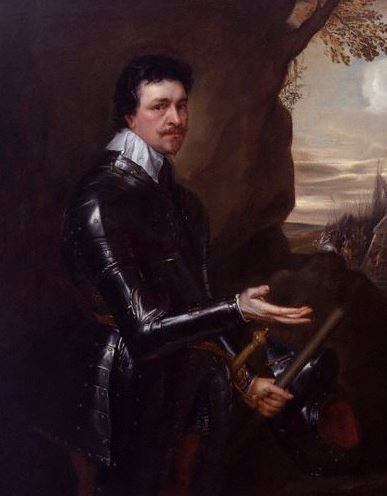
Image: A portrait of Sir Thomas Wentworth by Sir Anthony van Dyck.
Shift in Allegiances and Loyalty to the Crown
Wentworth’s shift from a defender of parliamentary rights to a royalist is one of the most intriguing aspects of his career. The shift began around 1626 when he was passed over for important roles in Parliament. Additionally, King Charles I dissolved Parliament in frustration over resistance to his policies, creating an environment where ambitious men like Wentworth had to choose between aligning with the crown or the increasingly defiant Parliament.
In 1628, Wentworth’s allegiance fully shifted when he accepted the title of Baron Wentworth and later that year became Viscount Wentworth. King Charles rewarded Wentworth’s loyalty with key roles in government, marking the beginning of his transformation into a royalist. Wentworth soon became known for his commitment to reinforcing royal authority, a stance that estranged him from many of his former allies in Parliament.
Appointment as Lord Deputy of Ireland
Wentworth’s talents and loyalty to the crown earned him one of the most powerful and challenging positions in the kingdom: Lord Deputy of Ireland. Appointed in 1632, he set out to implement an ambitious agenda aimed at consolidating royal power, increasing revenues, and enforcing order. His policies became known as “Thorough,” reflecting his determination to rule Ireland decisively on behalf of the king.
Wentworth believed that Ireland was critical to England’s stability and prosperity, and he approached his role with a combination of administrative skill and authoritarian control. He imposed reforms in various areas:
- Finance: Wentworth worked to make Ireland financially self-sufficient by revamping taxation policies and securing new revenues for the crown. His ability to generate funds for the monarchy earned him considerable favor from Charles I.
- Religion: He was careful to enforce English Protestantism in Ireland, ensuring conformity to the Church of England. However, he also maintained some tolerance for the Irish Catholic population, largely to avoid outright rebellion. His handling of religious matters was delicate, as Ireland was overwhelmingly Catholic, while English officials remained Protestant.
- Economic Development: Wentworth promoted economic growth, including encouraging the development of the linen industry. He aimed to foster Irish economic dependency on England while generating more income for the crown.
- Legal Reforms: Wentworth enforced English legal standards in Ireland, sometimes seizing land from local landowners to strengthen the English hold. This policy was highly controversial, as it fueled resentment among both the Irish aristocracy and English settlers.
Return to England and Elevation to the Earl of Strafford
In 1640, Wentworth returned to England, now in the role of a trusted royal advisor, just as tensions between Charles I and Parliament were coming to a head. He was granted the title Earl of Strafford, cementing his place among the English nobility. Wentworth, now Strafford, became a central figure in the king’s strategy to consolidate power and subdue parliamentary resistance.
Strafford was instrumental in advising Charles to rule without Parliament during the “Personal Rule” period (1629–1640), a decision that increased Strafford’s influence but also fueled opposition to the monarchy. He urged the king to resist parliamentary demands, suggesting that with a strong executive authority, Charles could avoid being subject to parliamentary restrictions. Strafford’s plan was to use resources from Ireland and Scotland to support the king’s finances, lessening the need for parliamentary consent.
The Bishops’ Wars and Conflict with Parliament
Strafford’s influence was tested by the Bishops’ Wars (1639–1640), a series of conflicts between Charles I and Scotland over religious reforms. Charles sought to impose Anglican practices on the Scottish church, which led to rebellion. Strafford advised Charles to raise an army in Ireland to subdue the Scots and proposed that Ireland might serve as a financial base for the king’s campaigns. However, Strafford’s suggestion proved deeply unpopular among Parliament, as it suggested the king was willing to use an Irish army against his own subjects.
When the Short Parliament was convened in 1640, Strafford’s policies were a central point of contention. The parliamentarians demanded an end to his policies, particularly his approach to taxation and governance without parliamentary consent. However, Strafford remained committed to his strategy, emphasizing the need for a unified government under the king’s authority.
Trial and Execution
Strafford’s actions eventually made him the principal target of parliamentary anger. In 1641, the Long Parliament impeached him on charges of treason, accusing him of attempting to subvert English liberties and using military force against the king’s subjects. His trial was a dramatic moment in the struggle between Parliament and the monarchy, and the charges against him were groundbreaking, as treason was traditionally seen as a crime against the monarch, not against Parliament.
Strafford defended himself vigorously, arguing that his actions had been in the interest of the king and that he had not acted independently. Nonetheless, the House of Commons, under leaders like John Pym, was determined to make an example of Strafford. Unable to convict him on conventional charges, Parliament used an unprecedented method to secure his execution—a bill of attainder, which declared him guilty of treason without the need for a legal trial. Parliament passed the bill with overwhelming support, putting Charles in a difficult position.
Charles initially refused to sign the bill, as he had pledged to protect Strafford. However, public pressure mounted, and the king ultimately gave in. Strafford was executed on May 12, 1641, becoming a martyr to the royalist cause and a symbol of the growing power of Parliament. His death underscored the shifting balance of power in England, as Parliament demonstrated its willingness to challenge and even punish the king’s closest advisors.
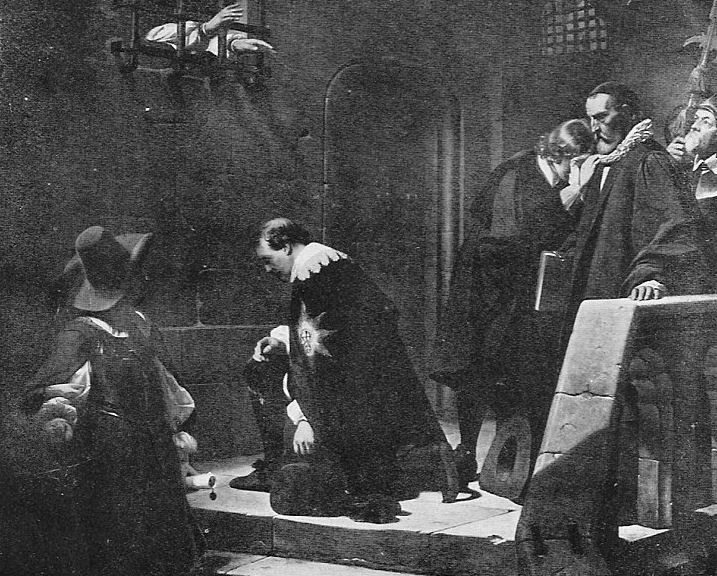
Image: Thomas Wentworth moments before his execution. Painting by French artist Paul Delaroche.
Legacy and Historical Significance
Thomas Wentworth, 1st Earl of Strafford, remains a complex figure in English history. His ambition and loyalty to the monarchy made him one of the most powerful statesmen of his time, yet his authoritarian methods and disregard for parliamentary authority positioned him as a divisive figure. His policies in Ireland and his counsel to Charles I contributed to the tensions that eventually erupted into the English Civil War.
Strafford’s execution marked a turning point in English politics, symbolizing the limits of royal power and the rise of parliamentary influence. Many contemporaries viewed him as a tragic figure, a man of great talent brought down by his own uncompromising stance. Others saw him as a dangerous threat to English liberties, a leader who would stop at nothing to secure the power of the crown.
In hindsight, Strafford’s life illustrates the complexities of leadership in a period of intense political and religious conflict. His efforts to centralize authority, both in Ireland and England, were part of a broader royal strategy to secure stability. However, his disregard for traditional rights and parliamentary privileges alienated those he sought to govern, fueling the opposition that would ultimately bring down both him and the monarchy he served.
Strafford’s legacy is thus twofold. He is remembered as both a dedicated servant of the crown, who was willing to take drastic steps to protect the monarchy, and as a cautionary figure whose methods exemplified the dangers of unchecked authority. His life and career offer insight into the challenges of governance in a time of rapid political change, as England moved toward a constitutional monarchy that would redefine the relationship between the king and Parliament.
Frequently Asked Questions

Image: Portrait by Anthony van Dyck
What was Thomas Wentworth’s role in the events leading up to the English Civil War?
Thomas Wentworth, 1st Earl of Strafford, was a key advisor to King Charles I and an influential statesman who sought to strengthen royal authority over Parliament. His strict policies in Ireland and efforts to consolidate the King’s power led to significant tension between the monarchy and Parliament, contributing to the political conflicts that preceded the English Civil War.
When and where was Thomas Wentworth born?
Thomas Wentworth was born on April 13, 1593, in England.
What were Wentworth’s initial political views?
Early in his career, Wentworth supported the cause of parliamentary power. However, his stance shifted over time, and he became a strong advocate for the monarchy, closely aligning himself with King Charles I.
What position did Wentworth hold in Ireland, and what was his governing style?
In 1632, he was appointed Lord Deputy of Ireland. His governing style was authoritarian; he sought to strengthen English control, increase royal revenue, and often suppressed local autonomy in favor of the crown’s interests.
How did Wentworth’s policies in Ireland affect his reputation?
His strict policies in Ireland were marked by both efficiency and controversy. While he was effective in securing royal interests, his authoritarian rule drew criticism and increased his reputation as a divisive figure, particularly among those who valued local autonomy.
Upon his return to England in 1640, Wentworth was given the title of Earl of Strafford and became a leading advisor to King Charles I.
How did Wentworth’s role in the King’s council affect the relationship between the monarchy and Parliament?
His efforts to strengthen the King’s power over Parliament intensified existing tensions. His defense of royal authority made him a focal point for parliamentary opposition, contributing to the growing conflict between the monarchy and Parliament over governance and authority.
What charge did Parliament bring against Wentworth in 1641, and why?
In 1641, Parliament charged Wentworth with treason, fearing his influence and authority under the King. His policies and strong support for royal power were seen as threats to parliamentary authority and constitutional governance.
How did King Charles I respond to Wentworth’s sentence, and what does this indicate about the political climate?
Although reluctant, King Charles I eventually signed the bill authorizing Wentworth’s execution due to immense pressure from Parliament and public opinion. This act highlighted the King’s weakening position and the intense political climate of the time.
What was the significance of Wentworth’s execution?
Wentworth’s execution on May 12, 1641, marked a pivotal moment in the escalating conflict between the monarchy and Parliament, setting the stage for the English Civil War.
What noble titles did Wentworth receive during his career?
He was made Baron Wentworth in 1628, then Viscount Wentworth, and finally, in January 1640, he was elevated to the title of Earl of Strafford.
What legacy did Wentworth leave, and how is it viewed historically?
His legacy is complex; he is seen as an ambitious figure who prioritized the centralization of power. His role in strengthening royal authority and the opposition it provoked played a significant part in the events that led to the English Civil War.