Marilyn Diptych (1962) by Andy Warhol
Andy Warhol’s Marilyn Diptych (1962) is a landmark of American Pop Art, encapsulating the essence of celebrity culture and mass media in the 20th century. This monumental piece, featuring 50 silkscreened images of Marilyn Monroe, remains one of Warhol’s most renowned works, reflecting his fascination with fame, repetition, and mortality.
Created just weeks after Monroe’s untimely death, the painting immortalizes her image while simultaneously exploring themes of ephemerality and media saturation. Today, it resides in the collection of the Tate, continuing to captivate audiences and scholars alike.
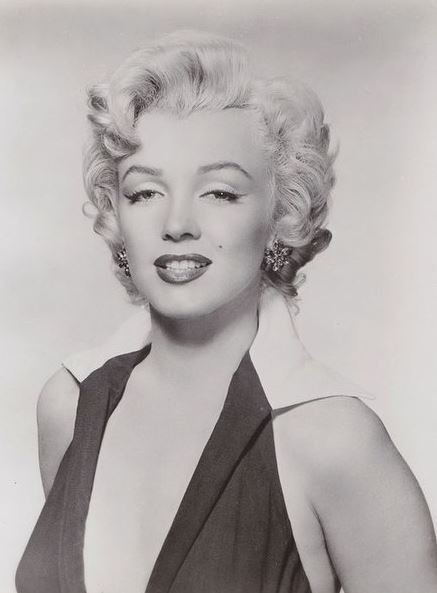
A 1953 photo of Marilyn Monroe.
Andy Warhol’s Marilyn Diptych is more than just a portrait of Marilyn Monroe; it is a profound meditation on fame, mortality, and media saturation.
Composition and Technique
The Marilyn Diptych consists of fifty repeated images of Marilyn Monroe, all derived from a single publicity still from the 1953 film Niagara.
Warhol employed the silkscreen printing technique, a method borrowed from commercial production, to create a mechanical and detached aesthetic. The left half of the diptych displays twenty-five images in vibrant color, evoking the glamour and vitality of Monroe’s screen persona.
In stark contrast, the right-side features twenty-five black-and-white images, some of which appear faded or partially obscured, hinting at decay and the fleeting nature of stardom.

Symbolism and Interpretation
One of the most striking aspects of the diptych is the interplay between its two halves. Many scholars and critics interpret this duality as a commentary on Monroe’s life and death.
The bright, saturated images on the left capture her as the radiant Hollywood icon, while the ghostly monochromatic side suggests her decline and tragic demise. This juxtaposition underscores Warhol’s broader interest in the tension between celebrity and mortality.
Cultural critic Camille Paglia has praised Marilyn Diptych for its ability to convey the complexity of Monroe’s legacy. In her 2012 book Glittering Images, she highlights the artwork’s “multiplicity of meanings,” emphasizing how it reflects Monroe’s dual identity as both a glamorous movie star and a deeply troubled individual.
Warhol’s Use of Repetition
Repetition is a hallmark of Warhol’s artistic practice, and Marilyn Diptych exemplifies this technique to great effect. By replicating Monroe’s image multiple times,
Warhol mimics the way mass media endlessly reproduces celebrity faces, reducing them to commodified symbols. The mechanical nature of the silkscreen process reinforces this sense of depersonalization, suggesting that Monroe, like many celebrities, became more of an image than a person in the public eye.
Additionally, the variations in the prints—some appearing smudged, faded, or over-inked—highlight the imperfection within the mechanical process, perhaps hinting at the artificiality of fame and the erosion of identity over time. This aspect of the work aligns with Warhol’s broader fascination with consumer culture and the mass production of images, as seen in his Campbell’s Soup Cans and other series.
Through his use of silkscreen printing, repetition, and striking color contrasts, Warhol encapsulated the paradox of Monroe’s existence—her dazzling public persona juxtaposed with the fragility of her private life.
Reception and Legacy
Since its creation, Marilyn Diptych has been widely recognized as a seminal work of modern art. In a 2004 survey conducted by The Guardian, it was ranked as the third most influential modern artwork, underscoring its lasting impact on contemporary visual culture.
Some critics, including Kathleen Davenport, Director of the Rice University Art Gallery, have ranked the portrait among the top ten artworks of the past millennium.
The painting has been extensively analyzed in art historical discourse, with interpretations ranging from critiques of consumerism to meditations on mortality. Its ability to resonate across different contexts and audiences speaks to Warhol’s genius in distilling complex ideas into visually arresting imagery.
Warhol’s Approach to Appropriation
One of the most controversial aspects of Warhol’s practice was his use of appropriated images, a characteristic evident in Marilyn Diptych. He often repurposed photographs and logos without permission, leading to numerous legal disputes.
The Marilyn series, including the Marilyn Diptych, relied on a publicity still owned by Monroe’s movie studio. Warhol did not seek authorization to use the image, which later resulted in a settlement between his estate and the copyright holder.
Warhol’s approach to appropriation has sparked debates about artistic originality and fair use. Some critics argue that his modifications were transformative, imbuing the original photographs with new meaning and cultural significance. Others contend that his reliance on pre-existing imagery blurs the line between creativity and reproduction.
The controversy surrounding Warhol’s work extends beyond Marilyn Diptych to other famous series, such as his Campbell’s Soup Cans and portraits of Jackie Kennedy, further cementing his reputation as a provocateur in the art world.
Impact on Pop Art and Contemporary Culture
Marilyn Diptych epitomizes the ethos of the Pop Art movement, which sought to blur the boundaries between high art and mass culture.
By elevating a movie star’s image to the status of fine art, Warhol challenged traditional notions of artistic subject matter and technique.
Marilyn Diptych‘s critical acclaim and lasting influence affirm its status as one of the most significant pieces of 20th-century art.
Warhol’s use of commercial printing methods and mass-produced imagery laid the foundation for later developments in contemporary art, influencing artists such as Jeff Koons, Barbara Kruger, and Richard Prince.
Beyond the art world, Marilyn Diptych continues to shape discussions about celebrity culture, media representation, and the commodification of personal identity.
In an era dominated by social media and constant image circulation, Warhol’s insights into fame and repetition remain as relevant as ever.
Frequently Asked Questions
How does Warhol’s use of color and black-and-white imagery contribute to the meaning of Marilyn Diptych?
The vibrant colors on the left represent Monroe’s glamorous public persona, while the faded black-and-white images on the right suggest her tragic decline and death, reinforcing the contrast between celebrity and mortality.
Why did Warhol choose silkscreen printing for this artwork?
Silkscreen printing allowed Warhol to mimic mass production techniques, emphasizing the commodification of Monroe’s image and the way celebrity culture reduces individuals to reproducible icons.
What is the significance of repetition in Marilyn Diptych?
Repetition reflects the endless reproduction of celebrity images in mass media, reducing Monroe to a symbol rather than an individual, while the variations in the prints hint at the imperfections and instability behind fame.
How was the original photograph for Marilyn Diptych selected?
Warhol used a single publicity still from the 1953 film Niagara, which was owned by Monroe’s movie studio. This image became the basis for multiple artworks in his Marilyn series.
What controversies surrounded Andy Warhol’s appropriation of images?
Warhol often used copyrighted photographs without permission, leading to legal disputes, including a settlement over the Marilyn Monroe publicity image. His work continues to raise debates about fair use and artistic originality.

A 1980 photo of Andy Warhol.
How has Marilyn Diptych influenced modern art?
It helped define Pop Art by blending commercial imagery with fine art, influencing contemporary artists such as Jeff Koons and Barbara Kruger, and shaping discussions on media representation and celebrity culture.
Where is Marilyn Diptych currently housed?
The artwork is part of the Tate’s collection, where it remains a central piece in discussions on Pop Art and 20th-century visual culture.





