French Egyptologist Émile Chassinat
A French Egyptologist Émile Gaston Chassinat (1868–1948) known for his contributions to temple inscriptions and hieroglyphic studies.
Early Life and Education
Émile Gaston Chassinat was born on May 5, 1868. He developed a passion for ancient civilizations early in life, leading him to pursue Egyptology. His education was rooted in classical studies, archaeology, and linguistics, which provided him with the necessary foundation to excel in his field. His meticulous approach to research and his ability to decipher hieroglyphic texts made him a significant figure in the study of ancient Egypt.

Photograph of Émile Chassinat.
READ MORE: 10 Major Events in Ancient Egyptian History
Career and Contributions to Egyptology
Chassinat became an integral part of the French archaeological mission in Egypt and was appointed Director of the French Institute for Oriental Archaeology in Cairo (IFAO) from 1898/9 to 1911/2. During his tenure, he played a crucial role in expanding the institute’s activities, overseeing excavations, and promoting scholarly research. His leadership helped establish IFAO as a leading center for Egyptological studies.
One of Chassinat’s key achievements was his involvement in acquiring two Amarna tablets in 1903. These tablets, part of the larger Amarna Letters corpus, provided significant insights into diplomatic correspondence between the Egyptian administration and foreign states during the reign of Pharaoh Akhenaten. His acquisition of these artifacts contributed to a broader understanding of international relations in the ancient Near East.
Émile Chassinat (1868–1948) was a French Egyptologist known for his work on temple inscriptions and ancient Egyptian religious texts.
Excavations and Temple Documentation
Chassinat participated in numerous excavations, particularly in temple complexes and necropolises, which deepened scholarly understanding of Egyptian religious practices. Among his most important contributions was his extensive work on the Temple of Edfu, one of the best-preserved Ptolemaic temples in Egypt. His detailed documentation and publication of its inscriptions became an invaluable resource for Egyptologists studying religious rituals and temple architecture.
He also conducted significant research at the Temple of Dendera, another vital site for understanding Egyptian religious traditions. His collaboration with fellow scholars, including François Daumas and Maxence de Rochemonteix, led to the publication of several volumes dedicated to the inscriptions and architectural details of these temples.

Publications and Scholarly Works
Chassinat was a prolific writer, contributing extensively to Egyptological literature. His publications reflect his broad research interests, ranging from temple inscriptions to hieroglyphic cataloging and medical texts. Some of his most notable works include:
- Fouilles de Qattah (1906) – A collaborative work documenting archaeological excavations at Qattah.
- Catalogue des signes hiéroglyphiques de l’imprimerie de l’Institut français du Caire (1907-1930) – A comprehensive catalog of hieroglyphic signs, which became an essential reference for scholars and students of Egyptian script.
- Une campagne de fouilles dans la nécropole d’Assiout (1911) – A report on excavations conducted in the necropolis of Asyut, offering insights into burial practices and tomb architecture.
- Le papyrus médical copte (1921) – A study of ancient Egyptian medical texts, contributing to the understanding of medical practices in antiquity.
- Le temple d’Edfou (1960-1987) – A multi-volume publication documenting the inscriptions of the Temple of Edfu, regarded as a cornerstone of Egyptological research.
- Le temple de Dendara (1965-1987) – Another multi-volume work focusing on the Temple of Dendera, co-authored with François Daumas.
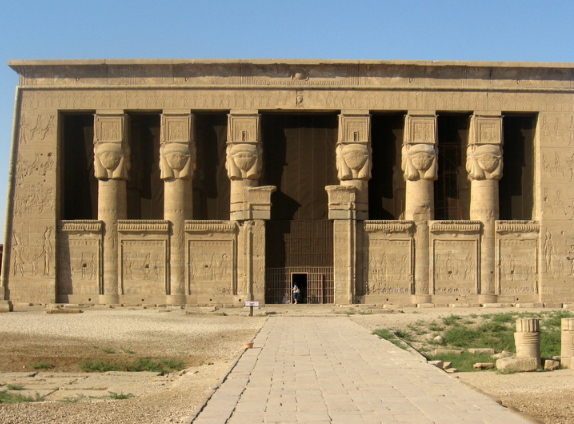
The Dendera Temple Complex lies to the south of Abydos, with the Temple of Hathor serving as its centerpiece. Inside the Temple of Hathor, there are several chapels and shrines.
His research on hieroglyphic writing systems and temple inscriptions remains fundamental to the field, as his detailed transcriptions and interpretations provide essential data for ongoing studies in Egyptian linguistics and religious practices.
Legacy and Impact
Chassinat’s meticulous scholarship and dedication to preserving Egypt’s cultural heritage earned him recognition as one of the foremost Egyptologists of his time. His work laid the groundwork for future generations of researchers, particularly in the fields of temple architecture, hieroglyphic studies, and ancient Egyptian religion. His publications continue to be referenced by scholars worldwide.
Chassinat’s detailed documentation and translations of hieroglyphic texts have remained valuable for Egyptologists studying ancient Egyptian religion and rituals.
Beyond his academic contributions, his role as Director of IFAO solidified the institute’s reputation as a center for archaeological excellence. His efforts in excavation, preservation, and documentation helped safeguard many significant artifacts and inscriptions that might have otherwise been lost or damaged.
READ MORE: Field of Reeds in Ancient Egyptian Religion
Frequently Asked Questions
What was Émile Gaston Chassinat’s role at the French Institute for Oriental Archaeology (IFAO)?
He served as director from 1898/9 to 1911/2, overseeing significant excavations and research.
What notable discovery did he make in 1903?
He acquired two of the Amarna tablets, part of the diplomatic correspondence from the reign of Akhenaten.
What was his major contribution to the study of Egyptian temples?
He worked extensively on Le Temple d’Edfou, documenting its inscriptions, a key source for understanding Ptolemaic religious practices.
What other temple did he study in detail?
He collaborated on Le Temple de Dendara, another important Egyptian religious site.
What is one of his key publications on Egyptian scripts?
He compiled the Catalogue des signes hiéroglyphiques, an essential reference for hieroglyphic studies.
Did he contribute to medical studies in Egyptology?
Yes, he published Le papyrus médical copte (1921), focusing on ancient Egyptian medical practices.
Émile Gaston Chassinat’s meticulous documentation of temple inscriptions and hieroglyphic signs remains a fundamental resource for Egyptologists.





