Meaning and Symbolism of the Dragon in Ancient China
The dragon, or lóng (龙), holds a prominent position in Chinese mythology, culture, and philosophy, serving as an enduring symbol of power, strength, and divine authority. Unlike the malevolent dragons of Western traditions, the Chinese dragon is revered as a benevolent force associated with life-giving rain, prosperity, and imperial power. Depictions of dragons date back thousands of years, with early representations found on pottery, jade, and other artifacts from Neolithic cultures such as the Hongshan and Liangzhu. Over time, the dragon became an emblem of cosmic balance, a harbinger of good fortune, and a protector of the people.
Origins and Early Representations
Prehistoric Evidence: Hongshan and Liangzhu Cultures
The earliest depictions of dragons in China can be traced back to the Neolithic period, particularly in the Hongshan culture (circa 4700–2900 BCE) and the Liangzhu culture (circa 3300–2300 BCE). Archaeological discoveries have revealed jade carvings of dragon-like creatures, suggesting the symbolic importance of these serpentine beings in early Chinese rituals. One of the most notable artifacts is the jade C-shaped dragon (玉龙) discovered in Inner Mongolia, which features a coiled, snake-like body and a distinct head resembling a pig or horse. The Liangzhu culture, located in present-day Zhejiang province, also produced jade artifacts with dragon motifs, underscoring the widespread reverence for dragons in ancient China.
Evolution During the Shang and Zhou Dynasties
As Chinese civilization progressed into the Bronze Age, dragons continued to feature prominently in art and religious symbolism. The Shang dynasty (c. 1600–1046 BCE) produced bronze vessels decorated with intricate dragon designs, often depicting them with elongated bodies, horns, and clawed feet. The Zhou dynasty (c. 1046–256 BCE) further elevated the dragon’s status, associating it with the concept of the Mandate of Heaven (天命), which justified the divine right of rulers to govern. Dragons were seen as intermediaries between heaven and earth, symbolizing the power of the emperor as the “Son of Heaven” (天子).
Mythological Origins and Symbolism
The Dragon as a Composite Creature
The Chinese dragon is a composite being, blending features from various animals. Traditional descriptions highlight its serpent-like body, the antlers of a deer, the scales of a fish, the claws of an eagle, and the whiskers of a catfish. This amalgamation of traits embodies the harmony of different elements within the natural world, reflecting the Chinese philosophical emphasis on balance and interconnectedness. According to ancient texts, the dragon possessed 117 scales, 81 of which were considered yang (positive energy) and 36 yin (negative energy), further reinforcing the idea of cosmic balance.
The Four Dragon Kings and Their Realms
In Chinese mythology, the four Dragon Kings (龙王) preside over the four seas and control the waters and weather. Each Dragon King governs one of the cardinal directions and corresponding seas:
- The Azure Dragon of the East (青龙) rules over the East Sea.
- The Vermilion Dragon of the South (南海龙王) governs the South Sea.
- The White Dragon of the West (西海龙王) controls the West Sea.
- The Black Dragon of the North (北海龙王) commands the North Sea.
These celestial beings were believed to ensure the well-being of the land by regulating rainfall and protecting communities from floods and droughts. Temples dedicated to the Dragon Kings were erected throughout China, where offerings were made to appease them and ensure favorable weather conditions.
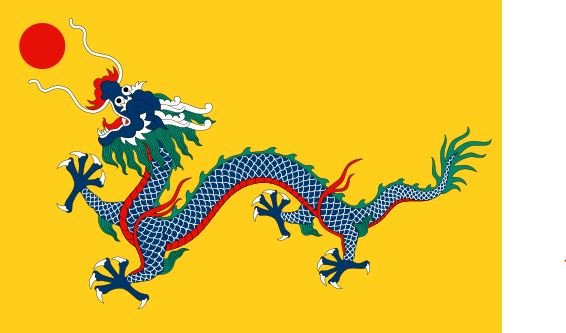
The Azure Dragon featured on China’s national flag during the Qing dynasty (1889–1912).
Dragons in Creation Myths
One of the most enduring myths involves the dragon’s role in the creation of the world. In ancient Chinese cosmology, the universe was born from the primordial chaos, represented by the cosmic egg. The dragon, as a manifestation of primordial energy, helped shape the heavens and the earth. Another prominent myth credits the dragon with assisting the legendary emperor Yu the Great (大禹), who controlled floods and established order in the realm. The dragon’s association with water reinforced its role as a divine guardian of balance and fertility.
The Dragon and Chinese Philosophy
In Daoist philosophy, the dragon embodies the fluid and dynamic nature of the universe. The Dao De Jing (道德经), attributed to Laozi, emphasizes the importance of harmony with the Dao (道), the underlying force that governs all existence. The dragon, with its ability to soar through the heavens and dive into the depths of the sea, exemplifies the Dao’s transformative power. Daoist practitioners sought to emulate the dragon’s effortless adaptability, moving with the natural flow of the cosmos.
The dragon in ancient China was not merely a mythical creature but a profound symbol that permeated every aspect of Chinese society.
Confucianism, with its focus on ethical conduct and social harmony, also incorporated the dragon as a symbol of virtuous leadership. Confucius (551–479 BCE) was often likened to a dragon due to his profound wisdom and moral rectitude. In Confucian thought, the dragon represented the ideal ruler, whose benevolence and righteousness ensured peace and prosperity. The metaphor of the dragon as a wise and just leader was reinforced through classical texts such as the Book of Rites (礼记) and the Analects (论语).
Dragons and Imperial Power
The Dragon as the Emblem of the Emperor
During the Qin dynasty (221–206 BCE), the dragon became an official symbol of imperial authority, a tradition that continued through subsequent dynasties. The emperor was regarded as the “True Dragon” (真龙), a divine being whose mandate to rule was bestowed by heaven. The imperial throne was often referred to as the “Dragon Throne” (龙椅), and the emperor’s robes were adorned with intricate dragon motifs, signifying his celestial power.
The Five-Clawed Dragon and Its Exclusivity
By the Ming dynasty (1368–1644), strict regulations were established regarding the depiction of dragons. Only the emperor was permitted to use the five-clawed dragon as an emblem, while lesser nobles and officials could use dragons with fewer claws. This distinction reinforced the hierarchical order of society and underscored the emperor’s supreme status. Violating these regulations was considered an act of treason, punishable by severe consequences.
Dragons in Chinese Literature and Folklore
The Classic of Mountains and Seas (山海经)
The Classic of Mountains and Seas (Shan Hai Jing), a compendium of mythological geography and creatures, features numerous references to dragons. This ancient text describes the various dragon-like beings that inhabit the mountains, rivers, and seas, often portraying them as guardians of sacred realms. The text’s vivid descriptions inspired later generations of Chinese writers and artists, who expanded upon the mythos of the dragon.
Journey to the West (西游记) and The Dragon King of the East Sea
In the Ming dynasty classic Journey to the West (西游记) by Wu Cheng’en, the Dragon King of the East Sea plays a pivotal role. When the Monkey King, Sun Wukong, seeks a weapon to match his power, he visits the Dragon King and acquires the magical Ruyi Jingu Bang (如意金箍棒), a staff that can change size at will. The Dragon King’s depiction in this tale reflects his traditional role as a dispenser of divine treasures and guardian of cosmic order.
Folk Tales and Local Legends
Dragons feature prominently in Chinese folklore, often as protectors of communities and benefactors of the people. One popular legend recounts the story of a dragon who sacrifices himself to save a village from drought, transforming into a river that nourishes the land. Another tale involves a dragon that bestows blessings upon those who show kindness and respect to nature, reinforcing the Confucian ideal of reciprocity and virtue.
Dragons in Chinese Festivals and Rituals
Dragon Boat Festival (端午节)
The Dragon Boat Festival, celebrated annually on the fifth day of the fifth lunar month, commemorates the poet and statesman Qu Yuan (屈原), who drowned himself in the Miluo River. According to legend, local villagers raced their boats in an attempt to save him or recover his body, an act that evolved into the modern tradition of dragon boat racing. The dragon-shaped boats, adorned with vibrant colors and intricate designs, symbolize protection and vitality. The rhythmic beating of drums during the races is believed to awaken the dragon’s spirit and ward off evil.
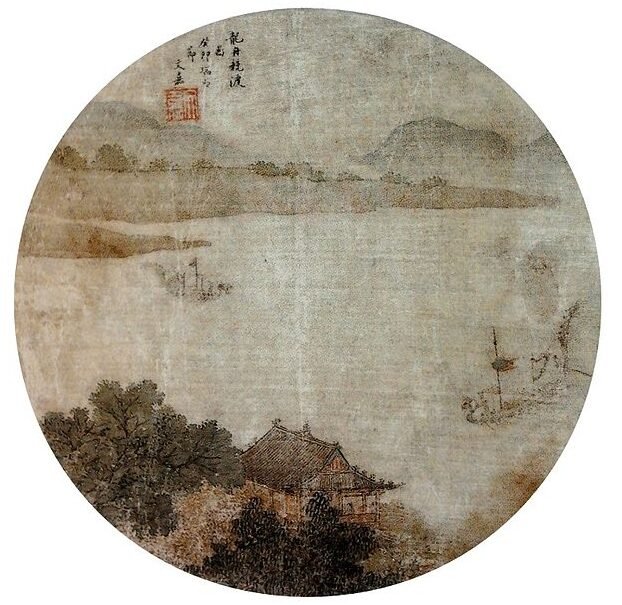
An 18th century depiction of the Dragon Boat Festival.
The Chinese New Year and Dragon Dances
During Chinese New Year celebrations, the dragon dance is performed to bring good fortune and drive away malevolent spirits. The dragon, often operated by a team of dancers, weaves through the streets in a mesmerizing display of agility and coordination. The movements of the dragon mimic the undulating motion of a river, symbolizing the flow of positive energy. Firecrackers and loud music accompany the performance, enhancing the festive atmosphere and inviting prosperity for the coming year.
Dragons in Art and Architecture
Imperial Palaces and Temples
Dragons are ubiquitous in Chinese architectural design, adorning imperial palaces, temples, and tombs. The Forbidden City in Beijing, a masterpiece of Ming and Qing dynasty architecture, features dragon motifs on rooftops, staircases, and decorative panels. The Nine-Dragon Wall (九龙壁), a renowned architectural feature, showcases vibrant ceramic dragons that symbolize the emperor’s omnipotence and the protection of the realm.
Porcelain and Decorative Arts
Dragons also appear prominently in Chinese porcelain and decorative arts. The blue-and-white porcelain of the Ming dynasty often features dragons amid clouds and waves, reflecting their association with the heavens and the seas. These exquisite works of art were highly prized in both domestic and international markets, cementing the dragon’s status as a cultural icon.
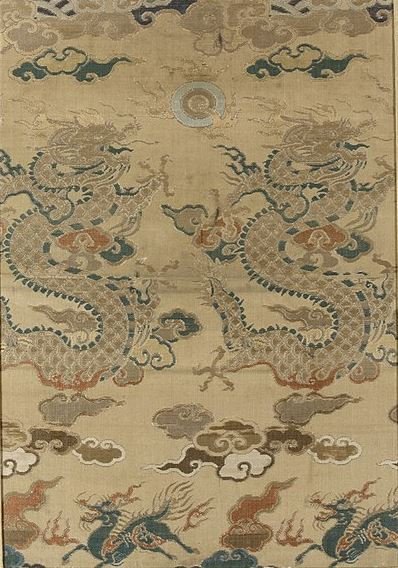
A Qing dynasty textile featuring double dragons.
The Dragon and Modern China
In contemporary China, the dragon continues to serve as a symbol of national identity and cultural pride. The phrase “Descendants of the Dragon” (龙的传人) is used to describe the Chinese people, emphasizing their shared heritage and resilience. The dragon motif remains a powerful symbol in Chinese popular culture, appearing in films, literature, and visual arts that celebrate the nation’s ancient traditions.
Even in the modern era, the dragon remains a potent emblem of strength, wisdom, and unity, ensuring that its legacy endures across generations.
Chinese martial arts, such as Kung Fu and Tai Chi, often incorporate movements inspired by the dragon’s fluid and powerful motions. The dragon’s grace and strength serve as a model for practitioners seeking to achieve balance and mastery over their bodies. Additionally, the dragon’s mystique has influenced global pop culture, with Chinese dragons appearing in films, video games, and fantasy literature, introducing audiences worldwide to the rich tapestry of Chinese mythology.
Frequently asked questions about the Dragon in Ancient China
What distinguishes the Chinese dragon from dragons in Western mythology?
The Chinese dragon is viewed as a benevolent and powerful force associated with life-giving rains, prosperity, and cosmic balance, whereas Western dragons are often portrayed as malevolent creatures to be slain by heroes.
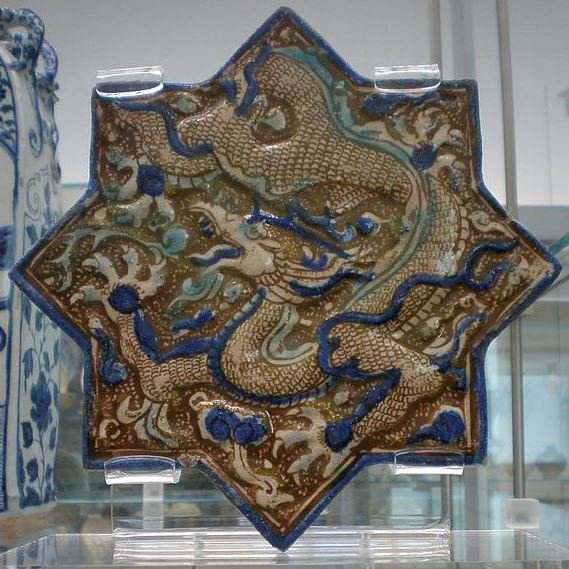
Azure Dragon of the East, as featured on a wall tile.
What is the earliest known evidence of dragon depictions in China?
The earliest depictions of dragons in China date back to the Hongshan culture (circa 4500–3000 BCE), where jade carvings resembling serpentine creatures have been discovered.
What physical attributes characterize the Chinese dragon?
The Chinese dragon is described as a composite creature with the horns of a stag, the forehead of a camel, the eyes of a demon, the neck of a snake, the scales of a carp, the claws of an eagle, and the ears of an ox. Some variations include features such as the body of a snake or the eyes of a rabbit.
From its origins in Neolithic jade carvings to its role as a guardian of imperial power and cosmic balance, the dragon has left an indelible mark on Chinese culture. Through mythology, philosophy, literature, and art, the dragon continues to inspire reverence and awe.
How did the dragon’s form symbolize balance and harmony?
The dragon’s hybrid form, which combined features from various animals, represented the harmonious blending of different elements of the natural world, reflecting the Chinese philosophical emphasis on balance and cosmic unity.
What theory did Wen Yiduo propose about the dragon’s symbolism?
Wen Yiduo suggested that the dragon’s diverse attributes symbolized the political union of different tribes, each with its own totem animal. The dragon became a representation of the assimilation of these tribes into a single nation.
How was the dragon associated with water and agriculture?
In Chinese mythology, the dragon governed water sources, controlled rainfall, and ensured agricultural prosperity. Ancient farmers believed that dragons brought the rains necessary to nourish their crops and prevent droughts.
What role did the dragon play in relation to Chinese emperors?
The dragon was associated with rulership and divine authority. Emperors of China, regarded as the “Sons of Heaven,” were compared to dragons, symbolizing their wisdom, strength, and benevolence. Only the emperor was allowed to use the five-clawed dragon as a symbol, while lesser dragons were reserved for nobles and officials.
Who were the Four Dragon Kings, and what was their role?
The Four Dragon Kings (Ao Kuang, Ao Qin, Ao Jun, and Ao Shun) ruled the Four Seas and controlled the waters of the world. They were believed to safeguard the cosmic order and were honored for maintaining balance in nature.
How did dragons feature in Daoist and Buddhist philosophy?
In Daoist philosophy, the dragon symbolized the Dao (道), the universal force that governs existence. The dragon’s fluidity represented the Dao’s transformative power. In Chan (Zen) Buddhism, a dragon emerging from behind clouds symbolized the elusive nature of enlightenment.
What is the significance of the Dragon Boat Festival?
The Dragon Boat Festival (端午节) commemorates the poet and statesman Qu Yuan, who drowned himself in the Miluo River. The dragon boat races originated as an attempt to retrieve his body but later evolved into a ritual to honor the rain-bringing dragon and seek protection.
Why is the dragon dance performed during Chinese New Year?
The dragon dance, performed during Chinese New Year celebrations, is believed to drive away evil spirits and usher in good fortune. Dancers manipulate a long, serpentine dragon figure, mimicking its movements to invoke prosperity and protection.
How did rural communities use dragon imagery in rain-seeking rituals?
In times of drought, rural communities performed processions carrying dragon figures made of paper, cloth, or pottery to solicit rain. These rituals, often accompanied by chants and water splashing, were meant to awaken the dragon’s spirit and invoke its generosity.
Where can dragon motifs be found in Chinese architecture?
Dragon motifs are prominent in Chinese architecture, particularly in imperial palaces such as the Forbidden City in Beijing. Dragons adorn rooftops, staircases, and decorative panels, symbolizing imperial authority and divine protection.
How did dragons feature in Chinese art and decorative crafts?
Dragons were a popular subject in Chinese art, appearing in porcelain, jade carvings, and lacquerware. The blue-and-white porcelain of the Ming dynasty often depicted dragons soaring amidst clouds and waves, emphasizing their celestial and aquatic associations.
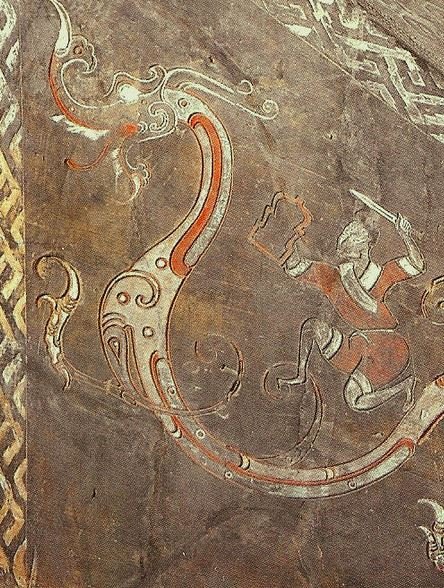
A Western Han dynasty tomb mural from Luoyang depicting a warrior on a dragon.
What role did dragons play in Chinese literature and folklore?
Dragons were central to many Chinese tales and legends. In Journey to the West (西游记), the Dragon King of the East Sea grants the Monkey King, Sun Wukong, a magical staff. In folk tales, dragons are portrayed as guardians of treasures and protectors of sacred realms.
Why are the Chinese people referred to as the “Descendants of the Dragon”?
The phrase “Descendants of the Dragon” (龙的传人) emphasizes the shared heritage and resilience of the Chinese people. It reflects their connection to the dragon as a symbol of strength, wisdom, and national identity.