Michel Ney: The French Military Commander Described by Napoleon as “the Bravest of the Brave”
Michel Ney, 1st Prince de la Moskowa and 1st Duke of Elchingen, was a pivotal figure in French military history, renowned for his exceptional bravery and strategic acumen. Known as “the bravest of the brave” by Napoleon Bonaparte, Ney’s career spanned the tumultuous periods of the French Revolutionary Wars and the Napoleonic Wars, and his life was marked by dramatic shifts in loyalty and fate.
During which conflict did Ney first distinguish himself, leading to his rapid promotion? And why was Ney referred to as “the bravest of the brave” by Napoleon?
In the article below, World History Edu dives into the life, military accomplishments and death of the marshal.
Early Life and Background
Michel Ney was born on January 10, 1769, in Saarlouis, a small town in the Holy Roman Empire, now part of modern-day Germany. He was the second son of a cooper, Pierre Ney, and his wife, Marguerite Grewelinger. Growing up in a modest family, Ney’s early life was relatively unremarkable. He received a basic education and initially worked as a clerk to a notary and later as a civil servant in the local government. However, Ney’s life took a decisive turn in 1787 when he enlisted in a cavalry regiment, just before the outbreak of the French Revolution.
Military Ascendancy
Ney’s military career began in earnest during the French Revolutionary Wars. His talent for leadership and his exceptional courage quickly distinguished him from his peers. He first gained significant recognition during the War of the First Coalition (1792–1797), which pitted revolutionary France against a coalition of European monarchies intent on suppressing the new French Republic. Ney’s bravery in cavalry actions and his ability to inspire his men led to rapid promotions.
By 1794, Ney had risen to the rank of chef de brigade (colonel), and his actions in various battles earned him further acclaim. His performance at the Battle of Hohenlinden in 1800 was particularly notable. The battle was a decisive victory for France against the Austrian forces, and Ney’s leadership played a crucial role in securing the French triumph. Following this victory, Ney was promoted to divisional general, underscoring his growing importance in the French military hierarchy.

Marshal of the Empire
The proclamation of the French Empire by Napoleon Bonaparte in 1804 marked a new phase in Ney’s career. Recognizing Ney’s exceptional capabilities, Napoleon appointed him as one of the original 18 Marshals of the Empire. This prestigious title was not just an honor but also a testament to Ney’s skill, bravery, and loyalty to Napoleon.
As a Marshal of the Empire, Ney participated in many of Napoleon’s most significant campaigns. In 1805, he played a key role in the Battle of Elchingen, which earned him the title Duke of Elchingen. His tactical brilliance at the Battle of Jena in 1806 further solidified his reputation as one of Napoleon’s most trusted commanders. Ney’s success continued with his involvement in the Battle of Eylau in 1807, where his leadership once again proved critical to the French efforts.
The Russian Campaign and “The Bravest of the Brave”
One of Ney’s most legendary contributions came during Napoleon’s invasion of Russia in 1812. The campaign, initially aimed at compelling Tsar Alexander I to cease trading with Britain, turned into a catastrophic failure for the French. The harsh Russian winter and scorched earth tactics employed by the Russian forces led to severe attrition of the Grande Armée.
During the disastrous retreat from Moscow, Ney was given the formidable task of commanding the rearguard. His ability to maintain order and protect the retreating French forces under such dire conditions earned him widespread admiration. Napoleon himself dubbed Ney “the bravest of the brave” for his unwavering courage and tenacity. Ney’s leadership during the retreat, particularly at the Battle of Krasnoi, where he managed to rally his troops and break through encircling Russian forces, became legendary.
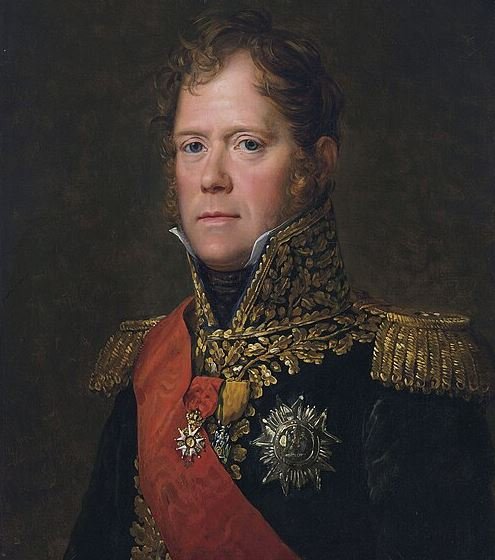
Ney’s greatest moment came during the invasion of Russia, where his brilliant command of Napoleon’s rear-guard created a legend for all time. Image: A portrait of Ney by French artist François Gérard.
The Fall of Napoleon and Ney’s Shifting Loyalties
The tide began to turn against Napoleon in 1813 with the formation of the Sixth Coalition, an alliance of European powers determined to overthrow the French Emperor. Following a series of defeats, including the decisive Battle of Leipzig, Napoleon’s empire began to crumble. In 1814, as the Allies closed in on Paris, Ney found himself in a difficult position. He pressured Napoleon to abdicate, believing that the emperor’s continued resistance would only bring further suffering to France.
After Napoleon’s abdication, Ney pledged his allegiance to the restored Bourbon monarchy under King Louis XVIII. This period of service, however, was short-lived. In 1815, Napoleon escaped from exile on the island of Elba and returned to France, initiating the period known as the Hundred Days. Ney initially vowed to the Bourbon king that he would bring Napoleon back to Paris in an iron cage, but upon encountering his former emperor and witnessing the loyalty of the troops, he switched sides once again and rejoined Napoleon.
The Battle of Waterloo and Ney’s Final Stand
Ney’s final significant military engagement was at the Battle of Waterloo on June 18, 1815. This battle marked the end of the Napoleonic Wars and Napoleon’s rule. Commanding the French forces alongside Napoleon, Ney displayed his characteristic bravery and determination. Despite his efforts, the French army was decisively defeated by the combined forces of the British, Dutch, and Prussian armies.
Following the defeat at Waterloo, Ney’s fate was sealed. The restored Bourbon monarchy sought retribution against those who had supported Napoleon during the Hundred Days. Ney was arrested, charged with treason, and tried by the Chamber of Peers. Despite his previous service to the Bourbon monarchy and his defense that he was acting in accordance with the will of the French people, Ney was convicted and sentenced to death.
Execution and Legacy
On December 7, 1815, Michel Ney was executed by firing squad. His final moments were marked by his refusal to wear a blindfold and his command to the firing squad to aim straight at his heart, demonstrating his characteristic bravery even in the face of death. His execution was a tragic and controversial end to a career that had been marked by extraordinary military achievements and shifting political allegiances.
Michel Ney’s legacy is complex and multifaceted. He is remembered as one of the greatest military commanders of his time, celebrated for his tactical genius and personal courage. His name is inscribed on the Arc de Triomphe in Paris, alongside other illustrious generals of France, as a testament to his contributions to French military history.
However, Ney’s life also reflects the turbulent and often brutal nature of the political and military struggles of the era. His shifting loyalties—from the Revolution to Napoleon, then to the Bourbons, and back to Napoleon—highlight the complexities and contradictions faced by many military leaders during the period.
Major Battles and Campaigns Marshal Ney Fought in

French Emperor Napoleon called Michel Ney “the bravest of the brave.” Ney’s career was marked by extreme heroism and an unrivaled ability to inspire his troops. Image: Napoleon (1769 – 1821).
War of the First Coalition
- Battle of Hohenlinden (1800): Ney’s leadership was crucial in this decisive victory against Austrian forces, marking a significant milestone in his early career.
War of the Third Coalition
- Battle of Elchingen (1805): Ney’s tactical brilliance earned him the title Duke of Elchingen. The battle was part of the Ulm Campaign, which led to the capitulation of a large Austrian army.
- Battle of Jena (1806): Ney played a pivotal role in this major French victory against the Prussians, further establishing his reputation as an exceptional military commander.
War of the Fourth Coalition
- Battle of Eylau (1807): Ney’s involvement in this brutal and bloody battle showcased his determination and leadership under extreme conditions.
Peninsular War
- Ney also saw action in the Peninsular War (1807–1814), where French forces fought against Spanish, Portuguese, and British troops. His campaigns in Spain, although less successful than his other endeavors, were marked by fierce fighting and significant challenges.
Invasion of Russia
- Battle of Krasnoi (1812): Ney’s command of the rearguard during the retreat from Moscow, particularly at Krasnoi, where he managed to break through encircling Russian forces, became one of his most celebrated feats.
Hundred Days
- Battle of Quatre Bras (1815): Ney fought fiercely against the Duke of Wellington’s forces, displaying his usual courage and tactical skill.
- Battle of Waterloo (1815): Despite his valiant efforts, Ney could not prevent the ultimate defeat of Napoleon’s forces in this decisive battle.
Impact and Historical Significance
Michel Ney’s impact on French military history and his broader historical significance cannot be overstated. He was a central figure during a transformative period in European history, witnessing and influencing the rise and fall of Napoleon’s empire. Ney’s career provides valuable insights into the dynamics of loyalty, bravery, and the harsh realities of war.
His reputation as “the bravest of the brave” is well-deserved, reflecting his unwavering commitment to his duties and his extraordinary courage on the battlefield. Ney’s tactical innovations and ability to inspire his troops made him a legend in his own time and beyond. His life story, marked by both remarkable achievements and tragic end, serves as a poignant reminder of the human dimensions of historical events.
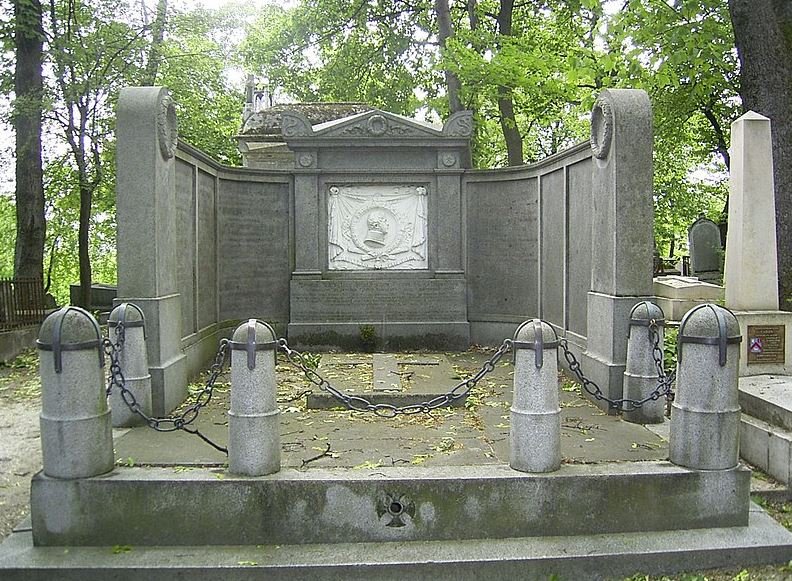
Despite the controversial end to his life, Michel Ney’s name continues to be honored and studied as a symbol of courage and military excellence. His story is an integral part of the broader narrative of the rise and fall of Napoleon and the dramatic changes that swept across Europe during the late 18th and early 19th centuries. Image: Ney’s grave at Père Lachaise Cemetery in France.
Questions and Answers on Michel Ney
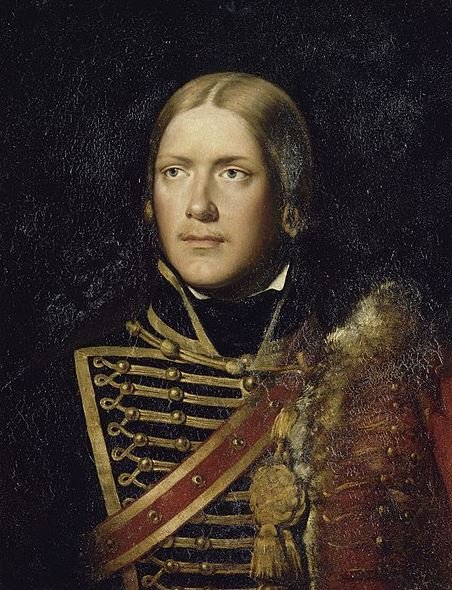
Michel Ney’s career encapsulates the volatility and drama of the French Revolutionary and Napoleonic periods, reflecting the complexities and contradictions of the time. An artwork by French painter Adolphe Brune, showing Ney as a junior military officer.
Who was Michel Ney, 1st Prince de la Moskowa and 1st Duke of Elchingen?
Michel Ney was a prominent French military commander and Marshal of the Empire who played a significant role in the French Revolutionary Wars and the Napoleonic Wars.
What was Ney’s occupation before joining the military?
Michel Ney was born on January 10, 1769, in Saarlouis. Before joining the military, Ney worked as a civil servant.
How did Michel Ney rise through the military ranks?
Ney enlisted in a cavalry regiment in 1787, just before the outbreak of the French Revolution. He distinguished himself during the War of the First Coalition.
By the Battle of Hohenlinden in 1800, Ney had achieved the rank of divisional general.
In 1804, Napoleon Bonaparte proclaimed the French Empire, and Ney was named one of the original 18 Marshals of the Empire.
Which battles did Ney play significant roles in during Napoleon’s subsequent campaigns?
Ney played significant roles in the Battle of Elchingen (1805), the Battle of Jena (1806), and the Battle of Eylau (1807).
Why was Commander Ney referred to as “the bravest of the brave” by Napoleon?
Ney was referred to as “the bravest of the brave” by Napoleon for his extraordinary bravery and resilience, particularly during the harrowing retreat from Moscow in the 1812 invasion of Russia.
What happened to Ney after Napoleon’s defeat by the Sixth Coalition in 1814?
After Napoleon’s defeat by the Sixth Coalition in 1814, Ney pressured Napoleon to abdicate and pledged his allegiance to the restored Bourbon monarchy.
During the Hundred Days in 1815, Ney initially promised the Bourbons to capture Napoleon but ultimately rejoined Napoleon and commanded troops at the Battle of Waterloo.

Despite his heroism, Ney’s actions could be marred by recklessness and tactical blunders. His uncoordinated cavalry attacks at Waterloo are often blamed for contributing to Napoleon’s defeat. Image: A painting by French painter Louis Dumoulin, depicting Ney leading his army during the Battle of Waterloo.
What was the outcome of the Battle of Waterloo for Ney?
The defeat at the Battle of Waterloo led to Ney’s arrest, trial for treason by the restored Bourbon monarchy, and his execution by firing squad on December 7, 1815.
How did Ney demonstrate his bravery even at the moment of his execution?
At the moment of his execution, Ney refused to wear a blindfold and commanded the firing squad to aim straight at his heart.





