Greatest Moments in British Military History
British military history is marked by numerous significant and influential events that not only shaped the destiny of the nation but also had a profound impact on world history.
In the article below, British historians at WHE present some of the greatest moments in British military history:
The Battle of Hastings (1066)
The Battle of Hastings is one of the most famous military engagements in English history. It occurred on October 14, 1066, when the Norman forces led by William the Conqueror defeated King Harold II of England. This battle marked the beginning of the Norman conquest of England and led to profound changes in English culture, governance, and aristocracy.
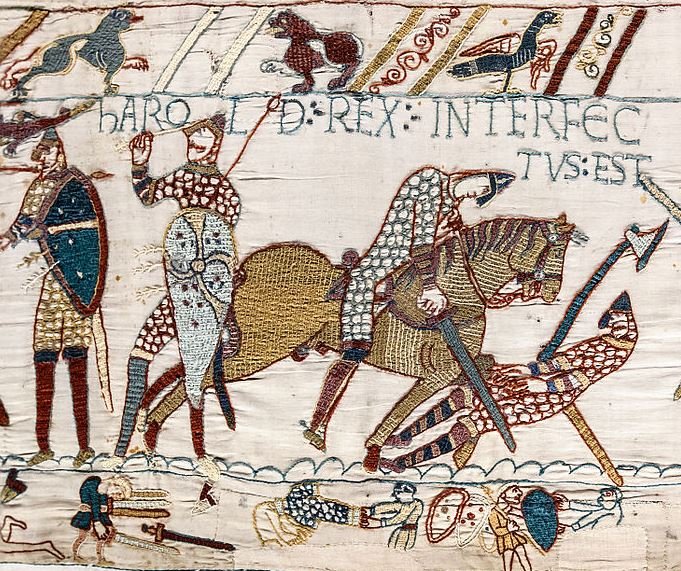
Image: A illustration of The Battle of Hastings
The Spanish Armada (1588)
The defeat of the Spanish Armadain 1588 by the English navy, under the command of Sir Francis Drake, was a pivotal moment. The Spanish fleet set out to invade England but was decimated by the combination of strategic defensive tactics, aggressive naval engagement, and severe weather. This victory established England as a premier naval power and marked the beginning of Spanish decline.
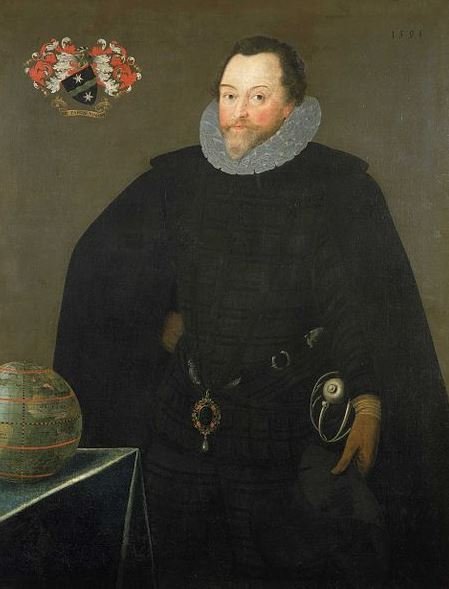
Image: A portrait of Francis Drake by Flemish painter Marcus Gheeraerts.
Difference between the Spanish Armada and the English Armada
The Battle of Waterloo (1815)
The Battle of Waterloo on June 18, 1815, was a decisive engagement in which the British-led allied army under the Duke of Wellington defeated Napoleon Bonaparte’s forces. Napoleon’s defeat ended his rule as Emperor of the French and marked the end of the Napoleonic Wars, which had raged across Europe for over a decade.
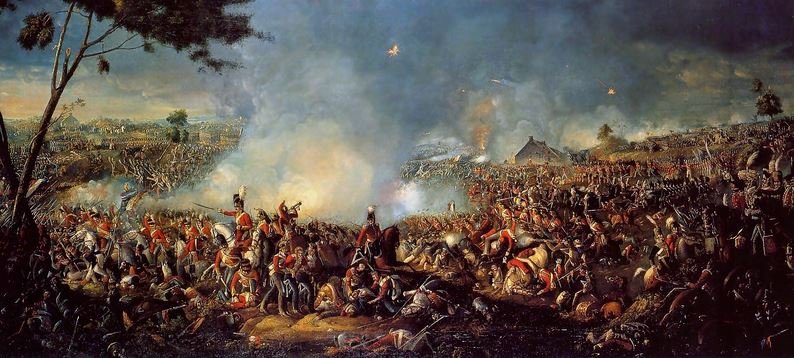
Image: An artwork depicting the Battle of Waterloo. It was created by Irish painter William Sadler II.
The Charge of the Light Brigade (1854)
During the Crimean War, the Charge of the Light Brigade was a disastrous and bold cavalry charge led by British forces against Russian troops at the Battle of Balaclava on October 25, 1854. Despite the heavy casualties and its ultimate failure, the charge became legendary for its display of bravery and the stoic acceptance of a doomed mission.
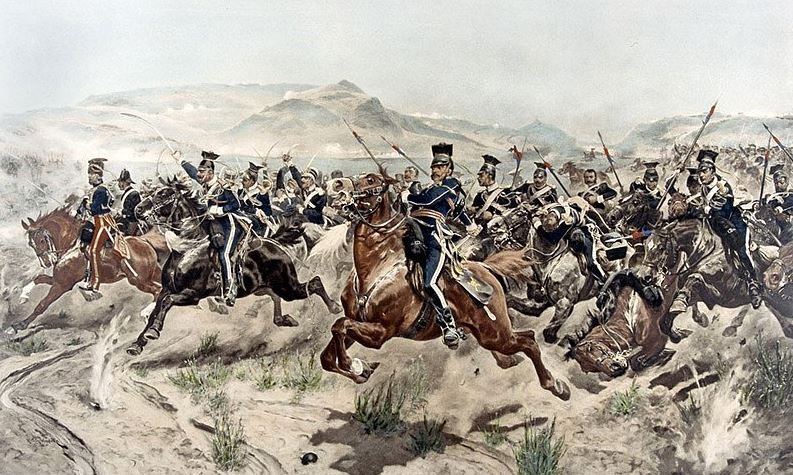
Image: A painting by English artist Richard Caton Woodville Jr., depicting the Charge of the Light Brigade.
The Battle of Rorke’s Drift (1879)
The Battle of Rorke’s Drift was a remarkable defensive action by British soldiers during the Anglo-Zulu War. Despite being vastly outnumbered, a small British force successfully defended a mission station against a fierce assault by Zulu warriors. Eleven Victoria Crosses were awarded to the defenders, the most ever received for a single action by one regiment.
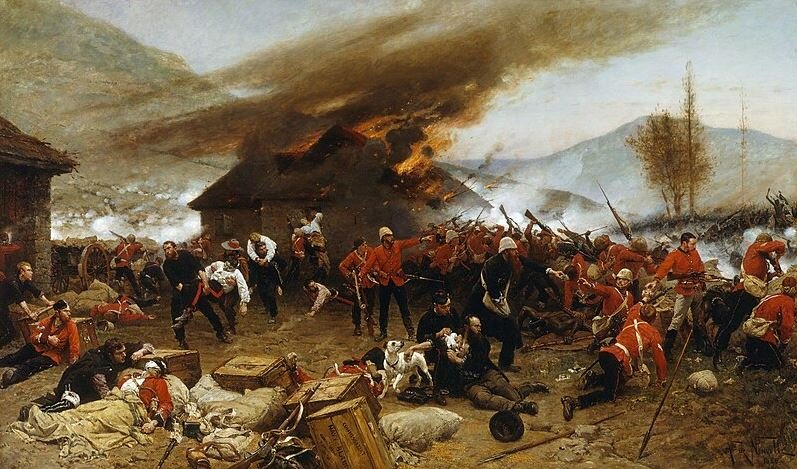
French painter Alphonse de Neuville’s illustration depicting the Battle of Rorke’s Drift.
The Battle of Britain (1940)
The Battle of Britain was a crucial conflict of World War II, where the Royal Air Force (RAF) defended the United Kingdom against large-scale attacks by Nazi Germany’s air force, the Luftwaffe. The successful defense not only prevented a German invasion but also marked the first major defeat of Hitler’s military forces.
Operation Barbarossa: Why did Nazi Germany Launch an Invasion of the Soviet Union in 1941?
The Falklands War (1982)
The Falklands War was a ten-week conflict between Argentina and the United Kingdom over two British overseas territories in the South Atlantic: the Falkland Islands and South Georgia and the South Sandwich Islands. The British military expedition to reclaim the Falklands demonstrated the UK’s willingness and ability to defend its interests overseas, despite the logistical challenges.
D-Day (1944)
Though a joint Allied effort, British forces played a crucial role in the D-Day landings of June 6, 1944. This massive seaborne invasion began the liberation of German-occupied France (and later Western Europe) from Nazi control and laid the foundations for the Allied victory on the Western Front.
Operation Barbarossa: Why did Nazi Germany Launch an Invasion of the Soviet Union in 1941?
The Battle of Trafalgar (1805)
Under the command of Admiral Lord Nelson, the British navy decisively defeated the combined fleets of the French and Spanish Navies at the Battle of Trafalgar on October 21, 1805. This victory ensured British naval supremacy for the next century and prevented Napoleon’s invasion of Britain.
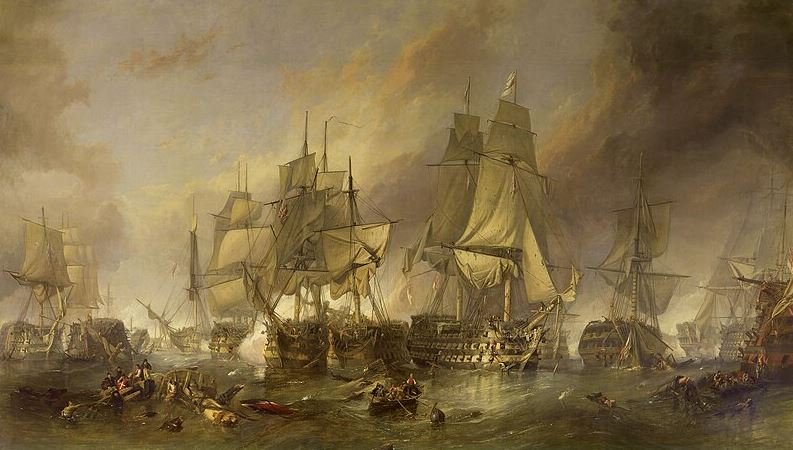
Image: A depiction of The Battle of Trafalgar by English painter Clarkson Frederick Stanfield