Most Famous Anti-Apartheid Activists
The struggle against apartheid in South Africa was waged by a diverse group of activists who employed various strategies, including peaceful resistance, armed struggle, international advocacy, and political leadership. These individuals, drawn from different racial and social backgrounds, played a crucial role in dismantling institutionalized racism and shaping a democratic South Africa.
Below, World History Edu explores the lives and contributions of some of the most famous anti-apartheid activists.
Nelson Mandela

A 1994 photo of Mandela casting his vote.
Nelson Mandela is perhaps the most well-known anti-apartheid activist. Born in 1918 in the village of Mvezo, Mandela initially trained as a lawyer before joining the African National Congress (ANC) in 1944. His political activism intensified as he became a key figure in the Defiance Campaign of 1952, which encouraged mass civil disobedience against apartheid laws.
Mandela co-founded uMkhonto we Sizwe (MK), the armed wing of the ANC, in 1961 after concluding that peaceful resistance was ineffective. Arrested in 1962, he was later sentenced to life imprisonment during the Rivonia Trial of 1964. He spent 27 years in prison, primarily on Robben Island, emerging in 1990 as a global symbol of resistance and reconciliation.
His negotiations with the apartheid government led to South Africa’s first multiracial elections in 1994, in which he became the country’s first Black president. His presidency emphasized reconciliation, truth, and nation-building, with initiatives such as the Truth and Reconciliation Commission (TRC). Mandela’s legacy remains central to South Africa’s democratic history.
Desmond Tutu
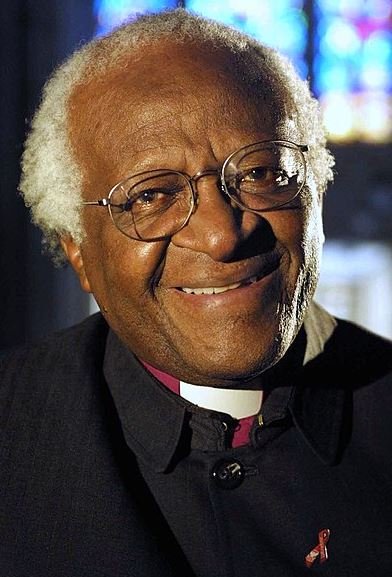
A 2004 photograph of Desmond Tutu.
Archbishop Desmond Tutu was a key figure in the nonviolent resistance against apartheid. A prominent Anglican cleric, he used his religious platform to denounce apartheid as a moral and theological crime. Tutu’s advocacy reached global audiences, strengthening international sanctions against South Africa.
As the general secretary of the South African Council of Churches (SACC) in the 1970s, Tutu championed nonviolent resistance and called for economic sanctions against the apartheid regime. His efforts earned him the Nobel Peace Prize in 1984, making him one of the most internationally recognized anti-apartheid figures.
Tutu later chaired the Truth and Reconciliation Commission (TRC), which investigated human rights violations committed during apartheid. He advocated for justice through truth-telling rather than retribution, helping South Africa transition peacefully into democracy. His phrase “Rainbow Nation” became a symbol of unity in post-apartheid South Africa.
Steve Biko

Steve Biko
Steve Biko was the leader of the Black Consciousness Movement (BCM), which sought to empower Black South Africans psychologically and politically. Born in 1946, Biko became a student activist, co-founding the South African Students’ Organization (SASO) in 1969.
Biko’s philosophy emphasized self-reliance, black pride, and mental liberation. He argued that apartheid’s most profound effect was the psychological oppression of Black people, making them feel inferior. His slogan, “Black is Beautiful,” encouraged self-respect and defiance against white supremacy.
Arrested in 1977, Biko was brutally tortured and killed in police custody, sparking international outrage. His death strengthened the global anti-apartheid movement, leading to increased sanctions against South Africa. His ideas continue to inspire movements advocating for racial equality and social justice.
Winnie Madikizela-Mandela
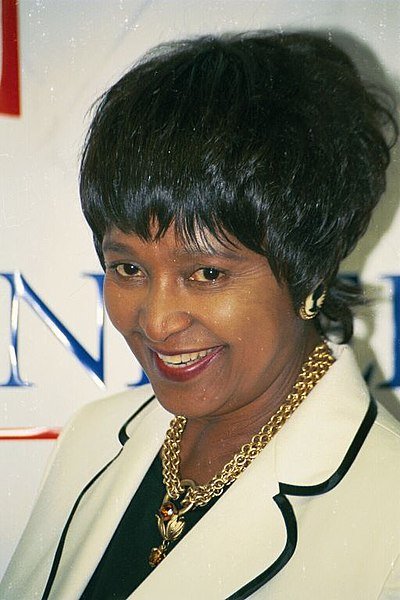
Winnie Madikizela-Mandela
Winnie Madikizela-Mandela, Nelson Mandela’s wife, became a formidable anti-apartheid activist in her own right, particularly during his imprisonment. After being banned and frequently detained by the government, she emerged as a fearless leader of grassroots resistance movements.
Despite facing harassment, exile, and imprisonment, she remained vocal against apartheid, inspiring thousands to join the struggle. As a leader of the United Democratic Front (UDF) in the 1980s, she mobilized young activists, particularly during the Soweto Uprising of 1976. However, her legacy is complex due to allegations of human rights abuses, including links to the Mandela United Football Club.
Despite controversies, Winnie Mandela remains an iconic figure in South Africa’s history, symbolizing the unrelenting spirit of resistance.
Walter Sisulu

A 1991 photo of Walter Sisulu
Walter Sisulu was an architect of the ANC’s resistance strategy. As a mentor to Nelson Mandela and other young activists, he played a key role in shaping the ANC’s policies. He helped draft the Freedom Charter in 1955, which outlined South Africa’s democratic aspirations.
Sisulu was arrested in 1963 and sentenced to life imprisonment alongside Mandela at the Rivonia Trial. Released in 1989, he played a crucial role in negotiations leading to the end of apartheid. His behind-the-scenes leadership helped shape South Africa’s transition to democracy.
Oliver Tambo

Oliver Tambo in 1981
Oliver Tambo was the president of the ANC in exile for over 30 years. After being forced into exile in 1960, he led the ANC’s international campaign against apartheid, securing financial and military support from various countries.
Under his leadership, the ANC gained legitimacy on the global stage, leading to the eventual international isolation of the apartheid government. Tambo’s diplomatic efforts were crucial in mobilizing sanctions and maintaining the ANC’s political coherence.
Although he died in 1993 before seeing the full transition, Tambo’s role in shaping South Africa’s future remains undeniable.
Chris Hani
Chris Hani was the leader of the South African Communist Party (SACP) and the chief of staff of uMkhonto we Sizwe (MK). A militant activist, he played a significant role in the armed struggle against apartheid.
Hani was known for his charismatic leadership and strong commitment to socialism. He believed that economic liberation was inseparable from political freedom. His assassination in 1993 by a right-wing extremist nearly derailed South Africa’s transition, but Mandela’s leadership prevented mass violence.
Hani remains a revolutionary icon, especially among young activists advocating for economic justice.
Joe Slovo
Joe Slovo was a Jewish South African, lawyer, and leading member of both the ANC and the South African Communist Party (SACP). He was instrumental in formulating the ANC’s armed struggle strategy and played a key role in the MK’s sabotage operations.
Slovo was also a major figure in the negotiations to end apartheid, advocating for a peaceful transition while ensuring that the voices of marginalized communities were heard. His legacy as a white anti-apartheid activist remains a testament to the multi-racial nature of the struggle.

Joe Slovo’s grave is located in Avalon Cemetery, Soweto.
Albertina Sisulu
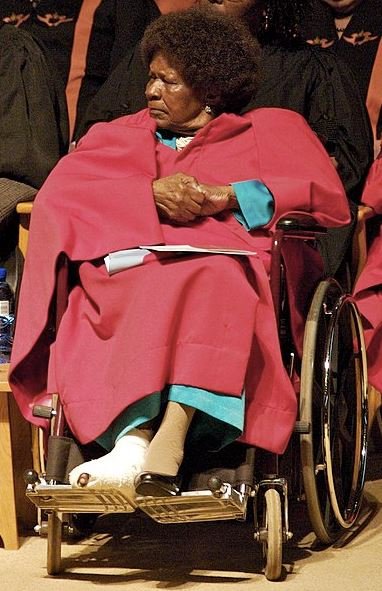
A 2007 picture of Albertina Sisulu seated on a wheelchair.
Albertina Sisulu was a nurse, community leader, and staunch anti-apartheid activist. The wife of Walter Sisulu, she played a crucial role in resistance movements, particularly within the Federation of South African Women (FEDSAW).
She helped organize the 1956 Women’s March, where 20,000 women protested against pass laws. She was also an active member of the ANC Women’s League and was frequently detained for her activism. Even during her husband’s long imprisonment, she continued to fight for justice.
After apartheid, she served as a Member of Parliament, ensuring that South Africa’s democracy represented the marginalized. Her contributions earned her recognition as one of the country’s greatest heroines.
Ahmed Kathrada
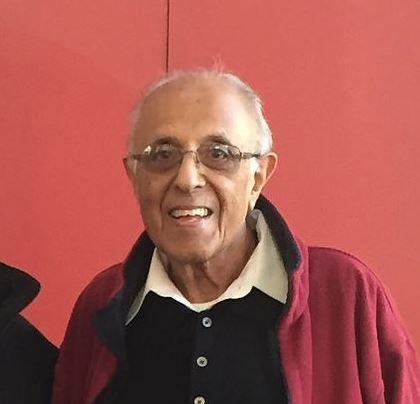
A 2016 photo of Ahmed Kathrada.
Ahmed Kathrada was a close confidant of Nelson Mandela and a leading member of the ANC. He played a crucial role in organizing resistance campaigns, including the Defiance Campaign of 1952.
The legacy of Ahmed Kathrada reminds us that freedom is won through struggle, perseverance, and unity.
Arrested in 1963, he was sentenced to life imprisonment alongside Mandela and Sisulu. After his release in 1989, Kathrada served as an adviser to Mandela during his presidency. His dedication to justice extended beyond apartheid, advocating for prison reform and human rights globally.
Beyers Naudé
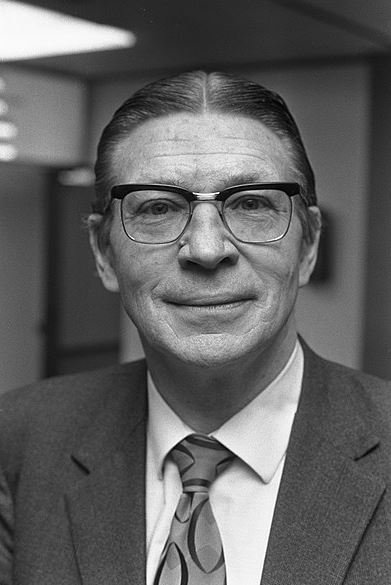
A 1972 photograph of Beyers Naudé.
Beyers Naudé was a white Afrikaner and former minister of the Dutch Reformed Church, which had supported apartheid. He broke away from the church and founded the Christian Institute of Southern Africa, opposing racial segregation.
Despite being banned and persecuted, Naudé continued to provide moral and material support to anti-apartheid activists, earning widespread respect. His role in the struggle demonstrated the power of religious resistance against injustice.
Fatima Meer
Fatima Meer was a prominent Indian-South African activist, writer, and academic. She played a significant role in bridging Indian and Black solidarity against apartheid.
As a founding member of the Black Women’s Federation, she actively resisted apartheid laws and championed women’s rights. Her activism extended beyond South Africa, advocating for global human rights.
Questions and Answers
What was apartheid?
A system of institutionalized racial segregation and discrimination implemented by the National Party in South Africa from 1948 to 1994.
How did the African National Congress (ANC) initially resist apartheid?
Through peaceful protests, civil disobedience, and the Defiance Campaign of 1952.
What led to the shift from peaceful protests to armed resistance?
The Sharpeville Massacre of 1960, where police killed 69 unarmed protesters, convinced many activists that nonviolent resistance was ineffective.
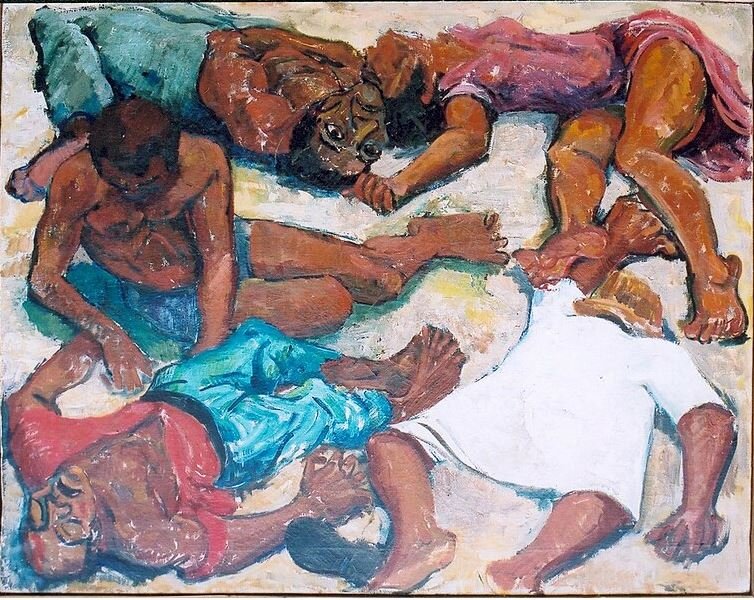
An illustration by Godfrey Rubens, depicting the Sharpeville massacre.
What was uMkhonto we Sizwe (MK)?
The ANC’s armed wing, founded in 1961, which carried out sabotage attacks against government infrastructure.
What role did the Pan Africanist Congress (PAC) play in the resistance?
It broke away from the ANC in 1959, organized anti-pass law protests, and formed its own militant wing, Poqo.
What was the significance of the Soweto Uprising in 1976?
A student-led protest against the compulsory use of Afrikaans in schools, which turned violent when police fired on demonstrators, killing hundreds.
How did international pressure contribute to ending apartheid?
Economic sanctions, trade restrictions, and diplomatic isolation weakened the South African government.
What was the role of the Black Consciousness Movement (BCM)?
Led by Steve Biko, it promoted black pride, self-reliance, and resistance to white dominance.
Why was Nelson Mandela imprisoned?
He was arrested in 1962 and later sentenced to life imprisonment in the Rivonia Trial for sabotage and conspiracy to overthrow the government.
What was the Tricameral Parliament, and why was it controversial?
Introduced in 1983, it allowed limited representation for Coloured and Indian citizens but excluded Black South Africans.
The United Democratic Front (UDF) was a coalition of anti-apartheid organizations formed in 1983 to coordinate resistance efforts.
How did trade unions contribute to the anti-apartheid struggle?
Organizations like COSATU organized mass strikes and boycotts that disrupted the economy.
What was the impact of the Rivonia Trial?
Key ANC leaders were imprisoned, but it drew global attention to the anti-apartheid cause.
How did churches oppose apartheid?
Religious leaders like Desmond Tutu and Beyers Naudé condemned apartheid and supported resistance efforts.
What was the Mass Democratic Movement (MDM)?
A 1989 alliance of UDF and COSATU that led protests against segregation and state repression.
How did apartheid officially end?
Through negotiations between the ANC and the National Party, culminating in the 1994 multiracial elections.
What was the role of white anti-apartheid activists?
Some, like Helen Suzman and Joe Slovo, opposed apartheid through politics, journalism, and armed struggle.
What was the significance of the 1994 elections?
They marked the official end of apartheid, with Nelson Mandela elected as South Africa’s first Black president.





