What transpired at the Battle of Manzikert in 1071?
The Battle of Manzikert, fought on August 26, 1071, between the Byzantine Empire and the Seljuk Empire near Manzikert (modern-day Malazgirt in Turkey), marked a turning point in Middle Eastern and Anatolian history. The defeat of the Byzantine army and the capture of Emperor Romanos IV Diogenes significantly weakened Byzantine control over Anatolia and paved the way for the Turkification of the region.

A map showing the location of the battle and other regions.
The Battle of Manzikert altered the power dynamics of the region, leading to political instability, economic turmoil, and a shift in Byzantine military strategies.
Background
By the mid-11th century, the Byzantine Empire was experiencing internal strife and military decline. The reigns of Constantine IX Monomachos and Constantine X Doukas had significantly weakened the army, with military funding being diverted to other state expenses.
The brief reign of Isaac I Komnenos attempted to address these military deficiencies, but his reforms were not sustained after his abdication. The Byzantine eastern front was left vulnerable when Constantine IX disbanded the “Iberian Army,” which had served as a crucial defensive force against Seljuk incursions.
In 1068, Romanos IV Diogenes ascended to the throne and sought to reform the military, recognizing the growing Seljuk threat. He launched campaigns to reclaim lost Byzantine fortresses and to reinforce the empire’s eastern defenses. However, the peace treaty signed between Romanos and the Seljuk Sultan Alp Arslan in 1069 was a mere strategic maneuver. Romanos aimed to surprise the Seljuks by launching a sudden campaign into Armenia in 1071, leading to the fateful encounter at Manzikert.
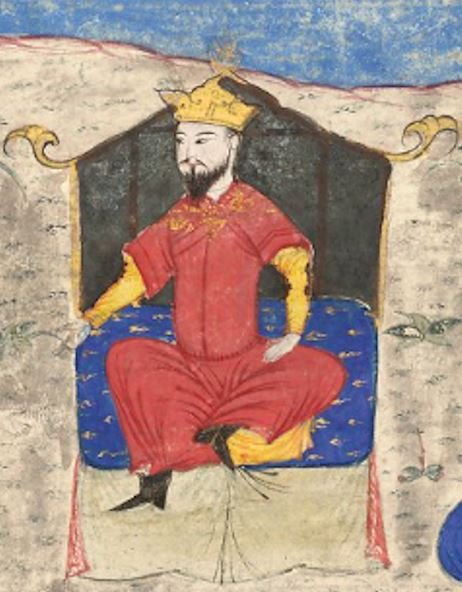
A illustration depicting Alp Arslan.
Prelude to the Battle
Romanos IV led an army composed of Byzantine regulars, mercenaries, and provincial levies, amounting to over 38,000 men. His forces included Norman and Frankish mercenaries under Roussel de Bailleul, Varangian Guards, Pecheneg and Turkic auxiliaries, and Armenian and Georgian allies. Despite the diverse composition of his army, Romanos faced logistical challenges, including low troop morale and internal political tensions. His decision to march towards Manzikert, despite warnings from his generals, proved detrimental.
Meanwhile, Alp Arslan had initially been engaged in a campaign against the Fatimids in Aleppo but rapidly redirected his forces northward upon learning of the Byzantine advance. His army, primarily composed of highly mobile cavalry, was well-suited for the battlefield conditions. Alp Arslan utilized superior reconnaissance, allowing him to position his forces strategically while Romanos remained largely unaware of the Seljuk army’s whereabouts.
The Battle of Manzikert
On August 23, 1071, Romanos captured the town of Manzikert without significant resistance. However, his decision to split his forces by sending a detachment under Joseph Tarchaniotes to capture Khliat resulted in a major tactical blunder. Tarchaniotes’ forces either deserted or were annihilated, leaving Romanos with only half of his original army.
The Byzantine army advanced towards the Seljuk positions on August 26, engaging in battle formation. The Byzantine center, commanded by Romanos himself, pushed forward, while the left and right flanks, led by Bryennios and Alyates respectively, attempted to outmaneuver the Seljuks. However, Alp Arslan employed classic steppe warfare tactics, using feigned retreats and hit-and-run cavalry attacks to lure the Byzantines into a vulnerable position. As the Byzantines advanced deeper into the battlefield, their formations became stretched and disorganized.
By evening, Romanos ordered a retreat, but his forces were confused, and a miscommunication allowed the Seljuks to launch a devastating counterattack. Andronikos Doukas, a political rival of Romanos, deliberately withheld his forces from aiding the emperor. The Byzantine right wing crumbled, and many troops deserted. The Varangian Guard and the emperor’s personal bodyguard made a last stand but were eventually overwhelmed. Romanos was wounded and captured by the Seljuks, marking the first time in Byzantine history that an emperor was taken prisoner by a Muslim commander.
Who were the greatest military generals of the Byzantine Empire?
Captivity of Romanos IV Diogenes
Alp Arslan treated his captive with unexpected courtesy, offering him fair terms for his release. The agreement stipulated the surrender of key Byzantine cities, a ransom of 1.5 million gold pieces, and an annual tribute. However, upon his return to Constantinople, Romanos found himself deposed by his political enemies. He was blinded and exiled, where he eventually succumbed to his injuries. His tragic downfall highlighted the internal instability within Byzantium, which further weakened its ability to defend against future invasions.
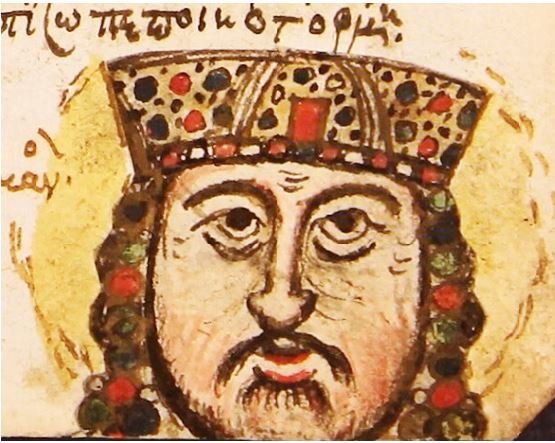
A drawing portraying Romanos IV Diogenes.
Aftermath and Consequences
The Battle of Manzikert was not an immediate territorial disaster for the Byzantines, as many fortresses remained under their control. However, the ensuing civil wars and lack of central authority allowed the Seljuks to advance into Anatolia unopposed. By 1080, the Seljuks controlled approximately 29,730 square miles (77,000 square kilometers) of Byzantine land. The establishment of the Sultanate of Rum in central Anatolia solidified Turkish influence in the region.
The Battle of Manzikert in 1071 demonstrated the effectiveness of Seljuk military tactics against the rigid formations of the Byzantine army and marked the beginning of centuries of Turkish rule in Anatolia.
The battle also indirectly contributed to the call for the First Crusade. Byzantine Emperor Alexios I Komnenos, seeking to recover lost territories, appealed to Western Europe for military assistance. This request led to Pope Urban II’s call for a crusade in 1095, altering the geopolitical landscape of the medieval world.
READ ALSO: 10 Most Influential Catholic Popes from the Middle Ages
Historical Interpretations
Historians have debated the true impact of the Battle of Manzikert. While some, like Steven Runciman, describe it as the most decisive disaster in Byzantine history, others argue that internal Byzantine strife played a greater role in the empire’s decline than the battle itself. Anna Komnene and later Byzantine chroniclers lamented the defeat, viewing it as the beginning of the empire’s downfall.

READ ALSO: 10 Most Famous Byzantine Emperors and Empresses
Legacy and Cultural Impact
The Battle of Manzikert remains a significant historical event in both Byzantine and Turkish historiography. It is commemorated in Turkey as a symbol of national heritage and the beginning of Turkish dominance in Anatolia. The Çamlıca Mosque in Istanbul, with minarets reaching 107.1 meters, is a tribute to the battle’s significance in Turkish history.
Timeline of the events leading up to the Battle of Manzikert (1071)
- 1053: Byzantine Emperor Constantine IX disbands the “Iberian Army,” weakening eastern defenses.
- 1064: Seljuk Sultan Alp Arslan captures Ani, marking increased Seljuk incursions into Byzantine territory.
- 1068: Romanos IV Diogenes becomes Byzantine emperor and initiates military reforms.
- 1069: Byzantines and Seljuks sign a peace treaty, as Alp Arslan focuses on Egypt.
- 1071 (February): Romanos seeks to renew peace, but both sides prepare for conflict.
- 1071 (August 23): Byzantines capture Manzikert; Seljuks launch attacks.
- 1071 (August 26): Seljuks encircle and defeat the Byzantine army; Romanos IV is captured.
- 1071 (September): Romanos is released but soon deposed and blinded.

This map depicts Byzantine territory in purple, Byzantine attacks in red, and Seljuk attacks in green.
Questions and Answers
What was the Battle of Manzikert?
A battle fought on August 26, 1071, between the Byzantine Empire and the Seljuk Empire near Manzikert (modern-day Malazgirt, Turkey). The Byzantines suffered a decisive defeat.
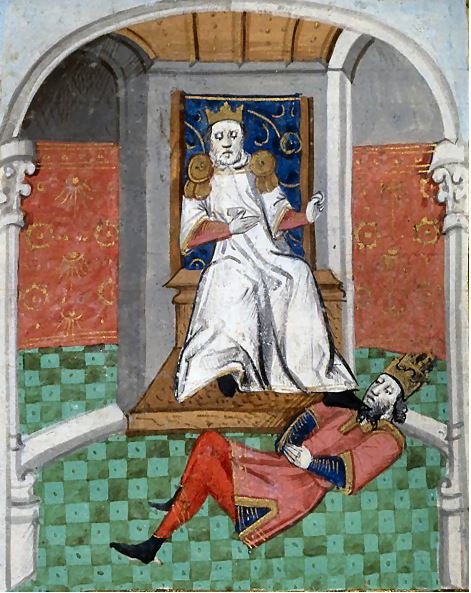
An illustration showing Romanos IV Diogenes being humiliated by Alp Arslan.
Why was the battle significant?
It marked the beginning of the Byzantine decline in Anatolia and facilitated the gradual Turkification of the region.
Who led the opposing forces?
Byzantine Emperor Romanos IV Diogenes led the Byzantines, while Sultan Alp Arslan commanded the Seljuks.
What was the outcome for the Byzantine emperor?
Romanos IV was captured by Alp Arslan, later released, but deposed and blinded upon his return to Constantinople.
How did the battle impact the Byzantine military?
The defeat weakened the Byzantine army, leading to civil wars and economic decline, reducing its ability to defend Anatolia.
What role did internal Byzantine conflicts play?
Political instability and rivalries, especially with the Doukas family, contributed to the empire’s failure to recover from the loss.
Did the Seljuks immediately conquer Anatolia?
No, but Byzantine instability after Manzikert allowed Turkish groups to settle and expand control over central Anatolia.
How did the battle influence later events?
The weakened Byzantines sought Western aid, leading to the First Crusade in 1095, reshaping Christian-Muslim relations in the region.





