Most Powerful and Influential Women Leaders of the 20th Century
The 20th century witnessed a remarkable shift in the roles women assumed in political leadership across the globe. This period saw women ascending to positions of power, overcoming societal barriers, and significantly impacting the course of history through their governance, policies, and reformative actions.
In the article below, World History Edu provides brief biographies of some of the most powerful and influential women leaders of the 20th century, examining their contributions, the challenges they faced, and their enduring legacies.
Eleanor Roosevelt (1884-1962)
Eleanor Roosevelt redefined the role of the First Lady of the United States during her husband Franklin D.Roosevelt’s presidency, becoming an influential advocate for civil rights, women’s rights, and human rights. Her diplomatic skills and humanitarian efforts didn’t end with her tenure as First Lady. After her husband’s death, she played a crucial role in the formation of the United Nations and was a key figure in drafting the Universal Declaration of Human Rights, significantly impacting global policies regarding human rights.

There is no doubt whatsoever that Eleanor Roosevelt’s legacy continue to inspire future generations of leaders around the world. Image: Eleanor Roosevelt in 1933.
10 Most Influential U.S. First Ladies and their Accomplishments
Golda Meir (1898-1978)
Golda Meir, known as the “Iron Lady” of Israeli politics, was Israel’s fourth Prime Minister and the world’s third woman to hold such an office. Her leadership was marked by her straightforward style and the critical decisions she made during tumultuous times, including the Yom Kippur War. Though her policies were sometimes controversial, her role in the foundational years of Israel and her significant contributions to its early political landscape have left a lasting imprint on Israeli society.

Women leaders of the 20th century broke barriers and shaped policies that had significant impacts on their nations and beyond. Image: Golda Meir, the renowned Israeli politician who served as her country’s fourth prime minister. Image: A 1964 photo of Golda Meir.
Indira Gandhi (1917-1984)
Indira Gandhi, the first and only female Prime Minister of India, was a central figure in Indian politics for the better part of the 20th century. Her tenure is noted for significant economic and social reforms that transformed India’s landscape. However, her leadership was also marked by authoritarian tendencies, most notably during the Emergency (1975-1977), when civil liberties were widely suspended. Despite these controversies, her impact on Indian politics and her role in shaping the modern Indian state are undeniable.

Image: Indira Gandhi in 1983
Margaret Thatcher (1925-2013)
Margaret Thatcher, the United Kingdom’s first female Prime Minister, held office from 1979 to 1990. Known as the “Iron Lady,” she is famous for her uncompromising politics and leadership style. Thatcher’s economic policies revitalized the British economy through deregulation, privatization of state-owned companies, and reducing the power of trade unions. Her tenure significantly altered the British social order and had a profound impact on the politics of the United Kingdom and the wider world.

Image: A portrait of Margaret Thatcher during the mid 1990s.
Benazir Bhutto (1953-2007)
Benazir Bhutto, twice Prime Minister of Pakistan, was the first woman to head a democratic government in a majority Muslim nation. Her political career was characterized by her charismatic authority and her struggle against military dictatorship.
Bhutto’s policies focused on liberalizing the economy and implementing social reforms. Her leadership, however, was marred by charges of corruption, and her assassination in 2007 left a void in Pakistan’s political landscape, highlighting the volatile intersection of gender, politics, and national security issues.

Benazir Bhutto’s leadership styles, policies, and the challenges she faced reflect both the complexities of power in her respective context and the transformative role she played in guiding India through pivotal times. Image: A 2006 picture of Benazir Bhutto.
Angela Merkel (Born 1954)
Though Angela Merkel’s most impactful years in leadership as Chancellor of Germany began in 2005, her rise in politics started in the 1990s, following the reunification of Germany. Merkel’s pragmatic leadership during numerous global financial crises has solidified her reputation as a steadfast leader. She has been pivotal in steering the European Union (EU) through various challenges, advocating for fiscal discipline within the EU while also showing a compassionate approach to the migrant crisis.
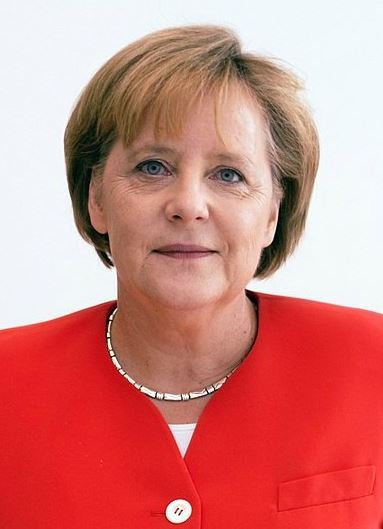
Image: Angela Merkel in 2010.
Madeleine Albright (1937-2022)
Madeleine Albright, the first female Secretary of State of the United States, served from 1997 to 2001 under President Bill Clinton. Albright was instrumental in shaping U.S. foreign policy in the post-Cold War era, advocating for expansion of NATO and military intervention in Kosovo. Her diplomatic strategies and negotiations on the global stage have been praised for advancing U.S. interests and promoting peace and democracy.
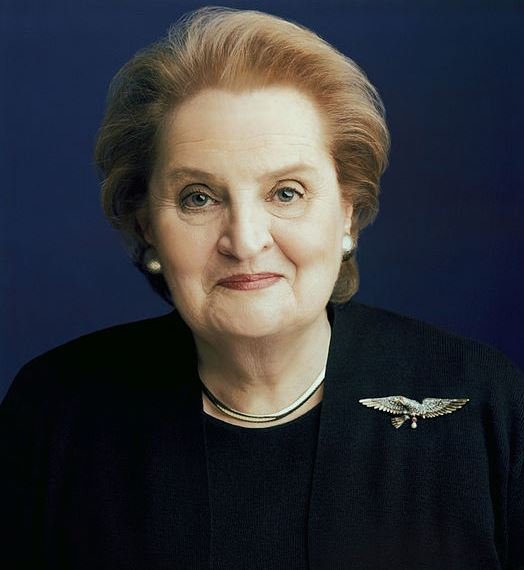
Image: A 1997 portrait of Madeleine Albright.
Corazon Aquino (1933-2009)
Corazon Aquino, the first female president of the Philippines and Asia, was thrust into the political spotlight after the assassination of her husband, Benigno Aquino Jr., who was a prominent critic of President Ferdinand Marcos. Her presidency was marked by efforts to restore democratic institutions after more than a decade of authoritarian rule. Though her leadership faced numerous challenges, including several coup attempts, her non-violent restoration of democracy has left a lasting legacy in the Philippines.
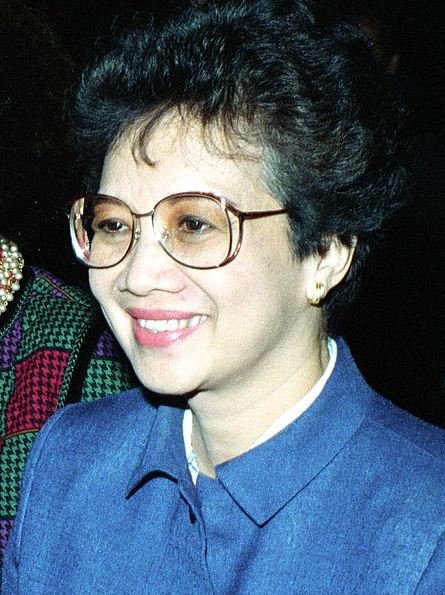
Image: A 1986 photograph of Corazon Aquino.
Ellen Johnson Sirleaf (Born 1938)
Ellen Johnson Sirleaf, the first elected female head of state in Africa, served as President of Liberia from 2006 to 2018. Another record that she chalked came in 2016, when she became the first woman to chair the Economic Community for West African States (ECOWAS), a regional political and economic union of fifteen countries located in West Africa.
Sirleef’s leadership is credited with bringing stability back to a country that was devastated by civil wars. Sirleaf’s efforts in fighting corruption, winning the Nobel Peace Prize in 2011, and her advocacy for women’s rights and education have been pivotal in her enduring influence both in Liberia and internationally.

Liberia’s President Ellen Johnson Sirleaf etched her name into the annals of history by becoming the first elected female head of state in Africa. Image: Liberia’s 24th President and Nobel Peace Prize Laureate Ellen Johnson Sirleaf. A 2015 photo of Sirleaf.
Gro Harlem Brundtland (Born 1939)
Gro Harlem Brundtland, a former Prime Minister of Norway and later Director-General of the World Health Organization, is another key figure in 20th-century leadership.
Brundtland’s political and diplomatic career was marked by her commitment to sustainable development and public health. Her leadership at the WHO focused on global health issues, including response to epidemics and improvements in health systems worldwide.

Image: A picture of Gro Harlem Brundtland in 2011.





In this list of powerful female national leaders, how could you not include the remarkable Queen Elizabeth.