Nefertiti’s Bust
by World History Edu · September 9, 2024

The Nefertiti Bust is one of the most famous and iconic pieces of ancient Egyptian art, representing not only the beauty and grace of Queen Nefertiti but also the rich cultural and historical significance of ancient Egypt. Its discovery in 1912 brought global attention to the artistry of the ancient world, and since then, the bust has become an object of both admiration and controversy, particularly in the ongoing debates over its ownership and the ethics of artifact repatriation.
In this detailed exploration, World History Edu cover the history of the Nefertiti Bust, its cultural context, its significance in the art world, and the controversies surrounding its acquisition.
Who Was Nefertiti?

Akhenaten, Nefertiti and their children
Before diving into the history of the Nefertiti Bust, it’s essential to understand the figure it represents. Nefertiti, whose name means “The Beautiful One Has Come,” was the Great Royal Wife of Pharaoh Akhenaten, who ruled during Egypt’s 18th Dynasty (c. 1370 – c. 1330 BC). She is one of the most famous queens in history, known for her beauty, political influence, and role in the religious revolution that Akhenaten initiated.
Together, Nefertiti and Akhenaten introduced Atenism, an early form of monotheism centered on the worship of the sun disc Aten. This religious reform represented a radical departure from traditional Egyptian polytheism. Nefertiti played a significant role in the religious and cultural changes of the time, making her one of the most powerful and influential women in ancient Egypt. Her beauty, power, and mysterious disappearance from historical records after Akhenaten’s death have fascinated scholars for centuries.
Discovery of the Bust
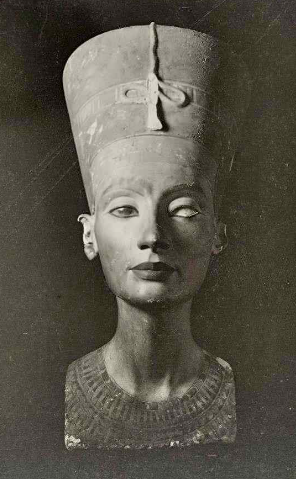
Photo of the Nefertiti Bust taken in 1912
The Nefertiti Bust was discovered on December 6, 1912, by a German archaeological team led by Ludwig Borchardt. The bust was found in the ruins of the workshop of Thutmose, a royal sculptor, in Tell el-Amarna, the city built by Akhenaten and Nefertiti to serve as the new capital of Egypt. Tell el-Amarna was the center of the Aten cult and a symbol of the religious reforms the royal couple introduced.
Thutmose’s workshop contained various unfinished sculptures, but the Nefertiti Bust stood out due to its remarkable craftsmanship and the realistic depiction of the queen’s beauty. It was carved from limestone and coated in a layer of stucco, with intricate paint applied to highlight Nefertiti’s features. The bust is widely considered to be a model or prototype, as it lacks certain finishing details, such as the inlay in the left eye.
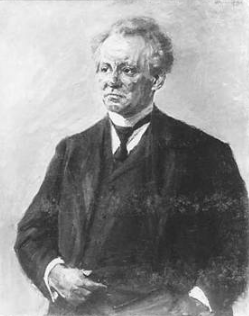
German Egyptologist Ludwig Borchardt
The Bust’s Journey to Germany
Following its discovery, the Nefertiti Bust was taken to Germany in early 1913, sparking a long-standing controversy. According to Egyptian officials, Borchardt downplayed the significance of the bust when dividing the finds from the excavation with Egyptian authorities. Egypt has accused him of deliberately misrepresenting the bust’s value, thus enabling him to smuggle it out of the country. He allegedly concealed the bust in such a way that its full beauty and importance were not immediately apparent to Egyptian officials.
Borchardt documented the find in his excavation notes, but his description of the bust was vague. Some scholars believe this was intentional, as the bust was only briefly shown to the Egyptian Antiquities Service, and Borchardt quickly arranged for its shipment to Germany. Once in Germany, the bust was acquired by James Simon, a German entrepreneur who financed the excavation, and he donated it to the Prussian Cultural Heritage Foundation.

Neues Museum in Berlin, Germany
Exhibition History
The Nefertiti Bust was first put on public display in 1924 at the Neues Museum in Berlin. Its public unveiling caused a sensation, and it quickly became one of the museum’s most popular exhibits. The bust’s realism, beauty, and elegance captured the imagination of visitors and cemented its status as an icon of ancient Egypt.
During World War II, the bust was moved several times to protect it from potential damage. It was hidden in a salt mine in Merkers-Kieselbach and later stored in a bank cellar. After the war, it was briefly housed in West Berlin’s Dahlem Museum before being returned to the Egyptian Museum in Charlottenburg and later to the Altes Museum.
Since 2009, the Nefertiti Bust has been displayed in the restored Neues Museum on Berlin’s Museum Island, where it remains one of the most visited artifacts. It occupies a central place in the museum’s Egyptian collection, drawing millions of visitors each year.
Artistic Significance
The Nefertiti Bust is widely considered one of the most exquisite examples of ancient Egyptian art. Its striking realism and detailed craftsmanship are hallmarks of the Amarna period, which is known for its departure from the traditional, rigid artistic conventions of earlier Egyptian art. During this period, under Akhenaten’s influence, artists began to depict the royal family and their subjects in a more naturalistic and individualized manner.
- Materials and Craftsmanship: The bust is made from limestone, covered with a thin layer of stucco, and painted with vibrant colors. The use of natural pigments allowed the sculptor to achieve a lifelike appearance, particularly in Nefertiti’s features, such as her almond-shaped eyes, high cheekbones, and elegant neck. The detail in her crown and jewelry also suggests the sculptor’s close attention to her regal status.
- Symbolism: Nefertiti’s crown, known as the “blue crown” or “Nefertiti cap crown,” became a signature element of her representation. It symbolizes her royal status and divine connection as Akhenaten’s consort. The symmetry and perfection of her features have led many to regard the bust as a symbol of idealized beauty, though it may also reflect the religious and political propaganda of the Amarna period, where the royal family was often depicted in an idealized form.
- Artistic Innovation: The Nefertiti Bust showcases the artistic innovation of the Amarna period, particularly the shift towards more expressive and individualized representations of figures. This period was a departure from the more rigid, formal depictions of earlier dynasties, where pharaohs and queens were often portrayed in stylized, unchanging poses. The bust’s realism highlights the influence of Akhenaten’s religious reforms on art, as the pharaoh promoted a more personal and direct connection between the gods and the royal family, which was reflected in the artistic styles of the time.
Cultural Impact and Modern Significance
The Nefertiti Bust has transcended its historical context to become a global icon of beauty and power. It is not only an important artifact of ancient Egypt but also a symbol of cultural heritage and the legacy of antiquities.
- Global Icon of Beauty: Nefertiti’s name and image have become synonymous with idealized beauty, and her bust has been replicated countless times in modern art and media. Her elegant features and graceful demeanor have inspired artists, filmmakers, and designers, making her a figure of enduring fascination. The bust’s influence can be seen in modern fashion, jewelry, and pop culture, where Nefertiti remains an emblem of timeless beauty.
- Symbol of Egypt’s Cultural Heritage: For Egypt, the Nefertiti Bust represents not only the artistic achievements of its ancient civilization but also the complex legacy of colonialism and the appropriation of cultural heritage. The bust is one of the most famous pieces of Egyptian art housed outside of Egypt, and its presence in Germany has long been a point of contention between the two countries.
Controversies and Calls for Repatriation
The Nefertiti Bust has been the subject of numerous repatriation requests from the Egyptian government, which began shortly after it was first displayed in Berlin in 1924. Egypt has argued that the bust was removed from the country illegally, citing evidence that Ludwig Borchardt misrepresented its significance to Egyptian authorities in 1912.
- Egypt’s Demands: Egypt has repeatedly requested the return of the bust, particularly since the 1920s. Egyptian officials argue that the artifact was illegally smuggled out of the country, violating an agreement that prohibited the export of significant archaeological finds. In recent years, former Egyptian Antiquities Minister Zahi Hawass has been particularly vocal in demanding the bust’s return, arguing that it is an integral part of Egypt’s cultural heritage.
- Germany’s Response: German officials and the Berlin Museum have consistently rejected Egypt’s demands, maintaining that the bust was legally acquired. They argue that the artifact was exported under the rules in place at the time, with the full knowledge of the Egyptian Antiquities Service. They also point to an official protocol signed between the German excavators and the French-led Egyptian authorities, which documented the division of the finds. Germany asserts that the bust is part of the museum’s collection and should remain in Berlin.
- Ethical Debate: The controversy surrounding the Nefertiti Bust is part of a broader debate about the ethics of artifact repatriation and the role of museums in addressing colonialism. Many scholars and activists argue that artifacts taken from their countries of origin during colonial times should be returned, as they are essential to those countries’ cultural identity and history. The Nefertiti Bust, along with other high-profile artifacts such as the Rosetta Stone and the Elgin Marbles, has become a focal point in this ongoing debate about the responsibilities of museums in the post-colonial era.
The Nefertiti Bust in Popular Culture
Beyond its historical and artistic significance, the Nefertiti Bust has become a cultural icon in the modern world. Its likeness has appeared in various forms of media, from films and documentaries to fashion and advertising. Nefertiti’s image has become synonymous with beauty, elegance, and power, making her one of the most recognizable figures from the ancient world.
- Film and Media: Nefertiti has been portrayed in numerous films, documentaries, and television shows, often as a symbol of ancient Egypt’s grandeur and mystery. The bust itself has been featured in many documentaries and exhibitions, further solidifying its status as one of the most famous artifacts of ancient Egypt.
- Fashion and Art: The bust’s elegant design and distinctive features have inspired countless artists, designers, and fashion houses. Nefertiti’s image has been used in fashion campaigns, jewelry designs, and modern art, symbolizing timeless beauty and sophistication. Her likeness has appeared on everything from high-end fashion accessories to street art, reflecting her continued relevance in contemporary culture.
- Symbol of Feminine Power: Nefertiti is often seen as a symbol of feminine strength and leadership, given her prominent role in ancient Egyptian politics and religion. In modern feminist discourse, she is celebrated as one of the few women in history who held significant power and influence. Her beauty, intelligence, and political acumen make her a role model for women today, and the bust has become a symbol of both physical beauty and inner strength.
Zahi Hawass’ Petition to have Nefertiti’s bust returned to Egypt
In September 2024, renowned Egyptian archaeologist and former Antiquities Minister Zahi Hawass launched a petition demanding the return of Queen Nefertiti’s pharaonic bust from Berlin’s Neues Museum to Egypt.
The famed archeologist has devoted considerable effort to ensure that key artifacts like Nefertiti’s bust, the Rosetta Stone, and the Dendera Zodiac are repatriated to Egypt. In his recent petition, he clarified that his campaign targets items removed illegally. Berlin museum officials have not commented.
Conclusion

Close-up of a limestone relief depicting Nefertiti smiting a female captive on a royal barge. On display at the Museum of Fine Arts, Boston.
The Nefertiti Bust is not only a masterpiece of ancient Egyptian art but also a symbol of the cultural, historical, and political complexities surrounding antiquities and their modern-day ownership. Its discovery over a century ago brought the world’s attention to the artistry and sophistication of the Amarna period, and it continues to captivate millions with its lifelike beauty and elegance.
However, the bust’s journey from Egypt to Germany and the ongoing debates over its repatriation reflect the broader issues of colonialism, cultural heritage, and the ethics of museum collections. While the bust remains one of the most iconic artifacts of ancient Egypt, its contested ownership underscores the challenges of preserving and honoring the cultural legacies of ancient civilizations in the modern world.
Whether it remains in Berlin or is eventually returned to Egypt, the Nefertiti Bust will undoubtedly continue to be a powerful symbol of both the artistic brilliance of the ancient world and the complex historical forces that have shaped its legacy.
Questions and Answers

Nefertiti was the queen of Egypt’s 18th Dynasty and the great royal wife of Pharaoh Akhenaten. She played a significant role in the religious reforms of Egypt during their reign. Image: Akhenaten, Nefertiti, and Meritaten (obscured) worshipping the Aten
What religious changes did Nefertiti and Akhenaten implement?
They introduced Atenism, an early form of monotheism centered on the sun disc Aten, which drastically changed Egypt’s religious practices.

Her husband and her reigns were turbulent times in Egyptian history. The royal couple had tossed the old gods, primarily based in Thebes, and established a somewhat new religion with the sun god Aten at the top of the pyramid. This incurred the displeasure of many Theban priests and religious leaders. Image: Akhenaten and Nefertiti. Louvre Museum, Paris.
What was the significance of Nefertiti and Akhenaten’s reign?
Their reign coincided with one of the most prosperous periods in ancient Egyptian history, marked by religious transformation and cultural development.
Did Nefertiti rule as Pharaoh after Akhenaten’s death?
Some scholars believe Nefertiti briefly ruled as Pharaoh under the name Neferneferuaten after Akhenaten’s death, although this theory is still debated.

Nefertiti worshipping the Aten. She is given the title of Mistress of the Two Lands. On display at the Ashmolean Museum, Oxford.
Why did Nefertiti gain modern fame?
Nefertiti became widely known in the 20th century with the discovery of her famous bust, which has become one of the most replicated works of ancient Egyptian art.
Where is Nefertiti’s bust currently housed?
Nefertiti’s iconic bust is displayed in Berlin’s Neues Museum.
Who sculpted Nefertiti’s bust?
The bust is attributed to the Egyptian sculptor Thutmose and was found in his studio.
What is the significance of Nefertiti’s bust?
Nefertiti’s bust is one of the most replicated pieces of ancient Egyptian art, symbolizing her enduring legacy and beauty throughout history.
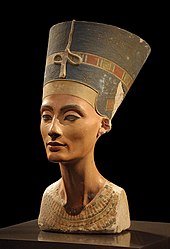
The Nefertiti Bust is a painted limestone sculpture of Queen Nefertiti, the Great Royal Wife of Pharaoh Akhenaten, believed to have been crafted around 1345 BC by the sculptor Thutmose.
Where is the Nefertiti Bust currently displayed?
The bust is currently displayed in the Neues Museum in Berlin, Germany.
Who discovered the Nefertiti Bust and when?
The bust was discovered in 1912 by a German archaeological team led by Ludwig Borchardt in the workshop of Thutmose at Tell-el Amarna, Egypt.
Where has the Nefertiti Bust been housed since its discovery?
The bust has been kept in various locations across Germany, including a bank cellar, a salt mine in Merkers-Kieselbach, the Dahlem Museum, the Egyptian Museum in Charlottenburg, and the Altes Museum.
Why is the Nefertiti Bust significant?
The bust has become an enduring symbol of ancient Egyptian culture and feminine beauty, making Nefertiti one of the most recognizable figures from antiquity. It is also one of the most frequently copied works of ancient Egyptian art.
Why has the Nefertiti Bust been the subject of controversy?
The bust has sparked a long-standing dispute between Egypt and Germany, with Egypt calling for its return, citing laws that prohibited the export of valuable archaeological items. Egyptian officials accuse Borchardt of concealing the bust’s value to smuggle it out of Egypt.

Right profile and front of the Nefertiti Bust
When did Egypt first demand the repatriation of the Nefertiti Bust?
Egypt’s demands for the return of the bust began in 1924, shortly after its public debut.
What broader issues does the dispute over the Nefertiti Bust highlight?
The dispute highlights broader debates about the legacy of European colonialism, the ownership of cultural artifacts, and the ethical responsibilities of museums in returning such items to their countries of origin.
What is Germany’s position on the ownership of the Nefertiti Bust?
German officials and the Berlin Museum claim they legally acquired the bust, referencing an official agreement between the German excavators and the French-led Egyptian Antiquities Service at the time.
What does the Nefertiti Bust symbolize in modern debates?
The bust symbolizes ongoing discussions about cultural heritage, restitution, and the ethical obligations of museums in addressing colonial history.
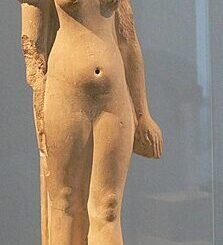





Hello, the Headbust of Queen Nefertiti beyond phenomenal.
The one and onl