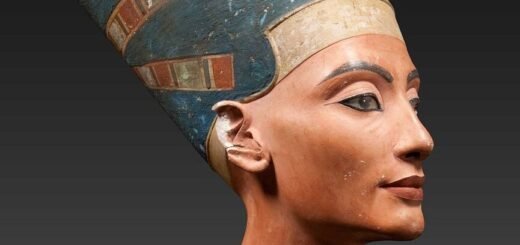
Standing Figure of Queen Nefertiti
The Standing Figure of Nefertiti is a masterpiece from Ancient Egypt, dating back to approximately 1350 BC during the reign of Pharaoh Akhenaten in the Amarna Period. This era marked a revolutionary departure from traditional Egyptian art and culture, emphasizing realism and individuality.
The figure was crafted in the studio of Thutmose, a renowned sculptor of the time. It represents Queen Nefertiti, the Great Royal Wife of Akhenaten, whose influence extended beyond her royal duties to cultural and religious reforms. The statue portrays Nefertiti in a lifelike manner, reflecting the Amarna Period’s artistic innovations, which sought to humanize royal figures.
Representing the early Amarna Period, the Standing Statue of Nefertiti depicts the Egyptian Queen wearing sandals and a transparent robe.
The limestone figure was intended as part of a larger body of artistic works dedicated to showcasing the royal family’s prominence and divinity.
Although incomplete, the sculpture embodies the essence of the queen’s persona. Nefertiti’s pivotal role in the religious transformation led by Akhenaten, centered on the worship of the sun disk Aten, underscores the importance of such representations. This artistic relic stands as a testament to the queen’s enduring legacy within Egyptian history.
Discovery of the Standing Figure of Nefertiti
In 1920, the German Oriental Society conducted an excavation at house P47.2, a structure identified as the workshop of Thutmose in the ancient city of Akhetaten (modern-day Amarna). Amid the ruins, archaeologists unearthed the fragmented statue of Nefertiti. It was found in multiple pieces, suggesting it had suffered damage over time, possibly during the city’s abandonment following Akhenaten’s reign.
The fragments revealed the exquisite craftsmanship of the Amarna Period and provided insight into the studio’s operations. Other artifacts and unfinished works were discovered at the site, indicating that the location served as a creative hub for royal commissions.
The pieces were carefully reconstructed, but some parts, including the right arm, sections of the left arm, toes, and nipples, remain missing. Markings on the figure suggest it was not fully completed, with plans for additional work, particularly on the face, to enhance its realism.
Discovered in 1920 by the German Oriental Society in Thutmose’s studio, the Standing Figure of Nefertiti was found in fragments.
The statue was acquired by James Simon, a benefactor of the excavation, who subsequently donated it to the Egyptian Museum of Berlin. Its discovery was significant, as it added to the understanding of Nefertiti’s iconography and the broader artistic context of the Amarna Period.
Artistic and Historical Significance
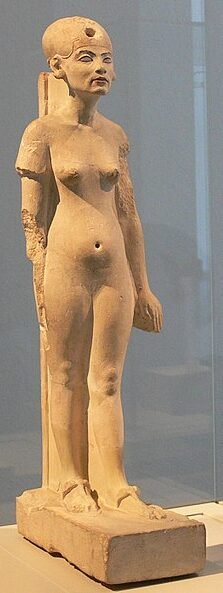
Image: The Standing Figure of Nefertiti is a limestone sculpture of Queen Nefertiti, created around 1350 BC.
Representation of the Amarna Period
The Standing Figure of Nefertiti exemplifies the art of the Amarna Period, known for breaking away from the rigid conventions of earlier Egyptian art. Unlike idealized depictions of royal figures, this sculpture emphasizes realism. Nefertiti is portrayed with a slightly advanced left leg, a vertical back pillar for support, and a transparent robe identifiable by its sleeves. Her posture and attire reflect a sense of individuality and movement, characteristics that distinguished Amarna art from its predecessors.
The figure also portrays Nefertiti as an older woman, highlighting her life experiences and motherhood. The visible signs of aging in her face, abdomen, and other features mark a deliberate artistic choice to humanize the queen. This departure from traditional ideals of eternal youth and divine perfection adds depth to the understanding of royal imagery during Akhenaten’s reign.
Symbolic Features and Details
The sculpture features intricate details, such as a tight-fitting hood covering her head and a yellow-pigmented headband. Her lips are painted red, and black pigment outlines her eyelids and eyebrows, enhancing the lifelike quality of the statue. Remnants of a broad collar are visible above the chest, symbolizing her royal status and connection to divine authority.
One of the most intriguing aspects is the hole atop her head, which once held the front part of the uraeus, a royal serpent emblem signifying sovereignty and protection. This detail underscores her prominent position as a Great Royal Wife and a central figure in the religious and political life of the time.
Cultural and Archaeological Importance
The Standing Figure of Nefertiti is a rare example of three-dimensional representations from the Amarna Period. While many depictions of Nefertiti exist in reliefs and paintings, complete statues are scarce. This artifact is therefore invaluable for understanding the artistic conventions and innovations of the time. It sheds light on the methods and materials used by Thutmose and his contemporaries, revealing the technical expertise of ancient Egyptian artisans.
From an archaeological perspective, the discovery of this statue provides a glimpse into the functioning of royal workshops. The presence of other unfinished pieces at Thutmose’s studio suggests that artisans were deeply involved in crafting personalized representations of the royal family. These artworks were not only symbols of power but also tools for promoting the religious reforms championed by Akhenaten and Nefertiti.
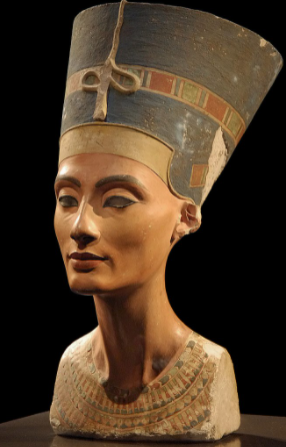
The Bust of Nefertiti, crafted by the sculptor Thutmose.
Legacy of the Standing Figure of Nefertiti
The statue’s incomplete state does not diminish its impact; rather, it adds to its mystique and significance. It serves as a tangible link to one of the most influential women in Ancient Egyptian history. Nefertiti’s role as a partner in Akhenaten’s religious revolution and her enduring influence as a cultural icon are immortalized through this sculpture.
Displayed in the Egyptian Museum of Berlin, the figure continues to captivate historians, archaeologists, and art enthusiasts. It offers a rare opportunity to study the interplay of realism, symbolism, and cultural identity in ancient Egyptian art. By providing insights into the artistic practices of the Amarna Period, the Standing Figure of Nefertiti enriches the understanding of an era defined by innovation and transformation.
Conclusion
The Standing Figure of Nefertiti holds immense historical, artistic, and cultural value. Its origins in the transformative Amarna Period highlight a unique moment in Egyptian history when art sought to reflect the complexities of human life. Its discovery in Thutmose’s studio not only uncovered the legacy of an extraordinary queen but also revealed the innovative spirit of an era. As a symbol of Nefertiti’s power, influence, and humanity, this sculpture remains a vital piece of ancient heritage and a cornerstone of Egyptian art.
Frequently Asked Questions
What is the Standing Figure of Nefertiti?
The Standing Figure of Nefertiti is a limestone sculpture from 1350 BC that portrays Queen Nefertiti during the Amarna Period. It is displayed in the Egyptian Museum of Berlin.
Where and when was the statue discovered?
The statue was discovered in 1920 during an excavation by the German Oriental Society at house P47.2, identified as the studio of the sculptor Thutmose.
What makes the depiction of Nefertiti in this sculpture unique?
Unlike idealized representations in traditional Egyptian art, this sculpture depicts Nefertiti as an older woman, with realistic features such as signs of age in the face, abdomen, breasts, and buttocks.
What parts of the statue are missing?
The sculpture is incomplete, with the right arm, parts of the left arm, toes, nipples, and the front portion of the uraeus missing.
What does the sculpture’s stance and attire signify?
Nefertiti is shown in a dynamic pose with her left leg slightly advanced, wearing sandals and a transparent robe identified by its sleeves, highlighting the Amarna Period’s focus on realism and individuality.
What colors and details are still visible on the statue?
Traces of yellow pigment remain on her headband, red on her lips, black on the eyelids and eyebrows, and a black pattern above the chest, indicating a broad collar.
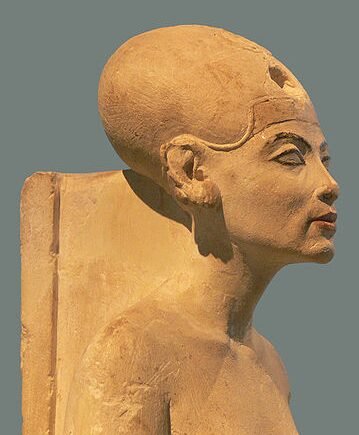
Image: A closer look at the head of the statue.
What is the significance of the uraeus on the sculpture?
The hole atop the head suggests a missing uraeus, a symbol of royalty, indicating Nefertiti’s high status as a queen.
Why is the statue an important example of Amarna Period art?
It reflects the artistic shift of the Amarna Period, emphasizing individuality and realism over traditional idealized beauty.
Who acquired the statue after its discovery, and how did it reach the museum?
The statue was acquired by James Simon, who later donated it to the Egyptian Museum of Berlin.
Why is the Standing Figure of Nefertiti historically significant?
As a representation of one of Ancient Egypt’s most influential queens, it provides insights into the life and legacy of Nefertiti and the cultural and artistic norms of her time.