Nicomedes III of Bithynia
Nicomedes III Euergetes, known as “the Benefactor” (Ancient Greek: Νικομήδης Εὐεργέτης), ruled the kingdom of Bithynia from approximately 127 BC to 94 BC. A descendant of a prestigious lineage and an influential player in the complex geopolitics of Hellenistic Asia Minor, Nicomedes III navigated alliances, conflicts, and diplomatic intrigues during his reign.
Early Life and Succession
Nicomedes III was the son of Nicomedes II of Bithynia. Upon his father’s death, he inherited the throne and continued to expand the influence of Bithynia. His reign was marked by strategic marriages, political alliances, and conflicts with neighboring states, particularly Cappadocia and Pontus.

A silver coin portraying Nicomedes II of Bithynia
Marriages and Family
Nicomedes III’s personal life significantly influenced his political strategies:
Marriage to Nysa
Nicomedes married Nysa, the daughter of Ariarathes VI of Cappadocia and Laodice, who shared lineage with the Seleucid dynasty. This marriage strengthened ties with Cappadocia and brought him closer to the powerful Seleucid heritage. Together, Nicomedes and Nysa likely had a daughter, also named Nysa.
Other Marital Connections
Earlier, Nicomedes had married Aristonica, who tragically died nine days after the birth of their son, Nicomedes IV. He also had another son, Socrates Chrestus, with a concubine named Hagne from Cyzicus. Hagne and Socrates were sent to Cyzicus with a substantial gift of 500 talents.
Alliance through Laodice
Nicomedes’ third marriage was to Laodice of Cappadocia, his former mother-in-law and the widow of Ariarathes VI. This politically motivated union was emblematic of the era’s dynastic strategies.
Alliance with Mithridates VI of Pontus
Nicomedes formed an alliance with Mithridates VI of Pontus, which led to the partitioning of Paphlagonia. This alliance, however, was fraught with tension. Mithridates eventually orchestrated the murder of Ariarathes VI of Cappadocia and sought to control the region by placing his son, Ariarathes IX, on the Cappadocian throne under the guardianship of Gordius.
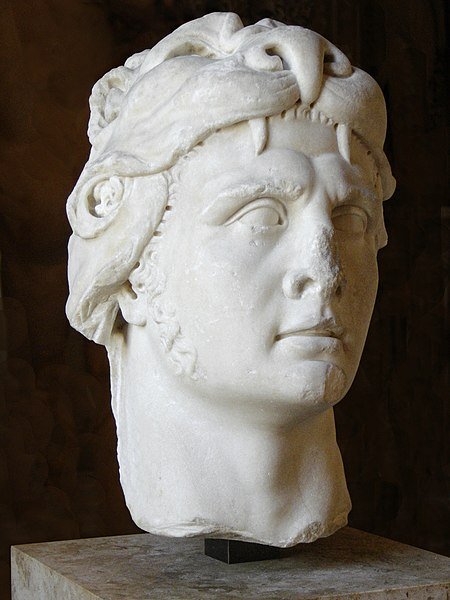
Portrait of the king of Pontus Mithridates VI as Heracles. Marble, Roman imperial period (1st century)
Nicomedes III Euergetes’s reign was defined by a delicate balancing act between alliances and rivalries, particularly with Mithridates VI and the Roman Republic.
Nicomedes III, exploiting the instability, invaded Cappadocia, though Mithridates countered this move by restoring his own influence in the region. The rivalry between Nicomedes and Mithridates became a central theme in the political dynamics of Asia Minor during this period.
Cappadocian Intrigues
The struggle for control over Cappadocia intensified after the murder of Ariarathes VII by Mithridates. The Cappadocians revolted and called Ariarathes VIII, the younger brother of Ariarathes VII, to reclaim the throne. However, Mithridates drove him out and subsequently arranged his death in 96 BC. With the extinction of the Cappadocian royal line, Nicomedes feared Mithridates’ growing power and devised a scheme involving a pretender to the Cappadocian throne, claiming him as a son born to Laodice. This move aimed to counter Mithridates’ influence but was ultimately thwarted by Roman intervention.
Relations with Rome
The Roman Senate, aware of the manipulations by both Nicomedes and Mithridates, intervened to stabilize the region. It ordered both kings to vacate their conquests—Nicomedes from Paphlagonia and Mithridates from Cappadocia. This marked the growing influence of Rome in Asia Minor and highlighted the limitations imposed on local monarchs by Roman authority.
Contributions to Delphi
Nicomedes III’s reign was also marked by cultural patronage. In 102 BC, he and Queen Laodice provided thirty slaves to Delphi, as requested by the city’s delegates. In gratitude, the Delphians issued a decree honoring the royal couple with statues in the temple of Pythian Apollo and granting them privileges such as proxeny, tax exemptions, and priority access to the oracle. These actions reflect Nicomedes’ role as a benefactor and his desire to reinforce his prestige through Hellenistic cultural and religious practices.
Refusal to Aid Rome in the Cimbrian War
In 104 BC, when the Roman consul Gaius Marius requested troops for the war against the Cimbri and Teutones, Nicomedes refused. He cited the depletion of Bithynia’s free population due to the enslavement of its citizens by Roman tax collectors. This refusal led the Roman Senate to decree that no free ally of Rome could be enslaved within its provinces. The decision underscored the tensions between Rome’s demands and the interests of its allies, while also demonstrating Nicomedes’ assertiveness in protecting his kingdom’s autonomy.
Frequently Asked Questions about Nicomedes III of Bithynia
Who were Nicomedes III’s family members?
He was the son of Nicomedes II. His wives included Nysa (daughter of Ariarathes VI and Laodice), and Laodice of Cappadocia, his former mother-in-law. He had children, including Nicomedes IV, Socrates Chrestus, and a daughter named Nysa.
What was Nicomedes III’s connection to the Seleucid dynasty?
Both Nicomedes III and his wife Nysa were descendants of the Seleucid dynasty.
How did Nicomedes III interact with Mithridates VI of Pontus?
They initially allied, partitioning Paphlagonia, but later became adversaries as Mithridates drove Nicomedes out of Cappadocia and opposed his claims.
Why did the Roman Senate intervene between Nicomedes III and Mithridates VI?
Both kings schemed for control of Cappadocia. Rome ordered Mithridates to leave Cappadocia and Nicomedes to leave Paphlagonia to curb their ambitions.
What privileges did Nicomedes III and Laodice receive from Delphi?
They were honored with statues, proxeny, priority access to the oracle, tax exemptions, privileged seating at games, and trade privileges.
How did Nicomedes III respond to Rome’s request for troops during the Cimbrian War?
He refused, citing that many Bithynians had been enslaved by Roman tax-collectors. This led the Senate to decree freedom for enslaved Roman allies.
What does the 102 BC Delphi decree reveal about Nicomedes III’s diplomacy?
He and Laodice supported Delphi by providing slaves, earning high honors and privileges, demonstrating their benefactor role in Greek affairs.





