Olmec Colossal Stone Heads: Origin Story, Purpose, Symbolism, and Major Facts
The Olmec colossal stone heads are some of the most iconic and mysterious artifacts of ancient Mesoamerican history. These massive stone sculptures, carved from basalt, are a defining feature of the Olmec civilization, which flourished along the Gulf Coast of Mexico from roughly 1400 BCE to 400 BCE. The heads are renowned for their impressive size, craftsmanship, and the enigmatic figures they depict.
In the article below, World History Edu delves deep into their creation, purpose, and cultural significance.
Historical Context of the Olmec Civilization
The Olmec civilization is often regarded as the “mother culture” of Mesoamerica, influencing subsequent civilizations such as the Maya and Aztec. Centered in the modern-day Mexican states of Veracruz and Tabasco, the Olmec established some of the earliest complex societies in the Americas. Their society was marked by advanced agriculture, monumental architecture, and a sophisticated understanding of astronomy and religious iconography.
The Olmec are credited with many firsts in Mesoamerican history, including the development of a rudimentary writing system and calendar. Their art and architecture, particularly the colossal heads, reflect a complex sociopolitical structure dominated by elite rulers and religious leaders.

Olmec Head at the archeological site in La Venta.
Description of the Colossal Heads
The colossal stone heads are perhaps the most remarkable artistic achievement of the Olmec civilization. To date, 17 such heads have been discovered, primarily at key Olmec sites like San Lorenzo, La Venta, Tres Zapotes, and Laguna de los Cerros. These heads vary in size, with heights ranging from about 1.5 meters (4.9 feet) to 3.4 meters (11 feet) and weights of up to 50 tons.
The colossal heads provide insights into Olmec society, including their artistic achievements, political structures, and cultural beliefs.
Each head is characterized by distinctive facial features, including broad noses, thick lips, and prominent cheekbones. The heads also depict a variety of expressions, from stern and commanding to calm and contemplative. One of their most notable features is the headdresses, which are intricately detailed and believed to represent helmets or ceremonial headgear. These headdresses often include patterns or motifs that might signify status, identity, or allegiance.
Materials and Construction
The colossal heads were carved from basalt, a volcanic rock that was not readily available in the Olmec heartland. Scholars believe the basalt was quarried from the Tuxtla Mountains, located over 50 miles from the primary Olmec sites. Transporting these massive stones over such distances, likely via rivers and overland routes, would have required an extraordinary degree of organization, labor, and engineering skill.
The carving process involved using basic tools made from harder stones. Despite the limited technology, the Olmec artisans achieved remarkable precision and detail. The smooth surfaces and fine features of the heads suggest a high level of craftsmanship and artistic sophistication.
Purpose and Symbolism
The purpose of the colossal heads remains a subject of debate among scholars, but most agree that they served as representations of Olmec rulers or elites. The heads are thought to symbolize power and authority, commemorating individuals who held significant political, religious, or military roles.
The individualized facial features of each head suggest that they were intended to represent specific individuals rather than generic figures. These portraits may have immortalized the rulers in stone, emphasizing their dominance and perpetuating their legacy.
Given the Olmec’s deeply spiritual culture, the heads may have held religious connotations. The headdresses resemble helmets, which might indicate a connection to ritual warfare or ceremonial roles. Some scholars propose that the heads were part of larger ceremonial complexes, serving as focal points for rituals and offerings.
Another theory posits that the heads served as boundary markers, delineating the extent of Olmec-controlled territory or commemorating victories in battle.
The Olmec may have revered their ancestors, and the heads could represent deified ancestors or lineage founders, reinforcing the continuity of power and tradition.
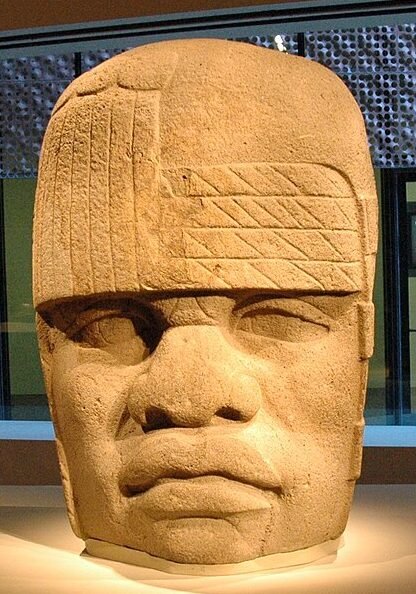
San Lorenzo Colossal Head 4 at the anthropological museum Museo de Antropología de Xalapa in Mexico.
Key Sites and Discoveries
The colossal heads have been found at several major Olmec sites, each offering unique insights into their context and significance.
San Lorenzo
This site is home to ten of the colossal heads, the largest concentration discovered so far. San Lorenzo was one of the earliest and most important Olmec centers, characterized by its extensive drainage systems and monumental architecture. The heads at San Lorenzo are among the oldest, dating to around 1200 BCE.
La Venta
Four heads have been discovered at La Venta, another prominent Olmec site. La Venta is renowned for its ceremonial complexes, including massive earthen pyramids and elaborate altars. The heads here are slightly smaller than those at San Lorenzo but no less impressive in their craftsmanship.
Tres Zapotes
This site is home to two colossal heads, including the last one discovered in 1939. Tres Zapotes marks the later period of Olmec civilization, and the heads here reflect stylistic changes, suggesting a continuation or adaptation of traditions.
Laguna de los Cerros
While no colossal heads have been definitively excavated at this site, it is believed to have played a role in the production or transport of these sculptures, given its proximity to basalt quarries.
Cultural and Artistic Legacy
The colossal heads are a testament to the Olmec’s artistic and engineering prowess. They represent one of the earliest known instances of monumental portraiture in the Americas and have influenced subsequent Mesoamerican cultures. Elements of Olmec art, such as the focus on elite representation and the use of monumental scale, are evident in later civilizations like the Maya and Aztec.
The heads also reflect the Olmec’s hierarchical society, where the elite wielded significant control over labor and resources. The sheer effort required to produce and transport these sculptures underscores the centralized authority and organizational capacity of Olmec rulers.
Mysteries and Ongoing Research
Despite decades of study, many aspects of the colossal heads remain enigmatic. Questions about their exact purpose, the identities of the individuals they represent, and the logistics of their creation continue to intrigue researchers. Advances in technology, such as 3D scanning and geochemical analysis, are helping to shed new light on these ancient artifacts.
One ongoing debate centers on the headdresses. Some scholars suggest they represent helmets worn by ballplayers in the Mesoamerican ballgame, a ritualistic sport with deep spiritual significance. Others argue that the headdresses indicate military or ceremonial roles, adding another layer of complexity to their interpretation.
Modern Significance of the Olmec Colossal Stone Heads
Today, the colossal heads are recognized as a symbol of Mesoamerican heritage and a source of pride for Mexico. They are featured in museums and exhibitions worldwide, drawing attention to the ingenuity and cultural achievements of the Olmec civilization. Efforts to preserve these sculptures and their associated archaeological sites are crucial for understanding and appreciating this ancient culture.
Frequently asked questions
How many colossal stone heads have been discovered, and where were they primarily found?
A total of 17 heads have been discovered to date. Ten were found at San Lorenzo, and four at La Venta, two of the most significant Olmec centers.
What materials were used to create the stone heads, and where were they sourced?
The heads were carved from basalt, a volcanic rock sourced primarily from Cerro Cintepec in the Tuxtla Mountains. This basalt was transported over 100 kilometers to the sites where the heads were sculpted and displayed.
What techniques were used by the Olmec to carve the colossal heads?
Olmec artisans used hand-held stone tools to shape the heads and employed drilling techniques with reeds and wet sand to carve details such as eyes, nostrils, and mouths. Dimples on the cheeks, chin, and lips were also meticulously etched.
How large are the colossal heads, and what was their likely appearance when completed?
The heads measure up to 3 meters in height and weigh around 8 tons. They were likely painted in bright colors, although the pigments have faded over time.
Why did the Olmec focus exclusively on the head in these sculptures?
In Olmec culture, the head was believed to be the seat of the soul, emotions, and experience. This belief likely explains the exclusive focus on the head in these sculptures.
What features indicate that the colossal heads represent specific individuals?
Each head displays unique facial features, suggesting they are realistic portraits of specific rulers. For example, Colossal Head 5 is thought to depict a ruler of San Lorenzo from the second millennium BCE.
What is the significance of the helmets depicted on the stone heads?
The helmets were likely protective gear used in battle or the Mesoamerican ballgame. Some helmets also incorporate motifs like jaguar paws or talons, symbolizing political and religious power. For instance, Colossal Head 1 from La Venta features talons carved on its helmet.

San Lorenzo Colossal Head 1 at the anthropological museum Museo de Antropología de Xalapa in Mexico.
Were any of the heads repurposed from other objects?
Yes, some heads were repurposed. For example, San Lorenzo Colossal Head 7 was originally a throne, and Altar 5 from La Venta appears to have been abandoned mid-conversion. Such transformations might reflect acts of remembrance or political statements.
How were the colossal heads positioned in their original settings, and what was their purpose?
At La Venta, four heads were positioned as guardians of the city’s sacred precinct, with three at the northern end and one at the southern end, all facing outward. This arrangement suggests they served as territorial markers or symbols of protection.
What evidence suggests that the heads were moved or altered over time?
Many heads show signs of deliberate defacement and burial, indicating they were moved or altered for ritual purposes, such as ancestor worship or neutralizing the power of a deceased ruler. These changes might also have been political strategies by subsequent leaders.
When were the colossal heads rediscovered, and what does this reveal about their legacy?
The heads were buried and forgotten for nearly 3,000 years. They began to be rediscovered in 1871, with the most recent head excavated in 1994. Their rediscovery highlights their enduring significance as symbols of Olmec artistry and cultural influence.





