What was the Olmec Civilization? – History & Major Facts
The Olmec civilization, often referred to as the “mother culture” of Mesoamerica, was one of the earliest and most influential ancient civilizations in the Americas.
Flourishing between 1200 and 400 BCE in what is now the southern part of Mexico, particularly in the states of Veracruz and Tabasco, the Olmec laid the foundation for many cultural practices, artistic styles, and religious concepts that would influence later Mesoamerican civilizations such as the Maya, Zapotec, and Teotihuacán.
The Olmecs are most famous for their colossal stone heads, distinctive art, and their role as innovators of key religious and cultural practices, including ritual bloodletting and the Mesoamerican ballgame. However, much about them remains a mystery, including the exact reasons for their decline.
Below, World History Edu delves into the history and major facts surrounding the Olmec civilization.
Religious Practices and Major Deities of Pre-Columbian Civilizations
Origins and Location
The Olmec civilization originated in the fertile lowlands along the Gulf Coast of Mexico, an area known for its swampy environment interspersed with rich alluvial soils. The main Olmec heartland covered the present-day Mexican states of Veracruz and Tabasco, centered around four major cities: San Lorenzo, La Venta, Tres Zapotes, and Laguna de los Cerros. These regions had the perfect environmental conditions to support large-scale agriculture, which allowed the Olmec population to flourish and build complex societies.
Before the rise of the Olmec, the area was inhabited by pre-Olmec cultures as early as 2500 BCE. However, it was between 1400 and 1200 BCE that the Olmecs emerged as a dominant culture, with San Lorenzo becoming their first major urban center. Archaeological evidence suggests that the Olmecs were influenced by earlier cultures in the region, such as the Mokaya and Mixe-Zoque, who contributed to the development of their agricultural practices, political organization, and religious ideologies.
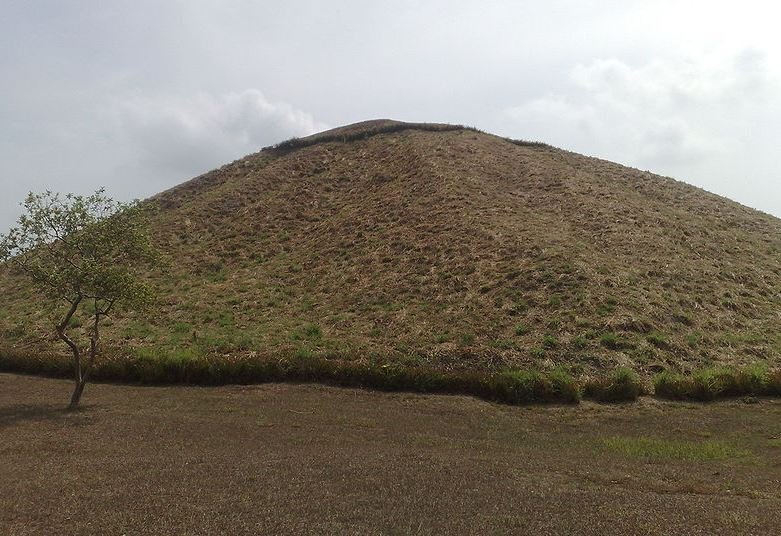
The Olmec civilization is considered an archaeological culture, meaning it’s understood through artifacts rather than texts. Archaeologists associate the Olmec with artifacts found on the northern Isthmus of Tehuantepec in Mesoamerica from 1200–400 B.C.E. Image: The Great Pyramid in Tabasco, Mexico.
The Olmec Heartland
The heartland of the Olmec civilization was characterized by low-lying tropical forests, rivers, and fertile floodplains, which provided an ideal environment for agriculture. The region was also rich in resources such as basalt, clay, and other materials needed for crafting tools and monumental architecture. Most notably, the Olmecs utilized basalt to carve their famous colossal heads, which are believed to represent their rulers or important figures in their society.
The Olmec heartland was strategically located near rivers like the Coatzacoalcos, which served as important transportation routes, allowing the Olmec to engage in long-distance trade with other Mesoamerican cultures. This access to trade routes helped the Olmecs obtain exotic goods like jade and obsidian, which they used to create luxury items for the elite class. The presence of jade and other luxury materials in Olmec sites suggests that they had extensive trade networks stretching from present-day Guatemala to Central Mexico.
Key Cities of the Olmec Civilization

The influence of the Olmecs extended across the region, and though their dominance faded, they are considered the “mother culture” of later civilizations like the Maya, Zapotec, and Teotihuacán. Image: A map showing the region occupied by the Olmecs.
San Lorenzo Tenochtitlán
San Lorenzo, which reached its height around 1400–900 BCE, was the first major Olmec center. Situated on a plateau with access to natural water sources, it became the political and religious center of Olmec society during this period. San Lorenzo is known for its impressive earthworks, terraces, and water systems, all of which showcase the Olmecs’ engineering capabilities.
One of the most remarkable features of San Lorenzo is the colossal stone heads, which range in height from 1.5 to 3 meters (5 to 10 feet). These heads are thought to depict Olmec rulers and were likely symbols of political power and religious authority. Archaeologists believe that these heads were transported from basalt quarries many miles away, demonstrating the Olmecs’ advanced organizational skills and labor systems.
San Lorenzo’s decline around 900 BCE is still debated, though it is commonly attributed to environmental changes, such as the shifting of river courses, internal uprisings, or possibly invasions from other groups. Following the decline of San Lorenzo, the Olmec center of power shifted to La Venta.
La Venta
La Venta rose to prominence as the major Olmec center after the decline of San Lorenzo, flourishing from around 900 BCE to 400 BCE. Located on an island in the middle of the Tonalá River, La Venta became the new political and ceremonial hub of the Olmec civilization.
One of the key features of La Venta is the Great Pyramid, a massive earthen mound standing 34 meters (112 feet) tall. This pyramid is one of the earliest examples of monumental architecture in Mesoamerica and demonstrates the Olmecs’ sophisticated construction techniques. In addition to the pyramid, La Venta is known for its elaborate ceremonial offerings, including jade figurines, pottery, and large mosaics made from serpentine.
La Venta also contains evidence of Olmec religious practices, including altars, thrones, and stelae, which feature depictions of gods, rulers, and mythological events. Like San Lorenzo, La Venta had colossal stone heads, further emphasizing the importance of these monuments in Olmec society.
By around 400 BCE, La Venta began to decline, marking the end of the classic Olmec civilization. However, their influence lived on in subsequent cultures, and the region continued to be occupied by smaller successor states.
Tres Zapotes and Laguna de los Cerros
Tres Zapotes and Laguna de los Cerros were two other significant Olmec centers, though they never reached the prominence of San Lorenzo and La Venta. Tres Zapotes, located on the western edge of the Olmec heartland, continued to be occupied after the decline of La Venta and developed into what is known as the Epi-Olmec culture. This site is famous for Stela C, which contains one of the earliest examples of the Mesoamerican Long Count calendar, marking the use of the concept of zero in their numerical system.
Olmec Society and Culture
The Olmec civilization was a highly stratified society, with a ruling elite at the top that controlled political, religious, and economic life. The elite class was responsible for the construction of large ceremonial centers, the creation of luxury goods, and the organization of trade networks. Below the elite were artisans, farmers, and laborers who worked to produce food and craft items for the ruling class.
Religion and Ritual Practices
Religion played a central role in Olmec society, and their religious beliefs laid the foundation for many Mesoamerican traditions. The Olmecs were polytheistic, worshipping a pantheon of gods often represented in both human and animal forms. One of the most important deities in Olmec religion was the jaguar, which symbolized strength, power, and fertility. Many Olmec sculptures depict hybrid creatures known as were-jaguars, combining human and jaguar features, which may represent shamanistic transformation or the divine powers of their rulers.
The Olmecs are credited with pioneering key religious practices that would later be adopted by other Mesoamerican civilizations, such as ritual bloodletting and possibly human sacrifice. Bloodletting, in which individuals would cut themselves to offer their blood to the gods, was believed to be a way of maintaining the balance between the human and divine worlds. Archaeologists have discovered ceramic and stone tools, such as stingray spines and obsidian blades, which were used in these rituals.
The Mesoamerican Ballgame
The Olmecs were also the first known culture to play the Mesoamerican ballgame, a ceremonial sport that would be played by many subsequent Mesoamerican civilizations. The ballgame had deep religious significance, often symbolizing the struggle between life and death or the movement of celestial bodies. Players used rubber balls, a material abundant in the Olmec region, and courts have been found at several Olmec sites, including San Lorenzo and La Venta.
Art and Monumental Sculpture
Olmec art is characterized by its naturalistic and stylized forms, often blending human and animal elements. The most iconic pieces of Olmec art are the colossal stone heads, which are believed to represent rulers or important individuals. These heads, carved from basalt, display distinctive facial features, including flattened noses, thick lips, and helmet-like headdresses.
In addition to the colossal heads, Olmec artisans created a wide variety of sculptures, including jade figurines, altars, and stelae. These works often depicted religious scenes or mythological figures and served as important symbols of political and religious authority. Jade, in particular, was highly valued by the Olmec elite, who used it to create intricate figurines and masks.
The Olmecs also excelled in the production of ceramics. They crafted vessels, figurines, and other objects using a variety of techniques, including slip painting and burnishing. Olmec ceramics have been found in many parts of Mesoamerica, suggesting that their artistic styles had a wide-ranging influence.

Image: An artwork depicting an Olmec king from the La Venta Archaeological Site in Tabasco.
Trade and Economy
The Olmec economy was based primarily on agriculture, with maize (corn) as the staple crop. In addition to maize, the Olmecs cultivated beans, squash, and other crops, and they also engaged in fishing and hunting to supplement their diet. The rich agricultural environment of the Olmec heartland allowed for the production of surplus food, which supported a growing population and the development of complex urban centers.
Trade played a crucial role in the Olmec economy, with the ruling elite controlling the distribution of luxury goods. The Olmecs were part of an extensive trade network that connected them to other Mesoamerican cultures. Goods such as jade, obsidian, and magnetite were exchanged over long distances, and the presence of these materials at Olmec sites indicates that they had access to resources from as far away as present-day Guatemala and Central Mexico.
The Olmecs were skilled traders, and their control of trade routes helped to maintain their dominance in the region. Their ability to acquire and redistribute luxury goods, such as jade, gave the Olmec elite a powerful economic and political advantage over their neighbors.
Did you know…?
The name “Olmec” comes from the Nahuatl word “Ōlmēcatl,” meaning “rubber people.” It refers to the ancient practice of extracting latex from rubber trees. The term was used by the Aztecs to describe people living in the Gulf Lowlands, centuries after the Olmec civilization had vanished.
Decline and Legacy
The reasons for the decline of the Olmec civilization are not entirely understood, but it is believed that environmental changes, such as shifting river courses or volcanic activity, may have contributed to their downfall. By around 400 BCE, the major Olmec centers had been abandoned, and the population in the region decreased significantly.
Despite the decline of the Olmec civilization, their influence continued to be felt throughout Mesoamerica for centuries. The Olmecs are often referred to as the “mother culture” of Mesoamerica because many of their religious, artistic, and cultural practices were adopted by later civilizations, including the Maya, Zapotec, and Teotihuacán.
Influence on Later Mesoamerican Civilizations
The Olmecs are credited with introducing several important innovations that shaped the course of Mesoamerican history. One of their most significant contributions was the development of the Mesoamerican Long Count calendar, which used a base-20 numerical system and included the concept of zero. The use of zero in the calendar is one of the earliest known instances of this mathematical concept in human history.
The Olmecs also played a key role in the development of Mesoamerican writing systems. In 2006, archaeologists discovered the Cascajal Block, a serpentine tablet inscribed with 62 symbols, which may represent an early form of Olmec writing. This discovery suggests that the Olmecs may have been the first civilization in the Americas to develop a writing system.
The Olmecs’ religious and artistic traditions were also passed down to later civilizations. The Maya, for example, adopted the Olmec practice of bloodletting and human sacrifice, as well as their use of jade and other precious materials in religious ceremonies. The monumental architecture of the Olmecs, such as pyramids and ceremonial platforms, influenced the construction of later Mesoamerican cities, including Teotihuacán and the Maya cities of Tikal and Palenque.
In terms of art, the Olmec tradition of creating colossal stone sculptures continued in later Mesoamerican cultures. The Maya, Zapotec, and Mixtec all created large stone monuments, often depicting rulers or deities, similar to the Olmec colossal heads. The Olmecs’ use of symbolic motifs, such as the jaguar and the feathered serpent, also became central elements in the religious iconography of later civilizations.
Other Questions and Answers

Where was the Olmec civilization centered, and what were its major cities?
The Olmec civilization was initially centered at San Lorenzo Tenochtitlán. After the decline of San Lorenzo around the 10th century BCE, they moved to La Venta, which became the primary center until around 400 BCE.
What are the Olmecs best known for in terms of cultural contributions?
The Olmecs are best known for their colossal stone heads, ritual bloodletting, and their role in introducing the Mesoamerican ballgame. Their art, including altars, sculptures, and stelae, is considered some of the most striking in ancient America.
What geographical features supported the rise of the Olmec civilization?
The Olmec heartland was rich in alluvial soils and was connected by the Coatzacoalcos river basin, providing fertile land for agriculture and facilitating trade networks that supported the development of large city-temple complexes.
What role did trade play in the Olmec civilization?
Trade played a significant role in the Olmec civilization. Luxury goods like jade, obsidian, and magnetite were traded over long distances, helping to establish the Olmec elite class and promote their cultural influence across Mesoamerica.
What was the fate of the city of San Lorenzo?
San Lorenzo, the first major Olmec center, reached its peak around 1400–900 BCE but was abandoned around 900 BCE. Many of its monuments were destroyed, possibly due to internal conflict or environmental changes.
What were the main features of La Venta, the second major Olmec center?
La Venta became the main Olmec center after San Lorenzo’s decline. It featured grand structures, such as the 34-meter-high Great Pyramid, and contained opulent offerings of jade and other valuable materials, symbolizing the Olmec’s power and wealth.
What might have caused the decline of the Olmec civilization?
The decline of the Olmecs, around 400–350 BCE, is still a mystery, though environmental changes, such as shifts in the river systems or volcanic eruptions, may have made the region unsuitable for agriculture, leading to depopulation.
How did Olmec art and cultural practices influence later Mesoamerican civilizations?
Olmec art, especially the colossal heads, and their religious practices, including bloodletting and the ballgame, deeply influenced later Mesoamerican civilizations like the Maya, Zapotec, and Teotihuacán. Their innovations in religion, writing, and mathematics also shaped the development of these cultures.

Image: Colossal Head, located at the Museo de Antropología de Xalapa in Mexico’s city of Xalapa.
What are some of the technological and mathematical innovations attributed to the Olmecs?
The Olmecs are credited with developing the Mesoamerican Long Count calendar, the concept of zero, and possibly the earliest form of writing in the Western Hemisphere. The use of zero on Stela C at Tres Zapotes is one of the earliest examples of this mathematical concept.
What evidence suggests that the Olmecs may have practiced human sacrifice?
While direct evidence of human sacrifice is limited, disarticulated remains, particularly of infants, found at sites like El Manatí, suggest that some form of ritual sacrifice may have been part of Olmec religious practices.
What is the significance of the Cascajal Block in the history of writing?
The Cascajal Block, dated between 1100 and 900 BCE, contains a set of symbols that may represent an early form of writing, making it one of the earliest examples of pre-Columbian writing in the Americas.
How did the Olmec civilization influence later Mesoamerican societies after their decline?
The Olmec laid the foundation for later Mesoamerican cultures by introducing key religious, artistic, and technological practices. Their cultural innovations continued to shape societies like the Maya, Zapotec, and Teotihuacán for centuries after the Olmec civilization ended.
How were the Americas prior to the era of European exploration?