Olympe de Gouges
Olympe de Gouges, born Marie Gouze on May 7, 1748, in Montauban, France, was a French playwright and political activist renowned for her pioneering advocacy of women’s rights and abolitionism. Her seminal work, Declaration of the Rights of Woman and of the Female Citizen (1791), remains an iconic text in feminist history. De Gouges was a bold and vocal critic of societal injustices, ranging from slavery to gender inequality, ultimately leading to her execution during the French Revolution.

A 1793 painting of Olympe de Gouges.
Early Life and Background
Marie Gouze was born into a modest family. Her mother, Anne Olympe Mouisset Gouze, came from a bourgeois background, while her father was officially recorded as Pierre Gouze, a butcher. However, persistent rumors suggested she was the illegitimate daughter of Jean-Jacques Lefranc, Marquis de Pompignan, a claim Marie herself encouraged, though it remains historically unverifiable.
At the age of 17, Marie was forced into marriage with Louis Aubry, a caterer. She described the marriage as deeply unhappy and referred to it as a “tomb of trust and love.” Following Louis’ death in 1766, Marie, now a widow with a son, Pierre Aubry, vowed never to marry again. She adopted the name Olympe de Gouges, signifying her new identity and independence.

Move to Paris and Literary Pursuits
In 1768, Olympe moved to Paris, funded by her partner Jacques Biétrix de Rozières. Immersed in Parisian society, she attended literary salons frequented by intellectuals and political figures. Despite lacking formal education, de Gouges displayed remarkable intellect, dictating her works to secretaries. Her early literary efforts included novels and plays addressing societal issues such as divorce, marriage, and the rights of illegitimate children.
Advocacy for Social Justice
De Gouges emerged as one of France’s earliest voices against slavery. In her 1788 pamphlet, Réflexions sur les Hommes Nègres, she condemned the inhumanity of slavery and linked it to broader systems of oppression. Her play, L’Esclavage des Noirs, was staged in 1789 but faced backlash from pro-slavery factions who disrupted performances. De Gouges firmly believed that true liberty was incompatible with slavery, declaring that “Men everywhere are equal.”
Political Engagement During the Revolution
De Gouges initially welcomed the French Revolution, seeing it as a gateway to liberty and equality. However, she became increasingly disillusioned when the rights proclaimed in the Declaration of the Rights of Man and of the Citizen (1789) excluded women. In response, she authored her famous Declaration of the Rights of Woman and of the Female Citizen (1791), asserting that women deserved the same political and legal rights as men.
Aligning with the moderate Girondins, de Gouges opposed the radical Montagnards led by Robespierre. Her writings criticized the violence of the Reign of Terror and advocated for democratic reforms. She also opposed the execution of King Louis XVI, calling instead for exile, a stance that alienated her from many revolutionaries.
Imprisonment and Execution
In 1793, de Gouges published a provocative pamphlet, Les Trois urnes, advocating for a plebiscite to decide France’s future government. This act was deemed seditious, leading to her arrest. During her trial, de Gouges defended herself eloquently but was denied legal counsel. Her writings, particularly an unfinished play criticizing Marie Antoinette, were used as evidence against her.
On November 3, 1793, Olympe de Gouges was executed by guillotine. Her last words reportedly condemned the injustices of the Revolution. Though her death served as a warning to politically active women, her courage and ideas laid the groundwork for future feminist movements.

Portrait of Olympe de Gouges by Polish painter Alexander Kucharsky
Key Works and Ideas
De Gouges’ most famous work challenged the male-centric Declaration of the Rights of Man. She argued that women had an equal right to participate in government and societal decisions, famously stating, “Woman has the right to mount the scaffold; she must equally have the right to mount the rostrum.”
De Gouges wrote over 40 plays, many of which tackled controversial issues. Notable works include L’Homme généreux and La France Sauvée. Her essays advocated for social security, education for women, and humane treatment of the poor.
Impact on Feminism and Human Rights
De Gouges’ writings inspired future feminists, including Mary Wollstonecraft, whose A Vindication of the Rights of Woman (1792) echoed de Gouges’ arguments. Her advocacy for gender equality and abolitionism transcended borders, influencing discussions on women’s suffrage and human rights.
While de Gouges faced scorn during her lifetime, her boldness made her a symbol of resistance against oppression. Her works have since been celebrated for their prescient vision of equality and justice.
Modern Recognition
In the 20th century, Olympe de Gouges was rediscovered as a feminist icon. Streets, schools, and public spaces in France now bear her name. Her Declaration has been republished and studied as a cornerstone of feminist literature.

Frequently Asked Questions
What inspired her famous declaration?
Her discontent with the French Revolution’s failure to extend equal rights to women, prompting her to challenge male authority and advocate gender equality.
What was her stance on slavery?
She was one of France’s earliest opponents of slavery, publishing works like Réflexions sur les hommes nègres and the play L’Esclavage des Noirs, which criticized the inhumanity of slavery.
What political positions led to her execution?
De Gouges opposed the execution of Louis XVI, criticized the Jacobins’ violence, and called for a plebiscite on governance, which led to her arrest and execution during the Reign of Terror.
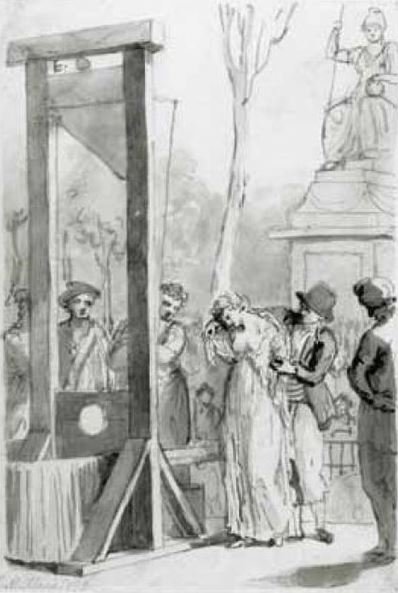
An illustration showing Olympe de Gouges being executed.
Why is her Declaration of the Rights of Woman significant?
It argued for women’s political and social equality, famously stating, “A woman has the right to mount the scaffold; she must possess equally the right to mount the speaker’s platform.”
What role did her gender play in her career and criticism?
As a woman writer and political figure, she faced societal backlash, including accusations of overstepping traditional female roles, which amplified her challenges.
What legacy did she leave for women’s rights?
Her writings inspired subsequent feminist movements, influencing works like Mary Wollstonecraft’s A Vindication of the Rights of Woman and the 1848 Declaration of Sentiments.
How is she remembered today?
Honored through street names, plays, and academic recognition, Olympe de Gouges is celebrated as a pioneer of women’s rights and social justice.





