Parmenides: History and Major Facts about the Pre-Socratic Philosopher who influenced Plato
Parmenides, a pre-Socratic philosopher from Elea, is best known for his metaphysical ideas, particularly his work titled On Nature (Peri Physeos), which is divided into two main parts: “The Way of Truth” (Aletheia) and “The Way of Opinion” (Doxa). Parmenides’ philosophy, especially the “Path of Truth,” fundamentally challenges the reality of change and the trustworthiness of sensory perception, establishing him as a key figure in shaping Western metaphysical thought.
Background on Parmenides
Parmenides lived in the 5th century BCE in Elea (modern-day southern Italy). He is considered a pivotal figure in philosophy for moving metaphysics from mythological explanations toward more abstract, rational inquiry. His ideas were revolutionary in contrast to earlier philosophers, such as Heraclitus, who emphasized constant flux and change.
Whereas Heraclitus argued that “everything flows,” Parmenides went in the opposite direction, asserting that reality is unchanging, eternal, and indivisible. His philosophy, which at first seems counterintuitive, is presented through the allegory of a journey in On Nature, where the narrator (presumably Parmenides himself) is led by a goddess who reveals the truths about reality.

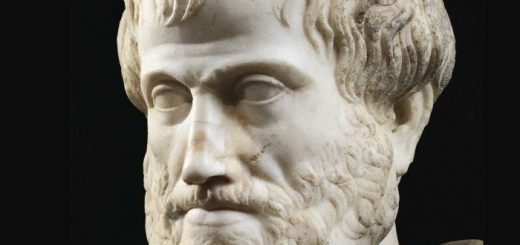
Image: statue of Parmenides
The Two Paths
Parmenides’ central idea is presented through a dualistic framework: there are two paths or ways of inquiry—the Path of Truth and the Path of Opinion.
The Path of Truth (Aletheia): This path leads to knowledge about what is and its unchanging, eternal nature. According to Parmenides, only one reality exists, and it is not subject to change or division. Everything that is, simply is, and there is no coming into being or ceasing to be.
The Path of Opinion (Doxa): This path is the route taken by those who trust sensory experience and believe in the world of appearances, where things seem to change, come into being, and perish. Parmenides claims that this is the way of mortal opinion, which is illusory and unreliable.
The Path of Truth: Core Concepts
The “Path of Truth” contains Parmenides’ argument for the unity, indivisibility, and immutability of being. He contrasts what is (to eon) with what is not (to mê eon), concluding that only what exists (being) can be the subject of rational thought or discourse.
Being is and Non-Being is not
The most fundamental assertion of Parmenides is that “being is, and non-being is not.” This means that only what is can be thought or spoken about because thinking requires an object, and this object must exist. In contrast, “non-being” or “nothingness” cannot exist, and hence cannot be thought about, imagined, or discussed. Non-being, by definition, is not something.
Being is One
Parmenides argues that being must be one, continuous, and indivisible. If being were divided, one part would have to be different from the other, implying that there is some “non-being” between them. But since non-being cannot exist, being must be a complete, continuous whole. Any appearance of plurality, separateness, or division must be illusory.
Being is Eternal and Unchanging
For Parmenides, the very concept of change involves something coming into being or passing away. If something changes, it means it either comes into existence from non-being (which is impossible because non-being does not exist) or it passes into non-being (which is equally impossible). Therefore, being must be eternal and unchanging—nothing can come into existence or cease to exist. Everything that is, always has been and always will be.
Being is Indivisible and Homogeneous
Parmenides also asserts that being is homogenous—there is no differentiation or variation within it. If being were composed of different parts, each part would either be or not be, again bringing in the impossible notion of non-being. Hence, being is indivisible and uniform.
The Role of Reason
One of the most significant aspects of Parmenides’ philosophy is the emphasis on reason over sensory experience. The Path of Truth is accessible only through rational thought. The senses, which seem to show a world of multiplicity, change, and becoming, deceive us. For Parmenides, the only reliable means of understanding reality is through the intellect, which perceives the unchanging nature of being.
The Illusion of Change: The Path of Opinion
Parmenides contrasts the Path of Truth with the Path of Opinion, which is the world as perceived by mortals through their senses. The world of opinion is one of plurality, change, and flux—a world where things come into existence, grow, decay, and pass away. Parmenides argues that this is not the true nature of reality but an illusion created by our senses.
In the Path of Opinion, Parmenides describes how mortals create concepts such as light and dark, birth and death, and other dualities that shape their understanding of the world. However, these concepts do not correspond to the nature of reality as revealed by reason. The sensory world is full of contradictions and cannot provide knowledge of what truly exists.

Implications of Parmenides’ Philosophy
Parmenides’ radical rejection of change and plurality had profound implications for later philosophers. His ideas forced subsequent thinkers to grapple with the tension between the world of sensory experience and the abstract world of being. His assertion that reason, rather than the senses, reveals the true nature of reality influenced the development of rationalist thought in Western philosophy.
Influence on Plato
Plato was deeply influenced by Parmenides, especially in his development of the theory of Forms. Plato sought to reconcile the unchanging nature of reality (as posited by Parmenides) with the apparent changes in the physical world. For Plato, the world of sensory experience is a shadow or reflection of a higher, unchanging reality—the world of Forms or Ideas.
Plato’s dialogue Parmenides explores these themes and presents an intellectual challenge to the notion of unchanging being. Plato’s solution was to separate the world of changeable things (the sensory world) from the world of eternal Forms, which exist in an unchanging, perfect state.
The Problem of Change and Becoming
Parmenides’ denial of change also posed a significant challenge to subsequent metaphysical theories. Philosophers like Aristotle tried to explain change without abandoning the notion of being altogether. Aristotle argued that change is possible by distinguishing between potentiality and actuality—things can exist in potential and then be actualized without violating the principle of being.
Eleatic Monism
Parmenides’ school of thought, often referred to as Eleatic Monism, became a significant strain in ancient philosophy. Later Eleatic thinkers, such as Zeno of Elea, sought to defend and develop Parmenides’ ideas further. Zeno, in particular, is famous for his paradoxes, which aim to show the logical contradictions involved in the concept of change and motion.
Parmenides’ Methodology and Legacy
In addition to his metaphysical ideas, Parmenides’ approach to philosophy, especially his reliance on logical argumentation and reasoning, helped to shape the discipline. His focus on abstract reasoning and the limitations of the senses laid the groundwork for much of Western philosophy, particularly in the areas of metaphysics and epistemology.
The legacy of Parmenides can be seen in the way later philosophers approached the nature of reality, being, and knowledge. His insistence that reality must conform to the principles of logic and reason forced thinkers to question the reliability of sensory perception and to seek deeper, more rational explanations for the world around them.

Frequently Asked Questions about Parmenides’ Philosophy

Parmenides’ ideas directly influenced Plato and later rationalists and remain a foundational element in the study of metaphysics and the nature of existence. Image: Statue of Plato.
Who was Parmenides, and where did he teach?
Parmenides (c. 485 BCE) was a philosopher from Elea, a Greek colony in southern Italy. He is often credited with founding the Monist School, which taught that all of reality is a singular, unified whole.
The Monist School taught that reality is one undivided whole. Parmenides argued that what people perceive as distinct objects in the world, like a dog or a horse, are in fact part of the same, singular reality. He believed that the differences perceived by the senses are deceptive, and true reality admits no plurality.
How did Parmenides view the differences between objects like a dog and a horse?
Parmenides believed that the apparent differences between objects like a dog and a horse are illusions created by the senses. He argued that the essence of all things is the same and that there is no true distinction between them. The multiplicity we perceive is merely a distortion caused by human perception.
What work is Parmenides best known for?
Parmenides is best known for a fragment of a long poem that discusses the “Path of Truth” and the “Way of Error.” The poem contrasts the correct understanding of reality (the Path of Truth) with the mistaken beliefs based on sensory perception (the Way of Error). Although the original title of the poem is lost, its core ideas were preserved through later writers.
What role did Zeno of Elea play in supporting Parmenides’ ideas?
Zeno of Elea, Parmenides’ student, developed 40 logical paradoxes to defend and prove his teacher’s ideas. These paradoxes aimed to demonstrate that motion, change, and plurality are illusions, mathematically supporting Parmenides’ belief in the uniformity of reality.
How did Xenophanes influence Parmenides?
Xenophanes, who proposed the existence of a single, all-powerful god unlike any human conception of deities, likely influenced Parmenides. Xenophanes argued that humans frequently misinterpret both the gods and the world. Parmenides extended this idea to assert that humans also misunderstand the nature of reality itself.
What are the two paths of inquiry Parmenides describes in his poem?
Parmenides describes two paths of inquiry: the “Path of Truth” and the “Path of Non-Being” (or the Way of Error). The Path of Truth leads to knowledge of the eternal, unchanging reality, while the Path of Non-Being represents the false beliefs shaped by sensory experience and illusion.
How does Parmenides contrast his philosophy with that of Heraclitus?
Heraclitus believed that life was in constant flux and that change was the essence of existence. He saw fire as the First Cause of all things and viewed the world as defined by transformation. In contrast, Parmenides rejected the idea of change, arguing that it is an illusion caused by the senses, and that true reality is unchanging and eternal.
How did Parmenides influence Plato?
Parmenides’ philosophy had a significant impact on Plato, who developed his own Theory of Forms based on Parmenides’ monism. Plato recognized the influence of Parmenides in several dialogues, most notably in Parmenides, The Statesman, and The Sophist, where he explored and expanded on Eleatic ideas.
What is the relationship between thinking and being according to Parmenides?
Parmenides believed that thinking and being are the same. To think about something means that it exists, and there can be no thought without existence. This reflects his view that being is whole, continuous, and indivisible, and it reinforces his belief in the unity and permanence of all things.
Why does Parmenides argue that the senses are unreliable?
Parmenides asserts that the senses are unreliable because they deceive people into believing in change, movement, and plurality. He argues that the senses present a distorted view of reality, leading people to false conclusions. True knowledge, according to Parmenides, can only be attained through reason, which reveals the unchanging nature of reality.
What does Parmenides mean by the concept of the “One”?
The “One” refers to Parmenides’ belief that all of reality is a singular, unified whole. There is no true division or difference between objects, people, or phenomena. Everything is interconnected, and the distinctions perceived by the senses are illusions. By recognizing this oneness, one can transcend sensory illusions and gain a deeper understanding of existence.
How did Parmenides’ philosophy challenge the way people understood reality?
Parmenides challenged the traditional understanding of reality by rejecting the idea of multiple, distinct objects and change. He argued that reality is eternal, unchanging, and singular. What people perceive as differences and changes in the world are illusions created by the senses. His philosophy called for a shift from sensory perception to reason as the basis for understanding the true nature of existence.