Who was Xenophanes of Colophon?
Xenophanes of Colophon (c. 570 – c. 475 BCE) was a pre-Socratic philosopher, poet, and social critic from Ionia (modern-day Turkey). Though less known than figures like Plato or Aristotle, Xenophanes was a visionary thinker whose work spans diverse fields, including theology, epistemology, and ethics. His fragmentary writings offer profound critiques of Greek religion, philosophy, and the nature of knowledge, making him a pivotal figure in the development of Western thought.
In the article below, World History Edu examines the life and work of Xenophanes, his philosophical contributions, and his influence on subsequent intellectual traditions.

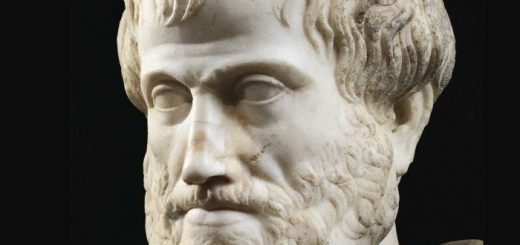
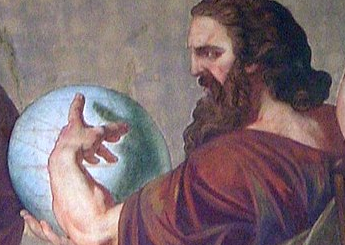
Xenophanes of Colophon occupied a significant place in the broader landscape of early Greek philosophy. Image: A portrait of Xenophanes.
Life and Historical Context
Xenophanes was born in Colophon, an Ionian city in Asia Minor, around 570 BCE. The political instability of the time likely shaped his early life; around the time of his birth, Colophon was caught in the conflicts of the Ionian Revolt against Persian domination. The instability and economic difficulties in the region eventually led Xenophanes to leave Colophon and become a wandering poet, traveling through various Greek cities and perhaps even Italy.
In his lifetime, Xenophanes wrote in verse, a common mode of communication for philosophers and poets at the time. He composed elegies and satires, often recited at symposia or public gatherings. Much of his work survives only in fragments, preserved by later philosophers such as Simplicius and Clement of Alexandria. His reputation as a critic of conventional beliefs, especially concerning religion and knowledge, is well-attested, even if the complete form of his works is lost.
Xenophanes is often considered a precursor to later philosophical movements, especially Eleatic philosophy, which emphasized monism (the idea that all of reality is one). He is sometimes associated with Parmenides and Heraclitus, both of whom engaged with similar questions about the nature of reality and the limits of human knowledge.
Critique of Anthropomorphism in Religion
One of Xenophanes’ most famous contributions is his critique of the anthropomorphic depictions of the gods in Greek religion. In the popular religious worldview of his time, gods were portrayed as human-like figures, with human emotions, desires, and flaws. The gods of Homer and Hesiod, for example, were depicted engaging in quarrels, acts of vengeance, and even deception, much like mortal humans.
Xenophanes objected to this portrayal, arguing that it was a projection of human qualities onto divine beings rather than an accurate reflection of their true nature. In a fragment, he famously said:
“Mortals deem that the gods are begotten as they are, and have clothes like theirs, and voice and form.”
In another passage, he humorously notes that if animals had hands and could create art, they would likely depict gods in their own image, just as humans do:
“If oxen or horses or lions had hands and could draw, and could sculpture like men, then the horses would draw their gods like horses, and oxen like oxen.”
Through these observations, Xenophanes suggests that the conventional images of the gods are based on human vanity and are not objective representations of the divine. This critique points to a broader skepticism about human knowledge: if humans are limited by their own perspectives, their attempts to understand the gods may be similarly flawed.
READ MORE: Principal Gods and Goddesses in Greek Pantheon
The Concept of a Single, Transcendent God
In place of the anthropomorphic gods of Greek tradition, Xenophanes proposed a radically different concept of divinity. He argued for the existence of a single god who is unlike humans in both form and mind. This god, according to Xenophanes, is eternal, unchanging, and governs the universe through thought and will, rather than through physical actions.
He describes this god as follows:
“There is one god, greatest among gods and men, neither in form nor in thought like unto mortals.”
This god, Xenophanes claims, is all-seeing, all-hearing, and all-powerful, but not subject to the limitations or passions that define human experience. Unlike the gods of Greek myth, who are often depicted as capricious and driven by personal whims, Xenophanes’ god is rational, impartial, and eternal.
This vision of a single, transcendent deity is one of the earliest articulations of monotheism in Western thought, though it is not entirely comparable to later monotheistic traditions like Judaism, Christianity, or Islam. Xenophanes’ god does not interact with the world in a personal or providential way but remains a distant, all-encompassing force. Nevertheless, his critique of polytheism and his emphasis on a unified divine principle had a significant impact on subsequent philosophical and religious thought.
Epistemology: The Limits of Human Knowledge
Xenophanes was also a pioneer in the field of epistemology, the study of knowledge and belief. He expressed a deep skepticism about human claims to certain knowledge, particularly concerning the divine and the nature of the universe. In one of his most famous fragments, he writes:
“The gods have not revealed all things to mortals from the beginning; but by seeking, men find out better in time.”
This passage suggests that human knowledge is limited and evolves over time. We do not possess the kind of infallible or certain knowledge that the gods might have; instead, we must rely on inquiry and the gradual accumulation of understanding. Xenophanes emphasizes that even when humans arrive at what they believe to be the truth, they may only have reached an approximation of it:
“No man knows, or ever will know, the truth about the gods and about everything I speak of; for even if by chance he were to utter the final truth, he would himself not know it: for all is but a woven web of guesses.”
Here, Xenophanes introduces a form of epistemological humility, recognizing the limitations of human perception and understanding. This view sets him apart from some of his contemporaries, who often sought to uncover absolute truths about the cosmos. Instead, Xenophanes acknowledges the complexity of the world and the limitations of human knowledge, calling for a more cautious and tentative approach to understanding.
Cosmology and Natural Philosophy
In addition to his theological and epistemological insights, Xenophanes also offered thoughts on cosmology—the study of the universe and its origins. Though his cosmological ideas are less developed than those of later philosophers, they reflect his general skepticism about traditional myths and his preference for naturalistic explanations.
Xenophanes is known for his observations on natural phenomena, particularly his interpretation of fossils. He is one of the earliest thinkers to have recognized that fossilized shells found inland were evidence that the earth had once been covered by water. This insight led him to propose that the earth and sea were in a constant state of flux, with land periodically rising and falling beneath the sea.
His naturalistic explanations extended to his thoughts on the formation of clouds, the nature of the sun, and other meteorological phenomena. Though he did not develop a systematic cosmology like Anaximander or Heraclitus, his observations reflect a rational approach to understanding the natural world, grounded in empirical observation rather than mythological explanations.
Critique of Traditional Values and Ethics
Xenophanes was not only a critic of religious anthropomorphism but also of the social values that these religious beliefs upheld. In particular, he criticized the excessive admiration of athletic prowess in Greek culture, arguing that wisdom and moral virtue were far more valuable.
In one fragment, he critiques the glorification of athletes:
“The men who have won victories at Olympia are less worthy of honor than the wise. The men in the cities are won over by the athletes, even though they do nothing good for the city.”
This critique reflects Xenophanes’ broader skepticism about the values of his society. He believed that the pursuit of wisdom and virtue should be prioritized over the pursuit of fame, wealth, or physical achievement. This ethical stance is consistent with his philosophical views on the nature of knowledge and the divine: just as humans should not assume that their gods resemble themselves, they should also avoid idolizing superficial qualities like strength or beauty.
Influence and Legacy
Xenophanes’ influence on later philosophical traditions is profound, even if indirect. His critique of anthropomorphism and his concept of a single, transcendent deity influenced the development of later Greek theology and philosophy, particularly the Eleatic school, which emphasized the unity and unchanging nature of reality. Parmenides, one of the most famous Eleatic philosophers, may have been influenced by Xenophanes’ ideas about the unchanging nature of the divine and the limitations of human knowledge.
His thoughts on epistemology also resonate with later philosophical developments. The skepticism he expressed about human knowledge prefigures the more systematic forms of skepticism found in later thinkers like Pyrrho and the early Academic Skeptics. Xenophanes’ emphasis on the limits of human understanding and the provisional nature of knowledge laid the groundwork for a more critical and reflective approach to philosophy.
In addition, Xenophanes’ naturalistic explanations of the world, particularly his observations on fossils and the changing relationship between land and sea, mark an early attempt to understand the world through reason and observation rather than myth. This rational approach to understanding the natural world would become a hallmark of later Greek science and philosophy.
Conclusion
Xenophanes of Colophon was a visionary thinker whose contributions to philosophy, theology, and science remain significant even in their fragmentary form. His critiques of anthropomorphism and traditional Greek religion, his concept of a single, all-encompassing deity, and his skepticism about human knowledge mark him as one of the most original thinkers of his time.
Though Xenophanes’ work is often overshadowed by more well-known figures like Parmenides and Heraclitus, his influence on the development of Greek thought is undeniable. His ideas about the limits of human knowledge and the need for critical inquiry resonate with modern philosophical concerns, and his vision of a unified, transcendent deity represents an early and important step in the development of monotheistic thought.
READ MORE: 10 Most Famous Ancient Greek Philosophers
Questions and Answers about Xenophanes of Colophon
Who was Xenophanes of Colophon, and what is his significance in ancient philosophy?
Xenophanes of Colophon (c. 570–c. 478 BCE) was an early Pre-Socratic philosopher, known for challenging traditional Greek views on religion and introducing the idea of a singular, all-powerful deity. His critiques of anthropomorphic gods and his exploration of divine concepts were revolutionary, laying the groundwork for later philosophical discussions on the nature of the divine and human understanding.
What are the Pre-Socratic philosophers known for?
Pre-Socratic philosophers in ancient Greece moved beyond mythological explanations to seek natural causes for existence, asking fundamental questions about the universe and life’s origins.
Thales of Miletus believed water was the basic substance of the universe due to its essential forms, marking a shift to natural explanations. Anaximander, his student, proposed the indefinite apeiron as the source of everything, while Anaximenes suggested air as the primary substance.
Undoubtedly, the inquiries of these pre-Socratic philosophers laid the groundwork for later philosophers, like Plato and Aristotle, to explore the physical world and ethics.

Pre-Socratic philosophers initiated philosophical inquiry in ancient Greece by moving beyond mythological explanations and seeking natural causes for existence. They asked fundamental questions about the nature of the universe and the origins of life. Image: A map highlighting Xenophanes’ travels.
How did Xenophanes’ approach to philosophy differ from other Pre-Socratic thinkers?
Unlike other Pre-Socratic philosophers who focused on identifying a natural substance as the First Cause of existence (such as water or air), Xenophanes concentrated on the nature of the gods and human understanding of the divine. He critiqued the anthropomorphic portrayal of gods in Greek religion and proposed the existence of one all-powerful, transcendent deity.
What was Xenophanes’ critique of traditional religion, particularly the depiction of gods?
Xenophanes criticized the anthropomorphic view of the gods in Greek religion, arguing that these depictions were simply human projections. He noted that people from different cultures created gods in their own image, attributing human-like qualities, flaws, and behaviors to them. Xenophanes believed it was inappropriate to ascribe human weaknesses to divine beings, and instead posited that there was one god who did not resemble mortals in any way.

What was Xenophanes’ vision of a singular god?
Xenophanes proposed the idea of a single, all-powerful god who was beyond human comprehension. This god was immobile, all-seeing, all-hearing, and controlled everything through thought alone. Unlike the gods of Mount Olympus, who were portrayed with human-like desires and actions, Xenophanes’ god was transcendent and did not resemble mortals in any form or thought.
What role did poetry play in Xenophanes’ philosophy?
Xenophanes expressed much of his philosophy through poetry. His poetic fragments blended practical advice with philosophical ideas, often critiquing society and introducing new concepts about the divine. His ability to convey profound philosophical insights in simple, accessible language made his work resonant and influential.
How did Xenophanes’ philosophy influence later thinkers?
Xenophanes’ ideas, particularly his concept of a singular, unchanging deity, influenced the Eleatic School of philosophy, especially Parmenides. Parmenides expanded on Xenophanes’ idea of an unchanging reality. Xenophanes’ critiques of human understanding and divine knowledge also laid the foundation for later philosophical discussions on knowledge and ethics.
Why is Xenophanes considered a visionary thinker?
Xenophanes is considered a visionary because he challenged the prevailing religious and philosophical beliefs of his time. By questioning the anthropomorphic gods of Greek tradition and proposing a transcendent, all-powerful deity, he introduced a revolutionary idea that anticipated later philosophical developments and reshaped thinking about the divine.