Pasargadae: The First Capital of the Achaemenid Empire

Today, Pasargadae is an archaeological site in Iran, near Madar-e-Soleyman and 90 km northeast of Shiraz. Image: Audience Hall at Pasargadae
Origin Story: The Founding of Pasargadae
Pasargadae, established in the 6th century BCE, marks the birthplace of the Achaemenid Empire under Cyrus the Great. Its founding is intertwined with Cyrus’s victory over the Median king Astyages in 550 BCE. This monumental victory near the site led Cyrus to commemorate his triumph by founding a capital that symbolized his emerging power.
Pasargadae was strategically located in present-day Fars Province, Iran, nestled within a fertile valley surrounded by mountains. This placement reflected Cyrus’s intention to create a political and cultural center rooted in Persian identity.
The name “Pasargadae” is believed to derive from the Persian term Pāthra-gadā, meaning “Protective Camp,” or from the tribe of Pasargadae, who played a vital role in Cyrus’s rise to power. The city not only served as an administrative and ceremonial hub but also reflected the grandeur and authority of the Achaemenid dynasty. Its foundation laid the groundwork for a unified empire that would expand to become one of history’s greatest powers.
History of Pasargadae
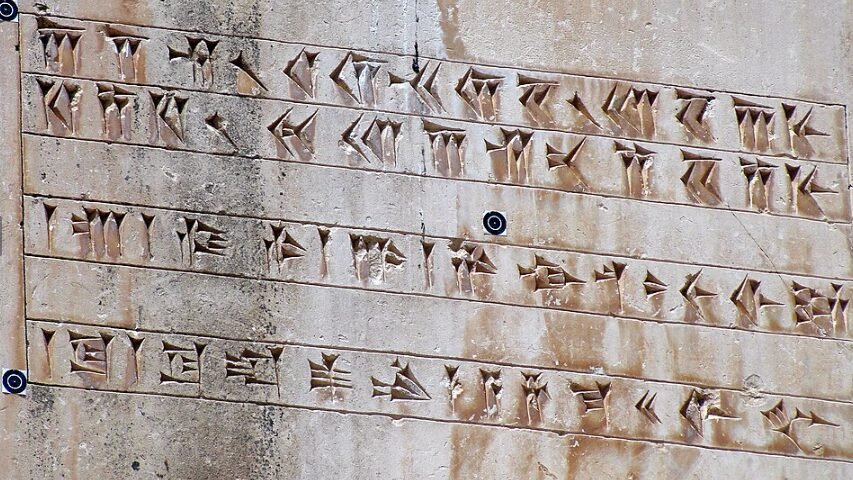
Pasargadae is more than an ancient city; it is a testament to the vision and leadership of Cyrus the Great and the foundational values of the Achaemenid Empire. Image: “I am Cyrus the king, an Achaemenid.” in Old Persian, Elamite and Akkadian languages. It is carved in one of the columns in Pasargadae
The Achaemenid Era: A Seat of Power
Pasargadae served as the Achaemenid Empire’s capital during Cyrus the Great’s reign (559–530 BCE). As the first city of the empire, it embodied Persian architectural and cultural ideals while also reflecting the diverse traditions of the territories Cyrus had conquered. The city became a center of governance, diplomacy, and cultural exchange, setting the standard for future capitals such as Persepolis.
The city remained the capital until Darius I ascended to power and shifted the administrative center to Persepolis, a city designed to rival Pasargadae in grandeur. While Pasargadae’s political role diminished, it retained its symbolic importance as the resting place of Cyrus the Great and the starting point of the Achaemenid legacy.
Architectural Marvels

Toll-e Takht hill at Pasargadae
Pasargadae covers an area of 1.6 square kilometers and features a remarkable blend of architectural innovations. The city’s layout includes royal palaces, fortified structures, and gardens that epitomize Persian ingenuity.
- The Tomb of Cyrus the Great: This iconic structure, central to Pasargadae, consists of a rectangular chamber atop a stepped platform. Its simplicity contrasts with its profound significance, as it became a symbol of Persian unity and leadership. Greek historians, including Arrian, documented that Alexander the Great visited the tomb, recognizing its cultural importance.
- Toll-e Takht Fortress: Overlooking the city from a nearby hill, this fortress provided both military security and a vantage point for the rulers.
- Persian Gardens: Pasargadae is home to the earliest example of the Persian chahar bagh (fourfold garden) design, emphasizing symmetry and harmony. This layout became a hallmark of Persian landscaping, influencing gardens across the Islamic world.
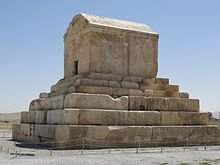
Recognized as a UNESCO World Heritage Site, Pasargadae houses the Tomb of Cyrus, once linked to Madar-e-Soleyman, or “Mother of Solomon.” Image: Tomb of Cyrus in Pasargadae, Iran, a UNESCO World Heritage Site
Did Alexander the Great set fire to the Persian city of Persepolis?
Diverse Cultural Influences
Pasargadae’s architecture reflects a synthesis of traditions from conquered regions, including Elam, Babylon, Assyria, Egypt, and Anatolia. For instance, the design of Cyrus’s tomb is attributed to Mesopotamian ziggurats, while the chamber structure shows Urartian influences. The city’s Gate R, a monumental propylaeum, is believed to have inspired the Gate of All Nations at Persepolis, underscoring Pasargadae’s role as a prototype for later Achaemenid cities.
Decline and Rediscovery
After the fall of the Achaemenid Empire to Alexander the Great in 330 BCE, Pasargadae gradually fell into disuse. Its ruins, however, remained a testament to the empire’s origins.
The site attracted explorers and archaeologists in later centuries, culminating in systematic studies beginning in the early 20th century.
Excavations revealed its architectural brilliance and historical significance, solidifying its place as a UNESCO World Heritage Site in 2004.
Significance of Pasargadae

Pasargadae’s architecture and design reflect a blend of innovation and inclusivity, setting the stage for Persia’s cultural and political dominance. The city’s history, from its founding to its decline and rediscovery, offers a rich narrative of resilience and legacy. Image: The Citadel of Pasargadae
Symbol of Cyrus the Great’s Legacy
Pasargadae stands as a monument to Cyrus the Great, whose leadership and vision forged the Achaemenid Empire. The city reflects Cyrus’s ideals of governance, which emphasized cultural inclusivity, administrative efficiency, and respect for local traditions. His tomb, in particular, symbolizes the enduring respect he commanded, even among his conquerors.

The gate of the palace with the view of the winged man
Architectural and Cultural Innovation
Pasargadae is a cornerstone of Persian architectural heritage. Its pioneering use of the chahar bagh design set a precedent for garden design that resonated across cultures and centuries. The blend of various architectural traditions exemplifies the empire’s ability to integrate diverse influences into a cohesive cultural identity.

The Gateway Palace at Pasargadae
Historical and Archaeological Importance
Pasargadae offers valuable insights into the early Achaemenid period, providing a glimpse into the empire’s political and cultural foundations. Key discoveries, such as the Pasargadae Treasure—a collection of gold jewelry and artifacts—highlight the city’s prosperity and artistic achievements.
Archaeological efforts have uncovered the city’s layout, construction techniques, and material culture, deepening our understanding of ancient Persia. The work of early archaeologists like Ernst Herzfeld and later teams has preserved Pasargadae’s legacy for future generations.
UNESCO World Heritage Status
In 2004, Pasargadae was designated a UNESCO World Heritage Site, recognizing its universal value as an exceptional example of early imperial city planning and Persian cultural achievement. This status underscores its role as a global symbol of human ingenuity and historical continuity.
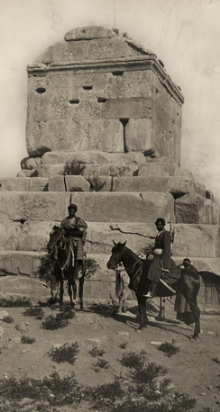
Men standing in front of the Tomb of Cyrus the Great at Pasargadae in 1920s
Modern Threats and Preservation Efforts
Pasargadae faces ongoing challenges, including environmental threats and modern development projects such as the Sivand Dam. Concerns about rising humidity and potential flooding have prompted conservation efforts to protect the site’s structures and artifacts. These challenges highlight the importance of balancing development with the preservation of cultural heritage.
READ MORE: Rulers of the Achaemenid Empire
Frequently Asked Questions about Pasargadae

Its preservation as a UNESCO World Heritage Site ensures that future generations can continue to explore and appreciate its historical significance. As a symbol of Persian identity and a beacon of cultural achievement, Pasargadae remains a cornerstone of human history. Image: Tomb of Cambyses I
Who founded Pasargadae, and when?
Pasargadae was founded in the 6th century BCE by Cyrus the Great as the first capital of the Achaemenid Empire.
What significant historical event is linked to its location?
It was established near the site where Cyrus defeated the Median king Astyages in 550 BCE.
What is the architectural significance of the Persian Gardens at Pasargadae?
The Persian Gardens are the earliest example of the chahar bagh (fourfold garden) design, a hallmark of Persian landscaping.
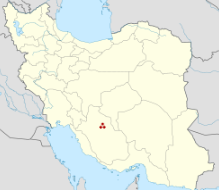
Location of Pasargadae – in present-day Fars Province, Iran
What is the most prominent structure in Pasargadae?
The tomb of Cyrus the Great, characterized by six steps leading to a rectangular chamber.
What cultures influenced the architecture of Pasargadae?
The city’s architecture reflects influences from Elamite, Babylonian, Assyrian, Egyptian, and Anatolian traditions.
What is Gate R, and why is it significant?
Gate R is the oldest known freestanding propylaeum and possibly an architectural precursor to the Gate of All Nations at Persepolis.

The tomb of Cyrus the Great in the Qajar period
Who conducted the earliest archaeological work at Pasargadae?
German archaeologist Ernst Herzfeld initiated archaeological exploration in the early 20th century.
What was the Pasargadae Treasure, and where is it now?
It is a collection of Achaemenid jewelry discovered near Pavilion B, now housed in the National Museum of Iran and the British Museum.

Aside from being celebrated for its cultural significance, Pasargadae is also a prominent tourist destination managed by Iran’s cultural heritage authorities. Image: Private Palace at Pasargadae
What modern threat endangers Pasargadae?
The Sivand Dam poses risks of increased humidity, which may accelerate the site’s deterioration.
How has Pasargadae influenced modern culture?
It inspired Brazilian poet Manuel Bandeira’s poem “Vou-me embora pra Pasárgada,” symbolizing an idyllic utopia.





