Pelopidas: Life and Major Accomplishments
Pelopidas was a distinguished Theban general and statesman whose life epitomized courage, selflessness, and an unwavering dedication to Thebes’ liberation and ascendancy in ancient Greece. Born into a wealthy and influential family, he chose to live modestly, dedicating his resources to public causes and the welfare of the underprivileged. Pelopidas played a pivotal role in some of the most significant military and political events of 4th century BC Greece, particularly during the period of Theban hegemony.
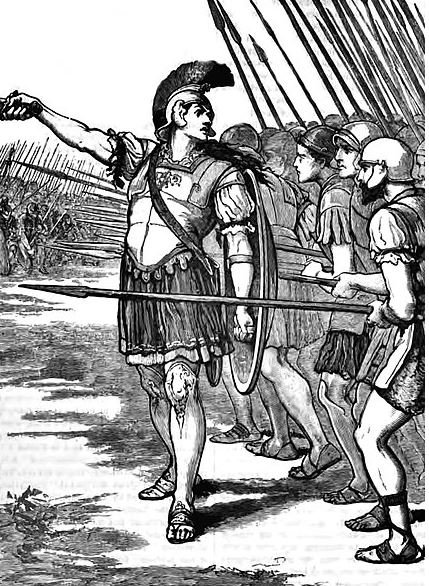
Pelopidas (died 364 BC) was a prominent Theban statesman and general who played a key role in securing Theban dominance in mid-4th century BC Greece. Image: An illustration showing Pelopidas commanding the Theban forces during the Battle of Leuctra.
Early Life and Background
Pelopidas came from a wealthy and prominent family in Thebes. Despite his privileged background, he led a simple and austere life, emulating the discipline and lifestyle of an athlete. His wealth was often spent on supporting the poor and public endeavors rather than personal luxuries. This altruism earned him widespread admiration and respect among the citizens of Thebes.
In 384 BC, Pelopidas joined a Theban contingent that aided Sparta during the Siege of Mantinea. During this campaign, he was gravely wounded and almost killed in battle. Epaminondas, a fellow Theban, saved his life, forging a deep bond of friendship between the two. This partnership became the cornerstone of Theban military and political strategy for the next two decades.
Liberation of Thebes
The turning point in Pelopidas’s life came with the Spartan occupation of the Theban citadel in 382 BC. This occupation, led by the pro-Spartan oligarchs in Thebes, marked a period of oppression for the Theban democrats. Pelopidas fled to Athens, where he organized a conspiracy to overthrow Spartan rule and restore Theban independence.
In 379 BC, Pelopidas and a small group of exiles infiltrated Thebes, disguising themselves to evade detection. They coordinated with sympathizers within the city and launched a surprise attack, assassinating key pro-Spartan leaders. This bold move sparked an uprising against the Spartan garrison. Pelopidas’s leadership in rallying the Thebans proved decisive, and the Spartan forces were forced to surrender. This event marked the liberation of Thebes and the beginning of Pelopidas’s illustrious military career.
The Sacred Band and th.e Battle of Tegyra
Following the liberation of Thebes, Pelopidas was elected boeotarch (war leader) multiple times. Recognizing the need for a disciplined and elite fighting force, he established the Sacred Band, a corps of 300 soldiers bonded by deep personal loyalty and camaraderie. The Sacred Band became renowned for its effectiveness and discipline, playing a critical role in Theban military successes.
In 375 BC, Pelopidas led the Sacred Band in the Battle of Tegyra, where a much smaller Theban force defeated a larger Spartan army near Orchomenus. This victory was a watershed moment, as it marked the first time a Spartan army was decisively defeated in a pitched battle. The success at Tegyra demonstrated the growing strength of Thebes and the strategic brilliance of Pelopidas as a commander.
The Battle of Leuctra
Pelopidas’s most celebrated contribution came during the Battle of Leuctra in 371 BC, a decisive engagement between Thebes and Sparta. The Theban army, under the overall command of Epaminondas, faced a numerically superior Spartan force led by King Cleombrotus. Epaminondas implemented an innovative tactic, the oblique phalanx, concentrating his forces on one flank to break the Spartan line.
Pelopidas and the Sacred Band played a crucial role in this battle, executing a key charge that exploited the Spartan weaknesses. The result was a catastrophic defeat for Sparta, which lost its hegemony over Greece. The victory at Leuctra established Thebes as the dominant power in the region and marked the zenith of Theban influence. Pelopidas’s leadership and the valor of the Sacred Band were instrumental in this historic achievement.
Consolidation of Theban Power
In the years following Leuctra, Pelopidas continued to work alongside Epaminondas to consolidate Theban dominance. In 370 BC, the two generals led a campaign into the Peloponnese, where they re-founded the city of Messene as an independent state. This move permanently weakened Sparta by depriving it of a critical source of manpower and resources. Their efforts to reshape the political landscape of Greece demonstrated their vision for a united and powerful Theban-led coalition.
Although their campaigns were controversial and led to accusations of overstepping their authority, both Pelopidas and Epaminondas were acquitted. Their political and military leadership was widely recognized as essential to Theban interests.
Diplomatic Achievements
Pelopidas was not only a skilled general but also a capable diplomat. In 367 BC, he traveled to the Persian court of King Artaxerxes II to negotiate terms favorable to Thebes. Backed by the prestige of Theban victories, Pelopidas secured Persian recognition of Thebes as a major power in Greece. The Persian king endorsed the independence of Messene and supported Theban hegemony, further isolating Sparta and solidifying Thebes’ position.
Campaigns in Northern Greece
Pelopidas’s influence extended to northern Greece, where he intervened in Thessalian and Macedonian affairs. Responding to appeals from Thessalian cities against the tyrant Alexander of Pherae, Pelopidas drove Alexander out and restored order. He also arbitrated a succession dispute in Macedon, securing Theban influence in the region. During this mission, he brought Philip of Macedon, the future conqueror of Greece, to Thebes as a hostage. Philip’s time in Thebes exposed him to Theban military tactics, which would later influence his own strategies.
Capture and Release
In a subsequent campaign in Thessaly, Pelopidas was betrayed and captured by Alexander of Pherae. Despite his imprisonment, his reputation remained unscathed, and Thebes launched two expeditions to secure his release. The second expedition, led by Epaminondas, succeeded in liberating Pelopidas, highlighting the respect and importance he commanded among his compatriots.
Final Campaign and Death
Pelopidas’s final campaign took place in 364 BC, following another appeal from Thessaly to confront Alexander of Pherae. Despite a solar eclipse limiting his forces, Pelopidas led a daring charge at the Battle of Cynoscephalae, defeating Alexander’s much larger army. However, his determination to personally kill the tyrant led to his reckless advance, where he was struck down by Alexander’s guards.
Pelopidas’s death was a significant loss for Thebes. While his courage and leadership were lauded, his impetuosity in his final moments drew criticism from historians like Plutarch. Nevertheless, his legacy as a selfless and fearless leader endures.
Legacy
Pelopidas’s life and career left an indelible mark on Theban and Greek history. His leadership in liberating Thebes, establishing the Sacred Band, and securing decisive victories against Sparta elevated Thebes to a position of unprecedented power. His diplomatic and military efforts demonstrated his vision for a united Greece under Theban leadership, even if this vision ultimately proved unsustainable.
Pelopidas’s partnership with Epaminondas is celebrated as one of the most effective collaborations in ancient military history. Together, they reshaped the balance of power in Greece and challenged the dominance of Sparta. Though his life was cut short, Pelopidas remains a symbol of bravery, selflessness, and dedication to the ideals of freedom and justice. His contributions to Theban hegemony and his role in some of the most significant battles of his time ensure his place among the great figures of ancient Greek history.
Frequently Asked Questions about Pelopidas
These questions and answers capture the essence of Pelopidas’s life, his contributions to Theban power, and his enduring legacy in Greek history.
What was Pelopidas’s background?
He was born into a wealthy and distinguished family but chose a modest lifestyle, dedicating his resources to public service and aiding the poor rather than personal luxury.
How did Pelopidas and Epaminondas become allies?
They bonded during the Siege of Mantinea in 384 BC when Epaminondas saved Pelopidas’s life after he was severely wounded in battle. This event marked the beginning of a lifelong political and military partnership.
What role did Pelopidas play in liberating Thebes?
After the Spartan seizure of Thebes in 382 BC, Pelopidas fled to Athens and led a conspiracy to overthrow Spartan control. In 379 BC, he orchestrated a revolt, expelled the Spartan garrison, and restored Theban independence.
What is the Sacred Band, and how was Pelopidas involved?
The Sacred Band was an elite Theban military unit of 300 soldiers. Pelopidas led them to a pivotal victory against a larger Spartan force at the Battle of Tegyra in 375 BC, marking the decline of Spartan supremacy.
What was Pelopidas’s contribution to the Battle of Leuctra?
In 371 BC, Pelopidas led the Sacred Band in a decisive charge during the Battle of Leuctra, helping Epaminondas defeat the Spartans. This victory ended Spartan hegemony and established Theban dominance in Greece.
What diplomatic achievements did Pelopidas accomplish?
In 367 BC, Pelopidas negotiated favorable terms with the Persian king Artaxerxes II, securing support for Thebes and ensuring the independence of Messene from Spartan control.
How did Pelopidas influence Macedonian politics?
Pelopidas arbitrated disputes in Macedonia and brought Philip of Macedon to Thebes as a hostage. Philip later absorbed Theban military tactics, which influenced his future as a military leader.
What led to Pelopidas’s capture, and how was he released?
During a campaign in Thessaly, Pelopidas was betrayed and captured by Alexander of Pherae. Thebes sent two expeditions to rescue him, with Epaminondas leading the successful effort.
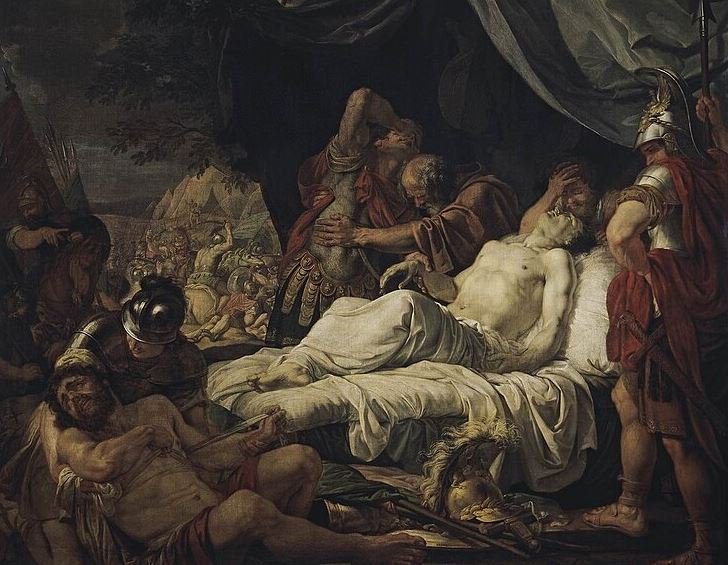
Image: A painting by Russian artist Andrey Ivanov titled “Death of Pelopidas”.
How did Pelopidas die?
In 364 BC, Pelopidas led a campaign against Alexander of Pherae and achieved a tactical victory at Cynoscephalae. However, in an attempt to personally kill Alexander, he was slain by the tyrant’s guards.





