Pharaoh Djedkare Isesi
Djedkare Isesi, also known as Tancheres in Greek, was the eighth and penultimate ruler of Egypt’s Fifth Dynasty during the Old Kingdom. He reigned from the late 25th century to the mid-24th century BCE.
Succeeding Menkauhor Kaiu and preceding Unas, Djedkare’s familial relationships with these rulers remain uncertain, though a smooth transition suggests possible close ties. He likely reigned for over 40 years, marking a transformative period in Egyptian history.
Religious Shifts
One of Djedkare’s most significant changes was his break from the tradition of constructing sun temples dedicated to Ra, a practice followed by his predecessors. Instead, his reign emphasized the rise of Osiris as the central figure of the Egyptian pantheon. This shift signified a broader transformation in the role of the pharaoh, who became less of a divine guarantor of eternal life and more of a mortal leader with socially dominant but humanized attributes.
READ MORE: Differences between Anubis and Osiris
Administrative Reforms
Djedkare introduced groundbreaking reforms to state administration. He restructured the priesthood, particularly in the Abusir necropolis, and reorganized funerary cults. These changes centralized certain religious practices but simultaneously decentralized administrative control, granting provincial officials, such as nomarchs, greater authority. This shift toward provincial autonomy is seen as a precursor to the political fragmentation of the First Intermediate Period.
The reforms also redefined ranking titles, increasing the power of viziers and other high-ranking officials while curbing the influence of lower officials. This redistribution of power fostered administrative efficiency but sowed seeds of decentralization.

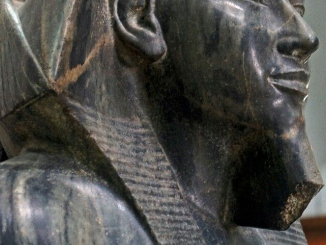
Image: The lower part of the statue of Isesi.
Foreign Expeditions and Trade
Djedkare’s reign saw extensive foreign expeditions aimed at securing valuable resources. Missions to Sinai yielded turquoise and copper, while expeditions to Nubia procured gold and diorite. The fabled Land of Punt provided incense, essential for religious rituals. Notably, his reign marks the earliest recorded use of the term “Nub” for Nubia, emphasizing its significance as a gold source.
Trade flourished under Djedkare, with evidence of exchanges with the Levantine coast and Byblos. Military campaigns during his reign included punitive raids in Canaan, and one of the earliest depictions of a siege scene, found in a tomb of his official Inti, underscores Egypt’s expanding influence.
Pyramid Complex and Burial
Djedkare constructed his pyramid in South Saqqara, naming it Nefer Djedkare, meaning “Djedkare is Perfect.” Once standing 52 meters tall, the pyramid is now heavily eroded due to the loss of its limestone casing. Excavations in the 1940s uncovered skeletal remains believed to belong to Djedkare. Analysis of the remains suggests he died in his fifties.
Adjacent to the pyramid, a mortuary temple and additional structures reflected his emphasis on funerary practices. Radiocarbon dating of tombs nearby identified possible links to his daughters, further confirming familial connections.

Image: The pyramid of Djedkare in the Egyptian town of Saqqara.
Cultural and Literary Contributions
Djedkare’s reign is traditionally associated with Ptahhotep, a vizier credited with authoring The Maxims of Ptahhotep. This text, one of the earliest examples of wisdom literature, reflects the ethical and philosophical milieu of Djedkare’s reign. It underscores his court’s intellectual achievements and cultural influence.
Impact of Administrative Reforms
Modern evaluations of Djedkare’s reforms remain mixed. Some Egyptologists argue that his decentralization policies weakened the central authority of the pharaoh, creating a system akin to feudalism that contributed to the Old Kingdom’s decline. However, others contend that these reforms allowed for greater administrative efficiency and fostered artistic and cultural growth, evidenced by the proliferation of grand tombs and refined craftsmanship during his reign.
Legacy and Funerary Cult
Djedkare’s legacy extended far beyond his reign. His funerary cult persisted throughout the Old Kingdom and received renewed attention during the Sixth Dynasty. Pharaohs Merenre I and Pepi II made rich offerings to honor him, as recorded on the South Saqqara Stone.
During the New Kingdom, Djedkare’s name appeared on the Karnak king list, signifying continued reverence. His memory was further immortalized in the tomb of the priest Mehu, where he is depicted alongside other esteemed pharaohs. These tributes highlight his enduring influence on Egyptian history.
Achievements in Foreign Relations
Djedkare maintained strong trade ties with Byblos and likely extended Egypt’s influence into the Levant and possibly Anatolia. Artifacts, such as a gold cylinder seal bearing his name, indicate wide-ranging trade networks. Additionally, records suggest expeditions to Punt, Nubia, and the Eastern Desert for materials like lapis lazuli, gold, and incense.
His military campaigns in Canaan and control over key trade routes demonstrated Egypt’s growing assertiveness on the international stage. These endeavors supported the economic and cultural prosperity of his reign.
Historical Documentation
Djedkare is well-documented in contemporary records, including tomb inscriptions, royal decrees, and the Abusir papyri. These texts provide valuable insights into his administrative practices and governance. He is also mentioned in later king lists, such as the Abydos King List, Saqqara Tablet, and Turin Canon, although the latter underestimates his reign at 28 years. Archaeological evidence, including inscriptions from Wadi Maghareh and Tell Edfu, corroborates his expansive mining and trade activities.
READ MORE: Most Famous Pharaohs of Ancient Egypt
Frequently Asked Questions

Image: Cartouche of Djedkare Isesi at the Neues Museum in Berlin, Germany.
What marked Djedkare Isesi’s reign as transformative?
His reign introduced significant administrative reforms, shifted religious practices towards Osiris, and expanded foreign expeditions, breaking from earlier traditions.
Why did Djedkare abandon the tradition of sun temples?
He prioritized Osiris over Ra, reflecting the growing importance of Osiris as the god of the afterlife and a broader transformation in religious and royal roles.
What were Djedkare’s notable administrative reforms?
He restructured state administration, decentralized governance by empowering nomarchs, and reorganized funerary cults, paving the way for provincial autonomy.
How did foreign expeditions shape Djedkare’s reign?
He sent missions to Sinai, Nubia, and Punt to procure resources like turquoise, gold, and incense, and his era saw the earliest recorded use of “Nub” for gold-rich Nubia.
What evidence highlights Djedkare’s trade and military activities?
Artifacts and inscriptions show trade with Byblos and the Levant, while depictions of a siege scene suggest punitive raids in Canaan during his reign.
What do we know about Djedkare’s burial complex?
He was buried in South Saqqara in the pyramid Nefer Djedkare. Excavations revealed remains likely belonging to him and linked to nearby tombs of his daughters.
How long did Djedkare’s legacy last?
His funerary cult persisted through the Old Kingdom and saw a revival during the New Kingdom, with evidence of offerings and depictions honoring him.
What were the consequences of Djedkare’s reforms?
While fostering cultural and artistic growth, his decentralization policies are debated for potentially weakening royal authority and contributing to later political fragmentation.