Pharaoh Neferefre
Pharaoh Neferefre, also known as Raneferef, was a ruler of ancient Egypt’s Fifth Dynasty during the Old Kingdom period. His reign, though brief, offers valuable insights into the political, architectural, and religious practices of the time.
Known primarily through limited archaeological evidence and historical references, Neferefre’s life and rule are emblematic of the challenges of dynastic succession and the ambitious, albeit incomplete, projects of Egypt’s pyramid builders.

Neferefre Isi (Raneferef) was a Fifth Dynasty pharaoh during Egypt’s Old Kingdom (c. 2480–2458 BC). Image: Cartouche of Pharaoh Neferefre on the Abydos king list
Neferefre’s Lineage and Ascension
Neferefre was the eldest son of Pharaoh Neferirkare Kakai and Queen Khentkaus II. Before ascending to the throne, he was referred to as Prince Ranefer, as evidenced by inscriptions and reliefs.
His royal lineage positioned him as the natural successor to his father. However, his reign was unexpectedly brief, which altered the planned course of the dynasty.
After his death, his younger brother, Nyuserre Ini, succeeded him, though there is some debate among scholars about the role of the ephemeral ruler Shepseskare in this succession sequence.
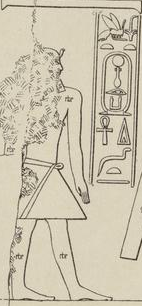
Likely the eldest son of Neferirkare Kakai and Khentkaus II, Neferefre ruled for about 2–3 years before dying unexpectedly in his early twenties. Image: Neferirkare Kakai, initially Prince Ranefer, was later adorned with royal titles and regalia.
Historical Evidence and Archaeological Records
The reign of Neferefre is documented by sparse but significant sources, including an inscription found in his pyramid complex. This inscription refers to the “first occurrence of the cattle count,” a biennial or irregular event in which livestock was tallied for taxation purposes. This inscription, along with the unfinished state of his pyramid, suggests a reign of no more than two years.
Artifacts such as clay seals bearing Neferefre’s Horus name have been discovered in his mortuary complex, further confirming his historical presence. Administrative papyri from the temple of his mother, Khentkaus II, provide additional insights into the funerary cult established in his honor, demonstrating the societal importance of maintaining the king’s posthumous worship.
Pyramid of Neferefre: Netjeribau Raneferef
Neferefre began constructing a pyramid at Abusir, named Netjeribau Raneferef (“The bas of Neferefre are divine”). Planned to be larger than some earlier Fifth Dynasty pyramids, its construction was halted upon his premature death.
Neferefre’s legacy lies in his incomplete pyramid and temple, fragmented mummy, and sparse yet significant records.
The pharaoh’s pyramid remained unfinished, with only the lowest layers of the core completed. After Neferefre’s death, Nyuserre Ini repurposed the incomplete pyramid, transforming it into a square-shaped mastaba. The modest completion reflects the abrupt end of his reign and the necessity of preparing a burial site quickly.
Mortuary Temple and Cult Practices
The mortuary temple of Neferefre, initially conceived as a small limestone chapel, was expanded by Nyuserre using mudbrick. This temple incorporated architectural innovations, such as Egypt’s earliest hypostyle hall, whose roof was supported by wooden lotus-cluster columns. The temple housed statues of the king and served as a center for his funerary cult.
The administrative papyri uncovered in the temple highlight the importance of royal funerary practices in maintaining societal stability and demonstrating loyalty to the deceased ruler. These documents reveal that large-scale animal sacrifices were conducted during festivals dedicated to Neferefre. This practice underscores the significant resources devoted to funerary rituals and the role of priests in sustaining the king’s legacy.
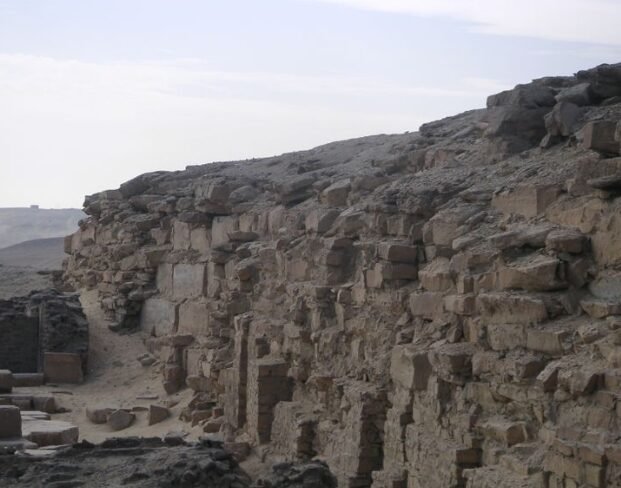
Limited evidence of his reign exists, including plans for a sun temple, Hotep-Re, which was likely incomplete. Image: The ruins of the mortuary temple of Neferefre
Neferefre’s Sun Temple: Hotep-Re
Following the Fifth Dynasty tradition of sun worship, Neferefre planned or began constructing a sun temple named Hotep-Re (“Ra is content”). While the exact location of this temple remains unknown, its existence is attested in inscriptions found in the tomb of Ti, an official of the period. Scholars speculate that the temple may never have been completed due to Neferefre’s short reign and that its materials might have been repurposed for other constructions, possibly by Nyuserre Ini.
Royal Succession and Shepseskare’s Role
The succession following Neferefre’s death is a subject of scholarly debate. Some historical sources, including the Saqqara King List, place Shepseskare between Neferirkare and Neferefre.
Neferefre’s unexpected death left his succession unclear, with Shepseskare possibly serving as an ephemeral ruler.
However, archaeological evidence suggests that Shepseskare’s reign was extremely brief, possibly only lasting weeks or months. Many Egyptologists believe Neferefre succeeded his father directly and that Shepseskare ruled after him in an attempt to stabilize the dynasty. The unfinished state of Shepseskare’s pyramid at Abusir supports the hypothesis of his fleeting reign.
Legacy in King Lists and Historical Records
Neferefre is mentioned in several New Kingdom king lists, such as the Abydos King List and the Saqqara Tablet, although there are variations in the spelling and sequence of his name.
Pharaoh’s Neferefre’s short reign reflects the challenges of dynastic succession and the abrupt transitions characteristic of the Fifth Dynasty.
In Manetho’s Aegyptiaca, a Hellenized history of Egypt, Neferefre is identified as “Cherês” and credited with a reign of 20 years. Modern Egyptologists dispute this figure, citing the unfinished state of his pyramid and limited evidence of his reign.
Neferefre’s Mummy and Burial
Fragments of Neferefre’s mummy were discovered in his pyramid burial chamber. These remains, including a left hand and pieces of skin, were radiocarbon-dated to align with the Fifth Dynasty, confirming their authenticity.
Analysis revealed that Neferefre died in his early twenties, likely between the ages of 20 and 23. He stood approximately 1.67 to 1.69 meters tall and led a life of privilege, engaging in minimal physical labor, as evidenced by his skeletal remains. His premature death likely resulted from natural causes, though the exact circumstances remain unknown.
Efforts to Complete His Father’s Pyramid
During his brief reign, Neferefre initiated efforts to complete the pyramid of his father, Neferirkare Kakai. This pyramid, the largest of the Fifth Dynasty, lacked its limestone casing and associated mortuary temple at Neferirkare’s death.
Neferefre began the cladding process and laid the foundations for the temple, but these tasks were left unfinished. His brother, Nyuserre, eventually completed the temple using mudbrick and wood, abandoning the limestone casing.
Funerary Cult and Festivals
Neferefre’s funerary cult persisted during the late Fifth Dynasty, as evidenced by records in the Abusir Papyri. These documents describe annual festivals held in his honor, featuring the ritual sacrifice of animals, particularly bulls. The scale of these sacrifices highlights the economic resources allocated to the cult, reflecting the importance of royal mortuary practices in Egyptian society.
However, the funerary cult declined during the First Intermediate Period. While there are indications of a potential revival in the Middle Kingdom, evidence is scant. A Twelfth Dynasty burial within Neferefre’s temple suggests a residual association with his cult, though its significance remains unclear.
READ MORE: Most Famous Ancient Egyptian Festivals
Architectural Alignment at Abusir
The alignment of pyramids at Abusir reflects the religious and astronomical considerations of the Fifth Dynasty. The pyramids of Sahure, Neferirkare, and Neferefre form a line pointing toward Heliopolis, the center of Ra worship. This alignment underscores the dynasty’s focus on sun worship and continuity in royal architectural planning. The unfinished pyramid attributed to Shepseskare deviates from this alignment, suggesting it was constructed after Neferefre’s death.
Conclusion
Pharaoh Neferefre’s reign, though brief, provides valuable insights into the complexities of dynastic succession, Old Kingdom architecture, and royal funerary practices. His incomplete projects, including his pyramid and sun temple, reflect the abrupt end of his rule. The preservation of his mortuary temple and mummy, alongside records from the Abusir Papyri, ensures that his legacy endures as a window into a transformative period in ancient Egyptian history.
Frequently Asked Questions

Schist statue of Neferefre, wearing Upper Egypt’s white crown, found in Abusir’s pyramid complex.
What dynasty did Neferefre belong to?
Neferefre was a pharaoh of the Fifth Dynasty during Egypt’s Old Kingdom.
How long did Neferefre rule, according to modern Egyptological consensus?
His reign likely lasted no more than two years, based on archaeological evidence.
What evidence suggests the brevity of Neferefre’s reign?
An inscription in his pyramid, dated to the first or second cattle count, and the unfinished state of his pyramid indicate a short rule.
What was the purpose of the cattle count mentioned in Neferefre’s inscription?
The cattle count was used to evaluate livestock for taxation purposes.

Neferefre’s pyramid at Abusir, Netjeribau Raneferef (“The bas of Neferefre are divine”), remained unfinished, later completed as a mastaba by his successor, Nyuserre Ini. Image: Double statue portraying Nyuserre as both a young man and an old man, Museum of Egyptian Art in Munich
What is the name and meaning of the pyramid Neferefre began constructing?
His pyramid, Netjeribau Raneferef, means “The bas of Neferefre are divine.”
What role did Nyuserre Ini play in Neferefre’s burial and pyramid construction?
Nyuserre, Neferefre’s younger brother, converted the unfinished pyramid into a mastaba and expanded the mortuary temple.
What artifacts from Neferefre’s reign have been discovered?
Artifacts include clay seals with his Horus name, statues, and administrative papyri from his mortuary temple.
What did bioarchaeological analysis of Neferefre’s mummy reveal?
The analysis showed he died in his early twenties and likely led a life of privilege with minimal physical labor.
What is the significance of the sun temple named Hotep-Re?
Following tradition, Neferefre likely began building Hotep-Re (“Ra is content”), though its exact location remains unknown.
What was the fate of Neferefre’s funerary cult?
His cult persisted into the late Old Kingdom with annual festivals but diminished by the First Intermediate Period.
READ MORE: Three Major Time Periods in Ancient Egypt





