Pharaoh Pepi I of the Sixth Dynasty
Pharaoh Pepi I Meryre was a significant ruler of Egypt’s Sixth Dynasty during the Old Kingdom, reigning for over 40 years in the late 24th and early 23rd centuries BC. His reign marked both a period of consolidation and an era of brewing challenges that foreshadowed the Old Kingdom’s eventual decline. Pepi I’s governance was characterized by ambitious building projects, strategic familial alliances, and military and trade expansions.
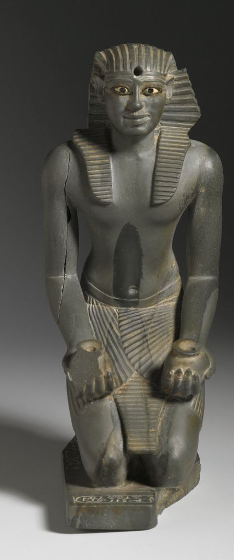
Kneeling statuette of Pepi I, Brooklyn Museum
Life and Background
Pepi I was the son of Pharaoh Teti, founder of the Sixth Dynasty, and Queen Iput, who may have been a daughter of Unas, the final ruler of the Fifth Dynasty. This dual royal lineage reinforced his legitimacy.
However, his ascent to the throne followed a turbulent period, as Teti’s death was possibly due to assassination, and the brief reign of the enigmatic Userkare intervened before Pepi’s rule. It remains uncertain whether Userkare was a regent, an usurper, or a placeholder until Pepi reached maturity.
Family and Alliances
Pepi I strengthened his reign through strategic familial connections. He married at least six queens, including Ankhesenpepi I and Ankhesenpepi II, daughters of the powerful nomarch Khui of Abydos. These alliances tied him to influential provincial families. Nebet, the wife of Khui and mother of these queens, became the first woman to hold the prestigious title of vizier, demonstrating Pepi’s trust in this family. Nebet’s son, Djau, also served as vizier, further consolidating the king’s control over key regions.
Pepi fathered several children, including his successors, Merenre Nemtyemsaf I and possibly Pepi II Neferkare, who would become one of Egypt’s longest-reigning pharaohs. His daughters also played essential roles, with some marrying future kings, securing continuity within the royal lineage.
Challenges During His Reign
Pepi’s reign was marked by internal and external challenges. The possible murder of his father created an air of uncertainty, which was compounded by a conspiracy within his harem later in his reign. One of his consorts plotted against him, possibly aiming to secure the throne for her son. This conspiracy, while suppressed, highlighted the internal threats even within the royal household. Pepi responded by strengthening his power base through political reforms and strategic marriages.
Externally, decentralization was a growing issue. Provincial officials and local elites gained more autonomy, challenging the traditional centralized power of the pharaoh. Pepi’s reign reflected attempts to mitigate this by redistributing administrative authority and maintaining a visible royal presence across Egypt.
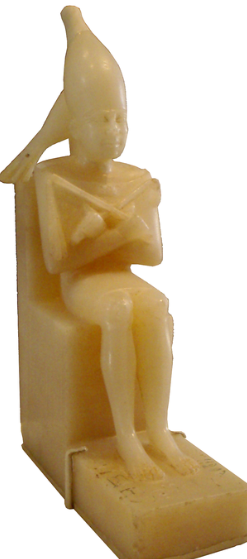
Pepi I’s reign represented a high point of Old Kingdom cultural and architectural development, even as it hinted at the challenges that would eventually lead to the era’s decline. Image: Alabaster sculpture of an Old Kingdom pharaoh, Pepi I Meryre
Military Campaigns
Pepi I launched several military campaigns to secure Egypt’s borders and protect trade routes. In Nubia, his expeditions aimed to control the region’s wealth and resources. His campaigns extended to Sinai and southern Canaan, where Egyptian troops marched and sailed to assert dominance and likely acquire raw materials. These actions ensured Egypt’s influence over its neighbors while securing valuable trade networks.
Trade and Foreign Relations
Trade flourished under Pepi I, with Egypt establishing strong ties with the Levantine cities of Byblos and Ebla. Artifacts bearing Pepi’s name, such as alabaster vessels, have been discovered in these regions, signifying active diplomatic and commercial exchanges.
Trade also extended to Punt and the oases of the Western Desert, bolstering Egypt’s economy and resource base. Mining and quarrying expeditions, particularly for copper and turquoise in Sinai, further exemplified his focus on economic prosperity.
Administrative Reforms
Facing the growing influence of local elites, Pepi I implemented significant administrative reforms. He appointed officials from non-noble backgrounds to high-ranking positions, ensuring loyalty to the crown. The king also expanded a network of state-controlled storehouses, which facilitated tax collection and labor mobilization. These measures balanced power between the central government and provincial authorities, temporarily maintaining stability.
Building Projects
Pepi I was one of the most prolific builders of the Old Kingdom, leaving a lasting architectural legacy. He constructed numerous temples dedicated to local deities, enhancing the religious unity of Egypt. These structures reinforced the king’s ideological authority by promoting the idea of the pharaoh as a divine figure throughout the provinces.
At Saqqara, Pepi built his pyramid complex, Pepi Mennefer, following the architectural traditions of the Fifth Dynasty. Although not large compared to later pyramids, its religious significance was immense. The burial chambers were inscribed with extensive Pyramid Texts, the largest collection from the Old Kingdom. These spells aimed to guide the pharaoh’s journey to the afterlife, ensuring his eternal presence among the gods. For the first time, similar texts also appeared in the pyramids of his queens, marking a significant development in Egyptian funerary practices.
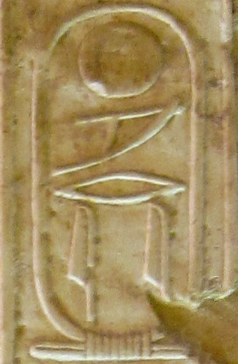
Through his policies and accomplishments, Pepi I’s legacy endures as a pivotal chapter in ancient Egyptian history. Image: Cartouche of Pharaoh Pepi I
Religious Contributions
Pepi I’s extensive construction of temples and chapels dedicated to local gods reflected his emphasis on integrating the provinces into a unified religious network. This strategy bolstered royal authority by ensuring the king’s presence was felt in distant regions. His pyramid texts, which included both traditional and innovative spells, became a cornerstone of Egyptian funerary literature, influencing subsequent generations.
Legacy
Pepi I’s reign left a mixed legacy. On one hand, his ambitious building projects, robust trade networks, and military campaigns underscored a period of prosperity and cultural achievement. His administrative reforms and strategic marriages demonstrated his ability to adapt to internal and external challenges. However, the decentralization of power, which he attempted to manage, continued to grow, sowing the seeds of the First Intermediate Period.
The name of his pyramid complex, Mennefer, eventually lent its name to the nearby capital, Memphis, ensuring his historical significance. Although his mortuary cult persisted into the Middle Kingdom, it waned during the Second Intermediate Period. Later, his monuments were dismantled or repurposed, yet his contributions to Egypt’s history remained evident through surviving texts and architectural fragments.
READ MORE: 9 Famous Middle Kingdom Pharaohs
Frequently asked questions
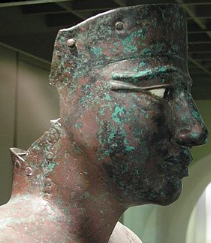
Pepi I’s long reign brought sustained prosperity, cultural achievements, and architectural innovation. Yet it also witnessed the intensifying tensions between the throne and its regions and revealed vulnerabilities in the fabric of Old Kingdom governance. Image: Lifesize copper statue of Pepi I, Cairo Museum
What challenges did Pepi I face early in his reign?
He came to power after the suspicious death of his father Teti and a brief, uncertain rule by Userkare, leading to political instability and potential court intrigues.
How did Pepi I respond to threats to his authority?
He launched a vast architectural program, building temples and shrines across Egypt, reinforcing centralized power by showcasing royal patronage and presence in local areas.
What role did Pepi I’s family play in consolidating his power?
He forged strategic marriages—especially to the daughters of the powerful nomarch Khui—and elevated their family members, such as Nebet and Djau, into high offices, securing loyalty and regional influence.
How did Pepi I address the growing power of provincial elites?
He promoted non-nobles to administrative positions, diversified the sources of officials, and enhanced local cult centers, ensuring that provincial power was balanced and beholden to the king’s authority.

Through his building projects, administrative adjustments, foreign expeditions, and marriages, Pepi I attempted to hold together the increasingly intricate tapestry of his nation, leaving an enduring imprint on Egypt’s historical narrative. Image: Cartouches of Pepi I and Pyramid Texts
What external policies did Pepi I pursue?
He undertook military campaigns into Nubia, maintained trade relations with places like Byblos and Ebla, and supported mining expeditions in Sinai, sustaining Egypt’s economy and securing foreign resources.
What is significant about Pepi I’s pyramid at Saqqara?
His pyramid featured the most extensive set of Pyramid Texts yet discovered and introduced the practice of inscribing funerary texts in queens’ pyramids, marking an evolution in royal burial customs.
How did Pepi I’s building activities shape Egyptian religious life?
By constructing numerous temples and chapels dedicated to local gods, he integrated various regions into a state-sponsored religious network, reinforcing unity and royal ideological influence.
What impact did Pepi I’s policies have on Egypt’s future political landscape?
While he strengthened the state temporarily, his recognition of local elites and decentralized administrative measures ultimately contributed to power shifts that weakened central authority in the long run.
How did Pepi I’s cult endure after his death?
His mortuary complex continued to receive offerings into the Middle Kingdom, and the name of his complex, Mennefer, lent its name to Memphis, ensuring a lasting cultural and linguistic legacy.
Why is Pepi I considered both a stabilizer and a precursor to future unrest?
He maintained Old Kingdom prosperity through building, diplomacy, and administration, yet the gradual empowerment of local families and shifts in governance during his reign sowed the seeds for later fragmentation and the eventual First Intermediate Period.





