
Praetorian Prefectures of the Roman Empire (395), with the Praetorian Prefecture of the East shown in grey.
The Praetorian Prefecture of the East was a crucial administrative division of the Late Roman Empire. As one of the four large praetorian prefectures that structured the empire, it held immense power in the eastern territories.
The prefecture played a vital role in governance, finance, military administration, and justice. Due to its vast territorial expanse and influence, the Praetorian Prefect of the East was the most powerful figure in the Eastern Roman administration after the Emperor himself, functioning in many respects as the imperial first minister.
Establishment and Structure
The Praetorian Prefecture of the East was established following the death of Constantine the Great in 337 AD. After his passing, the empire was divided among his sons, with Constantius II receiving control over the eastern portion. To aid in governing this vast region, a praetorian prefect was appointed, serving as the Emperor’s chief administrative official.
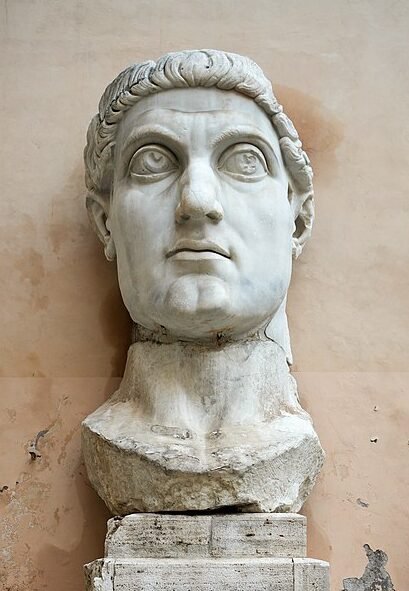
Head of the Colossus of Constantine at the Capitoline Museums in Rome, Italy.
This prefecture was composed of multiple dioceses, each overseeing several provinces. Initially, there were four main dioceses:
- Diocese of Thrace – Covering the eastern Balkans.
- Diocese of Asiana – Encompassing western Asia Minor.
- Diocese of Pontus – Governing northern Asia Minor.
- Diocese of the Orient – Controlling the Levant and Mesopotamia.
Later, a fifth diocese, Egypt, was added to the Prefecture, further expanding its administrative reach. The capital of the Prefecture of the East was established in Constantinople, the new imperial capital founded by Constantine, which served as the political, economic, and cultural heart of the Eastern Roman Empire.
Duties and Functions of the Praetorian Prefect
The Praetorian Prefect of the East wielded extensive authority over administrative, military, judicial, and financial matters. Some of the main responsibilities included:
- Taxation and Financial Oversight: The prefect controlled revenue collection, ensuring tax efficiency across the provinces. He also oversaw the imperial treasury and economic policies.
- Judicial Authority: The prefect served as the supreme judge in legal disputes, with the power to issue rulings that could only be overturned by the Emperor.
- Military Administration: While not a battlefield commander, the prefect played a significant role in military logistics, provisioning armies, and ensuring border security.
- Civil Administration: He oversaw provincial governors, ensuring efficient governance and enforcing imperial decrees.
Due to these responsibilities, the Praetorian Prefect of the East functioned as the Emperor’s chief administrator, holding a rank second only to the Emperor himself.

Evolution and Changes in the Prefecture
Throughout the history of the Eastern Roman Empire, the role and influence of the Praetorian Prefect of the East evolved. Initially, during the 4th and 5th centuries, the prefects wielded extensive power, often acting with considerable autonomy. However, as the empire progressed into the Justinian era (6th century) and beyond, their power was gradually diminished.
As the second-highest authority in the eastern territories, the Praetorian Prefect played a vital role in taxation, governance, justice, and military administration.
Under Emperor Justinian I (reign: 527–565), the administrative landscape was restructured, and many of the military and financial powers of the praetorian prefects were transferred to other officials, such as the magister militum (Master of Soldiers) and the comes sacrarum largitionum (Count of the Sacred Largesses). Nonetheless, the prefecture remained a significant bureaucratic institution within the Eastern Roman government until its decline in the early Byzantine period.

Justinian I
List of Notable Praetorian Prefects of the East
Many distinguished officials held the office of Praetorian Prefect of the East, shaping imperial policy and governance. Below are some of the most significant figures who served in this role:
Early Prefects (4th Century)
- Ablabius (329–337/338) – A close advisor of Constantine the Great, overseeing the early development of the eastern administrative structure.
- Philippus (344–351) – Served under Emperor Constantius II, managing financial and civil affairs.
- Thalassius (351–354) – Oversaw the administration during the reign of Constantius II.
- Flavius Hermogenes (358–360) – A key figure in imperial bureaucracy, known for legal reforms.
Prominent Prefects of the 5th Century
- Flavius Anthemius (405–414) – Played a crucial role in the reign of Emperor Theodosius II and was involved in major construction projects, including fortifications of Constantinople.
- Hierius (425–428, 432) – Twice served as Prefect of the East, demonstrating political influence under Emperor Theodosius II.
- Flavius Taurus (445) – Managed civil administration and legal affairs during a period of political instability.
Key Prefects of the 6th Century (Justinian Era)
- John the Cappadocian (531–532, 533–541) – One of the most powerful prefects, serving under Justinian I. He was instrumental in tax reforms but fell out of favor due to political intrigue.
- Peter Barsymes (543–546, 555–562) – Held the office twice, contributing to Justinian’s economic and administrative policies.
- Areobindus (c. 553) – A general-turned-administrator who played a role in Byzantine military affairs.
The Decline of the Praetorian Prefecture
By the 7th century, the power of the Praetorian Prefecture of the East declined significantly. Several factors contributed to its diminished influence:
Under Emperor Heraclius (reign: 610–641), the empire transitioned from the old Roman provincial system to the Theme System, which transferred many administrative and military responsibilities from the praetorian prefects to regional governors known as strategoi.
Due to Persian invasions and later the Arab conquests, large parts of the eastern territories, including Egypt and Syria, were lost. This significantly reduced the geographical scope of the Prefecture of the East.
Over time, military leaders and court officials took on many of the functions previously held by the praetorian prefects, leading to the office’s redundancy.
By the late 7th century, the Praetorian Prefecture of the East was essentially obsolete, with its functions absorbed by the new Thematic administration.

Frequently Asked Questions
When was the Praetorian Prefecture of the East established, and why?
It was established in 337 AD after the death of Constantine the Great to manage the vast eastern territories under his son, Constantius II.
What were the main dioceses under its control?
It comprised the Dioceses of Thrace, Asiana, Pontus, the Orient, and later Egypt, each containing multiple provinces.
What were the primary duties of the Praetorian Prefect?
The prefect was responsible for taxation, legal administration, military provisioning, and enforcing imperial policies across the eastern provinces.

Who were some notable praetorian prefects?
Notable figures include Ablabius, John the Cappadocian, Flavius Anthemius, and Peter Barsymes, many of whom played key roles in imperial governance and reforms.
How did the role change over time?
Initially wielding extensive power, the prefect’s authority declined, especially under Emperor Justinian I, as administrative and military functions were reassigned to other officials.
What led to the decline of the Praetorian Prefecture of the East?
Reforms by Emperor Heraclius, territorial losses to Persians and Arabs, and the shift to the Theme System gradually rendered the office obsolete.
What was its long-term impact on Byzantine administration?
Its bureaucratic framework influenced later Byzantine governance, particularly in taxation, law enforcement, and provincial administration.





