Chronology of Roman Emperors: Augustus to Constantine
The Roman Empire, spanning centuries, is renowned for its emperors who shaped its history. From Augustus, the founder, to Constantine, the architect of a new era, each ruler contributed uniquely to the Roman political, cultural, and religious landscape.
Augustus (27 BCE – 14 CE)

Bust of Augustus
Reign: Augustus, originally Gaius Octavius, was Rome’s first emperor. He transformed the Republic into an empire and laid the foundation for the Pax Romana, a 200-year period of relative peace.
Achievements: He reformed the military, established efficient administrative systems, and commissioned monumental structures such as the Ara Pacis.
Legacy: Augustus’ rule marked the transition from a republic to an autocratic system, securing his place as a pivotal figure in Roman history.
Tiberius (14 – 37 CE)
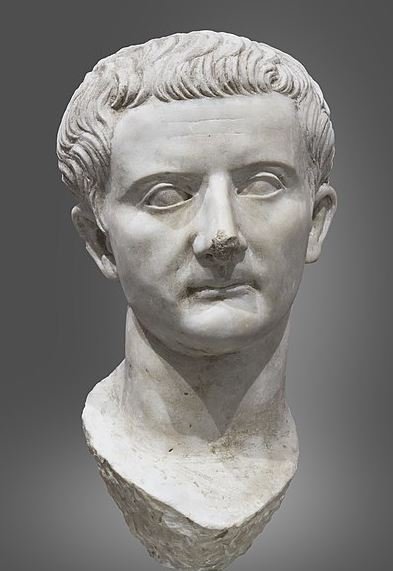
Bust of Tiberius at the Musée Saint-Raymond in Toulouse, France.
- Reign: The stepson of Augustus, Tiberius, faced challenges in maintaining the stability of the empire.
- Achievements: Though less popular, he expanded the treasury and consolidated power in the provinces.
- Legacy: His later years were marred by paranoia and reclusion, leaving his legacy somewhat tarnished.
Caligula (37 – 41 CE)

A marble bust of Caligula, the third Roman emperor, dating back to his reign.
- Reign: Known for his erratic behavior and controversial policies, Caligula’s short reign was marked by excess and instability.
- Achievements: Initially promising, his rule soon became notorious for lavish spending and cruelty.
- Legacy: Assassinated by his own guards, Caligula’s reign became a cautionary tale of unchecked power.
Claudius (41 – 54 CE)

Bust of Claudius at the Naples National Archaeological Museum in Italy.
- Reign: Claudius, considered an unlikely emperor due to physical ailments, proved to be an able administrator.
- Achievements: He expanded the empire significantly, including the conquest of Britannia, and improved the empire’s infrastructure.
- Legacy: Despite his successes, his reliance on freedmen and scandals in his court marred his reputation.
Nero (54 – 68 CE)

Nero’s head from a monumental statue on display at Glyptothek, Munich.
- Reign: Nero’s reign started positively but descended into tyranny, infamously linked to the Great Fire of Rome in 64 CE.
- Achievements: He patronized the arts and initiated urban development projects but is remembered for his cruelty.
- Legacy: Declared a public enemy by the Senate, Nero’s suicide marked the end of the Julio-Claudian dynasty.
Year of the Four Emperors (68 – 69 CE)
A tumultuous period saw the rise and fall of Galba, Otho, Vitellius, and finally Vespasian, who stabilized the empire.
Vespasian (69 – 79 CE)

Bust of Vespasian at the Pushkin Museum in Moscow.
- Reign: The founder of the Flavian dynasty, Vespasian restored order after the chaos of 69 CE.
- Achievements: He began construction of the Colosseum and stabilized finances through reforms.
- Legacy: His pragmatic governance laid the groundwork for future stability.
Titus (79 – 81 CE)

Bust of Titus at the Glyptotek in Denmark.
- Reign: Known for his short but impactful reign, Titus oversaw the completion of the Colosseum.
- Achievements: He dealt with crises, including the eruption of Mount Vesuvius and a devastating fire in Rome.
- Legacy: His popularity earned him the title “the delight of mankind.”
Domitian (81 – 96 CE)

Bust of Emperor Domitian
- Reign: Domitian’s autocratic rule consolidated power but alienated the Senate.
- Achievements: He strengthened the empire’s defenses and initiated extensive building programs.
- Legacy: Assassinated in a conspiracy, his memory was condemned by the Senate.
Nerva (96 – 98 CE)
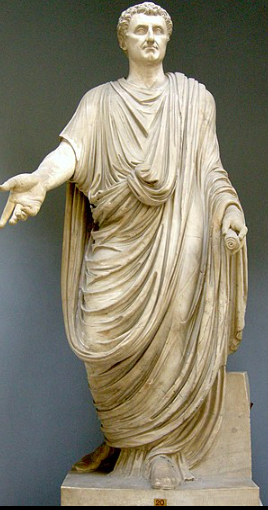
Statue of Nerva at the Chiaramonti Museum in Vatican City.
- Reign: Nerva’s brief reign marked the beginning of the Nerva-Antonine dynasty.
- Achievements: He stabilized the empire by adopting Trajan as his heir.
- Legacy: His succession strategy set a precedent for choosing capable rulers.
Trajan (98 – 117 CE)
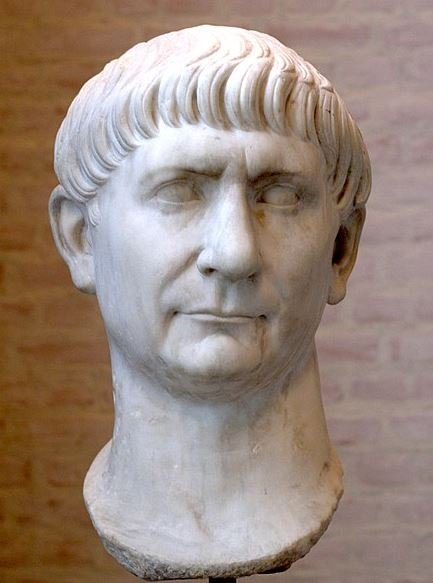
Image: Bust of Trajan.
- Reign: Trajan presided over the empire at its greatest territorial extent.
- Achievements: His conquests in Dacia and Mesopotamia brought immense wealth to Rome. He also built the famous Trajan’s Column.
- Legacy: Remembered as one of Rome’s greatest emperors, his rule epitomized expansion and prosperity.
Hadrian (117 – 138 CE)

Bust of Hadrian
- Reign: Hadrian prioritized consolidation over expansion.
- Achievements: He fortified the empire’s borders, including Hadrian’s Wall in Britain, and promoted cultural projects like rebuilding the Pantheon.
- Legacy: Known as a philhellene, Hadrian’s reign emphasized cultural flourishing and stability.
Antoninus Pius (138 – 161 CE)
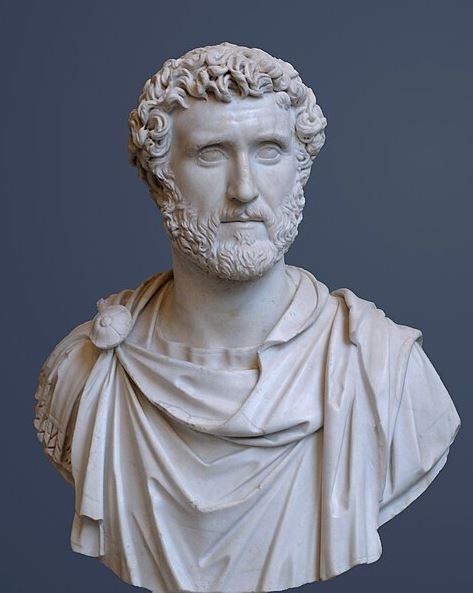
Bust of Pius at the Glyptothek in Munich.
- Reign: Antoninus Pius’ peaceful rule was marked by administrative efficiency.
- Achievements: He continued Hadrian’s policies and avoided major conflicts.
- Legacy: His era is remembered for stability and prosperity, often called a “golden age.”
Marcus Aurelius (161 – 180 CE)

Marble bust of Marcus Aurelius at the Musée Saint-Raymond in France.
- Reign: Known as the “Philosopher Emperor,” Marcus Aurelius exemplified stoic leadership.
- Achievements: He defended the empire against invasions and wrote Meditations, a cornerstone of Stoic philosophy.
- Legacy: His death marked the end of the Pax Romana, ushering in greater instability.
Commodus (180 – 192 CE)

Commodus
- Reign: Commodus’ self-indulgent rule starkly contrasted with his father’s.
- Achievements: His policies and behavior destabilized the empire, culminating in his assassination.
- Legacy: Seen as a symbol of decline, his death led to another civil war.
Year of the Five Emperors (193 CE)
This chaotic year saw the rapid succession of Pertinax, Didius Julianus, Pescennius Niger, Clodius Albinus, and eventually Septimius Severus.
Septimius Severus (193 – 211 CE)

Roman Emperor Septimius Severus
- Reign: Severus established the Severan dynasty and strengthened military authority.
- Achievements: He expanded the empire in Africa and the East and reformed the military.
- Legacy: His reign emphasized militarization, altering the balance of power in Roman governance.
Caracalla (211 – 217 CE)
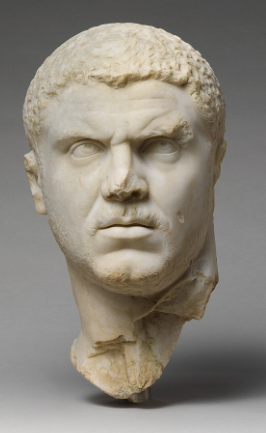
Bust of Caracalla at Rome’s Museo Nazionale Romano.
- Reign: Caracalla is remembered for both his brutal policies and administrative achievements.
- Achievements: The Edict of Caracalla granted Roman citizenship to all free men in the empire.
- Legacy: Assassinated during a campaign, his reign was divisive.
Elagabalus (218 – 222 CE)
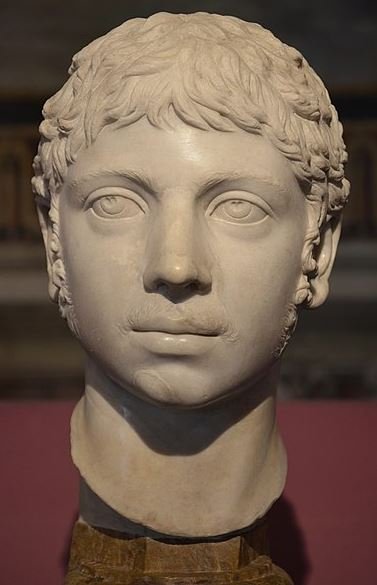
Marble bust of Elagabalus at the Capitoline Museums in Rome.
- Reign: Elagabalus’ controversial reign included religious reforms that alienated traditional Roman elites.
- Achievements: His focus on the Syrian sun god Elagabal disrupted Roman religious norms.
- Legacy: Overthrown and killed, his reign is often cited as a period of decadence.
Severus Alexander (222 – 235 CE)
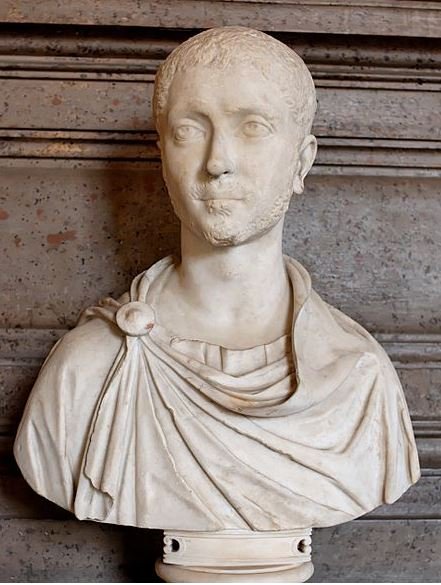
Bust of Severus Alexander at the Musei Capitolini in Rome.
- Reign: His efforts to restore stability were undermined by military unrest.
- Achievements: Alexander pursued diplomatic solutions to conflicts, including with Persia.
- Legacy: His assassination marked the beginning of the Crisis of the Third Century.
Crisis of the Third Century (235 – 284 CE)
- This period saw rapid turnover of emperors, external invasions, and internal strife. Figures like Decius, Valerian, and Gallienus struggled to maintain control, while Aurelian (270 – 275 CE) briefly restored order.
Diocletian (284 – 305 CE)

Sculpture work depicting the head of Diocletian.
- Reign: Diocletian’s reforms transformed the Roman Empire.
- Achievements: He divided the empire into East and West, creating the Tetrarchy, and implemented economic and military reforms.
- Legacy: His abdication set a precedent, and his reforms prolonged the empire’s existence.
Constantine the Great (306 – 337 CE)
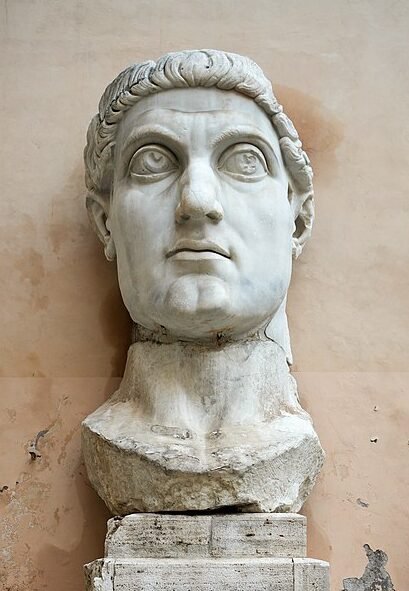
Head of the Colossus of Constantine at the Capitoline Museums in Rome, Italy.
- Reign: Constantine unified the empire after defeating rivals like Maxentius and Licinius.
- Achievements: He embraced Christianity, issuing the Edict of Milan, and founded Constantinople, establishing a new eastern capital.
- Legacy: Constantine’s reign marked the transition to a Christian empire, shaping its future for centuries.
Conclusion
From Augustus’ foundational reforms to Constantine’s transformation of the empire, the Roman emperors defined the trajectory of Western history. This chronology reflects their diverse legacies, from periods of peace and prosperity to times of crisis and renewal. Each emperor, through ambition and policy, contributed to the enduring legacy of Rome.
Questions and answers
Who was Augustus, and what were his achievements?
Augustus was the first emperor of Rome, reigning from 27 BCE to 14 CE. He established the imperial system, transforming the Roman Republic into the Roman Empire. His achievements included instituting the Pax Romana, reforming taxation, expanding the empire, and initiating major construction projects like the Ara Pacis. His reign marked the beginning of a new political era, laying the foundation for centuries of imperial rule.
What was Tiberius’ role as emperor, and what legacy did he leave?
Tiberius, Augustus’ stepson, ruled from 14 CE to 37 CE. Initially effective, he consolidated the empire’s finances and ensured provincial stability. However, his rule became overshadowed by paranoia, political purges, and unpopularity among the Senate and people.
What was notable about Caligula’s reign, and how did it end?
Caligula ruled from 37 CE to 41 CE. Although his reign began with promise, it descended into excess and tyranny. He undertook ambitious construction projects but became infamous for financial mismanagement and cruelty. His rule ended when he was assassinated by his own guards, cementing his legacy as a symbol of imperial decadence.
How did Claudius prove himself as an emperor despite initial doubts?
Claudius, reigning from 41 CE to 54 CE, overcame perceptions of physical and intellectual disabilities to become a capable ruler. He expanded the empire into Britannia, reformed laws, and improved administrative systems. However, his reliance on freedmen in court politics was controversial.
What is Nero remembered for, and what led to his downfall?
Nero ruled from 54 CE to 68 CE. He is remembered for his patronage of the arts, large-scale building projects, and the lavish Domus Aurea. However, his alleged involvement in the Great Fire of Rome and persecution of Christians led to widespread vilification. His suicide marked the end of the Julio-Claudian dynasty.
What was the Year of the Four Emperors, and what happened during this time?
The Year of the Four Emperors (69 CE) was a chaotic period following Nero’s death, during which Rome experienced a rapid succession of rulers: Galba, Otho, Vitellius, and finally Vespasian, who stabilized the empire.
How did Vespasian restore stability to the Roman Empire?
Vespasian, reigning from 69 CE to 79 CE, founded the Flavian dynasty and restored order after the chaos of 69 CE. He began the construction of the Colosseum, reformed the tax system, and stabilized finances, earning respect for his pragmatism.
What crises did Titus face during his reign, and how did he handle them?
Titus ruled from 79 CE to 81 CE. He faced the eruption of Mount Vesuvius and a major fire in Rome but provided effective leadership and aid to disaster-stricken areas. His completion of the Colosseum and widespread admiration marked his brief reign.
What characterized Domitian’s rule, and why was his memory condemned?
Domitian ruled from 81 CE to 96 CE, centralizing power and ruling autocratically. He strengthened frontier defenses and initiated significant construction projects. However, tensions with the Senate and his assassination led to the condemnation of his memory.
What made Nerva’s rule significant despite its brevity?
Nerva ruled from 96 CE to 98 CE. His brief reign restored stability and set a precedent for peaceful succession by adopting Trajan as his heir. He focused on infrastructure and legal reforms.
Why is Trajan considered one of Rome’s greatest emperors?
Trajan, ruling from 98 CE to 117 CE, led Rome to its greatest territorial extent. He conquered Dacia, bringing immense wealth to the empire, and constructed iconic structures like Trajan’s Forum and Trajan’s Column.
What were Hadrian’s priorities as emperor, and how did he promote culture?
Hadrian ruled from 117 CE to 138 CE and focused on consolidating rather than expanding the empire. He built Hadrian’s Wall in Britain, rebuilt the Pantheon, and promoted Greek culture, earning a reputation as a philhellene.
How did Antoninus Pius maintain the Pax Romana during his reign?
Antoninus Pius ruled from 138 CE to 161 CE. His peaceful and prosperous reign strengthened legal and fiscal systems. His stability allowed for a smooth transition to his successor, Marcus Aurelius.
What challenges did Marcus Aurelius face, and how is he remembered?
Marcus Aurelius ruled from 161 CE to 180 CE during increasing external pressures. He defended the empire against Germanic invasions and wrote Meditations, a cornerstone of Stoic philosophy. His reign marked the end of the Pax Romana.
What led to Commodus’ downfall, and what impact did it have on Rome?
Commodus, ruling from 180 CE to 192 CE, indulged in self-centered rule and lavish games, destabilizing the empire. His assassination plunged Rome into civil war.
What was the significance of the Year of the Five Emperors?
The Year of the Five Emperors (193 CE) saw Pertinax, Didius Julianus, Pescennius Niger, Clodius Albinus, and Septimius Severus vie for power. It ultimately led to the rise of Severus.
How did Septimius Severus reshape the Roman Empire?
Septimius Severus ruled from 193 CE to 211 CE. A soldier-emperor, he emphasized military authority, restructured the military, and expanded the empire in Africa and the East.
What was notable about Caracalla’s reign and reforms?
Caracalla ruled from 211 CE to 217 CE, known for his brutality and the Constitutio Antoniniana, granting citizenship to all free men in the empire. He also built the Baths of Caracalla in Rome.
Why is Elagabalus considered a controversial emperor?
Elagabalus ruled from 218 CE to 222 CE and focused on religious reforms, introducing the worship of the sun god Elagabal. His actions alienated traditional Roman elites, leading to his overthrow.
What challenges did Severus Alexander face during his reign?
Severus Alexander ruled from 222 CE to 235 CE and sought to restore stability through diplomacy and internal reforms. However, growing military unrest led to his assassination, marking the start of the Crisis of the Third Century.
What defined the Crisis of the Third Century?
The Crisis of the Third Century (235 CE – 284 CE) was characterized by rapid turnover of emperors, external invasions, and economic decline. Despite the chaos, emperors like Gallienus, Aurelian, and Probus made significant efforts to restore order.
What were the achievements of Aurelian and Probus during the Illyrian Emperors period?
Aurelian reunited the empire by defeating the Gallic and Palmyrene secessionist states during his reign (270 CE – 275 CE). Probus (276 CE – 282 CE) stabilized the frontiers and promoted economic recovery.
How did Diocletian reform the Roman Empire?
Diocletian ruled from 284 CE to 305 CE and implemented sweeping reforms. He established the Tetrarchy, dividing the empire into East and West, and restructured the economy and military. His unprecedented abdication prolonged the empire’s survival.
What made Constantine I’s reign a turning point in Roman history?
Constantine I ruled from 306 CE to 337 CE. He unified the empire after years of division and legalized Christianity with the Edict of Milan. He founded Constantinople, transitioning Rome toward a Christian empire.
How do the reigns of Augustus to Constantine reflect the evolution of the Roman Empire?
The emperors from Augustus to Constantine highlight Rome’s evolution, from the stability of the Pax Romana to the crises and ultimate transformation under Constantine. Each ruler left a lasting impact on one of history’s greatest empires.





